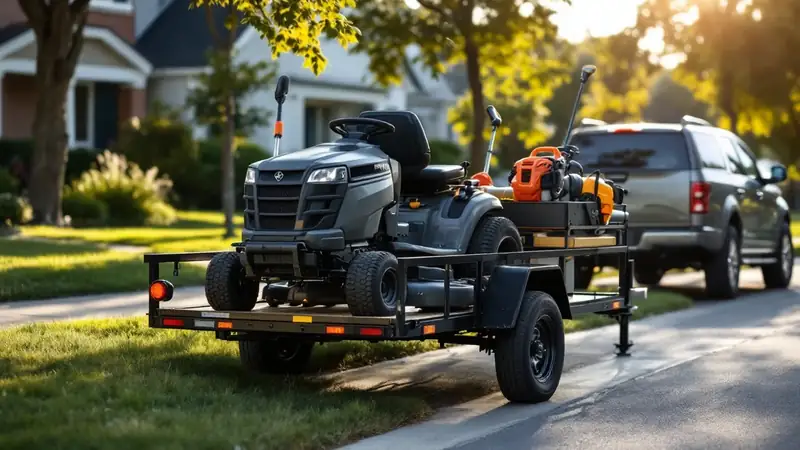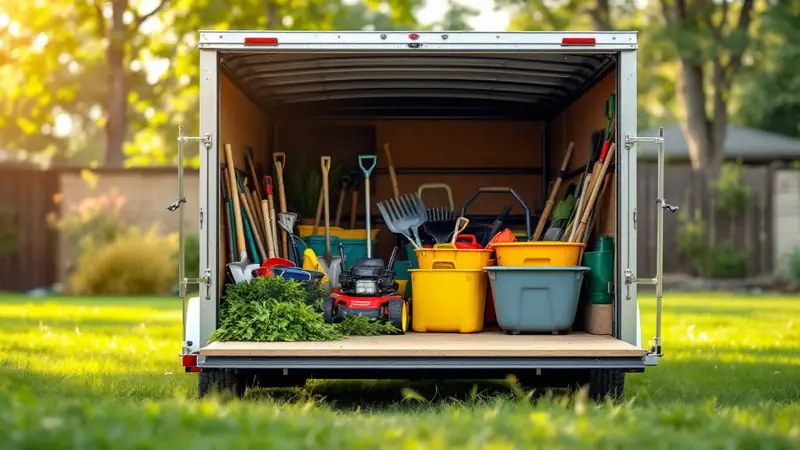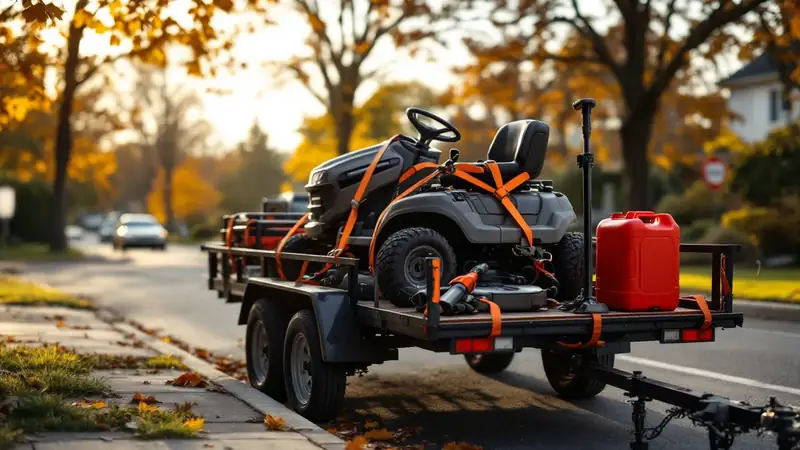
Short answer: A lawn care business needs general liability (clients expect $1 million per occurrence), commercial auto for the truck, equipment coverage, and workers’ comp once it hires. Insurer-published prices put liability near $28 to $63 a month and auto at $203 to $299 per vehicle; comp adds about $1 to $12 per $100 of crew payroll.
Lawn care business insurance is not one policy. It is a stack of four to seven policies, and which ones you need depends on three facts: whether you have employees, whether you drive equipment to jobs, and whether you spray or spread chemicals. This guide prices each layer from published rate filings, state statutes and insurers’ own published figures, then lets you total them for your state and payroll.
$2,928–$4,988 a year for a solo owner: liability, one truck, equipment (insurer-published figures; see method)
$1.05–$8.97 per $100 of payroll: 2026 full workers’ comp rates for lawn and landscape classes, North Dakota to New Jersey (state filings; see table)
3.0 vs 2.3 recordable injuries per 100 full-time workers, landscaping vs all private industry (BLS SOII, 2024)
1 employee triggers mandatory workers’ comp for landscapers in Florida and Tennessee, where code 0042 counts as construction

What insurance does a lawn care business need?
Four policies cover almost every lawn care operation: general liability for damage and injuries you cause to others, commercial auto for the truck and trailer, inland marine for mowers and handheld equipment, and workers’ compensation once you have employees. Add pesticide coverage if you spray, and an umbrella if commercial clients ask for higher limits.
| Coverage | What it pays for | Who needs it | Required by law? | What it does not cover |
|---|---|---|---|---|
| General liability (GL) | Injury to customers and passers-by, damage to their property (a mower-thrown rock through a window, a trimmer line through a car door), and the legal defense | Every lawn business that works on someone else’s property, including a one-person operation | Not by a general state law; required by many pesticide, landscape and home-improvement licenses (tables below) and by most commercial and public contracts | Your own equipment, your vehicles, injuries to your own employees, and (in most standard forms) pesticide drift without an endorsement |
| Workers’ compensation | Medical bills and lost wages for employees hurt on the job; employer’s liability for related lawsuits | Any business with W-2 employees (thresholds vary by state); many states let owners opt out | Yes, in every state except Texas once you pass the state’s employee threshold | The owner, if excluded; 1099 workers your state says are really employees |
| Commercial auto | Liability and damage from crashes in the truck, and in most policies the trailer while hitched | Anyone who drives to jobs with equipment, especially in a vehicle titled to the business | Yes: state minimum auto liability applies to the truck (table below), and interstate rigs over 10,000 lb need a USDOT number | Equipment on the trailer (that is inland marine); personal-auto claims for business use may be denied |
| Inland marine / contractor’s equipment | Theft or damage to mowers, trimmers, blowers and trailers on the road or at a job | Anyone whose equipment would take more than a week of revenue to replace | No | Wear and tear, mechanical breakdown, unattended theft from an unlocked trailer (check the wording) |
| Business owner’s policy (BOP) | GL plus property for a shop, office or stored inventory, plus business-income coverage | Operators with a shop, yard or storage building | No | Auto, workers’ comp, and usually mobile equipment away from the premises |
| Umbrella / excess liability | Extra limits above GL, auto and employer’s liability | Firms bidding commercial or municipal work that asks for $2 million or more | No, but contracts often require it | Anything the underlying policies exclude |
| Pesticide / herbicide applicator liability | Bodily injury and property damage from chemicals you apply (drift onto a neighbor’s garden, a reaction after a treatment) | Anyone who sprays weeds, fertilizes with weed-and-feed or treats for insects | Yes in many states, as a condition of the pesticide business license | Unlicensed applications; standard GL pollution exclusions unless the endorsement is added |
Your homeowner’s and personal auto policies are not a fallback. The Wisconsin insurance commissioner warns that a homeowners policy “usually does not cover business-related liability” (Wis. OCI consumer guide PI-015, revised July 2026), and Utah’s insurance department lists “Landscaping service” and “Snowplowing service” among vehicle uses that may need a commercial auto policy or an endorsement (Utah Insurance Department).
How much is lawn care business insurance?
For a one-person mowing business with one truck and a trailer of equipment, insurer-published figures add up to roughly $2,928 to $4,988 a year: general liability at $336 to $761, commercial auto at $2,436 to $3,590, and equipment coverage at $156 to $637. Hiring changes the math, because workers’ comp is priced on payroll and usually becomes the largest line.
The formula
Annual premium = workers’ comp + general liability + (commercial auto × vehicles) + equipment + umbrella, where workers’ comp = (annual field payroll ÷ 100) × class rate × experience mod. Where a state publishes a loss cost instead of a rate, the insurer multiplies the loss cost by its own loss cost multiplier first.
Worked example (Ohio, 2 crew members): 2 workers at the BLS median annual wage for landscaping workers ($39,150, May 2025) is $78,300 of payroll. Ohio’s 2026 base rate for class 0042 is $2.7014 per $100, so comp is 783 × $2.7014 = $2,115 before any mod or assessments. Add the solo-owner stack above and the year totals about $5,043 to $7,103. The same crew in California, with a 2026 pure premium of $5.58 and a multiplier of 1.13 to 2.10, pays $4,941 to $9,177 for comp alone.
| Publisher | Coverage | Per month | Per year | What the figure is | Source |
|---|---|---|---|---|---|
| Insureon (broker), landscaping customers | General liability, $1M/$2M | $63 | $761 | Median of policies bought by its landscaping customers; most have under 5 employees. Lawn care professionals averaged $57 a month | Insureon, updated Oct. 12, 2026 |
| Insureon | Workers’ comp | $150 | $1,802 | Same customer base | Insureon |
| Insureon | Commercial auto | $299 | $3,590 | Same customer base | Insureon |
| Insureon | Tools and equipment | $53 | $637 | Same customer base | Insureon |
| Insureon | Commercial umbrella | $92 | $1,101 | Same customer base | Insureon |
| NEXT | General liability | $18–$55 | $216–$660 | “Most” lawn care customers; limits $300,000 to $1M per occurrence; data updated October 2026 | NEXT lawn care cost page |
| NEXT | Workers’ comp | $154 (median) | $1,848 | NEXT active customers, prior 12 months | NEXT |
| NEXT | Tools and equipment | $31 (average) | $372 | What 43% of its customers pay on average | NEXT |
| Insurance Canopy | General liability, $1M/$2M | $31 | $336 | Published price for $1M/$2M limits; tools coverage $13 a month extra | Insurance Canopy lawn care cost page |
| Progressive Commercial | Commercial auto, contractors | $203 median / $260 average | $2,436 / $3,120 | 2025 new policies, per vehicle, liability and physical damage, no driver violations; contractors include landscapers | Progressive commercial auto cost page |
| The Hartford | General liability, all small businesses | $68 | $810 | All industries, not lawn care; its BOP averages $1,687 a year | The Hartford lawn care page; GL cost page |
Read those numbers for what they are. Insureon’s figures are medians for policies its customers chose, and most of those customers have fewer than five employees. NEXT’s general liability range includes policies with limits as low as $300,000. The Hartford’s $810 is an all-industry average. None of them is a quote, and none covers a firm with several crews.
Workers' comp = payroll ÷ 100 × the class figure in our state table × your mod; other lines use insurer-published figures. Excludes state assessments, minimum premiums and pesticide endorsements. Not a quote; see How we built these numbers.
Workers’ comp rates for lawn care and landscaping, by state (2026)
Workers’ comp is priced per $100 of payroll by job classification, and the class matters as much as the state. In most states that use NCCI’s system, code 0042 Landscape Gardening covers laying out grounds and planting, while code 9102 “includes grass cutting, weed control, and lawn spraying,” and the two “may be assigned to the same risk” (NCCI phraseology in the Minnesota Basic Manual, July 2026). California folds maintenance and lawn fertilizer and herbicide spreading into its own 0042 (WCIRB class description). Tree pruning that needs ladders, lifts or climbing is rated separately (code 0106), at a higher rate.
Swipe the table sideways to see every column.
| State | Class | Published figure per $100 payroll | Type | Effective | Comp on $78,300 payroll (2 workers)* | Source |
|---|---|---|---|---|---|---|
| California | 0042 Landscape gardening (includes maintenance, lawn fertilizing and herbicide) | $5.58 | Loss cost (insurer adds its multiplier) | Sept. 1, 2026 | $4,941–$9,177 | WCIRB approved advisory pure premium rates |
| Missouri | 0042 Landscape gardening and drivers | $4.27 | Loss cost (insurer adds its multiplier) | Jan. 1, 2026 | $3,782–$7,024 | Mo. DCI, NCCI advisory loss costs |
| Georgia | 0042 Landscape gardening and drivers | $3.17 | Loss cost (insurer adds its multiplier) | Mar. 1, 2025 | $2,803–$5,215 | Ga. SBWC, NCCI advisory loss costs |
| Colorado | 0042 Landscape gardening and drivers | $2.131 | Loss cost (insurer adds its multiplier) | Jan. 1, 2026 | $1,887–$3,508 | NCCI Colorado filing (archived copy), approved by Order O-26-010 |
| North Carolina | 0042 Landscape gardening and drivers | $1.93 | Loss cost (insurer adds its multiplier) | Apr. 1, 2025 (2026 value not public) | $1,707–$3,171 | NCRB loss costs and assigned risk rates (archived copy) |
| North Carolina | 0042 Landscape gardening and drivers, assigned-risk market | $5.54 | Full rate (before your experience mod) | Apr. 1, 2025 (2026 value not public) | $4,338 | NCRB loss costs and assigned risk rates (archived copy) |
| Pennsylvania | 0012 Landscape contractor or lawn cutting or maintenance contractor | $2.487 | Loss cost (insurer adds its multiplier) | Apr. 1, 2026 | $2,200–$4,087 | PCRB rating values |
| Oregon | 0042 Landscape gardening and drivers | $2.201 | Loss cost (insurer adds its multiplier) | Jan. 1, 2026 | $1,950–$3,617 | SAIF table of Oregon pure premiums |
| Oregon | 9102 Lawn maintenance, commercial or domestic | $1.538 | Loss cost (insurer adds its multiplier) | Jan. 1, 2026 | $1,362–$2,529 | SAIF table of Oregon pure premiums |
| New York | 0042 Landscape gardening and drivers | $1.865 | Loss cost (insurer adds its multiplier) | Oct. 1, 2026 | $1,652–$3,069 | NYCIRB circular RC 2659 |
| Texas | 0042 Landscape gardening and drivers | $0.916 | Loss cost (insurer adds its multiplier) | July 1, 2026 | $814–$1,503 | Tex. Dept. of Insurance, NCCI advisory loss costs (archived copy) |
| New Jersey | 0042 Landscape gardening and drivers (installation and planting) | $8.973 | Full rate (before your experience mod) | Jan. 1, 2026 | $7,026 | NJCRIB rate and classification handbook |
| New Jersey | 9102 Lawn maintenance (grass cutting, weed control, lawn spraying) | $4.436 | Full rate (before your experience mod) | Jan. 1, 2026 | $3,473 | NJCRIB rate and classification handbook |
| Ohio | 0042 Landscape gardening and drivers | $2.7014 | Full rate (before your experience mod) | July 1, 2026 | $2,115 | Ohio BWC base rates, Ohio Adm. Code 4123-17-06 App. A |
| Massachusetts | 0042 Landscape gardening and drivers | $2.29 | Full rate (before your experience mod) | July 1, 2024 (still in force) | $1,793 | WCRIBMA circular 2432 |
| North Dakota | 9007 Lawn maintenance (rated with building custodial services) | $1.74 | Full rate (before your experience mod) | July 1, 2026 | $1,362 | WSI manual rates 2026/2027 |
| North Dakota | 0003 Florists, nurseries, gardening (landscaping) | $1.05 | Full rate (before your experience mod) | July 1, 2026 | $822 | WSI manual rates 2026/2027 |
| Washington | 0308 Lawn care maintenance | $1.4948 per hour worked | State-fund rate (per hour) | Jan. 1, 2026 | $6,218 (2 workers × 2,080 hours) | L&I 2026 rates by class |
| Washington | 0301 Landscape construction and renovation | $2.1811 per hour worked | State-fund rate (per hour) | Jan. 1, 2026 | $9,073 (2 workers × 2,080 hours) | L&I 2026 rates by class |
Three patterns stand out. First, New Jersey splits the work: its 9102 lawn maintenance rate ($4.436) is half its 0042 landscape rate ($8.973), so a mow-and-spray company that is coded 0042 by mistake pays about twice what it should. Second, 2026 moved rates in both directions: New York’s 0042 loss cost dropped 24.7 percent, Oregon’s 8.7 percent and North Dakota’s landscaping class 7.1 percent, while Washington’s lawn care rate rose 4.1 percent and Ohio’s 0042 rate 0.7 percent. Texas has the lowest figure in the table, a 2026 loss cost of $0.916 per $100. North Carolina’s assigned-risk rate ($5.54, minimum premium $1,268) is what a firm pays in the residual market when no insurer will write it voluntarily. Third, California is the expensive outlier: its 0042 pure premium rose from $5.30 to $5.58 per $100 on Sept. 1, 2026.
California’s figure needs context. The insurance commissioner’s July 2026 order set the statewide average advisory claims cost benchmark, which the class pure premiums are adjusted to, at $1.65 per $100 of payroll (Calif. Dept. of Insurance decision, July 10, 2026), so landscape gardening runs at more than three times the state average.
Owners in four states cannot shop: North Dakota, Ohio, Washington and Wyoming require coverage from the state fund (N.D.C.C. 65-04-04; RCW 51.14.010), and Ohio and Washington also allow qualified employers to self-insure. Everywhere else, rates from the private market and the assigned-risk pool can differ.
Do you need workers’ comp for a lawn care business?
Yes, as soon as you have one employee in most states. Fourteen states set a higher headcount or a payroll test for at least some employers, and Texas makes coverage optional. Two of those states, Florida and Tennessee, treat landscaping as construction, which drops the trigger back to one employee. Owners without employees are generally not required to cover themselves but can usually elect to.
| State | When workers’ comp is required | Source |
|---|---|---|
| Alabama | 5 or more employees (officers count) | Ala. Code 25-5-50 |
| Arkansas | 3 or more employees (lower in building trades and for subcontracting contractors) | Ark. Workers’ Comp. Commission |
| Florida | 1 or more for landscapers: class 0042 is a construction code under Fla. Admin. Code 69L-6.021 (non-construction firms: 4) | Rule 69L-6.021; Fla. DWC |
| Georgia | 3 or more regular employees | Ga. SBWC |
| Kansas | Required once total payroll in the prior year exceeds $20,000 (family wages excluded) | K.S.A. 44-505 |
| Michigan | 3 or more at one time, or 1 working 35+ hours a week for 13+ weeks | Mich. WDCA |
| Mississippi | 5 or more employees | Miss. WCC fact sheet |
| Missouri | 5 or more (1 or more for construction employers who build or repair improvements) | RSMo 287.030 |
| New Mexico | 3 or more (any number if the work is licensed under the Construction Industries Licensing Act) | N.M. WCA |
| North Carolina | 3 or more (corporate officers count) | N.C. Industrial Commission |
| South Carolina | 4 or more, and over $3,000 of payroll in the prior year | S.C. Code 42-1-360 |
| Tennessee | 1 or more for landscapers: code 0042 is on the state’s construction list (non-construction firms: 5) | Tenn. construction codes list; non-construction rule |
| Texas | Optional for private employers; non-subscribers must notify the state and employees and lose key defenses in injury suits | Tex. Lab. Code ch. 406 |
| Virginia | 3 or more regular employees | Va. Code 65.2-101 |
| Wisconsin | 3 or more, or 1 or more paid $500 or more in a calendar quarter | Wis. DWD |
| All other states and DC | 1 or more employees (Wyoming: its extra-hazardous list names NAICS group 5617, which includes landscaping) | Wyo. Stat. 27-14-108 |
Two caveats change real-world answers. Florida’s rule names “0042 Landscape Gardening and Drivers” among construction codes (Fla. Admin. Code 69L-6.021), and in Florida a sole proprietor in construction is an “employee” under the act, so most landscape owners there cannot simply stay outside the system (Fla. Stat. 440.02). Tennessee’s workers’ comp appeals board upheld a ruling that a lawn care company with fewer than five employees needed coverage as a construction services provider (Holmes v. Watkins Lawn Care, 2018). A mow-only company that is assigned code 9102 instead of 0042 may fall back to the non-construction threshold; ask your agent which code you are rated under.
The penalties dwarf the premium. In Florida, failing to carry required coverage triggers a stop-work order, $1,000 per day for working in violation of it, and a penalty of twice the premium you would have paid over the previous 12 months (Fla. Stat. 440.107). California charges the greater of twice the premium owed or $1,500 per employee (Cal. Labor Code 3722). In Texas, a non-subscriber sued by an injured worker cannot argue the worker was negligent or assumed the risk (Tex. Lab. Code 406.033).
General liability insurance for a lawn care business
General liability is the policy customers mean when they ask “are you insured?” It pays when your work injures someone who is not your employee or damages property that is not yours, and it pays the lawyer when a claim is disputed. For a mowing route, the classic losses are thrown objects (rocks and sticks through windows, windshields and siding), line-trimmer damage to cars and screens, broken sprinkler heads and buried lines, and slip-and-fall claims around equipment.
What the limits on a certificate mean
Most small policies are written at $1,000,000 per occurrence and $2,000,000 aggregate. “Per occurrence” is the most the insurer pays for one incident; “aggregate” is the most it pays for all claims in the policy year. A separate products-completed operations aggregate covers damage that shows up after you leave, such as a fertilizer burn found a week later. Starter policies sold to solo mowers can carry limits as low as $300,000 per occurrence (NEXT), which is below what most commercial clients and several licensing laws ask for.
Gaps that surprise lawn care owners
- Your own equipment. GL never pays for your mower or trailer. That is inland marine (contractor’s equipment) coverage.
- Anything with a license plate. GL excludes autos. A truck and the trailer it pulls belong on a commercial auto policy.
- Chemicals. Standard GL forms carry a pollution exclusion. If you apply herbicide, insecticide or weed-and-feed, ask in writing whether the policy has a pesticide or herbicide applicator endorsement, and for which products and methods (spray vs granular).
- Work outside your class. Policies are rated on the operations you describe. Tree work above a set height, snow plowing, hardscape installation and irrigation repair are often separate classes; a claim from undisclosed work can be denied. Tree care has its own risks and rates and is covered in a separate guide.
- Subcontractors. If you sub out work to an uninsured crew, many policies either exclude the claim or charge premium on the sub’s payroll at audit. Collect certificates from every sub.
How much does $1 million in general liability cost?
For a small lawn care business, published figures for a $1 million per occurrence, $2 million aggregate policy run from $31 a month (Insurance Canopy) to a $63 monthly median among landscaping customers (Insureon). The Hartford says its small-business customers average $69 a month for a $1 million policy across all industries (The Hartford). Insurance Canopy says its lawn care price covers the owner and up to two employees (Insurance Canopy lawn care page); larger crews and chemical work price higher.
Pesticide and herbicide applicator insurance requirements by state
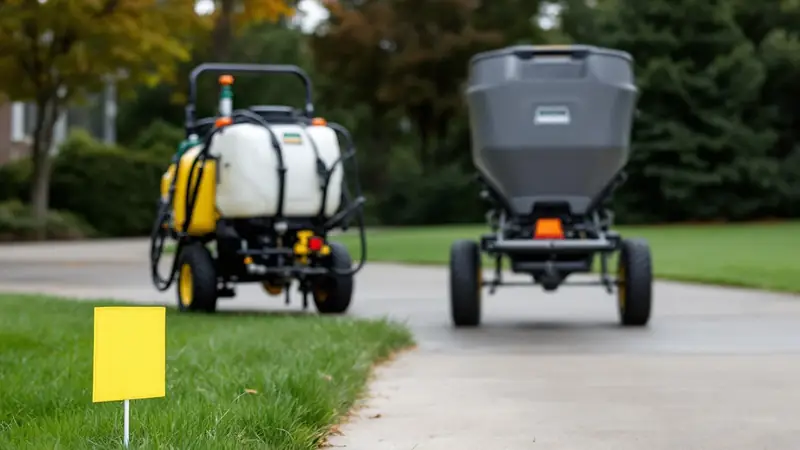
If you apply weed killer, insect control or weed-and-feed for pay, your state’s pesticide law may set the liability floor, and the license is not valid without it. These are the minimums the agencies publish:
| State | License that triggers it | Minimum coverage | Source |
|---|---|---|---|
| New York | Pesticide business registration | Commercial general liability of at least $1,000,000 each occurrence; certificate must name NYSDEC as holder | NYSDEC |
| Arizona | Pest management business license (includes turf and ornamental) | Financial security of at least $500,000 (insurance, bond, deposit or self-insured retention); deductible capped at 1% of the security | A.R.S. 3-3615 |
| Florida | Pest control business license (lawn and ornamental category) | Bodily injury $250,000 per person / $500,000 per occurrence; property damage $250,000 per occurrence / $500,000 aggregate | FDACS |
| Tennessee | Pest control charter (lawn and turf work) | Liability $250,000 per incident / $500,000 aggregate, plus a $10,000 surety bond | Tenn. Dept. of Agriculture |
| Pennsylvania | Pesticide application business license | At least $200,000 general liability: $100,000 bodily injury and $100,000 property damage | Penn State Extension (Pa. rules) |
| New Hampshire | For-hire pesticide registration (ground) | Bodily injury $50,000 each occurrence / $100,000 aggregate; property damage $50,000 each occurrence | N.H. Admin. Code Pes 302.03 |
| Montana | Commercial applicator license | At least $30,000 liability ($50,000 for aerial) | Mont. Dept. of Agriculture |
| Indiana | Pesticide business license (also needed to apply fertilizer for hire) | Liability insurance required; amount not stated in the OISC summary | OISC |
Some landscape licenses carry their own floors. Oregon will not license a landscape contracting business without at least $500,000 of liability coverage (ORS 671.565), and Maryland requires $500,000 of general liability for home improvement contractors, a license that covers landscaping next to a home (Md. Bus. Reg. 8-302.1). Our state-by-state licensing guide lists which states license landscape work at all.
Commercial auto insurance for lawn care trucks and trailers
Personal auto policies typically exclude carrying property “for compensation or a fee” (S.D. Division of Insurance), which describes a truck hauling a mower to paid jobs. A commercial auto policy covers liability and damage for the truck, and the trailer’s liability while hitched; the equipment on the trailer still needs inland marine coverage. Progressive reports that new contractor policies in 2025 cost a median $203 and an average $260 a month per vehicle (Progressive Commercial).
State minimums are the legal floor, not what clients want. Every public bid in the next section asks for $1 million per accident. Many states raised their floors recently, so check yours:
| State | Minimum liability (bodily injury per person / per accident / property damage, $000s) | Source |
|---|---|---|
| California | 30/60/15 (since Jan. 1, 2025) | Calif. Dept. of Insurance |
| Texas | 30/60/25 | Tex. Transp. Code 601.072 |
| Florida | No bodily injury minimum; $10,000 property damage plus $10,000 PIP | Fla. Stat. 324.022 |
| New York | 25/50/10 | N.Y. DFS |
| Pennsylvania | 15/30/5 | Pa. Insurance Dept. |
| Illinois | 25/50/20 | Ill. DOI |
| Georgia | 25/50/25 | Ga. OCI |
| North Carolina | 50/100/50 (since July 1, 2025) | N.C. DOI |
| New Jersey | 35/70/25 standard policy (since Jan. 1, 2026) | N.J. DOBI Bulletin 25-06 |
| Virginia | 50/100/25 (policies from Jan. 1, 2025) | Va. DMV |
| Massachusetts | 25/50/30 (since July 1, 2025) | Mass. Division of Insurance |
| Michigan | 50/100 lowest selectable bodily injury (default 250/500) | Michigan.gov |
| Washington | 25/50/10 | Wash. DOL |
| Arizona | 25/50/15 | Ariz. DIFI |
| Tennessee | 25/50/25 | Tenn. Dept. of Revenue |
| Maryland | 30/60/15 | Md. Transp. 17-103 |
| Missouri | 25/50/25 plus uninsured motorist 25/50 | Mo. DOR |
| Indiana | 25/50/25 | Ind. BMV |
| Colorado | 25/50/15 | Colo. DOI |
Crossing state lines with a heavy rig adds federal rules. A truck and trailer with a combined weight rating of 10,001 lb or more used in interstate commerce is a commercial motor vehicle (49 CFR 390.5) and needs a USDOT number (49 CFR 390.201); FMCSA lists many states, including California, Texas and Florida, that also require one for intrastate carriers (FMCSA). The federal $750,000 insurance minimum applies only to for-hire carriers (49 CFR 387.3, 387.9), not to a landscaper hauling its own equipment.
Equipment and trailer coverage (inland marine)
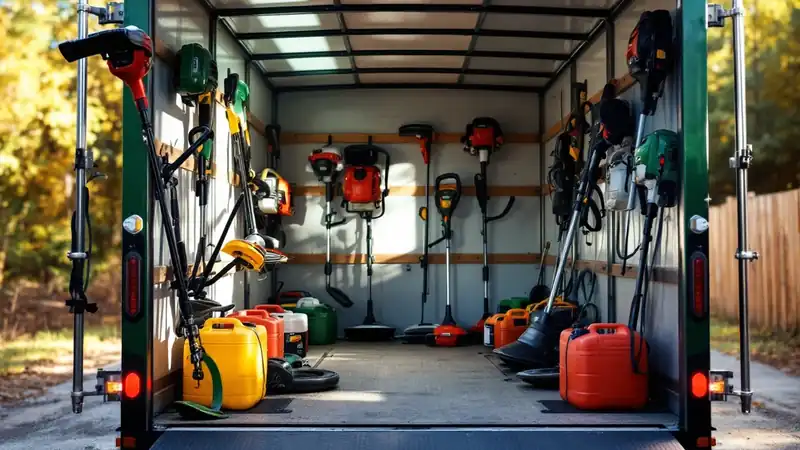
A commercial zero-turn, a trimmer and blower kit and an open trailer are the business for a small route, and none of it is covered by general liability or by a homeowner’s policy once it is used for paid work. Contractor’s equipment coverage, sold as an inland marine policy or an add-on to a BOP, pays to repair or replace scheduled equipment after theft, fire, collision or vandalism, on the road or at a job.
Two settings decide whether a claim pays well. Replacement cost vs actual cash value: actual cash value subtracts depreciation, so a three-year-old mower may pay out a fraction of a new one. Scheduled vs blanket limits: list anything worth more than the per-item cap by serial number. BLS’s producer price index for commercial turf and grounds care equipment rose 28.9 percent from August 2020 to August 2026 (BLS PPI WPU111401, August 2026 preliminary), so a schedule written five years ago probably undervalues your fleet.
Read the theft wording. Many forms require visible signs of forced entry or exclude equipment left unattended in an unlocked trailer or an open truck bed.
What commercial and municipal clients require on a certificate of insurance
A certificate of insurance (COI) is a one-page summary, usually on an ACORD 25 form, that your agent or insurer issues to a client. It proves coverage exists on the day it is printed; it does not change the policy. Commercial property managers, HOAs, general contractors and public agencies usually ask for four things beyond the limits:
- Additional insured status for the client on your GL (and often auto) policy, by endorsement.
- Waiver of subrogation, so your insurer cannot sue the client after paying a claim.
- Primary and non-contributory wording, so your policy pays before theirs.
- Notice of cancellation to the certificate holder.
Several of these are endorsements that may carry a fee. Ask for them when you buy the policy rather than the week a contract starts.
| Agency | Contract | General liability | Auto | Workers’ comp / employer’s liability | Other requirements | Source |
|---|---|---|---|---|---|---|
| City of Moorpark, Calif. | Landscape maintenance, LMD Zone 22 (RFP due May 8, 2025) | $1M per occurrence / $2M aggregate | $1M per accident | $1M employer’s liability | Additional insured (CG 20 10 and CG 20 37), waiver of subrogation, insurer rated A- or better | RFP |
| Town of Darien, Conn. | Landscape and maintenance contract, Great Island (Bid 2025-18) | $1M per occurrence; aggregate twice the occurrence limit | $1M combined single limit | $500,000 employer’s liability | $2M umbrella; town as additional insured; contractor primary; insurer A:VII or better | Bid documents |
| Richland County School District One, S.C. | Landscape maintenance (mowing), CBVB 2026-006 | $1M per occurrence; aggregate twice the occurrence limit | $1M per accident | $1M employer’s liability | Additional insured on GL; insurer A:VII | Bid |
| City of Auburn, Ala. | Landscape maintenance of islands, medians and streetscapes (bids due Sept. 17, 2026) | $1M per occurrence and $1M aggregates | $1M combined single limit | $500,000 employer’s liability | City as additional insured on GL and auto; waivers of subrogation | Bid package |
The pattern is consistent: $1 million per occurrence on general liability, $1 million on auto, workers’ comp with $500,000 to $1 million of employer’s liability, and the agency named as additional insured. A solo operator with a $300,000 starter policy cannot bid this work. Build the extra premium into your price; our guide to bidding landscaping jobs shows where overhead goes.
Why landscaping premiums are higher than for an office business
Insurers price from losses, and landscaping has more of them. In 2024 the landscaping services industry recorded 3.0 injury and illness cases per 100 full-time workers against 2.3 for all private industry (BLS SOII, landscaping services; private industry), and 1.4 cases per 100 workers that involved days away from work, against 0.8. That is about 24,300 cases in one year. The industry also recorded 243 fatal work injuries in 2022, the latest year in BLS’s published time series (BLS CFOI).
- Landscaping services (NAICS 561730)
- All private industry
Source: BLS Survey of Occupational Injuries and Illnesses, total recordable cases Series ISUPBS56173031100 and ISU00000000031100.
Show the numbers
| Landscaping services (NAICS 561730) | All private industry | |
|---|---|---|
| 2019 | 3.90 | 2.80 |
| 2020 | 3 | 2.70 |
| 2021 | 3.20 | 2.70 |
| 2022 | 3.40 | 2.70 |
| 2023 | 2.90 | 2.40 |
| 2024 | 3 | 2.30 |
The industry is also mostly small firms, which is why state thresholds matter. 70.6 percent of landscaping employer establishments had 1 to 4 employees in 2023 (Census County Business Patterns 2023), and another 537,970 landscaping businesses had no employees at all in 2024 (Census Nonemployer Statistics 2024). In a five-employee state such as Alabama or Mississippi, an employer the size of most of those establishments is under the line. See our industry data by state for local counts, and our landscaper salary data for the wages that drive comp premiums.
Do you need insurance to mow lawns?
We found no state that requires general liability insurance for mowing alone. You need it in practice once you work on property you do not own, and the law steps in four ways: employees (workers’ comp), driving on public roads (state auto minimums), pesticide work where the license requires coverage, and licenses that require it, such as Oregon’s landscape contracting license. A teenager mowing neighbors’ lawns with the family mower is the main case where going without is common, and their parents’ homeowner’s policy may exclude the activity once it becomes a business.
If you are just getting started, price insurance into your rate from the first job, then add workers’ comp before your first hire. Our guides on becoming a landscaper and licensing rules cover the other start-up steps, and our business section covers pricing, bidding and operations.
Seven ways to lower the premium without losing coverage
- Split payroll correctly. Office and estimating staff who never go to job sites can usually be rated in the clerical class instead of landscape gardening, at a fraction of the field rate. Keep time records that support the split; auditors check.
- Use pay-as-you-go workers’ comp. Premium is billed with each payroll instead of as a large deposit based on an estimate, which also shrinks the year-end audit bill for a seasonal business.
- Report owner payroll only if you choose to be covered. Many states let sole proprietors, partners and LLC members exclude themselves. That cuts premium, but the owner then has no comp benefits after an injury.
- Keep claims small and few. Once a firm is large enough to receive an experience modification factor, its own losses push the factor above or below 1.00, and the factor multiplies the whole workers’ comp premium.
- Raise deductibles on equipment and auto physical damage, not on liability. A $1,000 or $2,500 deductible on a mower schedule is easier to absorb than a liability gap.
- Describe your work exactly. Under-describing operations (no mention of herbicide spraying or snow plowing) can lower the quote and void the claim.
- Bundle and compare. A BOP can price below separate GL and property policies, and an independent agent can quote several carriers for the same limits. Compare like for like: per-occurrence limit, aggregate, deductibles, pesticide endorsement and additional-insured wording.
Red flags when you buy (or check a contractor’s) coverage
- A certificate with no policy number, an expired date, or a named insured that does not match the business on the contract.
- A GL policy that lists only “lawn mowing” when the crew also sprays, plows or installs hardscape.
- Workers’ comp shown as “exempt” or “N/A” by a company that has employees in a state where coverage is mandatory.
- A “1099 crew” doing the same work on the same schedule as employees. State comp agencies and the auditor may reclassify them, and the premium (or penalty) follows.
- A quote far below others for the same limits. Ask which exclusions or sublimits explain the difference.
Homeowners hiring a lawn service can ask for a COI sent directly from the agent, and call the agent to confirm it is current. Our guide to checking a landscaper’s license covers the license side of the same check.
How we built these numbers
Workers’ comp figures come from each state’s own rate or loss cost document, linked in the table, read in October 2026: WCIRB (California), NCCI’s filings for Missouri, Texas, Colorado and Georgia, NCRB (North Carolina, 2025 values), PCRB (Pennsylvania), SAIF’s republication of Oregon pure premiums, NYCIRB (New York), NJCRIB (New Jersey), Ohio BWC, WCRIBMA (Massachusetts), North Dakota WSI and Washington L&I. Loss costs and pure premiums exclude insurer expenses, so we multiplied them by 1.13 and 2.10, the low and high multipliers in SAIF’s 2026 Oregon rate tiers, to show a plausible range. That multiplier range is an illustration, not a statewide average.
Example payroll is 2 workers at the BLS OEWS May 2025 national median annual wage for landscaping and groundskeeping workers, $39,150 (BLS OEWS 37-3011), or $78,300. Washington is shown at 2,080 hours per worker because its rates are per hour.
Premiums for general liability, auto, equipment and umbrella are insurer- and broker-published figures, labelled as such, because no government agency publishes premiums by trade. The calculator uses general liability of $336 to $761 a year (Insurance Canopy’s published $1M/$2M price to Insureon’s landscaping median), commercial auto of $2,436 to $3,590 per vehicle (Progressive’s 2025 contractor median to Insureon’s landscaping median), equipment of $156 to $637 (Insurance Canopy to Insureon) and Insureon’s $1,101 umbrella median. Experience mods of 0.85 and 1.25 in the calculator are examples, not averages.
Excluded: state assessments and surcharges, expense constants, minimum premiums, premium discounts, terrorism charges, and tree work, which is rated and priced separately. Injury data are BLS SOII 2024 and CFOI 2022; firm counts are Census CBP 2023 and Nonemployer Statistics 2024.
This page is general information, not insurance or legal advice. Rates, class assignments and coverage requirements change; confirm with your state agency, your insurer and the contract in front of you.
Lawn care insurance questions, answered
How much is lawn care insurance per month?
For a solo operator, general liability alone runs about $28 to $63 a month in published figures (Insurance Canopy’s $336 a year to Insureon’s $63 landscaping median). With a commercial auto policy on one truck and equipment coverage, the total is roughly $244 to $416 a month. Employees add workers’ comp, priced per $100 of payroll.
How much is $1,000,000 liability insurance a month?
For lawn care, published prices for $1 million per occurrence and $2 million aggregate run from about $31 a month (Insurance Canopy) to a $63 median among Insureon’s landscaping customers. The Hartford reports $69 a month on average for a $1 million policy across all its small-business customers.
Do I need a license to start a lawn care business?
Usually a local business license, and a state license only in some states or for some work. Spraying pesticides for pay requires a state applicator license everywhere, and installation work can trigger contractor licenses in states such as Oregon, Nevada and Utah. Our state-by-state licensing guide lists each rule.
Can an LLC get general liability insurance?
Yes. The LLC is the named insured on the policy. Forming an LLC separates business debts from personal assets in many cases, but it does not pay for damage your crew causes; the insurance does. Clients will ask for a certificate in the LLC’s exact legal name.
Do you need insurance to start a lawn mowing business?
No state requires general liability just to mow, but you need workers’ comp once you hire (in most states at one employee), auto coverage that allows business use, and liability coverage before most commercial clients, HOAs or public agencies will hire you.
What is the best insurance company for a lawn care business?
We do not rank insurers, and no independent agency publishes lawn care claim-satisfaction data. Compare quotes for the same limits, check that the policy includes your actual operations (spraying, plowing, hardscape), confirm the additional-insured and waiver wording your clients need, and look up the insurer’s license with your state insurance department.
Sources
- Wisconsin Office of the Commissioner of Insurance, Consumer’s Guide to Homeowners Insurance (PI-015), Revised July 2026. Accessed October 2026.
- Utah Insurance Department, Business auto, Read October 2026. Accessed October 2026.
- Insureon, Landscaping business insurance cost (median premiums of its customers), Updated Oct. 12, 2026. Accessed October 2026.
- NEXT Insurance, Lawn care insurance cost, Customer data updated October 2026. Accessed October 2026.
- Insurance Canopy, Lawn care insurance cost, Read October 2026. Accessed October 2026.
- Progressive Commercial, Commercial auto insurance cost, 2025 new-policy data. Accessed October 2026.
- The Hartford, Lawn care business insurance (insurer-published averages), Read October 2026. Accessed October 2026.
- The Hartford, How much does general liability insurance cost?, Read October 2026. Accessed October 2026.
- Hiscox, Landscaping and lawn care business insurance, Read October 2026. Accessed October 2026.
- Minnesota Workers’ Compensation Insurers Association, Minnesota Basic Manual (NCCI classification phraseology for codes 0042 and 9102), July 2026 edition. Accessed October 2026.
- WCIRB California, Class 0042 Landscape Gardening description (archived copy), Archived April 2024. Accessed October 2026.
- WCIRB California, Approved advisory pure premium rates, effective Sept. 1, 2026 (CSV), Sept. 1, 2026. Accessed October 2026.
- Missouri Department of Commerce and Insurance, Advisory voluntary loss cost filings effective Jan. 1, 2026 (NCCI), Jan. 1, 2026. Accessed October 2026.
- Georgia State Board of Workers’ Compensation, Georgia advisory loss costs (NCCI), March 1, 2025. Accessed October 2026.
- Colorado Division of Insurance, NCCI Colorado advisory loss cost filing, effective Jan. 1, 2026 (archived copy), Jan. 1, 2026. Accessed October 2026.
- North Carolina Rate Bureau, Advisory loss costs and assigned risk rates, effective April 1, 2025 (archived copy), April 1, 2025. Accessed October 2026.
- Pennsylvania Compensation Rating Bureau, PCRB rating values: direct employment loss costs, Apr. 1, 2026. Accessed October 2026.
- SAIF Corporation, Comparison of 2026 and 2025 Oregon pure premiums, expected loss rates and D ratios, Jan. 1, 2026. Accessed October 2026.
- New York Compensation Insurance Rating Board, Circular RC 2659, loss costs effective Oct. 1, 2026, Oct. 1, 2026. Accessed October 2026.
- Texas Department of Insurance, Texas advisory loss costs effective July 1, 2026 (NCCI; archived copy), July 1, 2026. Accessed October 2026.
- New Jersey Compensation Rating and Inspection Bureau, Rate and Classification Handbook, numerical order, 2026, Jan. 1, 2026. Accessed October 2026.
- Ohio Bureau of Workers’ Compensation, Ohio Adm. Code 4123-17-06 Appendix A, base rates effective July 1, 2026 (archived copy), July 1, 2026. Accessed October 2026.
- Workers’ Compensation Rating and Inspection Bureau of Massachusetts, Circular letter 2432, rates and values effective July 1, 2024, July 1, 2024. Accessed October 2026.
- North Dakota Workforce Safety and Insurance, Manual rates 2026/2027, July 1, 2026. Accessed October 2026.
- Washington Department of Labor and Industries, 2026 rates by business type and class code, Jan. 1, 2026. Accessed October 2026.
- SAIF Corporation, 2026 rate memo (rate tier multipliers), Jan. 1, 2026. Accessed October 2026.
- California Department of Insurance, Workers’ compensation decision and order, July 10, 2026. Accessed October 2026.
- North Dakota Legislative Assembly, N.D.C.C. chapter 65-04, Current code. Accessed October 2026.
- Washington State Legislature, RCW 51.14.010, Current code. Accessed October 2026.
- Alabama Legislature, Code of Alabama 25-5-50, Current code. Accessed October 2026.
- Arkansas Workers’ Compensation Commission, Basic facts, Read October 2026. Accessed October 2026.
- Florida Administrative Code (via Cornell LII), Rule 69L-6.021, construction classification codes, Current rule. Accessed October 2026.
- Florida Division of Workers’ Compensation, Coverage requirements, Read October 2026. Accessed October 2026.
- Georgia State Board of Workers’ Compensation, Workers’ compensation insurance FAQs, Read October 2026. Accessed October 2026.
- Kansas Revisor of Statutes, K.S.A. 44-505, Current code. Accessed October 2026.
- Michigan Workers’ Disability Compensation Agency, Insurance requirements, Read October 2026. Accessed October 2026.
- Mississippi Workers’ Compensation Commission, Workers’ compensation facts, 2013 fact sheet; threshold unchanged in current code summaries. Accessed October 2026.
- Missouri Revisor of Statutes, RSMo 287.030, Current code. Accessed October 2026.
- New Mexico Workers’ Compensation Administration, Employer information brochure, April 2025. Accessed October 2026.
- North Carolina Industrial Commission, Workers’ compensation insurance requirements, Read October 2026. Accessed October 2026.
- South Carolina Legislature, S.C. Code title 42, chapter 1 (42-1-360), Current code. Accessed October 2026.
- Tennessee Bureau of Workers’ Compensation, Construction industry contracting codes list, Read October 2026. Accessed October 2026.
- Tennessee Bureau of Workers’ Compensation, Who must carry insurance: non-construction, Read October 2026. Accessed October 2026.
- Texas Legislature, Texas Labor Code chapter 406, Current code. Accessed October 2026.
- Virginia General Assembly, Va. Code 65.2-101, Current code. Accessed October 2026.
- Wisconsin Department of Workforce Development, Workers’ compensation: employers (archived copy), Archived Sept. 14, 2026. Accessed October 2026.
- Wyoming Legislature, Wyoming Statutes title 27 (27-14-108), Current code. Accessed October 2026.
- Florida Legislature, Fla. Stat. 440.02, definitions, 2026 statutes. Accessed October 2026.
- Tennessee Workers’ Compensation Appeals Board, Holmes v. Ellis Watkins d/b/a Watkins Lawn Care, Feb. 13, 2018. Accessed October 2026.
- Florida Legislature, Fla. Stat. 440.107, compliance and penalties, 2026 statutes. Accessed October 2026.
- California Legislature, Labor Code 3722, Current code. Accessed October 2026.
- Insurance Canopy, Lawn care insurance, Read October 2026. Accessed October 2026.
- New York State Department of Environmental Conservation, Pesticide business and agency registration, Read October 2026. Accessed October 2026.
- Arizona Legislature, A.R.S. 3-3615, business license; financial security, Current code. Accessed October 2026.
- Florida Department of Agriculture and Consumer Services, Pest control licensing and certification, Read October 2026. Accessed October 2026.
- Tennessee Department of Agriculture, Pesticide certification and charter, Read October 2026. Accessed October 2026.
- Penn State Extension, Pennsylvania pesticide applicator certification, Read October 2026. Accessed October 2026.
- New Hampshire Division of Pesticide Control (via Cornell LII), N.H. Admin. Code Pes 302.03, Current rule. Accessed October 2026.
- Montana Department of Agriculture, Commercial applicators, Read October 2026. Accessed October 2026.
- Office of Indiana State Chemist, Training, certification and licensing, March 2024. Accessed October 2026.
- Oregon Revised Statutes (via OregonLaws), ORS 671.565, Current code. Accessed October 2026.
- Maryland General Assembly, Business Regulation 8-302.1, Current code. Accessed October 2026.
- South Dakota Division of Insurance, Auto insurance guidance, Read October 2026. Accessed October 2026.
- California Department of Insurance, New year means new changes for insurance (minimum auto limits 30/60/15), January 2025. Accessed October 2026.
- Texas Transportation Code (via Texas Public Law), Section 601.072, Current code. Accessed October 2026.
- Florida Legislature, Fla. Stat. 324.022, 2026 statutes. Accessed October 2026.
- New York Department of Financial Services, How much auto insurance must I carry?, Read October 2026. Accessed October 2026.
- Pennsylvania Insurance Department, Auto insurance, Read October 2026. Accessed October 2026.
- Illinois Department of Insurance, Auto insurance shopping guide, Read October 2026. Accessed October 2026.
- Georgia Office of Commissioner of Insurance, Auto insurance, Read October 2026. Accessed October 2026.
- North Carolina Department of Insurance, Changes to auto policies effective July 1, 2025, 2025. Accessed October 2026.
- New Jersey Department of Banking and Insurance, Bulletin 25-06, 2025. Accessed October 2026.
- Virginia DMV, Insurance requirements, Read October 2026. Accessed October 2026.
- Massachusetts Division of Insurance, Consumer bill of rights for automobile insurance, Read October 2026. Accessed October 2026.
- State of Michigan, Choosing bodily injury coverage, Read October 2026. Accessed October 2026.
- Washington Department of Licensing, Mandatory insurance, Read October 2026. Accessed October 2026.
- Arizona Department of Insurance and Financial Institutions, Automobile insurance, Read October 2026. Accessed October 2026.
- Tennessee Department of Revenue, Why you should have insurance, Read October 2026. Accessed October 2026.
- Maryland General Assembly, Transportation 17-103, Current code. Accessed October 2026.
- Missouri Department of Revenue, Insurance requirements, Read October 2026. Accessed October 2026.
- Indiana BMV, Proof of financial responsibility, Read October 2026. Accessed October 2026.
- Colorado Division of Insurance, Auto insurance, Read October 2026. Accessed October 2026.
- eCFR, 49 CFR 390.5, definitions, Current to October 2026. Accessed October 2026.
- eCFR, 49 CFR 390.201, USDOT registration, Current to October 2026. Accessed October 2026.
- Federal Motor Carrier Safety Administration, Do I need a USDOT number?, Read October 2026. Accessed October 2026.
- eCFR, 49 CFR 387.3, applicability, Current to October 2026. Accessed October 2026.
- eCFR, 49 CFR 387.9, financial responsibility minimums, Current to October 2026. Accessed October 2026.
- U.S. Bureau of Labor Statistics, Producer Price Index, commercial turf and grounds care equipment (WPU111401), August 2020 to August 2026 (preliminary). Accessed October 2026.
- City of Moorpark, Calif., Landscape maintenance services, LMD Zone 22 RFP, 2025. Accessed October 2026.
- Town of Darien, Conn., Bid 2025-18, landscape and maintenance contract, Great Island, 2025. Accessed October 2026.
- Richland County School District One, CBVB 2026-006, landscape maintenance (mowing), September 2025. Accessed October 2026.
- City of Auburn, Ala., Landscape maintenance of islands, medians, roundabouts and streetscapes bid package, 2026. Accessed October 2026.
- U.S. Bureau of Labor Statistics, Survey of Occupational Injuries and Illnesses, landscaping services (NAICS 561730), series ISUPBS56173031100 and related case types, 2024 data. Accessed October 2026.
- U.S. Bureau of Labor Statistics, Survey of Occupational Injuries and Illnesses, private industry, series ISU00000000031100, 2024 data. Accessed October 2026.
- U.S. Bureau of Labor Statistics, Census of Fatal Occupational Injuries, landscaping services, series FWU00X56173X80N00, 2022 data. Accessed October 2026.
- U.S. Census Bureau, County Business Patterns 2023, NAICS 561730 by employment size class, 2023 data. Accessed October 2026.
- U.S. Census Bureau, Nonemployer Statistics 2024, NAICS 56173, 2024 data. Accessed October 2026.
- U.S. Bureau of Labor Statistics, Occupational Employment and Wages, 37-3011 Landscaping and Groundskeeping Workers, May 2025. Accessed October 2026.