Short answer: Clearing land costs an estimated $420 to $1,500 an acre for light brush, $840 to $2,570 for overgrown land and $2,300 to $6,400 for wooded land when debris is mulched or burned on site. Hauling wooded debris away raises that to $4,490 to $15,850 an acre, and lots under an acre cost more per acre.
$840–$2,570 per acre, overgrown land, mulched or piled and burned (estimate; see method)
$2,300–$6,400 per acre, wooded land, debris left or burned on site (estimate)
$1,193–$2,348 per acre: USDA’s own cost to doze moderate-density woods (NRCS practice scenarios, FY2025)
1 acre of disturbance triggers a construction stormwater permit (EPA)
Most land clearing price pages give a per-acre range with no source behind it, and the most specific one ranking for this search is a single Houston contractor’s rate card. This page builds every range from public inputs you can check: FEMA’s 2025 equipment rates, BLS wage data (OEWS, May 2025), the Census Bureau’s cost structure for site preparation contractors, and the U.S. Department of Agriculture’s own cost estimates for clearing woods on farms. We then test the results against what state transportation departments paid for clearing in 2025 and against published day rates. The arithmetic is in the method box near the end.
Three things set the price: how much is growing, how it comes down (mulcher, dozer or saws), and what happens to the debris afterward. The debris decision moves the bill more than the acreage does. For where clearing sits in a full project budget, see our landscaping cost breakdown and the rest of our cost guides.
Land clearing cost per acre, by method and vegetation
The table prices a job of 1 to 5 acres on reasonably flat ground a truck and trailer can reach. Hauling the machines in and out (mobilization) is a separate line of $480 to $960 per machine, covered in the calculator below.
| Method | Vegetation | Debris | Machine time per acre | Estimated cost per acre |
|---|---|---|---|---|
| Forestry mulching | Light brush, saplings under about 4 in | Mulched in place | 2.5–5 hr | $420–$1,500 |
| Forestry mulching | Overgrown: thick brush, trees to 6–8 in | Mulched in place | 5–8 hr | $840–$2,400 |
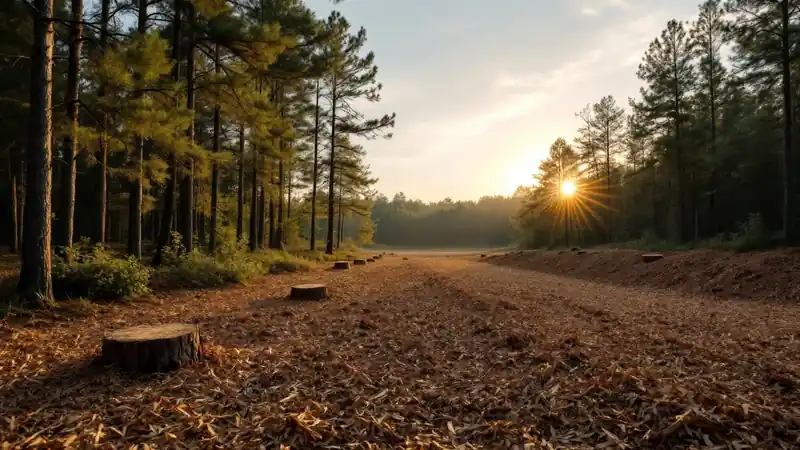
| Forestry mulching (dedicated machine) | Wooded: trees to 10–12 in | Mulched in place | 10–16 hr | $3,490–$6,400 |
| Dozer clearing, stumps pulled | Overgrown | Piled and burned on site | 3–5 hr dozer, 1–2 hr excavator | $1,150–$2,570 |
| Dozer clearing, stumps pulled | Wooded, timber sold first | Piled and burned on site | 6–10 hr dozer, 2–4 hr excavator | $2,300–$5,130 |
| Dozer clearing, stumps pulled | Overgrown | Hauled to a landfill | Same, plus 15–30 tons hauled | $2,250–$7,930 |
| Dozer clearing, stumps pulled | Wooded, timber sold first | Hauled to a landfill | Same, plus 30–60 tons hauled | $4,490–$15,850 |
| Selective clearing | Underbrush cleared, marked trees kept | Mulched in place | 5–10 hr mulcher, 4–16 hr saw work | $1,060–$3,900 |
Uses the per-acre ranges in this guide's main table. Excludes timber sale proceeds, grading, local permits and day minimums. Local prices vary; see How we built these numbers.
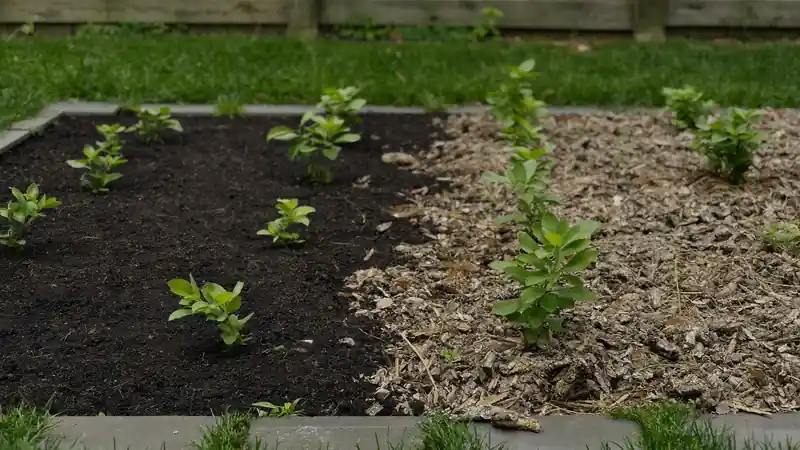
Debris handling is the biggest swing in the table. On an overgrown acre, burning the piles on site adds a few hours of labor; hauling the same material to a landfill adds 15 to 30 tons of trucking and tipping fees and roughly triples the top of the range. Mulching avoids both, but it leaves stumps at ground level and a mat of chips that has to break down or be scraped off before a slab, a septic field or new sod goes in.
The wooded rows assume a logger or timber buyer has already taken the merchantable trunks. If nobody buys them, the trunks become debris too, and every debris line in the table rises. Selective clearing costs more per acre than mulching everything because the operator works slower around the trees you keep, and part of the job is chainsaw work.
What the lot sizes people search for cost
These totals apply the per-acre estimates to the sizes in the most common searches, with mobilization included and a job-size adjustment: 25 percent more per acre at 1 acre or less, 15 percent less at 5 acres or more.
| Area | Light brush, mulched | Overgrown, mulched | Wooded, dozed, piled and burned |
|---|---|---|---|
| 1/4 acre (10,890 sq ft) | $610–$1,430 | $740–$1,710 | $1,680–$3,520 |
| 1/2 acre | $740–$1,900 | $1,000–$2,460 | $2,400–$5,130 |
| 1 acre | $1,000–$2,840 | $1,530–$3,960 | $3,840–$8,330 |
| 2 acres | $1,320–$3,960 | $2,160–$5,760 | $5,560–$12,180 |
| 5 acres | $2,260–$7,340 | $4,050–$11,160 | $10,740–$23,720 |
| 10 acres | $4,050–$13,710 | $7,620–$21,360 | $20,510–$45,520 |
A half acre rarely costs half of what an acre does. The trailer trip, the setup and the walk-through cost the same whatever the size. USDA’s own cost data shows the pattern: the Natural Resources Conservation Service (NRCS) in South Carolina pays $871.79 an acre for its small-acre tree site preparation scenario versus $370.37 for its heavy mechanical scenario, a 2.4-fold difference (NRCS South Carolina FY2026 payment schedule). In the other direction, one Houston-area contractor publishes per-acre rates 22 to 27 percent lower at 5 acres than at 1 acre (Daniel Dean published rates, checked October 2026).
Many operators also bill by the day. One Texas outfit publishes $3,000 a day for skid-steer mulching including transport and $4,000 a day plus transport for a high-horsepower dedicated mulcher (Pierce Equipment Rentals, checked October 2026). On a quarter-acre lot, a full-day minimum like that will exceed the totals above.
Land clearing cost per square foot
Divide the per-acre figure by 43,560. Overgrown land mulched in place works out to about $0.02 to $0.06 per square foot; wooded land dozed and burned, $0.05 to $0.12; wooded land with debris hauled away, $0.10 to $0.36. Below a quarter acre, mobilization dominates and per-square-foot math understates the bill.
Land clearing cost per hour
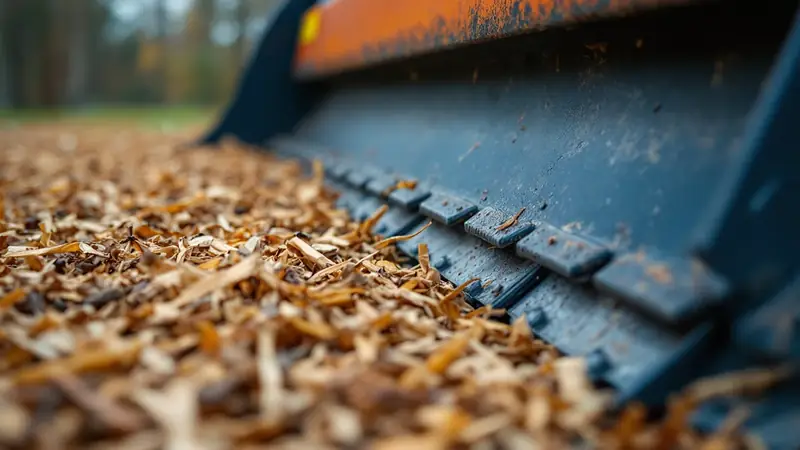
With an operator, our build-up gives about $167 an hour for a compact track loader with a mulching head, $349 for a dedicated wheeled mulcher, $228 to $327 for a mid-size dozer, $241 for a 20-ton excavator and $297 for an 18-cubic-yard dump truck with driver. Pierce’s published turnkey rates work out to $300 to $400 an hour over a 10-hour day. The machine-only portion comes from FEMA, whose rates cover ownership, fuel and repairs but not the operator (FEMA, Schedule of Equipment Rates).
Light brush, overgrown or wooded: which one you have
Operators price the slowest ground on the lot, so pick the row that matches the worst third of your land, not the average. NRCS sorts woody debris into three loads when it prices residue treatment, and those classes are a useful yardstick for how much material each category produces.
| Category | What you see | Typical stems | Debris yardstick |
|---|---|---|---|
| Light brush | Grass, briars, scattered shrubs and saplings; you can walk through it | Mostly under 4 in | NRCS light class: under 5 tons per acre |
| Overgrown | Thicket you cannot walk through, vines, young trees | Up to 6–8 in | NRCS medium class: 5–15 tons per acre, 8–12 in pieces |
| Wooded | Closed canopy, mature trees, understory beneath | 8 in and larger | NRCS heavy class: over 15 tons per acre; Pennsylvania forest land averages 61 dry tons of wood per acre |
The wooded row is where quotes diverge most. A stand with trunks worth selling should be logged before the clearing crew arrives, which turns the biggest debris item into income. A stand of crooked hardwoods and vines with nothing merchantable is the most expensive acre to clear, because every ton has to be mulched, burned or hauled.
Forestry mulching vs. dozer clearing vs. selective clearing
| Criterion | Forestry mulching | Dozer clearing | Selective clearing |
|---|---|---|---|
| Overgrown acre, estimate | $840–$2,400 | $1,150–$2,570 burned; $2,250–$7,930 hauled | $1,060–$3,900 |
| Stumps | Left at or near grade; grinding is extra | Pulled out with roots (grubbed) | Left; grinding is extra |
| Soil after | Covered by a chip mat | Bare; needs erosion control and seed | Mostly undisturbed |
| Debris | None to move | Piles to burn, grind or haul | Little |
| Ready for a slab or septic field | Not until stumps and chips come out of that area | Yes, after grading | No |
| Best for | Pasture recovery, trails, fire breaks, keeping the look of the land | House pads, fields, anything that needs bare dirt | Wooded homesites, park-like lots |
| What you give up | Stumps stay; chips slow grass for a season or more | Topsoil disturbance; burn or haul cost | Higher cost per acre; slower |
For a house site, the common answer is both: a dozer and excavator for the pad, driveway and septic area, where stumps must come out, and a mulcher for the rest of the lot. That keeps the bare-dirt footprint small, which can also keep you under the 1-acre stormwater threshold discussed below.
How much does a forestry mulcher cost per hour?
Hired with an operator, an estimated $167 to $400 an hour: the low end is a compact track loader with a mulching head priced at cost plus industry-average overhead, the high end is a published turnkey day rate spread over 10 hours. Machine-only, FEMA lists $174.37 an hour for a wheeled mulcher (Barko 930B) and $62.38 for a compact track loader (Bobcat T86) without the mulching head (FEMA 2025 Schedule of Equipment Rates).
How many acres can a forestry mulcher do in a day?
Anywhere from about half an acre to 5 acres in a 10-hour day, depending on stem size and the machine. In a USDA Forest Service study, a rotary-head masticator chopping harvest debris on 37 acres averaged 0.57 acres an hour, with a range of 0.21 to 0.89 (Halbrook and others, 2006). Pierce says its 375-horsepower machine runs 3 to 5 acres a day on open Texas ground. Our estimates assume 2 to 4 acres a day in light brush, 1.25 to 2 in overgrown land and 0.6 to 1 in woods.
What public agencies pay to clear land
Two public data sets bracket private prices. At the low end, NRCS publishes the estimated cost of each conservation practice it funds, including clearing trees with a dozer. Those are average costs at farm scale, and its regular payment rate is 75 percent of that cost (90 percent for historically underserved producers), so a published payment rate divided by 0.75 gives the cost estimate (NRCS Iowa FY2026 scenario booklet). At the high end, state transportation departments publish what contractors bid to clear and grub highway right of way.
| Source | Work described | Typical size | Cost per acre |
|---|---|---|---|
| NRCS South Carolina, FY2025 | Land clearing with 140-hp dozer, moderate tree density, debris disposed on site | About 1 acre | $2,348 |
| NRCS Nebraska, FY2025 | Land clearing with 200-hp dozer, moderate density | 10 acres | $1,193 |
| NRCS Nebraska, FY2025 | Land clearing with chainsaws and chippers, no heavy equipment | 1 acre | $1,209 |
| NRCS Iowa, FY2026 | Clearing and on-site disposal with heavy and medium equipment | 10 acres | $1,606 (payment $1,204.68 ÷ 0.75) |
| NRCS Kansas, FY2026 | Land clearing | Not stated | $1,642 (payment $1,231.47 ÷ 0.75) |
| NRCS South Carolina, FY2025 | Remove and dispose of brush and trees under 6 in | 2 acres | $1,537 |
| NRCS South Carolina, FY2025 | Remove and dispose of brush and trees over 6 in | 2 acres | $2,538 |
| NRCS South Carolina and Oklahoma, FY2026 | Fuel break with masticator (forestry mulcher) and herbicide | Not stated | $1,945–$2,048 (payments ÷ 0.75) |
| NRCS Nebraska, FY2025 | Woody residue over 15 tons per acre, masticators and mulchers | 20 acres | $1,759 |
| Texas A&M Forest Service | Maximum reimbursement, heavy-equipment fuel reduction (mulchers) | Per acre | Up to $2,000 |
| Missouri DOT, 2025 | Clearing and grubbing, average of 290 bids | 1.88 acres average | $15,250 |
| Florida DOT, 2025 | Clearing and grubbing, weighted average, 261 contracts | 3,054 acres total | $47,529 |
Our private-market estimates for dozer clearing of wooded land ($2,300 to $5,130 an acre, burned on site) start just below the top of the NRCS range, which is where they should sit: NRCS prices average costs on farm-scale jobs, and a contractor bidding your lot adds travel, risk and profit. Texas A&M Forest Service’s $2,000-an-acre reimbursement cap for mulcher work lands inside our overgrown mulching range.
Highway numbers sit far above both. Missouri’s average bid covered under 2 acres, so fixed costs land on very few acres, and highway work carries requirements a private lot does not, such as working beside traffic. Florida’s $47,529 average covers 3,054 acres of highway work, and the same report shows the state paid an average of $1,508.78 per tree for individual tree removal (FDOT, 2025). Treat highway figures as a ceiling for small, tightly specified jobs, not as a residential benchmark.
The debris decision: mulch, burn, grind or haul
Everything that comes down has to go somewhere, and each option has a price and a rulebook.
- Mulch in place. No added cost beyond machine time, no permit, no trucks. The trade-off is stumps at grade and a chip layer.
- Pile and burn. The cheapest way to dispose of dozed debris where burning is legal: our estimates add 4 to 16 hours of tending labor, about $56 an hour. Rules vary sharply by state (table below).
- Air curtain burner. A fan-forced pit or box that burns hotter with little smoke, and the required method in some counties. NRCS estimates its cost at about $218 to $235 per acre of slash treated (FY2026 payment rates of $163.74 to $176.07 in Oklahoma, South Carolina and Kansas, divided by 0.75). FEMA prices the machine alone at $20.79 an hour (FEMA 2025 rates).
- Grind on site. A tub grinder turns piles into chips you can spread or sell. FEMA’s rate for a mid-size unit rated up to 40 tons an hour is $165.82 an hour before the operator and the loader that feeds it (FEMA 2025 rates).
- Haul away. The most expensive option. We estimate $88 to $194 per ton delivered and dumped, of which $66 to $149 is trucking (FEMA truck rates plus BLS driver pay; see method) and $22 to $45 is the tipping fee (table below).
Hauling is costly because brush is bulky. FEMA’s debris guidance converts one ton of hardwood debris to 4 cubic yards and one ton of softwood to 6 (FEMA 329 Debris Estimating Field Guide), so an 18-yard dump truck carries only 3 to 4.5 tons of unground brush per trip. Tipping fees vary by region:
| Facility | Material | Published fee |
|---|---|---|
| Solid Waste Authority of Palm Beach County, Fla. | Land clearing debris | $22.00 per ton (effective July 1, 2026) |
| Lincoln County, N.C., landfill | Land clearing debris (limbs, stumps, trees) | $45 per ton |
| Sacramento County, Calif., North Area Recovery Station | Green waste, clean wood, tree stumps | $115.65 per ton |
| Loudoun County, Va., landfill | Land clearing debris | Not accepted |

Burn rules for land-clearing debris in eight states
Whether you can burn decides whether the cheap rows in the price table are available to you. Most Southeastern states allow land-clearing burns with a permit or notice; several restrict them by season, distance or county. Your county or city can be stricter than the state, and drought burn bans override everything.
| State | Permit or notice | Key limits |
|---|---|---|
| Texas | No state burn permit; the TCEQ outdoor burning rule allows land-clearing burns as an exception | Burn only on the property where it grew; you may not move debris to burn elsewhere. In nonattainment counties, only when no practical alternative exists. Fires downwind of, or at least 300 ft from, occupied structures on adjacent property unless the neighbor agrees in writing; burn from an hour after sunrise to an hour before sunset. City limits and county burn bans apply. |
| Georgia | Georgia Forestry Commission permit or notification for land-clearing burns | Summer ban May 1 to Sept. 30 in 54 counties covers land-clearing burns, including air curtain destructors. Larger counties in that group also bar open land-clearing burns Oct. 1 to April 30, leaving only air curtain destructors. |
| North Carolina | N.C. Forest Service permit (free) for burning in or within 500 ft of woodland between midnight and 4 p.m.; a special permit for land-clearing burns over 5 acres | At least 500 ft from dwellings off the property (waivable with neighbors’ signed consent or an air curtain incinerator); wind away from roads within 250 ft; start between 8 a.m. and 6 p.m.; plant growth only; no hauling debris off site to burn. |
| Florida | Florida Forest Service authorization for piles over 8 ft across | Residential land clearing: 300 ft from occupied buildings, 100 ft from roads, 50 ft from wildlands. Non-residential land clearing: 1,000 ft from occupied buildings, 100 ft from paved public roads and wildlands. |
| South Carolina | Notify the S.C. Forestry Commission before burning land-clearing debris next to woods, brush or grassland | Applies in unincorporated areas; city ordinances govern inside town limits. |
| Virginia | No state permit for the burn itself | Feb. 15 to April 30: no burning before 4 p.m. within 300 ft of woods, brushland or dry grass. Class 3 misdemeanor, plus liability for firefighting costs. |
| Tennessee | Tennessee Division of Forestry permit Oct. 15 to May 15 for debris pile fires | Permits are paused during burn restrictions; some cities and counties have stricter rules. |
| Washington | Permit from Ecology or the local clean air agency | Land-clearing burns are not allowed in urban growth areas. |
Permits that apply even when nothing burns
Stormwater: 1 acre is the line
Under the Clean Water Act, construction that disturbs 1 acre or more, or less than 1 acre as part of a larger plan of development or sale that will disturb 1 acre or more, needs stormwater permit coverage, and EPA counts clearing as earth-disturbing activity alongside grading and excavating (EPA, Stormwater Discharges from Construction Activities). EPA’s own 2022 Construction General Permit expires Feb. 16, 2027, and a proposed 2027 replacement went out for comment in August 2026; it applies only where EPA is the permitting authority. In most states the state environmental agency issues the equivalent permit and sets the fee:
| State | Permit fee | Notes |
|---|---|---|
| Texas (TCEQ, TXR150000) | $225 online notice of intent ($325 on paper) for 5 acres or more | 1 to under 5 acres: covered by posting a small construction site notice; no notice of intent fee |
| Georgia (EPD, GAR100001–3) | $80 per disturbed acre | Split $40/$40 with a certified local issuing authority where one exists |
| North Carolina (DEQ) | $119 per disturbed acre, state plan review (since July 1, 2025) | Erosion and sediment control plan required over 1 acre, filed 30 days ahead; local programs set their own fees |
| Tennessee (TDEC) | $250 for 1 to under 5 acres; $1,000 for 5 to under 20 | Annual maintenance fees for projects over a year |
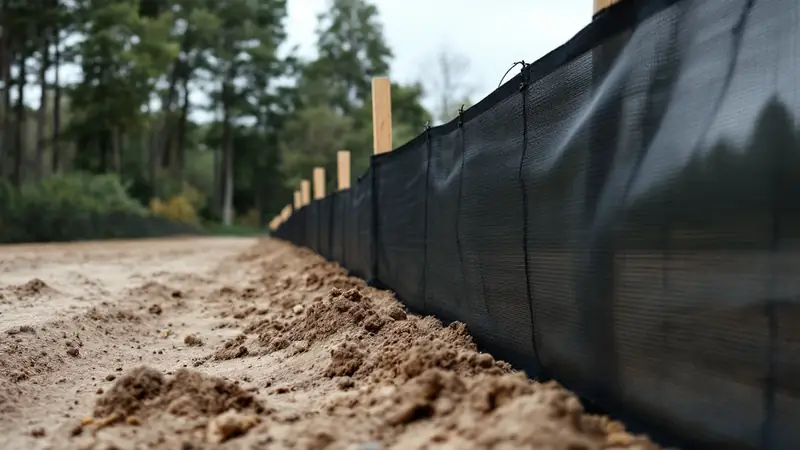
The permit fee is the small part. The plan usually calls for silt fence along the low side of the cleared area, a stabilized construction entrance and seeding or mulch on bare soil. For scale, Florida DOT paid a weighted average of $3.16 per linear foot for sediment barrier in 2025, and Missouri DOT bids averaged $3.28 per foot of silt fence (FDOT, 2025; MoDOT, 2025). A square acre has about 835 feet of perimeter, so fencing it fully runs about $2,640 to $2,740 at those prices, and fencing only the downhill side about half that.
Wetlands and farm programs
Federal rules name “mechanized landclearing” as an activity that can discharge dredged material into waters of the United States, which brings it under the Army Corps of Engineers’ Section 404 permit program (33 CFR 323.2). If any part of the lot stays wet, get a wetland determination before a machine goes in. Farmers in USDA programs face a second rule, known as Swampbuster: converting a wetland can cost eligibility for USDA benefits (NRCS, Conservation Compliance for Wetlands).
Cities and counties add their own layer: tree protection ordinances, grading permits for smaller areas than the state threshold and homeowners association covenants. None of these show up in a contractor’s per-acre price, so ask who is responsible for each before you sign.
This page is general information, not legal, tax or safety advice. Burn, stormwater and wetland rules change and vary by county; confirm with the agencies linked above before clearing or burning.
Let the timber pay part of the bill
Standing timber is sold by the ton “on the stump”, and on a wooded lot it can offset part of the clearing bill. Pine sawtimber averaged $27.66 a ton in North Carolina in the second quarter of 2026 and $26.38 in Texas in May and June 2026; pulpwood brought $5 to $7 (NC State Extension; Texas A&M Forest Service).
| Product | North Carolina, Q2 2026 | Texas, May–June 2026 | Value of 10 tons on the stump |
|---|---|---|---|
| Pine sawtimber | $27.66 per ton | $26.38 | $264–$277 |
| Pine chip-n-saw | $20.34 | $13.62 | $136–$203 |
| Pine pulpwood | $7.02 | $5.04 | $50–$70 |
| Mixed hardwood sawtimber | $28.03 | $38.45 | $280–$385 |
| Hardwood pulpwood | $5.15 | $5.56 | $52–$56 |
Pulpwood at $5 to $7 a ton rarely covers the cost of cutting and loading it, so a lot of small pines or scrub hardwood will not pay for itself. Sawtimber is a different story: a stand with real saw logs can return enough to cover a share of the clearing, and it removes the heaviest debris before the clearing crew arrives. A consulting forester can tell you whether the volume is worth a sale and run a competitive bid. Timber removal for a house site belongs on the calendar before clearing, not after.
Where clearing costs more because labor does
Machines cost about the same everywhere; operators do not. The median construction equipment operator earned $21.41 an hour in Arkansas and $46.99 in Illinois in May 2025, against a national median of $28.78 (BLS OEWS, May 2025). On a wooded acre needing 14 operator hours, that gap is worth roughly $830 an acre once benefits and overhead are added.
| State | Median operator wage, May 2025 | Dozer hour with operator (D6 class) | Operator cost in a wooded acre (14 machine hours) |
|---|---|---|---|
| Arkansas | $21.41 | $310 | $693 |
| Georgia | $23.02 | $313 | $745 |
| North Carolina | $23.71 | $315 | $767 |
| Florida | $23.75 | $315 | $769 |
| Texas | $24.26 | $316 | $785 |
| Tennessee | $25.00 | $318 | $809 |
| Virginia | $27.48 | $324 | $889 |
| United States | $28.78 | $327 | $931 |
| Pennsylvania | $29.10 | $327 | $942 |
| Washington | $39.28 | $351 | $1,271 |
| California | $41.90 | $357 | $1,356 |
| Illinois | $46.99 | $369 | $1,521 |
Wages are not the whole regional story. Burn rules (above) decide whether the cheap disposal rows exist at all, tipping fees run five times higher in Sacramento than in Palm Beach County, and rocky Northeastern soils or steep Western slopes slow every machine. The calculator’s terrain setting covers the last of these.
Cost-share that can cut the bill
- NRCS EQIP. Pays 75 percent of the estimated cost of an approved practice (90 percent for beginning, veteran, limited-resource and other historically underserved producers) on agricultural and forest land (NRCS Iowa FY2026 booklet). Land clearing (practice 460) applies only where clearing serves a conservation objective (NRCS practice standard 460). It does not pay to clear a house site.
- Texas A&M Forest Service Mechanical Fuel Reduction Grant. Reimburses actual contractor costs up to $2,000 an acre for heavy-equipment (mulcher) treatment, $1,500 for combined and $750 for hand-cut treatment, with a $20,000 cap per landowner; the landowner may not do the work (Texas A&M Forest Service). Other state forestry agencies run similar wildfire programs.
- Taxes, for farmers. The IRS lists clearing land for farming as a capital expense, while periodically clearing brush from land already in production can be deducted as an ordinary farm expense (IRS Publication 225).
Doing it yourself: what renting costs
Renting the machine saves the operator’s pay and the contractor’s markup, half to two-thirds of a hired mulcher’s hourly price in our build-up, but rental yards that carry real mulchers price them for professionals. Pierce lists a compact track loader with a forestry mulching head at $1,750 a day and its large dedicated mulchers at $11,000 to $14,000 a week, and it rents only to qualified contractors with experienced operators and insurance (Pierce Equipment Rentals, checked October 2026).
DIY makes the most sense at the light-brush end: a small area of briars and saplings, a chainsaw, a brush cutter and a burn permit. Overgrown and wooded land is a different job. A first-time operator works far slower than the production rates in our table, and a day lost to a stuck machine erases the savings. If you want grass once the ground is clear, our guides to sod versus seed and sod installation cost pick up from there; for a cleared slope that needs holding back, see retaining wall cost.
Reading a land clearing quote
Two bids for the same lot can differ by thousands of dollars because they are pricing different jobs. Before comparing totals, make each quote answer these:
- Stumps. Ground flush, ground below grade (how deep) or pulled out? Included, or per stump?
- Debris. Mulched, burned, ground or hauled? If burned, who gets the permit and tends the fire? If hauled, is the tipping fee included?
- Timber. Who owns logs worth selling, and is their value credited against the price?
- Mobilization and minimums. Is the trailer trip listed? Is there a day minimum?
- Permits and erosion control. On a job over 1 acre, who files the stormwater paperwork and installs silt fence?
- Finish. Rough cleared, or raked and ready for grading or seed?
Red flags: a per-acre price given over the phone without a site visit; a quote that never says what happens to debris; “no permit needed” for a 2-acre house pad; and a contractor who wants to burn debris trucked in from another site, which Texas and North Carolina rules prohibit. Check licensing and insurance where your state requires it using our license lookup guide and the state-by-state requirements. Operators pricing this work can use the same build-up in our guide to bidding landscaping jobs.
How we built these numbers
We do not have our own job data. Each per-acre estimate is machine hours times an hourly price, plus labor and debris costs, built from the published inputs below and grossed up for overhead and profit. Ranges are estimates, not quotes. Our general approach is on the methodology page.
Equipment. FEMA 2025 Schedule of Equipment Rates, which cover ownership, fuel, repairs and overhead but not the operator: compact track loader (Bobcat T86) $62.38 an hour; wheeled mulcher (Barko 930B) $174.37; dozers CAT D4 $99.70 and D6 $160.75; excavator CAT 320 $107.93; 18-cubic-yard dump truck $147.99; truck tractor $91.10 and 60-ton equipment trailer $21.05; stump grinder (Vermeer SC852) $55.28.
Labor. BLS OEWS May 2025 national medians: construction equipment operators $28.78 an hour (all industries); tree trimmers and pruners in landscaping services $24.30; truck drivers in landscaping services $25.06. Each divided by 0.70 for benefits, since wages were 70.0 percent of private-industry compensation costs in June 2026 (BLS Employer Costs for Employee Compensation).
Overhead and profit. Labor plus equipment divided by 0.618. Site preparation contractors (NAICS 238910) spent 21.5 percent of 2022 revenue on payroll, 5.7 percent on benefits and 12.7 percent on fuel, equipment rental, depreciation and repairs. Setting aside materials (24.5 percent) and subcontracted work (10.9 percent), which a clearing job barely uses, those direct costs are 61.8 percent of the remaining revenue (Census Bureau, 2022 Economic Census, EC2223BASIC). Resulting hourly prices with operator: track loader mulcher $167, dedicated mulcher $349, D4 $228, D6 $327, excavator $241, saw and burn hand $56, dump truck $297, lowboy truck and trailer $239. The top of the mulching ranges instead uses Pierce Equipment Rentals’ published turnkey rates over a 10-hour day: $300 an hour for skid-steer mulching and $400 for a dedicated mulcher.
Production. Our planning assumptions, not measured rates: mulching 2.5 to 5 hours per acre in light brush, 5 to 8 in overgrown land and 10 to 16 in woods (dedicated machine); dozer 3 to 5 hours plus 1 to 2 excavator hours per overgrown acre, 6 to 10 plus 2 to 4 per wooded acre; 4 to 8 and 8 to 16 labor hours to tend burn piles; selective clearing 5 to 10 mulcher hours plus 4 to 16 saw hours. The Forest Service’s measured masticator range of 0.21 to 0.89 acres an hour falls inside these. Low ends pair the cheaper machine with the faster rate; high ends pair the costlier machine with the slower rate.
Haul-away. 15 to 30 tons per overgrown acre and 30 to 60 tons per wooded acre after merchantable timber is sold (our assumption; for scale, Pennsylvania forest land averages 61 dry tons of wood per acre). FEMA’s 4 to 6 cubic yards per ton, 18-yard loads, 1 to 1.5 hours per round trip including loading, and $22 to $45 per ton tipping (Palm Beach County and Lincoln County, N.C.) give $88 to $194 per ton.
Adders and factors. Mobilization: 2 to 4 hours of truck, trailer and driver per machine, $480 to $960. Stump grinding: 1 to 3 stumps an hour at $146 an hour, $49 to $146 per stump. Erosion control: 400 to 835 feet of silt fence at $3.16 to $3.28 a foot plus $0 to $600 in state permit fees. Job-size factors (1.25 at 1 acre or less, 0.85 at 5 acres or more) reflect NRCS’s small-acre premium and one contractor’s published volume discount; terrain factors (1.25 and 1.5) are planning assumptions. Excluded throughout: grading, topsoil, surveying, local permit fees, sales tax, day minimums and timber proceeds.
Land clearing questions, answered with numbers
How much would it cost to clear an acre of land?
For a single acre, including hauling the machines in, an estimated $1,000 to $2,840 for light brush mulched in place, $1,530 to $3,960 for overgrown land mulched, and $3,840 to $8,330 for wooded land dozed, piled and burned. Hauling wooded debris away instead of burning it can more than double the wooded figure. Stump grinding, permits and erosion control are extra.
What is the cheapest way to clear land?
Where burning is legal, dozing and burning on site is usually the cheapest way to get bare ground, and forestry mulching is the cheapest way to clear brush when you can live with stumps at grade. Selling merchantable timber first, clearing only the house pad and driveway down to dirt, and using cost-share programs such as NRCS EQIP or Texas A&M Forest Service grants where you qualify cut the bill further. Hauling debris away is the most expensive option.
Do I need a permit to clear my own land?
Often not for the cutting itself on rural land, but three permits commonly apply. Disturbing 1 acre or more for construction requires stormwater permit coverage under EPA or state rules. Burning the debris requires a state burn permit or notice in states such as Georgia, North Carolina, Florida, South Carolina and Tennessee. Clearing in wetlands can require an Army Corps of Engineers permit. Cities, counties and homeowners associations may add tree and grading rules.
How long does it take to clear one acre of land?
Machine time runs about 2.5 to 5 hours for light brush with a mulcher, 5 to 8 hours for overgrown land and 10 to 16 hours for woods, by our planning estimates. Dozer clearing of a wooded acre takes roughly 6 to 10 dozer hours plus excavator time, and burning the piles can add days of waiting for permitted burn weather.
What is a normal price for clearing 1 acre in Texas?
Texas operator wages run below the national median ($24.26 versus $28.78 an hour in May 2025), so Texas prices tend to sit in the lower half of our ranges. Published Texas rates include $3,000 a day for skid-steer mulching with transport (Pierce Equipment Rentals) and, in the Houston area, $3,500 an acre to mulch standing brush and $5,800 to $11,000 an acre for dozer clearing of brush and small trees, depending on debris handling (Daniel Dean). In eligible Central Texas counties, Texas A&M Forest Service reimburses up to $2,000 an acre for mulcher fuel reduction.
How much does it cost to forestry mulch 1 acre?
An estimated $420 to $1,500 for light brush, $840 to $2,400 for overgrown land and $3,490 to $6,400 for woods, before about $480 to $960 to bring the machine in. On a single acre, expect the upper half of each range, and check whether the operator has a day minimum.
Is forestry mulching worth it?
It is when you want usable, walkable land without bare dirt, burn piles or haul bills: pasture recovery, trails, fire breaks and wooded homesites. It is not the right tool where you need a slab, septic field or lawn right away, because the stumps stay and the chip mat has to break down or be removed first.
Sources
- Federal Emergency Management Agency, 2025 Schedule of Equipment Rates, 2025 rates. Accessed October 2026.
- Federal Emergency Management Agency, Schedule of Equipment Rates (what the rates include), 2025. Accessed October 2026.
- U.S. Bureau of Labor Statistics, Occupational Employment and Wage Statistics, national and state files (SOC 47-2073, 37-3013, 53-3032), May 2025, released May 15, 2026. Accessed October 2026.
- U.S. Bureau of Labor Statistics, Employer Costs for Employee Compensation, June 2026. Accessed October 2026.
- U.S. Census Bureau, 2022 Economic Census, Construction: Summary statistics (EC2223BASIC), NAICS 238910, 2022. Accessed October 2026.
- USDA Natural Resources Conservation Service, South Carolina Practice Scenarios, Fiscal Year 2025 (practices 460, 500, 384), FY2025. Accessed October 2026.
- USDA Natural Resources Conservation Service, Nebraska Practice Scenarios, Fiscal Year 2025 (practices 460, 384), FY2025. Accessed October 2026.
- USDA Natural Resources Conservation Service, Iowa Financial Assistance Program Scenario Booklet, FY2026, April 2026. Accessed October 2026.
- USDA Natural Resources Conservation Service, South Carolina FY26 EQIP Payment Schedule, FY2026. Accessed October 2026.
- USDA Natural Resources Conservation Service, Oklahoma EQIP Cost List, Fiscal Year 2026, FY2026. Accessed October 2026.
- USDA Natural Resources Conservation Service, Fiscal Year 2026 Kansas NRCS EQIP Payment Schedule, FY2026, June 23, 2026. Accessed October 2026.
- USDA Natural Resources Conservation Service, Land Clearing (Ac.) (460) Conservation Practice Standard, Current standard. Accessed October 2026.
- Missouri Department of Transportation, 2025 Unit Bid Prices (pay item 2013000, clearing and grubbing; 8061019, silt fence), Calendar 2025. Accessed October 2026.
- Florida Department of Transportation, Item Average Unit Cost, Statewide, 2025/01/01 to 2025/12/31, Calendar 2025, report dated April 2, 2026. Accessed October 2026.
- Texas A&M Forest Service, Mechanical Fuel Reduction Grant, Checked October 2026. Accessed October 2026.
- Halbrook, J.; Han, H.-S.; Graham, R.T.; Jain, T.B.; Denner, R. (USDA Forest Service Treesearch), Mastication: A fuel reduction and site preparation alternative, 2006. Accessed October 2026.
- Pierce Equipment Rentals, Forestry mulcher rental and turnkey mulching rates (published pricing), Checked October 2026. Accessed October 2026.
- Daniel Dean, How Much Does It Cost to Clear Land? (published contractor rates, Southeast Texas), Checked October 2026. Accessed October 2026.
- Federal Emergency Management Agency, FEMA 329 Debris Estimating Field Guide (hosted by Connecticut DEMHS), September 2010. Accessed October 2026.
- USDA Forest Service, Pennsylvania's Forests 2009 (Resource Bulletin NRS-82), 2009 inventory, published 2013. Accessed October 2026.
- Solid Waste Authority of Palm Beach County, Tipping Fee Schedule, Effective July 1, 2026. Accessed October 2026.
- Lincoln County, N.C., Landfill and Tipping Fees, Checked October 2026. Accessed October 2026.
- Sacramento County Waste Management and Recycling, North Area Recovery Station Fees, Checked October 2026. Accessed October 2026.
- Loudoun County, Va., Loudoun County Landfill, Checked October 2026. Accessed October 2026.
- Texas Commission on Environmental Quality, Outdoor Burning in Texas (RG-049), Current edition. Accessed October 2026.
- Georgia Environmental Protection Division, Open Burning Rules for Georgia, Checked October 2026. Accessed October 2026.
- Georgia Forestry Commission, Burn Permits and Notifications, Checked October 2026. Accessed October 2026.
- North Carolina Administrative Code (via Cornell LII), 15A NCAC 02D .1903 Open Burning Without an Air Quality Permit, Amended eff. Sept. 1, 2023. Accessed October 2026.
- N.C. Forest Service, Open Burning Permits in North Carolina, Checked October 2026. Accessed October 2026.
- Florida Forest Service (FDACS), Burn Authorizations, Checked October 2026. Accessed October 2026.
- Florida Forest Service (FDACS), Open Burning in Florida FAQ: types of burning and setbacks, Checked October 2026. Accessed October 2026.
- South Carolina Forestry Commission, Fire & burning, Checked October 2026. Accessed October 2026.
- Virginia General Assembly, Code of Virginia § 10.1-1142, Regulation of fires in or near forest lands, Current code. Accessed October 2026.
- Tennessee Division of Forestry, Get a Burn Permit in Tennessee, Checked October 2026. Accessed October 2026.
- Washington State Department of Ecology, Burn permits, Checked October 2026. Accessed October 2026.
- U.S. Environmental Protection Agency, Stormwater Discharges from Construction Activities, Checked October 2026. Accessed October 2026.
- Texas Commission on Environmental Quality, Stormwater General Permit for Construction Activities, Checked October 2026. Accessed October 2026.
- Texas Commission on Environmental Quality, TPDES Construction General Permit TXR150000 (Part IX, Fees), Effective March 5, 2023. Accessed October 2026.
- Georgia Environmental Protection Division, NPDES Construction Stormwater Fees: Fact Sheet, Current posted fact sheet. Accessed October 2026.
- North Carolina Department of Environmental Quality, Erosion and Sediment Control Application, Fees as of July 1, 2025. Accessed October 2026.
- Tennessee Department of Environment and Conservation, NPDES Stormwater Construction Permit, Checked October 2026. Accessed October 2026.
- Electronic Code of Federal Regulations, 33 CFR 323.2, Definitions (discharge of dredged material), Current. Accessed October 2026.
- USDA Natural Resources Conservation Service, Conservation Compliance for Wetlands, Checked October 2026. Accessed October 2026.
- Internal Revenue Service, Publication 225, Farmer's Tax Guide, Current edition. Accessed October 2026.
- NC State Extension, North Carolina Standing Timber Price Report 2026, Q1 and Q2 2026. Accessed October 2026.
- Texas A&M Forest Service, Texas Timber Price Trends, May-June 2026, May-June 2026. Accessed October 2026.