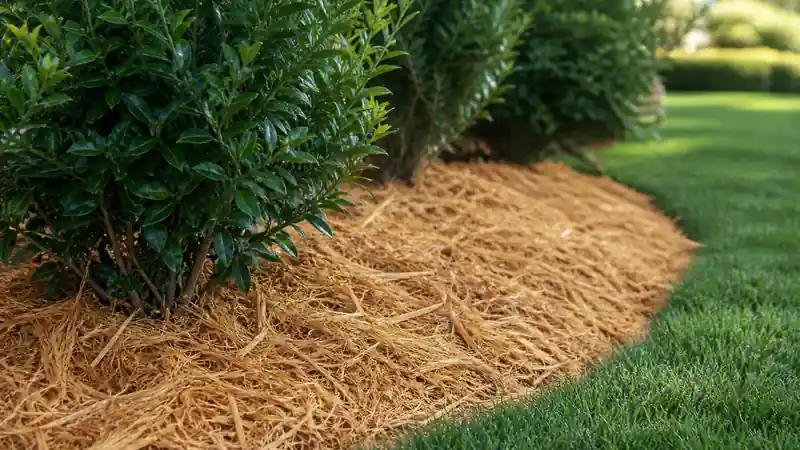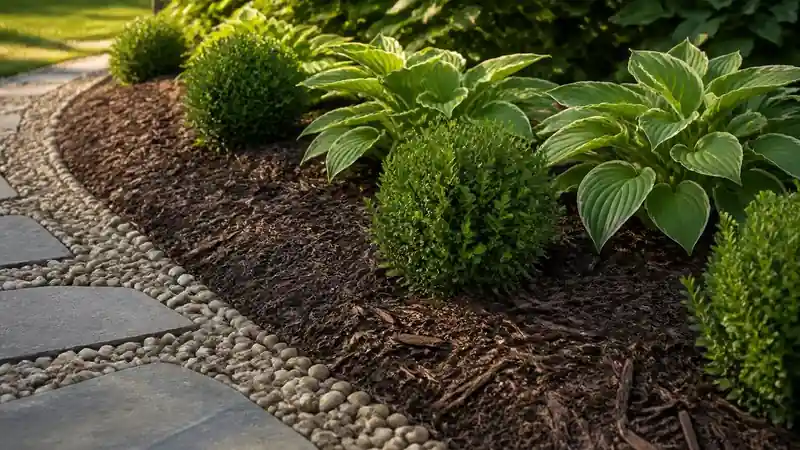
Mulch glue is a sprayed water-based acrylic or vinyl-acrylic latex that bonds the top of a mulch or gravel bed. Label rates cost $31 to $123 per 100 sq ft, and makers claim 6 to 24 months.
Key takeaways
- Liquid Rubber’s label calls for 1 gallon per 50 sq ft in two coats: 2 gallons, or $76 to $110 per 100 sq ft at its October 2026 prices (Liquid Rubber Mulch Binder Application Guide).
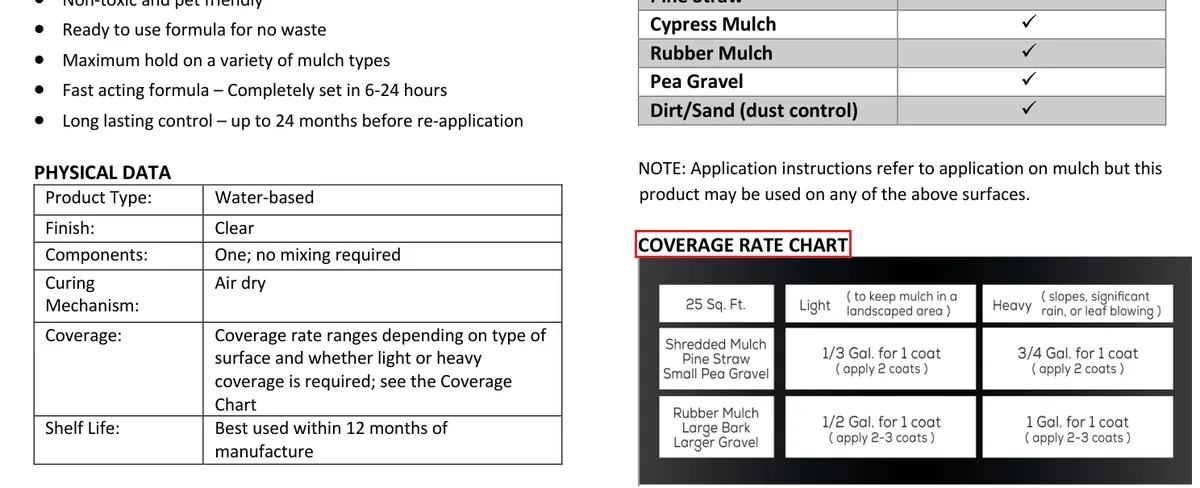
- Dominator Mulch Anchor’s own chart asks for 1/3 to 1 gallon per 25 sq ft per coat, 2 to 3 coats: 2.7 to 12 gallons per 100 sq ft (Black Diamond Coatings technical data sheet, April 2023).
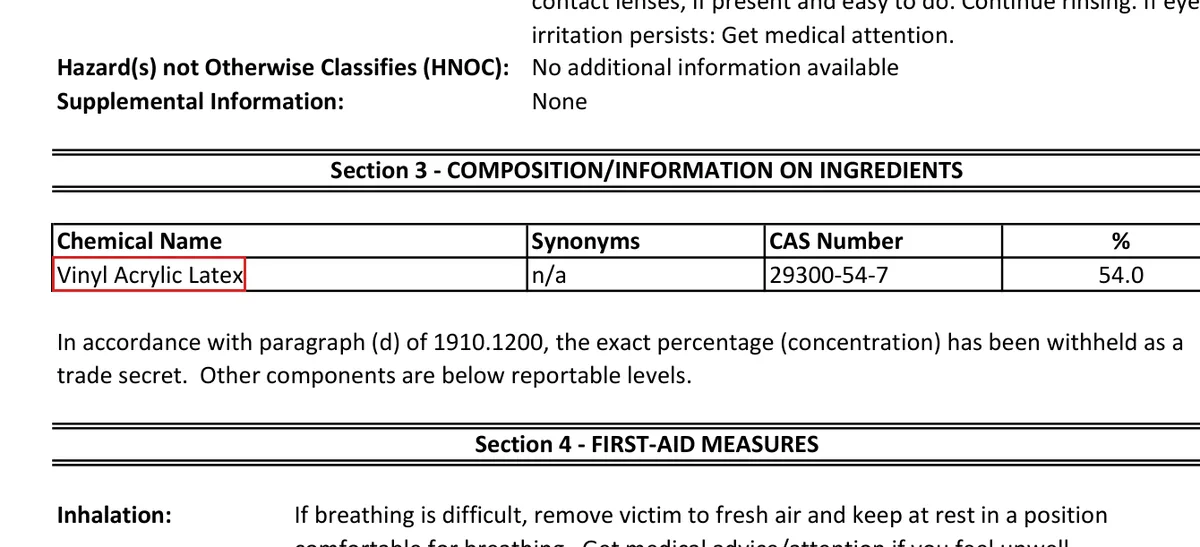
- The one mulch glue safety data sheet we found that names its polymer, Mulch-Lock Concentrate, lists vinyl acrylic latex (CAS 29300-54-7) at 54.0 percent and an eye-irritation warning (United Industries SDS, Oct. 11, 2018).
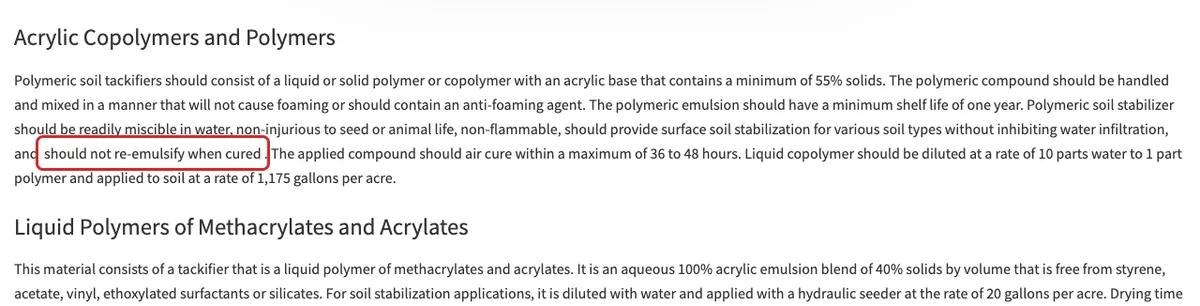
- Caltrans requires acrylic soil tackifiers that do not re-emulsify once cured and do not inhibit water infiltration; its rate equals about 0.25 gallon of polymer per 100 sq ft (Caltrans Erosion Control Toolbox: Tackifier).
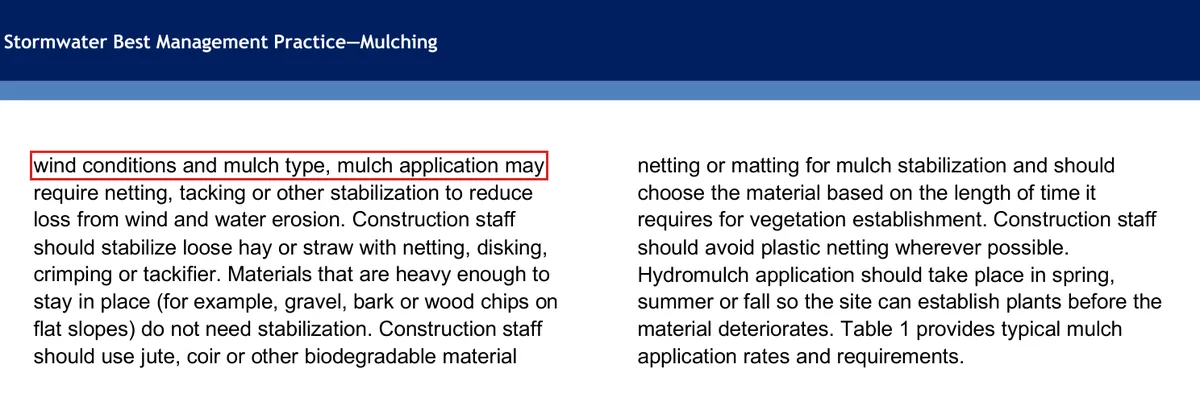
- EPA says gravel, bark or wood chips on flat ground are heavy enough to stay in place and need no stabilization (EPA-832-F-21-028V, Dec. 2021).
- Liquid Rubber’s label rules out pedestrian walkways, vehicles and downspout or roof-runoff paths; Dominator sells a separate XL formula for light foot traffic (Liquid Rubber guide, p. 4).
$31 to $123 per 100 sq ft, label-rate glue on fine mulch or pea gravel (maker prices, Oct. 2026)
24 to 48 h rain-free and at or above 50°F after spraying (Liquid Rubber, Dominator labels)
6 to 24 months claimed life before reapplying (PetraMax, Dominator, Liquid Rubber)
3/8 in largest round pea gravel the Liquid Rubber labels accept (Rock Glue guide, 2026)
What is mulch glue made of?
Mulch glue is a water-based polymer emulsion sprayed so the top layer of mulch or gravel dries into a bonded crust. Most makers do not list ingredients. The Mulch-Lock Concentrate safety data sheet names vinyl acrylic latex at 54.0 percent, Liquid Rubber calls its Rock Glue a water-based acrylic, and Liquid Rubber’s Rock Glue sprays white and cures clear.
Ingredient disclosure is thin because OSHA’s Hazard Communication Standard, 29 CFR 1910.1200 requires a safety data sheet to name only hazardous ingredients and lets a maker withhold an exact percentage as a trade secret. Liquid Rubber’s 2025 Mulch Binder SDS says the product “does not contain any substances required to report” (Liquid Rubber SDS, section 3). Mulch-Lock’s 2018 SDS is the exception: section 3 lists vinyl acrylic latex, CAS 29300-54-7, while noting the exact concentration is withheld.
| Product | What its documents say it is | Hazard class (SDS section 2) | pH and appearance | Source |
|---|---|---|---|---|
| Mulch-Lock Concentrate (United Industries) | Vinyl acrylic latex, CAS 29300-54-7, 54.0% | Eye Irritant Category 2B, signal word WARNING; calculated oral LD50 above 2,000 mg/kg | No data listed | SDS, Oct. 11, 2018 |
| Liquid Rubber Mulch Binder | Single-component adhesive; no reportable substances | Not classified under WHMIS 2022; notes eye and mild skin irritation, “may be harmful if swallowed” | pH 9; bluish milky white; not flammable | SDS, 2025 |
| Liquid Rubber Rock Glue | Water-based acrylic with “higher resin content” than the Mulch Binder | Not classified under HCS, 29 CFR 1910.1200 | pH 9; bluish milky white | SDS; FAQ |
| Dominator Mulch Anchor (Black Diamond Coatings) | Water-based, one component, air dry, clear finish | Waste not hazardous under RCRA, 40 CFR 261 | Clear | TDS, April 2023 |
| Elmer’s Glue-All (DIY mixes) | PVAC (polyvinyl acetate) based adhesive | HMIS health 1 (slight); may cause eye irritation | Milky white liquid | Elmer’s MSDS |
| Highway tackifiers (benchmark) | Guar, psyllium, starch, acrylic copolymer of at least 55% solids, polyacrylamide | Must be non-injurious to seed or animal life | Not applicable | Caltrans toolbox |
The practical upshot: two jugs both labeled “non-toxic mulch glue” can be different polymers at different strengths, which is one reason ready-to-use coverage rates in the next section differ ninefold. Liquid Rubber’s FAQ says its Rock Glue carries more resin than its Mulch Binder so it can hold “heavier, non-porous stones” (Liquid Rubber FAQ). No ready-to-use label we read states its solids content, the number Caltrans uses to specify polymer tackifiers.
How much mulch glue do I need per 100 square feet?
Plan on 1.3 to 2.7 gallons of ready-to-use mulch glue per 100 sq ft for two coats on shredded mulch, pine straw or pea gravel, or 0.8 to 1 gallon of concentrate before water is added. Rubber mulch, large bark and slopes take more: Dominator’s chart rises to 12 gallons per 100 sq ft for three heavy coats.
Labels quote coverage three different ways, and mixing them up is how buyers run short. Liquid Rubber’s 50 sq ft per gallon is the total for two coats (FAQ); PetraMax prints 150 sq ft per gallon per coat (PetraMax Ready to Use page); Rock Lock’s 128 sq ft and Ground Glue’s 100 sq ft are per gallon of concentrate before mixing (Rock Lock page; Ground Glue page). The table converts every label to the gallons you buy per 100 sq ft.
| Product and material | Form and mix | Label rate as printed | Coats | Gallons to buy per 100 sq ft | Liquid sprayed per 100 sq ft | Source |
|---|---|---|---|---|---|---|
| Liquid Rubber Mulch Binder: wood mulch, pine straw, rubber mulch | Ready to use | 1/2 gal per 50 sq ft per coat | 2 | 2.0 | 2.0 gal | Application Guide |
| Liquid Rubber Rock Glue: pea gravel to 3/8 in, angular stone to 3/4 in | Ready to use | 1/2 gal per 50 sq ft per coat | 2 | 2.0 | 2.0 gal | Rock Glue TDS |
| Dominator Mulch Anchor: shredded mulch, pine straw, small pea gravel, light | Ready to use | 1/3 gal per 25 sq ft per coat | 2 | 2.7 | 2.7 gal | TDS chart |
| Dominator, same materials, heavy (slopes, significant rain, leaf blowing) | Ready to use | 3/4 gal per 25 sq ft per coat | 2 | 6.0 | 6.0 gal | TDS chart |
| Dominator: rubber mulch, large bark, larger gravel, light | Ready to use | 1/2 gal per 25 sq ft per coat | 2 to 3 | 4.0 to 6.0 | 4.0 to 6.0 gal | TDS chart |
| Dominator, same materials, heavy | Ready to use | 1 gal per 25 sq ft per coat | 2 to 3 | 8.0 to 12.0 | 8.0 to 12.0 gal | TDS chart |
| PetraMax Ready to Use Mulch Glue Max | Ready to use | 150 sq ft per gal per coat | 2 | 1.3 | 1.3 gal | product page |
| Rock Lock (Yard Mastery) | Concentrate, 1:1 with water | Up to 128 sq ft per gal of concentrate | Not stated | 0.8 | 1.6 gal | product page |
| Ground Glue Tech-Tonic (CorrosionX) | Concentrate, 1:3 with water | 100 sq ft per gal of concentrate | 3 | 1.0 | 4.0 gal | product page |
| PetraMax Mulch Glue Max | Concentrate, 1:2 (collection page) or 1:1 (product page) | 200 to 400 sq ft per gal of concentrate | Not stated | 0.25 to 0.5 | 0.75 to 1.5 gal | collection page |
| Caltrans acrylic copolymer tackifier (benchmark) | Polymer, 10 parts water to 1 | 1,175 gal of mix per acre | 1 | 0.25 of polymer | 2.7 gal | Caltrans toolbox |
Dominator’s chart is the outlier and the most detailed label in the set. Its light rate on fine mulch, 1/3 gallon per 25 sq ft, is 75 sq ft per gallon per coat, half the 150 sq ft PetraMax prints. The chart also tells you to raise the rate for “slopes, significant rain, or leaf blowing” and for coarse materials, which no other label in the table separates (Dominator TDS, p. 1).
Use the calculator with the same product in both menus: the price menu sets dollars per gallon, and the label-rate menu sets gallons per square foot. Its default, 200 sq ft of Liquid Rubber at 2 coats, returns 4.0 gallons and $150 to $220, the same figures as the first row below.
- Gallons of product
- 4.0
- 1 gal jugs
- 4
- 5 gal pails
- 1
Gallons = area × label rate. Cost = gallons × price per gallon (low uses the 5 gal pail price, high the 1 gal jug). Prices from maker sites, Oct. 28 to 30, 2026. Concentrate rates count concentrate only.
| 200 sq ft bed (10 × 20 ft) with | Gallons needed | Cheapest way to buy it (Oct. 2026) | Material cost |
|---|---|---|---|
| Liquid Rubber Mulch Binder, 2 coats | 200 × 0.02 = 4.0 | 4 × 1 gal pack at $169.95 | $169.95 (4 single gallons: $219.80) |
| Dominator Mulch Anchor, fine mulch, light, 2 coats | 200 × 0.0267 = 5.3 | 5 gal pail ($149) + 64 oz jug ($27) | $176.00 |
| Dominator, rubber mulch, heavy, 3 coats | 200 × 0.12 = 24.0 | 5 × 5 gal pails at $149 | $745.00 |
| PetraMax Ready to Use, 2 coats | 200 × 0.0133 = 2.7 | 3 × 1 gal at $59.99 | $179.97 |
| Rock Lock concentrate, 1:1 | 200 ÷ 128 = 1.6 | 2 gal size at $99.99 (sale) | $99.99 |
| Ground Glue Tech-Tonic concentrate, 1:3, 3 applications | 200 ÷ 100 = 2.0 | 2 × 1 gal at $37.99 | $75.98 |
| 1 inch of fresh bulk mulch instead | 200 × 1 ÷ 324 = 0.62 cu yd | Supply-yard pickup at $31 to $49 a yard | $19 to $30 plus delivery |
What does mulch glue cost, and is more mulch cheaper?
At October 2026 maker prices, label-rate mulch glue costs $31 to $47 per 100 sq ft from concentrates and $76 to $123 from ready-to-use jugs on fine mulch, before tax and shipping. A fresh inch of bulk mulch on the same 100 sq ft costs $9.57 to $15.12, so glue pays only where mulch leaves faster than you replace it.
| Product | Sizes and prices (maker site) | Price per gallon | Gallons per 100 sq ft | Cost per 100 sq ft | Claimed life | Cost per 100 sq ft per year at claimed life |
|---|---|---|---|---|---|---|
| Liquid Rubber Mulch Binder | 1 gal $54.95; 4 × 1 gal $169.95; 5 gal $189.95 | $37.99 to $54.95 | 2.0 | $75.98 to $109.90 | 12 to 24 months (guide); up to 12 months (FAQ) | $37.99 to $109.90 |
| Liquid Rubber Rock Glue | 1 gal $54.95; 5 gal $189.95 | $37.99 to $54.95 | 2.0 | $75.98 to $109.90 | About 12 months | $75.98 to $109.90 |
| Dominator Mulch Anchor, fine, light | 64 oz $27; 1 gal $46; 2.5 gal $99; 5 gal $149 | $29.80 to $54.00 | 2.7 | $79.47 to $122.67 | 12 to 24 months | $39.74 to $122.67 |
| PetraMax Ready to Use Mulch Glue Max | 1 gal $59.99 | $59.99 | 1.3 | $79.99 | 6 to 12 months | $79.99 to $159.98 |
| Rock Lock concentrate | Quart $29.99; 1 gal $59.99; 2 gal $99.99; 5 gal $199.99 (sale; regular $39.99 to $239.98) | $40.00 to $59.99 | 0.8 | $31.25 to $46.87 | Not stated | Not computable |
| Ground Glue Tech-Tonic concentrate | Quart $14.99; 1 gal $37.99; 5 gal $184.95 | $36.99 to $37.99 | 1.0 | $36.99 to $37.99 | “A full year or more” | $37.99 or less |
| Bulk mulch top-up, 1 inch | $31 to $49 per cubic yard at supply yards | Not applicable | 0.31 cu yd | $9.57 to $15.12 | Replaced as it decomposes | $9.57 to $15.12 per top-up |
The arithmetic favors glue in a narrow set of cases. On a 300 sq ft front bed, two coats of Liquid Rubber bought in 5-gallon pails cost $227.94 (6 gallons at $37.99), against $28.70 to $45.37 for an inch of pickup bulk mulch ($31 to $49 a yard). Glue makes sense when the loss is pea gravel on a patio, pine straw stripped by wind, or mulch a leaf blower sends into the lawn every week, not when a bed thins at the normal rate of decomposition.
Delivered mulch narrows the gap only for small orders. A $100 delivery fee on a 1-yard order turns $9.57 to $15.12 per 100 sq ft into about $40 to $46, still under every ready-to-use glue in the table; our mulch calculator works out the yards for a top-up, and our mulch cost guide lists delivery fees by supplier.
How do you apply mulch glue?
Apply mulch glue to dry material at least 2 inches deep, on a day forecast at or above 50°F with no rain for 24 to 48 hours, in two coats from a pump sprayer with a fan tip. Tamp the first coat lightly while it is wet, wait 45 minutes to 2 hours, then spray the second coat and keep off it.
| Product | Rain window | Temperature and humidity | Between coats | Set or touch-dry | Full cure | Source |
|---|---|---|---|---|---|---|
| Liquid Rubber Mulch Binder | Material dry 24 to 48 h before; no rain within 48 h | Not below 50°F for 48 h after; humidity under 80% | 1 to 2 h | 4 to 6 h | 24 to 48 h | guide |
| Liquid Rubber Rock Glue | TDS: not within 24 h of rain; 2026 guide: 48 h | Above 50°F and rising (TDS) | 1 to 2 h | 4 to 6 h before disturbance | 24 to 48 h | TDS; guide |
| Dominator Mulch Anchor | Avoid rain forecast within 24 h | Above 32°F until dry; best at 50°F or higher | 45 min to 1 h | 6 to 24 h (TDS); 4 to 6 h (2026 product page) | Not stated | TDS; product page |
| Ground Glue Tech-Tonic | No load or water, rain included, for 24 h; 3 days if pre-mixed deeper than 2 in | Not stated | About 1 h (3 applications) | Not stated | 24 h | product page |
| PetraMax Ready to Use | No moisture for 24 h | Above 50°F (concentrate page) | Not stated | Not stated | About 24 h | product page |
| Caltrans acrylic tackifier | Not stated | Not stated | Single pass | Not stated | Air cure within 36 to 48 h | toolbox |
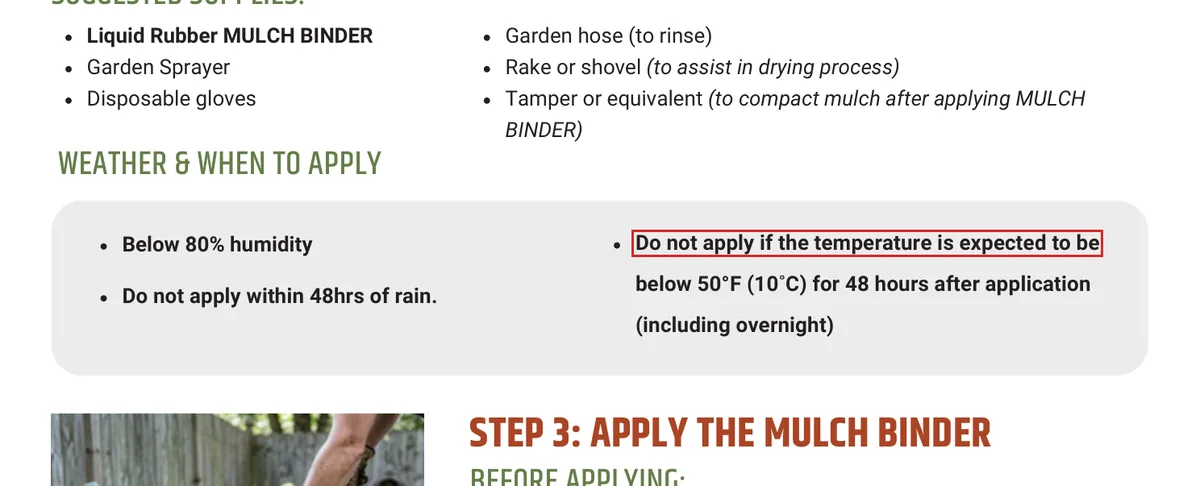
- Check the forecast. Liquid Rubber says do not apply within 48 hours of rain, above 80 percent humidity, or if temperatures will drop below 50°F in the 48 hours after application, overnight included (Liquid Rubber guide, p. 3).
- Lay at least 2 inches of material. Rinse pea gravel or crushed stone with a hose to remove dust, then let it dry 24 to 48 hours; rake damp mulch to speed drying, because damp material “will affect adhesion” (Rock Glue guide).
- Spray a 2 sq ft test patch first with the same sprayer and settings, as Dominator’s data sheet directs, and check the look once dry (Dominator TDS, step 2).
- Mark the bed into 50 sq ft sections (5 × 10 ft) so you can meter the rate: 1/2 gallon of Liquid Rubber per section per coat, or 1/3 gallon per 25 sq ft of Dominator on fine mulch.
- Mix only concentrates: Rock Lock 1:1 with water, Ground Glue 1 part to 3 parts water. Stir or shake ready-to-use jugs; Dominator says do not dilute or alter it.
- Spray the first coat evenly from a pump or battery sprayer with a fan nozzle, covering plants and pavers you do not want coated.
- While the first coat is wet, lightly compact the area with a tamper; Rock Lock’s steps tamp, spray, wait 10 minutes and tamp again.
- Wait for the first coat to set: 45 minutes to 1 hour for Dominator, 1 to 2 hours for Liquid Rubber, about 1 hour between Ground Glue’s three applications.
- Spray the second coat at the same rate. Keep people and pets off for 4 to 6 hours, and keep the area dry for the 24 to 48 hour full cure.
- Rinse the sprayer and nozzle immediately with warm soapy water; Liquid Rubber warns not to let glue dry in the nozzle (FAQ).
How long does mulch glue last, and what breaks the bond?
Makers claim 6 to 24 months: PetraMax 6 to 12 months, Liquid Rubber’s Rock Glue about 12, Dominator and Liquid Rubber’s Mulch Binder 12 to 24, Ground Glue “a full year or more.” None publishes the test behind its number, and Liquid Rubber’s pages give both “up to 12 months” and “12 to 24 months” for the same binder.
The labels agree on what ends a bond early, and the list is short. Liquid Rubber calls moisture “the #1 cause of bond failure” (FAQ), and the Adhesive and Sealant Council notes that heavy application can turn organic mulch into a hardened layer that does not break down, while water collecting under poorly bonded mulch can lift whole sections (ASC news, 2026).
| What breaks or rules out the bond | What the label or data sheet says | Source |
|---|---|---|
| Foot traffic | “Not for use in pedestrian walkways” (Liquid Rubber); Dominator markets its XL formula, at 2 to 3 coats, for a light foot-traffic hold | Liquid Rubber guide, p. 4 |
| Vehicles | “Not for use … for vehicular traffic” | Liquid Rubber guide, p. 4 |
| Concentrated water flow | Not “where significant water flow occurs (e.g., downspouts, roof runoff)” | Liquid Rubber guide, p. 4 |
| Damp material or rain before cure | No rain within 48 h; damp mulch “may affect adhesion” | Liquid Rubber guide, p. 2 and 3 |
| Dust and fines on gravel | Rinse stone; “dust and dirt will prevent a strong bond” | Rock Glue guide, p. 2 |
| Cold before cure | Below 32°F before drying may harm performance; best at 50°F or higher | Dominator TDS, p. 2 |
| Frozen or old product | Do not let it freeze; best used within 12 months of manufacture | Dominator TDS |
| Round stone over 3/8 in | Maximum pea gravel 3/8 in (10 mm); angular stone to 3/4 in (20 mm) | Rock Glue guide, p. 4 |
Does mulch glue work on rubber mulch, rocks, pea gravel and slopes?
The labels cover rubber mulch, pea gravel up to 3/8 inch and angular stone up to 3/4 inch, but coarse material takes more glue: Dominator’s chart doubles the per-coat rate for rubber mulch, large bark and larger gravel. Slopes get the heavy rate, and labels disagree on whether downspout areas qualify at all.
| Material | Labels that list it | Gallons per 100 sq ft at label rate | Limit or caution | Source |
|---|---|---|---|---|
| Shredded hardwood, cypress, pine straw | Liquid Rubber Mulch Binder; Dominator (fine row); PetraMax concentrate | 1.3 to 2.7 light; 6.0 heavy | At least 2 in of material | LR guide; Dominator TDS |
| Large bark nuggets | Dominator (coarse row); Liquid Rubber lists bark nuggets | 4.0 to 12.0 (Dominator) | 2 to 3 coats | Dominator TDS |
| Rubber mulch | Liquid Rubber Mulch Binder; Dominator (coarse row) | 2.0 (Liquid Rubber) or 4.0 to 12.0 (Dominator) | No label mentions playground surfacing | LR guide; Dominator TDS |
| Pea gravel | Liquid Rubber Rock Glue; Dominator (“small pea gravel”) | 2.0 to 2.7 | Round gravel to 3/8 in (10 mm) | Rock Glue TDS |
| Angular stone, crushed brick or concrete | Liquid Rubber Rock Glue | 2.0 | Up to 3/4 in (20 mm) | Rock Glue TDS |
| River rock | Liquid Rubber FAQ and PetraMax concentrate page name it; Liquid Rubber’s guide caps round stone at 3/8 in | Not specified | Conflicting maker statements | FAQ; PetraMax page |
| Slopes and erosion-prone spots | Dominator heavy rate; PetraMax concentrate lists hillsides and downspout areas | 6.0 to 12.0 (Dominator) | Liquid Rubber excludes downspouts and roof runoff | Dominator TDS; PetraMax page |
Rubber mulch is the easiest case for glue because the nuggets are light and do not decompose, but it is also the costliest at Dominator’s coarse rates: 4 to 12 gallons per 100 sq ft, or $119 to $552. Our rubber mulch pros and cons guide covers the playground depths and fire data that decide whether rubber belongs in the bed at all.
On real slopes, EPA’s construction fact sheet points to netting, matting, tackifiers or hydromulch rather than loose mulch alone: “On steep slopes and in critical areas, such as those near waterways, construction staff should use netting, anchoring or tackifiers to stabilize the mulch” (EPA-832-F-21-028V). Our erosion control methods guide compares those options by slope and cost.
Is mulch glue safe for pets, plants and drainage?
The data sheets we read rate mulch glues as low hazard: Liquid Rubber’s binder is not classified under WHMIS 2022, and Mulch-Lock carries only an eye-irritation warning with a calculated oral LD50 above 2,000 mg/kg. Keep pets off until the coating is dry, 4 to 24 hours by label, and keep spray off foliage and out of drains.
“Non-toxic” on a jug is a marketing word, not a regulatory class, so read SDS sections 2, 6, 11 and 12 for the product you buy. The two sheets that give real answers are compared below (Mulch-Lock SDS, pp. 1 to 4; Liquid Rubber SDS).
| SDS section | Mulch-Lock Concentrate (2018) | Liquid Rubber Mulch Binder (2025) |
|---|---|---|
| 2: Hazard class | Eye Irritant Category 2B; signal word WARNING | Not classified under WHMIS 2022 |
| 11: If swallowed | “May be harmful if swallowed. May cause stomach distress, nausea or vomiting” | “May be harmful if swallowed”; no acute toxicity data |
| 11: Acute toxicity | Calculated oral and dermal LD50 above 2,000 mg/kg | No data available |
| 12: Aquatic organisms | “Not expected to be harmful to aquatic organisms” | No data available |
| 12: Persistence and soil mobility | No data available | No data available |
| 6: Spills | Prevent entry into storm sewers and waterways | Avoid discharge to lakes, streams, sewers |
PetraMax likewise tells buyers not to pour leftovers into “drains, storm sewers, or natural waterways” (PetraMax page). If a dog or cat licks wet product or drinks from a sprayer, the ASPCA Animal Poison Control Center line is (888) 426-4435; a consultation fee may apply, so have the SDS open when you call.
Drainage is the claim with the least evidence behind it. Liquid Rubber’s FAQ says both of its glues are “100% permeable” (FAQ), and Caltrans requires polymer soil stabilizers to work “without inhibiting water infiltration” (Caltrans toolbox). As of October 2026 we found no published measurement of infiltration through glued landscape mulch, so a 2 sq ft test patch watered with a gallon from a can, next to an untreated patch, is the only check available.
This page is general information, not safety advice. Product formulas change; read the current label and safety data sheet for the exact product you buy before you spray near children, pets, ponds or edible plants.
How do professionals glue mulch on job sites?
Landscape and highway crews use a tackifier, not retail mulch glue: a binder mixed into hydraulic mulch or sprayed over straw. Caltrans lists guar, psyllium, starch and acrylic polymers, with acrylic copolymer diluted 10 parts water to 1 and sprayed at 1,175 gallons of mix per acre, which is about 0.25 gallon of polymer per 100 sq ft.
| Tackifier | Caltrans rate | Drying time | Spec requirement |
|---|---|---|---|
| Guar (plant-based) | Minimum 5 to 10% of the hydraulic mulch weight | Not stated | Default choice: “If you are uncertain which tackifier to select, just specify guar” |
| Psyllium (Plantago ovata seed coat) | 80 to 200 lb per acre | 12 to 18 h | Dries to a firm but rewettable membrane |
| Starch (pre-gelatinized cornstarch) | 150 lb per acre | 9 to 12 h | Non-ionic, cold-water soluble |
| Acrylic copolymer | 10:1 water to polymer, 1,175 gal of mix per acre | Air cure within 36 to 48 h | At least 55% solids; does not re-emulsify when cured; does not inhibit infiltration |
| Methacrylate and acrylate liquid polymer | 20 gal per acre, diluted | 12 to 18 h | 40% solids by volume; free of styrene, acetate and vinyl |
| Linear polyacrylamide copolymer | 5 lb per acre at 10 lb per 1,000 gal of water | Not stated | Stand-alone tackifier rate |
| Hydrocolloid polymer blends | 54 to 62 lb per acre | 0 to 4 h | Mixed with water |
| Step | Arithmetic | Result |
|---|---|---|
| Acres to sq ft | 1 acre = 43,560 sq ft, so 100 sq ft = 1/435.6 acre | 0.0023 acre |
| Mix sprayed per 100 sq ft | 1,175 gal ÷ 435.6 | 2.70 gal |
| Polymer per acre | 1,175 gal ÷ 11 parts × 1 part polymer | 106.8 gal |
| Polymer per 100 sq ft | 106.8 gal ÷ 435.6 | 0.25 gal |
| Retail comparison | Liquid Rubber sprays 2.0 gal per 100 sq ft; Ground Glue 4.0 gal of mix holding 1.0 gal of concentrate | Same liquid volume range as the highway spec |
The useful comparison is liquid volume: a homeowner jug sprays 1.3 to 2.7 gallons per 100 sq ft at light rates, close to the 2.7 gallons of highway mix. What a buyer cannot check is how much polymer is in that liquid, because no ready-to-use label states solids. Our hydroseeding cost guide prices the tackifier-blended wood fiber mulch crews actually buy.
Can you make mulch glue with Elmer’s glue?
You can mix white glue with water and spray it, but no one publishes a rate, cure time or field test for doing so. Elmer’s Glue-All is a PVAC (polyvinyl acetate) adhesive according to its safety data sheet, which makes no claim to the property Caltrans demands of outdoor tackifiers: no re-emulsifying once cured.
The Elmer’s Glue-All MSDS lists the product as a “PVAC based adhesive” with an HMIS health rating of 1 and storage advice to “keep from freezing,” and it gives no outdoor or wet-strength data. If you try a DIY mix, treat it as a test: spray a 2 sq ft patch, let it cure 48 hours, then soak it with a gallon of water and check the bond before committing a bed.
When should you skip mulch glue?
Skip mulch glue where people walk or water runs, where heavy bark or gravel already stays put on flat ground, and where an inch of fresh mulch ($9.57 to $15.12 per 100 sq ft) costs less than the glue. Use it for pea gravel between flagstones, pine straw in wind, and mulch along leaf-blower paths, at the label’s heavy rate on slopes.
| If your situation is | Do this | Why (source) |
|---|---|---|
| A walkway, patio joint you step on, or driveway | Skip glue; use pavers or a compacted gravel base | Liquid Rubber rules out pedestrian walkways and vehicles (guide p. 4); gravel driveway costs |
| A downspout or roof-runoff path through the bed | Skip glue; route the water with rock or a drain | Excluded on the Liquid Rubber label; French drain costs |
| Bark nuggets or wood chips creeping off flat ground | Edge the bed or add 1 inch of mulch ($9.57 to $15.12 per 100 sq ft) | EPA: these materials on flat ground need no stabilization (EPA-832-F-21-028V) |
| Pea gravel up to 3/8 in scattering from beds or flagstone joints | Glue it: rinse, dry 24 to 48 h, 2 coats at 2.0 gal per 100 sq ft | Liquid Rubber Rock Glue TDS; ASC notes flagstone joints as a fit (ASC) |
| Round river rock larger than 3/8 in | Do not count on glue; deepen the rock or add edging | Rock Glue guide caps round stone at 3/8 in (p. 4); river rock costs |
| Pine straw or shredded mulch on a slope, in wind or in a blower path | Glue at the heavy rate, 6.0 gal per 100 sq ft; use netting or matting on steep slopes | Dominator TDS heavy row; EPA slope guidance |
| Rubber mulch in a planting bed | Glue at the coarse rate, 4.0 to 12.0 gal per 100 sq ft, or edge it | Dominator TDS coarse row |
| Rain due within 48 h, nights below 50°F, or damp mulch | Wait for a dry, warm window | Liquid Rubber guide, p. 3 (guide) |
| A large bed where mulch thins at the normal rate | Top up 1 inch instead; ready-to-use glue costs 5 to 13 times as much | Cost table on this page |
1Will people walk, vehicles drive or downspout water run across it?
YesSkip glue: the Liquid Rubber label excludes all three. Use pavers, compacted gravel or a drain path.
NoGo to the next question
2Is it bark nuggets, wood chips or gravel on flat ground that only creeps at the edges?
YesSkip glue: edge the bed or add 1 inch of mulch for $9.57 to $15.12 per 100 sq ft.
NoGo to the next question
3Is rain due within 48 hours, a night below 50°F, or is the material damp?
YesWait for a dry, warm window, then come back to this chart.
NoGo to the next question
4Is it round stone larger than 3/8 inch?
YesDo not count on glue; deepen the rock or add edging.
NoGo to the next question
5Is it a slope, a leaf-blower path, rubber mulch or large bark?
YesGlue at the heavy or coarse rate: 4 to 12 gallons per 100 sq ft on the Dominator chart; use netting or matting on steep slopes.
NoGlue fits: test 2 sq ft, then spray 2 coats at the label rate (1.3 to 2.7 gallons per 100 sq ft ready to use).
How we compiled this
We read 17 primary documents from Oct. 28 to 30, 2026: guides, data sheets and product pages for 7 glues from 6 makers, 4 safety data sheets, the Caltrans tackifier specification and EPA’s mulching fact sheet. Prices are each maker’s listed price on those dates. No product was applied or tested for this page; coverage and cost are label rates converted with the arithmetic shown.
| Question | Short answer | Best evidence |
|---|---|---|
| What is it? | Water-based acrylic or vinyl-acrylic latex binder | Mulch-Lock and Liquid Rubber SDS |
| How much? | 1.3 to 2.7 gal per 100 sq ft ready to use; up to 12 gal heavy | Maker labels |
| What does it cost? | $31 to $123 per 100 sq ft on fine mulch | Maker prices, Oct. 2026 |
| How long? | 6 to 24 months claimed; no published test | Maker pages |
| Safe? | Low hazard by SDS; keep pets off until dry | SDS sections 2, 11, 12 |
| Skip it when? | Walkways, downspouts, flat bark beds | Labels; EPA |
Frequently asked questions
Does mulch glue really work?
It holds light material against wind, sprinklers and leaf blowers when applied at label rate to dry material, according to every maker. It is not meant for walkways, vehicles or downspout flow, which Liquid Rubber’s label excludes. We found no independent field study as of October 2026, so treat lifespan claims of 6 to 24 months as maker claims.
How long does mulch glue take to dry?
Labels give 45 minutes to 2 hours between coats and 4 to 24 hours to set: Liquid Rubber says 4 to 6 hours, Dominator’s 2023 data sheet says 6 to 24 hours. Full cure takes 24 to 48 hours, and Ground Glue asks for 24 hours with no water, rain included. Cold, humidity above 80 percent and heavy coats slow drying.
Can you walk on mulch glue?
Not as a path. Liquid Rubber’s guide says its binder is “not for use in pedestrian walkways” or for vehicles. Dominator markets a separate XL formula, sprayed in 2 to 3 coats, for only a light foot-traffic hold. For a path you use daily, pavers or a compacted gravel base hold where glued loose material cannot.
Does mulch glue wash away in the rain?
Uncured glue can, which is why labels ask for 24 to 48 rain-free hours after spraying. Once cured, Liquid Rubber’s Rock Glue data sheet says it “will not blush or discolor when wet,” and Caltrans requires acrylic tackifiers that do not re-emulsify. Concentrated runoff from downspouts or roofs is excluded on the Liquid Rubber label.
Will mulch glue stop weeds?
None of the labels or data sheets we read gives weed-control data. The glue binds the surface of the layer, and Liquid Rubber’s FAQ says it lets water through to the soil. Weed suppression comes from the mulch layer itself, kept at the 2 to 3 inches of fine mulch or 3 to 4 inches of coarse nuggets that extension services recommend.
How do you clean mulch glue out of a sprayer?
Rinse the tank, wand and nozzle with warm soapy water right after the last coat, before the glue skins over. Liquid Rubber warns not to let it dry inside the nozzle, and Dominator says any mix exposed to air will harden in the container. Pour unused ready-to-use product back into its jug and store it above freezing.
What is the best mulch glue?
No independent standard ranks them, so compare the label rate for your material and the cost per 100 sq ft. On October 2026 prices, concentrates such as Ground Glue and Rock Lock cost $31 to $47 per 100 sq ft, ready-to-use jugs $76 to $123 on fine mulch, and Dominator’s chart is the only one that separates slopes and coarse material.
Sources
- Liquid Rubber Canada Inc., Mulch Binder Application Guide, 2025 to 2026. Accessed October 2026.
- Liquid Rubber Canada Inc., Mulch Binder product page (sizes and prices), Oct. 2026. Accessed October 2026.
- Liquid Rubber Canada Inc., Mulch Binder and Rock Glue FAQ, Oct. 2026. Accessed October 2026.
- Liquid Rubber Canada Inc., Liquid Rubber Mulch Binder Safety Data Sheet (CAN/USA), 2025. Accessed October 2026.
- Liquid Rubber Canada Inc., Rock Glue product page, Oct. 2026. Accessed October 2026.
- Liquid Rubber Canada Inc., Rock Glue Technical Data Sheet, undated, read Oct. 2026. Accessed October 2026.
- Liquid Rubber Canada Inc., Rock Glue Application Guide 2026, 2026. Accessed October 2026.
- Liquid Rubber Canada Inc., Rock Glue Safety Data Sheet, read Oct. 2026. Accessed October 2026.
- Black Diamond Coatings, Inc., DOMINATOR Mulch Anchor Technical Data Sheet (hosted by The Home Depot), April 2023. Accessed October 2026.
- Black Diamond Coatings, Inc., DOMINATOR Mulch Anchor product page, Oct. 2026. Accessed October 2026.
- PetraTools, Ready to Use Mulch Glue Max product page, Oct. 2026. Accessed October 2026.
- PetraTools, Petramax Mulch Glue Max product page, Oct. 2026. Accessed October 2026.
- PetraTools, Mulch glues and dyes collection page, Oct. 2026. Accessed October 2026.
- Yard Mastery (The Lawn Care Nut), Rock Lock mulch glue product page, Oct. 2026. Accessed October 2026.
- CorrosionX, Ground Glue Tech-Tonic rock, mulch, sand and gravel binder, Oct. 2026. Accessed October 2026.
- United Industries Corporation, Mulch-Lock Concentrate Safety Data Sheet (hosted by DoMyOwn), Oct. 11, 2018. Accessed October 2026.
- Elmer’s Products, Inc., Elmer’s Glue-All Material Safety Data Sheet (hosted by Western Connecticut State University), undated MSDS, posted 2025. Accessed October 2026.
- California Department of Transportation, Erosion Control Toolbox: Tackifier, read Oct. 2026. Accessed October 2026.
- U.S. Environmental Protection Agency, Stormwater Best Management Practice: Mulching, EPA-832-F-21-028V, December 2021. Accessed October 2026.
- Adhesive and Sealant Council, Mulch Adhesives Bring Consumer Attention to Water-Based Outdoor Bonding Technology, 2026. Accessed October 2026.
- U.S. Occupational Safety and Health Administration (eCFR), 29 CFR 1910.1200, Hazard Communication, current as of Oct. 2026. Accessed October 2026.
- ASPCA, Animal Poison Control Center, Oct. 2026. Accessed October 2026.