When to mow new grass: seeded grass when the tallest seedlings reach about 1.5 times their mowing height (3 inches for a 2-inch cut), usually 2 to 6 weeks after sowing; sod once it resists a firm tug, 10 to 21 days after laying.
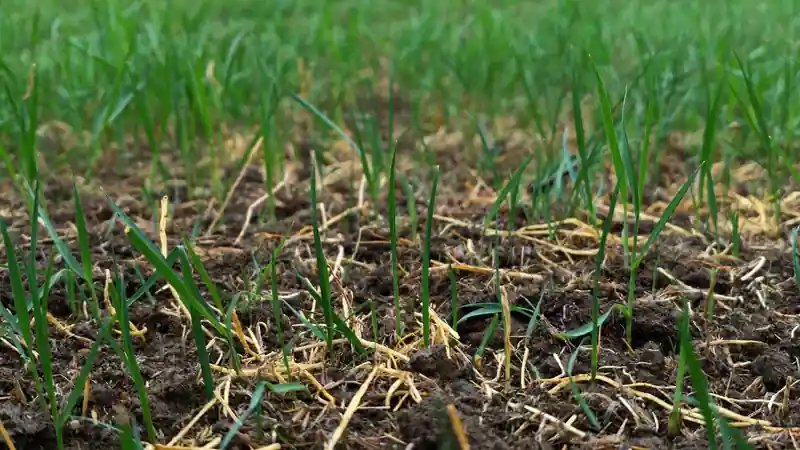
Knowing when to mow new grass comes down to two different tests. Seed is ready by height: Purdue Extension says to start as soon as the first few seedlings are tall enough to cut, even if that is only 10 percent of the plants, and warns that most people wait too long. Sod is ready by rooting: lift a corner, and if it holds and shows white roots, mow (Purdue AY-28).
The number most often repeated online, 3 to 4 inches, is a cool-season figure. Bermudagrass and zoysiagrass seedlings are cut at 1.5 inches once they average 2.25 inches (UT Extension W160-B). Letting them reach 4 inches first means the first cut takes off 63 percent of the leaf, almost double the one-third limit. The table below gives the trigger for each grass and planting method.
When to mow new grass, by grass and planting method
Read across from your grass. “Mow first when it reaches” is the trigger; the cut height is where to set the deck. Days are typical under good growing weather and stretch in cool spells: Purdue notes sod roots more slowly above or below its optimum temperatures, and Maryland’s 4 to 6 weeks for seed assumes optimum conditions.
Swipe the table sideways to see every column.
| Grass | Planted as | Mow first when it reaches | First cut height | Typical wait | Source |
|---|---|---|---|---|---|
| Tall fescue | Seed | 3 in (2 in cut); 4 to 4.5 in if you cut at 3 in | 2 in, raised to 2.5 to 3 in as seedlings mature | 2 to 3 weeks after seeding in good conditions | UGA; UT W160-B; UMD; NC State |
| Perennial ryegrass | Seed | 2.25 to 3 in | 1.5 in (Purdue) or 2 in (UT) | Height decides; usually the first grass in a mix to reach it | Purdue AY-3; UT W160-B |
| Fine fescue (chewings, hard) | Seed | 2.25 to 3 in | 1.5 in (Purdue) or 2 in (UT) | Height decides | Purdue AY-3; UT W160-B |
| Kentucky bluegrass | Seed | About 2.25 in | 1.5 in for the first 3 to 4 mowings, then 2 to 3.5 in | Slowest seed in a mix; keep watering until it emerges | Purdue AY-3; NC State |
| Bermudagrass | Seed or sprigs | About 2.25 in | 1.5 in (UT); keep it 1 to 2 in during establishment (K-State) | Height decides; sprigs 3 to 6 weeks | UT W160-B; K-State MF1126; UC IPM |
| Zoysiagrass | Seed, sprigs or plugs | About 2.25 in | 1.5 in (UT); 1 to 2 in long term (Clemson) | Plugs and sprigs 3 to 6 weeks | UT W160-B; Clemson HGIC 1205; UC IPM |
| Any seeded lawn | Seed | 1.5 times your target height | Your target height, removing no more than one-third | 4 to 6 weeks after seeding (Maryland); up to 2 months (California) | UMD; UC IPM |
| Kentucky bluegrass or tall fescue | Sod | Corner resists a pull and shows new white roots | Slightly higher than normal for the first few mowings | About 10 days; 10 to 14 days at optimum temperatures | Purdue AY-28 |
| Bermudagrass | Sod | Sod cannot be lifted without appreciable force | 0.5 to 2 in (Florida lawn range) | 14 to 21 days | UF/IFAS LH007; UF/IFAS LH009 |
| St. Augustinegrass | Sod or plugs | Roots pegged down | 3.5 to 4 in standard cultivars; 2.5 in dwarf cultivars | 14 to 21 days | UF/IFAS LH010 |
| Bahiagrass | Sod | Roots pegged down | 3 in, so mow at 4 to 4.5 in | 14 to 21 days | UF/IFAS LH006 |
| Centipedegrass | Sod or plugs | Plugs or sod do not pull up on a gentle tug | 2 in, so mow at 3 in | 2 to 3 weeks | UF/IFAS LH009 |
| Zoysiagrass | Sod | Grass no longer lifts when pulled at the edges | 1 to 2 in | Longer than bermudagrass, which it roots more slowly than | Purdue AY-28; UF/IFAS LH013; Clemson HGIC 1205 |
| Any grass | Sod | Roots firmly planted in the soil | Recommended height for the species | 2 to 3 weeks | UC IPM |
| Any grass | Sprigs, stolons or plugs | Roots firmly planted in the soil | Recommended height for the species | 3 to 6 weeks | UC IPM |
Two things stand out. Seeded tall fescue can be ready in 2 to 3 weeks in Georgia, sooner than many people expect (UGA). Sod is faster everywhere, but warm-season sod in Florida needs 14 to 21 days to peg down against about 10 days for cool-season sod in Indiana, and zoysiagrass roots more slowly than bermudagrass (Purdue AY-28).
Why 3 to 4 inches is the wrong first-mow height for bermuda and zoysia
Several of the retailer and lawn-service guides ranking for this question give one first-mow height for every lawn: about 3 to 4 inches. Run that against the one-third rule, which every extension source above repeats, and it holds only for grasses kept at 2.5 inches or taller. The arithmetic is (height at mowing minus cut height) divided by height at mowing.
| Grass and cut height | Cut height | Extension trigger (1.5 times) | Removed if first cut at 3 in | Removed if first cut at 4 in | Within one-third? |
|---|---|---|---|---|---|
| Hybrid bermudagrass | 1 in | 1.5 in | 67% | 75% | No |
| Common bermudagrass, zoysiagrass, centipedegrass | 1.5 in | 2.25 in | 50% | 62% | No |
| Centipedegrass upper end; tall fescue first cut | 2 in | 3 in | 33% | 50% | Only at 3 in |
| Dwarf St. Augustinegrass | 2.5 in | 3.75 in | 17% | 38% | Only at 3 in |
| Tall fescue, Kentucky bluegrass | 3 in | 4.5 in | 0% | 25% | Yes |
| Standard St. Augustinegrass | 3.5 in | 5.25 in | 0% | 12% | Yes |
A hybrid bermudagrass lawn left to 4 inches loses 75 percent of its leaf to a 1-inch cut. That is why K-State tells growers to keep warm-season grasses 1 to 2 inches tall during establishment (K-State MF1126), mowing early and often rather than waiting for a height that suits fescue.
New seed: mow by height, not by the calendar
Extension services agree on the principle and differ on the multiplier. Maryland and Penn State start mowing when the grass is one-third taller than the target, which removes 25 percent (UMD; Penn State). NC State and UC IPM wait for 1.5 times the target, which removes the full third (NC State; UC IPM). Both are safe; the 1.5 multiplier gives you a few extra days.
| Extension service | Start mowing when | Cut to | Removed | Source |
|---|---|---|---|---|
| Purdue and Illinois | The first few seedlings are tall enough to cut | 1.5 in bluegrass, ryegrass, fine fescue; 2 in tall fescue | Only the tallest plants at first | Purdue AY-3 |
| Tennessee | Bunch grasses average 3 in; bermuda and zoysia 2.25 in | 2 in; 1.5 in | 33% | UT W160-B |
| Kansas State | Cool-season grass reaches 3 in | 2 in | 33% | K-State MF1126 |
| Iowa State | New grass is 3 in | 2 to 2.5 in | 17% to 33% | Iowa State |
| Maryland | Grass is one-third above target: 4 in for tall fescue | 3 in | 25% | UMD |
| Penn State | Just before 4 in, for a 3-in lawn | 3 in | Up to 25% | Penn State |
| NC State | Grass is 50 percent above target: 4.5 in for tall fescue | 3 in | 33% | NC State |
| Georgia | Tall fescue at 2 to 3 weeks after seeding | 2 in, then raise to 2.5 to 3 in | Not stated | UGA |
| UC IPM | 1.5 times the target, after all seed has germinated | Target height | 33% | UC IPM |
- Mow when the tallest grass reaches (inches)
- 3.00
- Same trigger in centimeters
- 7.6
Default: a 2-inch cut with the 1.5 rule gives a 3-inch trigger, the Tennessee and K-State figure for tall fescue and ryegrass seedlings. Sod is ready by the tug test, not height.
Purdue’s advice is the most aggressive and the most specific: the first mowing may touch only 10 percent of the plants, the second 20 to 30 percent, and so on. It sets the first cuts at 1.5 inches for Kentucky bluegrass, perennial ryegrass and fine fescue and 2 inches for tall fescue, then moves to the permanent height of 2 to 3.5 or 2.5 to 4 inches after 3 or 4 mowings (Purdue AY-3).
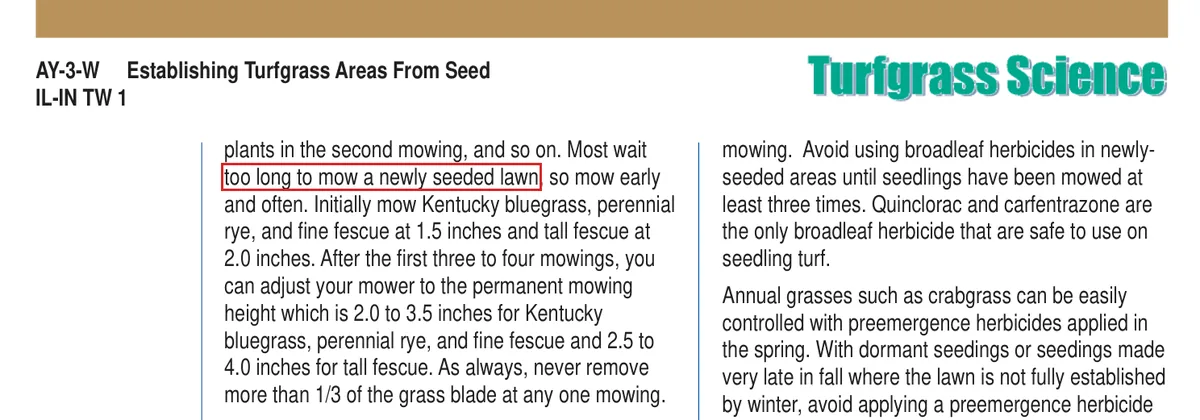
In a mixed seeding, height and germination pull in opposite directions. UC IPM says to wait for all of the seed to germinate, while NC State says to keep watering a bluegrass mix until the bluegrass emerges. If ryegrass is at 3 inches and bluegrass is still filling in, a light cut at the high setting follows Purdue’s 10 percent approach without stopping the slower seed.
New sod: the tug test decides
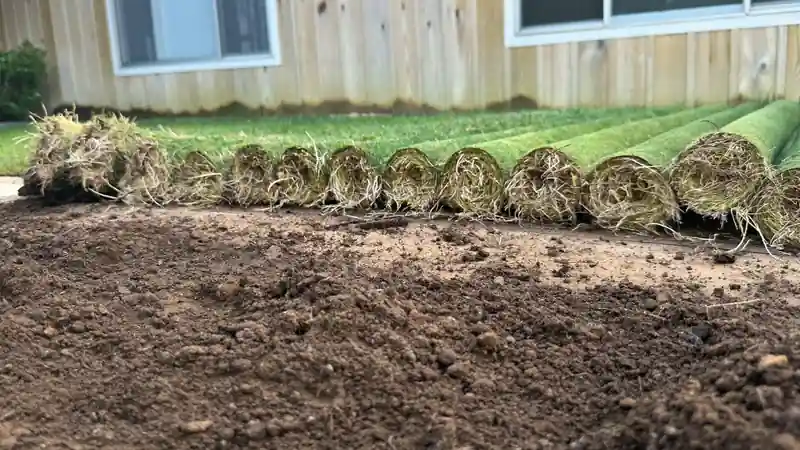
Sod has a height on day 1, so the trigger is rooting. Grasp a corner and pull: new roots are white and old ones brown, and most sod is fairly well rooted in 10 to 14 days at optimum temperatures (Purdue AY-28). UF/IFAS uses the same test with a firmer bar: mow once the roots have pegged down, generally 14 to 21 days after planting, meaning the sod “cannot be lifted without appreciable force” (UF/IFAS LH007).
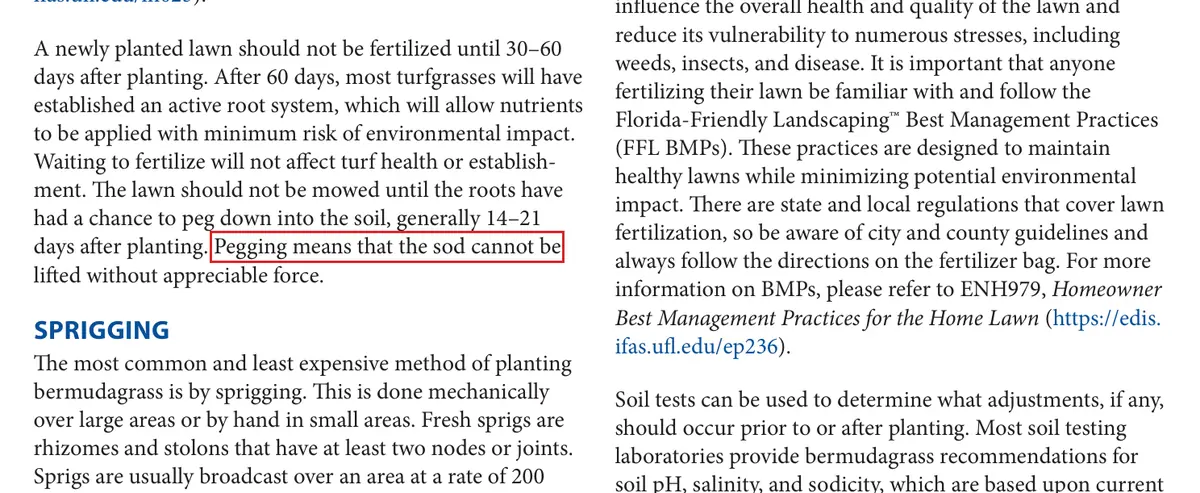
Sources split on the first sod height. Purdue says to mow slightly higher than normal for the first few cuts so the mower does not scalp seams and undulations. Clemson says new sod should be mowed at the same height and frequency as established turf (Clemson HGIC). On sod laid over a smooth, firm bed, either works; where you can see ridges at the seams, take Purdue’s higher setting for 2 or 3 cuts.
If a corner lifts at day 14, keep watering and test again every 2 or 3 days. Purdue notes sod roots more slowly when temperatures are above or below its optimum, and summer-laid cool-season sod may grow no new roots until the weather cools. Plugs and sprigs take longer than sod: UC IPM allows 3 to 6 weeks.
Is the ground firm enough for your mower?
Height and rooting say the grass is ready; the soil also has to carry the mower and you. Penn State’s test is to walk onto the lawn and look back: if the grass springs upright where you stepped, start mowing; if it stays flat, you risk trampling seedlings into the soil (Penn State).
- Use the lightest mower you have. Maine Extension recommends a lightweight hand mower at the 4-inch mark and says to wait longer if only a riding mower is available (UMaine Bulletin 2367).
- Sharpen the blade first. Maryland warns that dull blades can tear young grass out of the ground and shred leaf tops (UMD); our guide to sharpening a mower blade covers the job.
- Mow dry. K-State suggests a warm afternoon when the grass and soil are drier, and UGA says not to mow young seedlings when wet (K-State; UGA). More on wet cuts is in mowing wet grass.
- Turn on hard ground. Make turns on the drive or walk rather than pivoting the mower on the soft seedbed, where wheels can scuff out seedlings rooted for only a few weeks.
- Leave light straw. At 1 bale per 1,000 sq ft, Purdue says the straw does not need removing, so mow over it (Purdue AY-3).
1Was the lawn laid as sod, plugs or sprigs?
YesPull a corner or plug. If it holds and shows white roots, mow at or slightly above the normal height (Purdue AY-28). If it lifts, water and retest in 2 to 3 days.
NoGo to the next question
2Are the tallest seedlings still under 1.5 times your cutting height (3 in for a 2-in cut, 2.25 in for bermuda or zoysia cut at 1.5 in)?
YesWait and measure again in 3 days. Seed is ready by height, not by date (Purdue AY-3).
NoGo to the next question
3Do footprints stay flat, or is the surface wet?
YesWait for a dry afternoon and firmer soil before mowing (Penn State; K-State).
NoGo to the next question
4Is the grass already over twice your cutting height?
YesMow now at the highest deck setting and step down over later cuts a few days apart (Iowa State; UC IPM).
NoMow with a sharp blade and the lightest mower you have, removing no more than one-third.
Source: Purdue AY-3 and AY-28; Iowa State; UC IPM; Penn State; K-State MF1126
What if you waited too long to mow new grass?
Iowa State’s answer: if new grass reached 4 inches or more, set the blade as high as it goes, mow promptly and lower the height over later mowings (Iowa State). UC IPM allows the first cut to come at the top of the recommended range “or even a little higher,” then a second cut a few days later down to the target.
Late mowing does two kinds of harm. Maryland says letting new grass grow too tall stresses the turf because too much is removed at once, and Purdue says mowing early encourages the turf to fill in. K-State puts it as a growth habit: regular mowing makes grass spread rather than grow upright. A seeded lawn that waits 2 extra weeks is thinner and floppier, not stronger.
| Grass height now | Target height | First cut | Second cut, 3 to 5 days later | Third cut |
|---|---|---|---|---|
| 4.5 in | 3 in | 3 in (33%) | Done | Normal schedule |
| 5 in | 2 in | 3.5 in (30%) | 2.5 in (29%) | 2 in (20%) |
| 4 in | 1.5 in | 2.75 in (31%) | 2 in (27%) | 1.5 in (25%) |
| 6 in | 3 in | 4 in (33%) | 3 in (25%) | Normal schedule |
After the first cut: herbicides, water and the next mowings
Count your mowings, because 3 other decisions hang on them. NC State treats a lawn as established once it has been mowed 3 times (NC State). Purdue holds broadleaf herbicides until seedlings have been mowed at least 3 times and preemergence crabgrass products until 4 to 8 mowings, and Maryland waits until the new turf has grown to mowing height at least 4 times. Product labels set the final number; our lawn weed killer comparison lists the new-lawn wait on common labels.
Watering changes with mowing too. Purdue cuts back irrigation frequency once seedlings are 2 inches tall and moves to deep, infrequent watering after 2 or 3 mowings. For sod, UF/IFAS waters 1/4 inch two or more times a day until roots hold, usually 2 to 3 weeks, then less often. The ongoing cut interval is in how often to mow your lawn, and the seeding schedule before this point is in how to plant grass seed and grass seed germination time.
How we compiled this
In November 2026 we read 18 extension publications from Purdue, Maryland, NC State, UC IPM, Iowa State, Kansas State, Tennessee, Georgia, Penn State, Maine, Clemson and UF/IFAS, and pulled every stated first-mow height, multiplier and waiting period into the tables. Removal percentages and step-down cuts are our arithmetic from those heights. We did not mow test plots; wait times are as published and assume the conditions each source states.
Frequently asked questions
How long should you wait to mow newly planted grass?
Seed: until the tallest grass is about 1.5 times its cutting height, typically 4 to 6 weeks (UMD) and as soon as 2 to 3 weeks for tall fescue (UGA). Sod: until a corner resists a pull, about 10 to 14 days for cool-season sod (Purdue) and 14 to 21 for Florida warm-season sod (UF/IFAS).
What happens if you cut new grass too early?
On seed, a mower on wet or soft soil can pull seedlings out or press them into the soil; Maryland warns dull blades rip young grass out of the ground. On sod, UC IPM says mowing before the roots are firmly planted can tear out new turf, which is why UF/IFAS waits 14 to 21 days.
Does mowing new grass help it grow?
It helps it thicken. Iowa State says the first mowing promotes spreading and thickening, and K-State says regular mowing stimulates grass to spread rather than grow upright. Purdue advises mowing early and often for the same reason.
When can you mow new grass with straw on it?
At the same height trigger as any seeded lawn. Purdue’s rate of 1 bale of straw per 1,000 sq ft, light enough to see about 50 percent of the soil, does not need removing, so mow over it once the grass is 1.5 times its cut height.
Can I mow 2 weeks after overseeding?
Often yes, if the new seedlings have reached the trigger and the soil is firm; tall fescue can be ready in 2 to 3 weeks (UGA). Cut at the high setting so only the tallest plants are touched, as Purdue’s 10 percent first mowing describes. Our overseeding guide covers the rest of the job.
How do I know when new sod is ready to mow?
Pull up on a corner. If it holds and you see new white roots, it is ready (Purdue AY-28). If it lifts easily, water and retest in 2 or 3 days; UF/IFAS says Florida sod usually pegs down in 14 to 21 days.
Sources
- Purdue University and University of Illinois Extension, AY-3-W, Establishing Turfgrass Areas From Seed, Rev. May 2006. Accessed November 2026.
- Purdue University Extension, AY-28-W, Establishing a Lawn from Sod, Current PDF. Accessed November 2026.
- University of Maryland Extension, Starting a New Lawn, Current online edition. Accessed November 2026.
- NC State Extension, Extension Gardener Handbook, Chapter 9: Lawns, Current online edition. Accessed November 2026.
- University of California Statewide IPM Program, UC Guide to Healthy Lawns: Mowing new lawns, 2017. Accessed November 2026.
- Iowa State University Extension and Outreach, When should I start mowing a newly seeded lawn?, Updated Oct. 14, 2026. Accessed November 2026.
- Kansas State University Research and Extension, MF1126, Planting a Home Lawn, Current PDF. Accessed November 2026.
- University of Tennessee Extension, W160-B, Turfgrass Establishment: Seeding, October 2007. Accessed November 2026.
- University of Georgia CAES Field Report, September and October are perfect for seeding tall fescue lawns, Current online edition. Accessed November 2026.
- Penn State Extension, Lawn Establishment, Current online edition. Accessed November 2026.
- University of Maine Cooperative Extension, Bulletin #2367, Establishing a Home Lawn in Maine, Current online edition. Accessed November 2026.
- Clemson Cooperative Extension, HGIC, HGIC 1205, Mowing Lawns, Current online edition. Accessed November 2026.
- Clemson Cooperative Extension, HGIC, Lawn Establishment, Current online edition. Accessed November 2026.
- University of Florida IFAS Extension, ENH19/LH007, Bermudagrass for Florida Lawns, Current PDF. Accessed November 2026.
- University of Florida IFAS Extension, ENH5/LH010, St. Augustinegrass for Florida Lawns, Current PDF. Accessed November 2026.
- University of Florida IFAS Extension, ENH6/LH006, Bahiagrass for Florida Lawns, Current PDF. Accessed November 2026.
- University of Florida IFAS Extension, ENH8/LH009, Centipedegrass for Florida Lawns, Current PDF. Accessed November 2026.
- University of Florida IFAS Extension, ENH1129/LH013, Establishing Your Florida Lawn, Current PDF. Accessed November 2026.