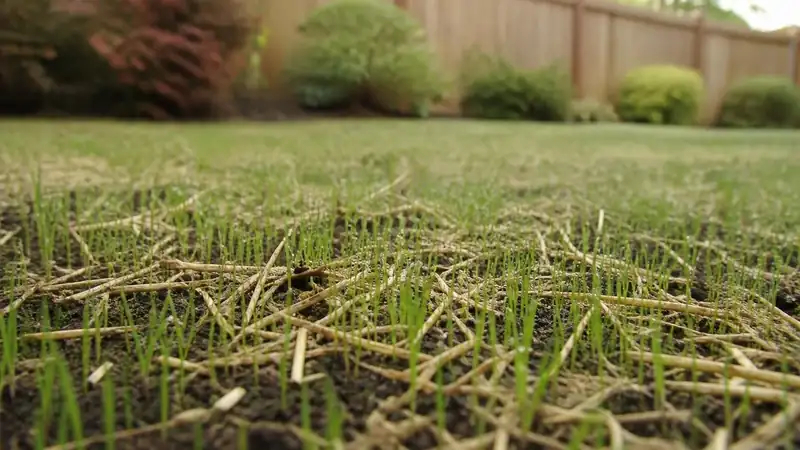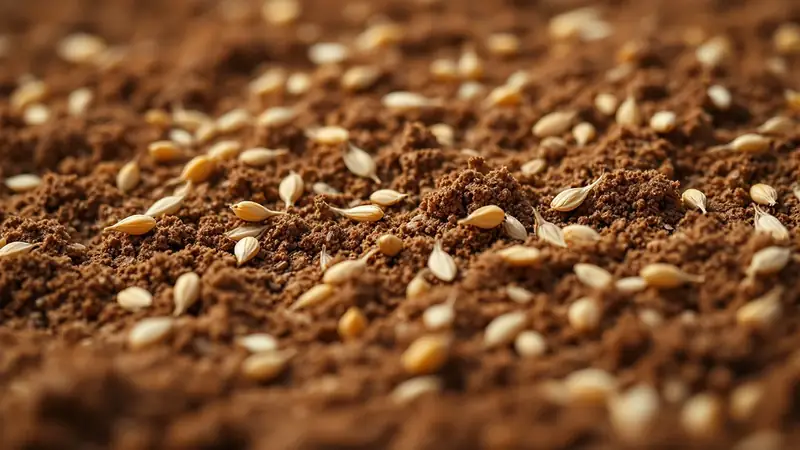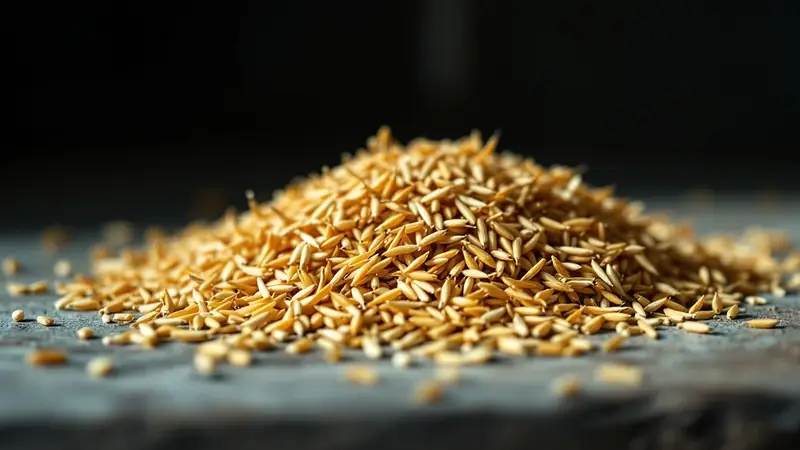
Does grass seed go bad? Yes, slowly: it loses germination rather than spoiling. A USDA index expects most lawn grasses to hold 50 percent or better for 3 to 5 years in favorable storage, bermudagrass for 1 to 2, so count sprouts before sowing.
How long does grass seed last? Shelf life by species
The usual answer is one range for all grass. USDA Agriculture Handbook 506 (Justice and Bass, 1978) rates each species separately, and it is the only published index naming turf species that we found. Class 1 means half or more of the seed still germinates after 1 to 2 years, class 2 after 3 to 5, class 3 after 5 or more.
Swipe the table sideways to see every column.
| Grass | USDA class | Half or more still germinates after | Federal limit, test date to interstate shipment |
|---|---|---|---|
| Creeping bentgrass | 3 | 5 or more years | 15 months |
| Colonial bentgrass | 3 | 5 or more years | 15 months |
| Buffalograss (burs) | 3 | 5 or more years | 5 months |
| Carpetgrass | 3 | 5 or more years | 5 months |
| Kentucky bluegrass | 2 | 3 to 5 years | 15 months |
| Rough bluegrass | 2 | 3 to 5 years | 5 months |
| Tall fescue | 2 | 3 to 5 years | 15 months |
| Red fescue | 2 | 3 to 5 years | 15 months |
| Chewings fescue | 2 | 3 to 5 years | 15 months |
| Hard fescue | None | Not rated | 15 months |
| Perennial ryegrass | 2 | 3 to 5 years | 15 months |
| Annual (Italian) ryegrass | 2 | 3 to 5 years | 15 months |
| Bahiagrass, Pensacola | 2 | 3 to 5 years | 5 months |
| Zoysia japonica (Japanese lawngrass) | 2 | 3 to 5 years | 5 months |
| Manilagrass (Zoysia matrella) | 2 | 3 to 5 years | 5 months |
| Bermudagrass | 1 | 1 to 2 years | 5 months |
Read class 2 carefully. It does not say seed stays good for 3 to 5 years. It says 50 percent or more germinates at that age, for seed of high viability and vigor, in favorable ambient storage between latitudes 35° and 48° N. A lot tagged 90 percent that has fallen to 50 percent takes 1.8 times the seed. Oregon State researchers repeat the index for Kentucky bluegrass, perennial ryegrass, tall fescue and creeping bentgrass in their 2006 seed report (p. 17).
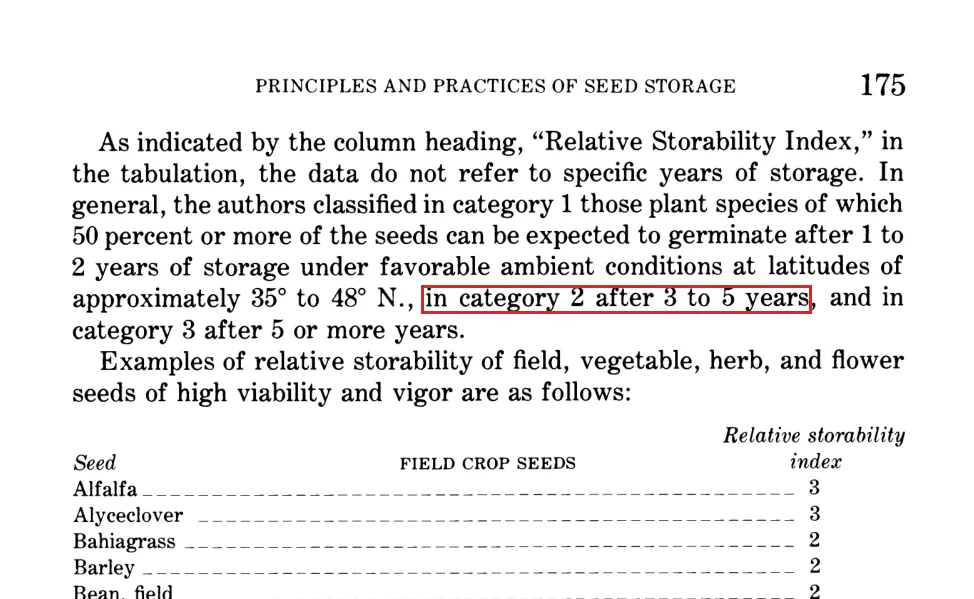
Pages that give all warm-season grass 2 to 3 years miss the split inside that group: bermudagrass sits in class 1, the lowest, while bahiagrass and zoysia are class 2 and buffalograss class 3. The index dates from 1978 and predates today’s turf cultivars, so use it for rank order, not as a promise about your bag.
We found no primary source for the “10 percent a year” figure on many lawn sites. The closest time series is forage, not turf: in Stanisavljević et al., 2020, Italian ryegrass and meadow fescue reached 93 and 90 percent at 6 months, held those rates to at least 20 months, then fell to 79 and 83 percent at 30 months. That is a plateau followed by a drop, not a straight line.
Climate moves all of this. Handbook 506 (p. 183) says many kinds of seed keep 5 years or longer at ambient conditions in arid areas, 2 or 3 years in temperate regions, and may lose viability in months or even weeks in humid subtropical and tropical regions. A shed in Phoenix and a shed in Mobile are not the same storage.
What ruins stored grass seed?
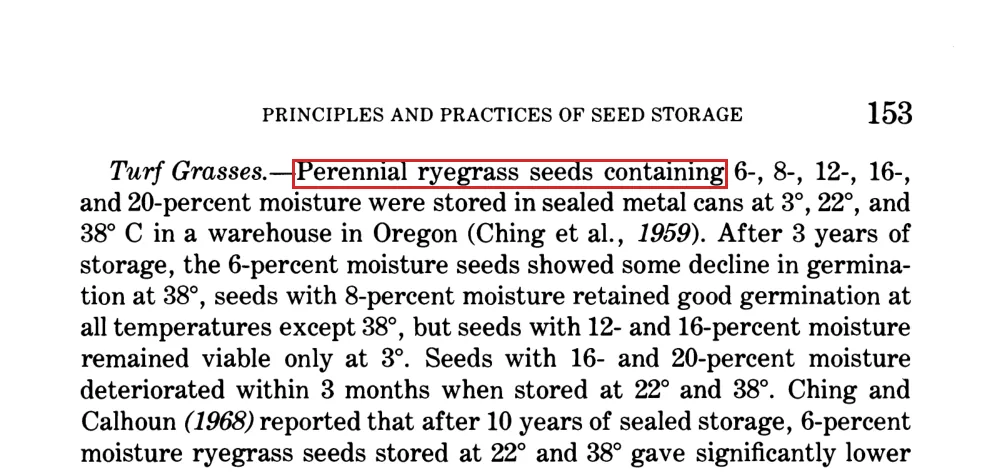
Moisture does the most damage, then heat. Seed takes up water from the air until it matches the humidity: Oregon State lists perennial ryegrass at 11.0 percent moisture at 55 percent relative humidity, 12.1 at 65 and 13.4 at 75. That last figure lands in the band where the sealed ryegrass below survived only at 37°F. Sealed cans are not paper bags, so treat it as a warning, not a forecast for your garage.
Bagged potting mix ages on the same two triggers, and our page on whether potting soil goes bad gives the makers’ storage limits: about 9 months for peat mixes and 6 for bark mixes.
| Seed and moisture | Stored | Result | Source |
|---|---|---|---|
| Perennial ryegrass, 6% | Sealed can, 37, 72 and 100°F, 3 years | Some decline at 100°F | Ching 1959, in Handbook 506 p. 153 |
| Perennial ryegrass, 8% | Same | Good germination except at 100°F | Same |
| Perennial ryegrass, 12% and 16% | Same | Viable only at 37°F | Same |
| Perennial ryegrass, 16% and 20% | Sealed can, 72 and 100°F | Deteriorated within 3 months | Same |
| Perennial ryegrass, 6% | Sealed can, 72 and 100°F, 10 years | Lab germination lower than new seed; field emergence not significantly different | Ching and Calhoun 1968, p. 153 |
| Kentucky bluegrass, 4.9% to 8.7% | Sealed tin, 34, 50 and 70°F, 30 months | About the original germination | Bass 1960, p. 153 |
| Creeping red fescue, 11.4% | Sealed metal can, 3 months | Sharp drop at every temperature | Handbook 506, p. 153 |
Two rules of thumb put numbers on it, and Handbook 506 calls both approximate. Harrington’s first (p. 27): seed life halves with each 5°C (9°F) rise and each 1 point of seed moisture, which makes a jump from 50°F to 80°F worth about a 90 percent cut in life. His second (p. 183): temperature in °F plus percent humidity should not exceed 100. A shed at 80°F and 70 percent scores 150.
For a bag you plan to keep past one season:
- Aim below 60°F and below 60 percent humidity, the line Oregon State calls reasonable for safe storage.
- Keep small amounts in a sealed glass jar in a refrigerator or cool closet, as Iowa State Extension advises. Mice open bags; UNH Extension suggests a galvanized can with a tight lid.
- Seal seed only when it is dry. The 11.4 percent red fescue in the table lost viability sealed; the 4.9 to 8.7 percent bluegrass did not.
Coated seed has no turf storage trial we could find. The nearest is fertilizer-coated buffel grass (Silcock and Smith, 1984): after 18 months some lots stayed high and others fell markedly, and one commercial coat went from 38 percent emergence at 4 months to very low within a year. Treat any coated bag older than a year as unknown and count it.
A sprout count also misses one loss. Endophyte fungi carried in some ryegrass and fescue for insect resistance can die in storage while the seed still sprouts: a 2025 Agronomy paper reports ambient storage can take them to zero in about 18 to 24 months. If you paid for that trait, a bag past 18 months may sprout without it.
What does the date on the bag mean?
The tag date is the month the germination test finished, not a spoilage date and not the harvest date. Federal rules let most cool-season lawn seed ship for 15 months after that test and bermudagrass, bahiagrass and zoysia for 5, and states set their own limits for sale. The clock runs from the test, so a retested lot can carry a new date. In a mixture, 7 CFR 201.22(b) has the tag show the oldest test among its components.
| Rule | Who it covers | Limit |
|---|---|---|
| 7 CFR 201.22(c) | Interstate shipment: bentgrass (colonial, creeping), Kentucky bluegrass, Chewings, hard, red and tall fescue, annual and perennial ryegrass | 15 months from test |
| 7 CFR 201.22(a) | Interstate shipment: other agricultural seed, which takes in bermudagrass, bahiagrass and zoysia | 5 months from test |
| 7 CFR 201.36c | Hermetically sealed containers, packed within 9 months of harvest; Kentucky bluegrass at 6.0% moisture or less, red fescue and ryegrass at 8.0% or less | 24 months from test |
| Minn. Stat. 21.82, subd. 5 | Lawn and turf grass seed and mixtures | Sell by no more than 15 months from test |
| Md. Agric. 9-209.1 and 9-210 (2009 Ch. 26) | Cool-season lawn and turf seed | Sell by no more than 15 months from the month after test |
| Nebraska Dept. of Agriculture test date sheet | Cool-season turf in packages of 50 lb or less; other nonnative seed 9 months; native seed such as buffalograss 12 months | 15-month sell by allowed instead of a test date |
| W. Va. Code R. 61-9-3 | Cool-season lawn and turf; other seed in regular containers 12 months; hermetic 36 months | 15 months, not counting the test month |
| Fla. Stat. 578.09(2)(i) | Agricultural seed, including lawn and turf grass seed | Tested within the previous 9 months, not counting the test month |
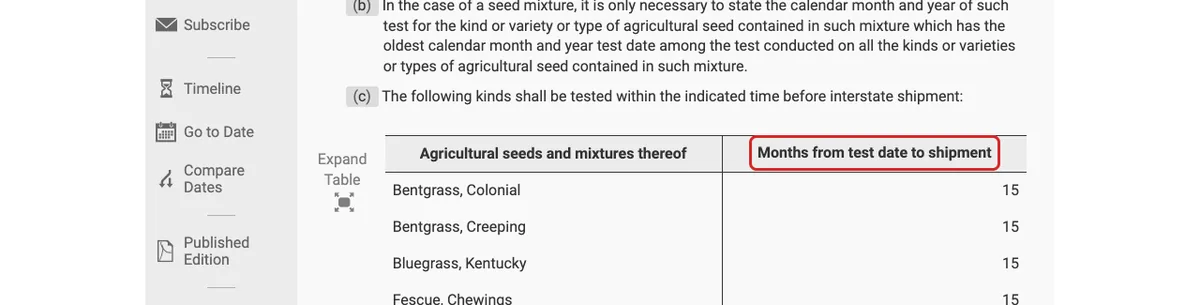
None of these limits says when seed dies. A sell-by date tells a store when it must stop selling or retest. Past it, the tag’s percent is simply out of date: UMass Extension notes germination falls with seed age, and that the tag percent reflects near-ideal lab conditions, so your count replaces it.
Old seed is only one reason a seeding fails; our guide to grass seed not growing lists the state test-date limits next to the other causes, with the day to dig and check for each grass.
How do you test old grass seed? The 100-seed count
- Mix the bag, then count out 100 seeds. Iowa State Extension accepts 20 and calls 100 best; federal labs use at least 400.
- Moisten five layers of plain white paper towel, one federal paper option in 7 CFR 201.58, and press out extra water. Use plain towel because the rule bars paper with chemicals toxic to seedlings.
- Lay the seeds on top, spaced apart, in a clear lidded container. Kentucky bluegrass, bentgrass, bermudagrass, zoysia and bahiagrass have a federal light requirement, so a closed roll in a dark cupboard can undercount them. Give them at least 8 hours of light a day.
- Hold at 70 to 80°F, the Iowa State range. It overlaps the lab range for cool-season grass but misses the hot end of the 68 to 95°F range for bermudagrass and zoysia, so treat warm-season results as a floor.
- Keep the towel damp. Count and remove seedlings on the first-count day, then count again on the final-count day from the table.
- Count only seedlings with roots and a shoot. A root alone is not a germinated seed under 7 CFR 201.56-5, which treats a missing shoot as abnormal.
- Add the two counts. Out of 100, that total is your germination percent. For a mix, run it to the slowest grass in the bag.
Swipe the table sideways to see every column.
| Grass | First count, day | Final count, day | Federal lab temperature, °F | Light |
|---|---|---|---|---|
| Creeping bentgrass | 7 | 28 | 59 to 86, 50 to 86 or 59 to 77 | Required |
| Colonial bentgrass | 7 | 28 | 59 to 86, 50 to 86 or 59 to 77 | Required |
| Buffalograss (burs) | 7 | 14 | 68 to 95 | Required |
| Carpetgrass | 10 | 21 | 68 to 95 | Required |
| Kentucky bluegrass | 10 | 28 | 59 to 77 or 59 to 86 | Required |
| Rough bluegrass | 7 | 21 | 68 to 86 | Required |
| Tall fescue | 5 | 14 | 59 to 77 or 68 to 86 | Optional |
| Red fescue | 7 | 21 | 59 to 77 | Optional |
| Chewings fescue | 7 | 21 | 59 to 77 | Optional |
| Hard fescue | 7 | 21 | 59 to 77 | Optional |
| Perennial ryegrass | 5 | 14 | 59 to 77 | Optional |
| Annual (Italian) ryegrass | 5 | 14 | 59 to 77 | Optional |
| Bahiagrass, Pensacola | 7 | 28 | 68 to 95 | Required |
| Zoysia japonica (Japanese lawngrass) | 10 | 28 | 95 then 68 | Required |
| Manilagrass (Zoysia matrella) | 10 | 28 | 95 then 68 | Required |
| Bermudagrass | 7 | 21 | 68 to 95 | Required |
The day count is where most home tests go wrong. Pages that say to read at one week would fail good Kentucky bluegrass, whose first federal count is day 10 and final count day 28. The seed count is the other trap: 7 of 10 sprouting fits anything from 40 to 89 percent.
| Seeds counted | Sprouted | Range the true germination likely sits in (95%) | Width |
|---|---|---|---|
| 10 | 7 | 40% to 89% | 49 points |
| 20 | 14 | 48% to 85% | 37 points |
| 50 | 35 | 56% to 81% | 25 points |
| 100 | 70 | 60% to 78% | 18 points |
| 400 (federal minimum) | 280 | 65% to 74% | 9 points |
Skip the float test. The word does not appear in 7 CFR Part 201, and Handbook 506 (p. 37) reports that living and dead seeds, perennial ryegrass among those studied, take up and hold the same moisture in storage. Smell and feel do catch one thing: musty, clumped or chewed seed has been wet or found by mice, and UNH ties overly moist seed to fungal decay. Bin that bag without testing.
How much more old seed should you sow?
Divide the tag germination by your count and multiply the normal rate by the answer. Purity does not change in the bag, so the pure live seed formula (purity x germination) reduces to that ratio. If the tag is gone, use 85 percent: Oregon State says most freshly harvested grass seed tests above it.
The normal rate for each grass, and the pure live seed multiplier for any tag value, are in our grass seeding rate table and calculator.
- Pounds of this old seed to sow
- 9.0
Pounds = area x rate x tag germination / your count. Rates and prices from our grass seed cost page. Default: 1,000 sq ft of tall fescue, tag 90%, count 70 = 9.0 lb, against 7 lb of fresh seed at $14 to $40. Under a count of 50, buy fresh.
| Step | Tall fescue | Kentucky bluegrass | Hulled raw bermudagrass |
|---|---|---|---|
| Rate for a new lawn, lb per 1,000 sq ft (midpoint) | 7 | 2.25 | 1.5 |
| Germination on the tag | 90% | 85% | 85% |
| Your count out of 100 | 70 | 60 | 50 |
| Multiplier: tag divided by count | 1.29 | 1.42 | 1.70 |
| Old seed to sow, lb per 1,000 sq ft | 9.0 | 3.2 | 2.5 |
| Fresh seed instead, at the rate above | 7 lb, $14 to $40 | 2.25 lb, $8 to $13 | 1.5 lb, $15 to $17 |
More seed restores the seedling count, not the lost vigor. UNH calls older seed much less vigorous, Oregon State says the germination test gets less sensitive as storage worsens, and Stanisavljević tied lower germination to slower seedling growth. Sow old seed early in your window, not in its last week, using the dates in how to plant grass seed. For thin spots, halve the area in the calculator or use the rates in how to overseed a lawn.
Keep it, boost it or buy new?
The old bag costs nothing more, but a failed seeding costs a season. Our cutoffs below match the 70 percent line on our germination time page; they are editorial judgment from the arithmetic, not a published standard. The exception is price: at $25 to $69 a pound for coated zoysia, a weak lot is worth using.
1Is the seed musty, clumped, damp or chewed?
YesBin it. Moist seed invites fungal decay (UNH Extension).
NoGo to the next question
2Did the 100-seed count reach the final-count day and finish at 70 or more?
YesSow it at the normal rate times tag divided by count, early in your window.
NoGo to the next question
3Is the count 50 to 69 and the seed over about $25 a pound, such as coated zoysia or buffalograss?
YesUse it, at the higher rate, and expect slower seedlings.
NoGo to the next question
4Is the count 50 to 69 on a small patch where a thin result is cheap to redo?
YesUse it up on the patch at the higher rate.
NoBuy fresh seed and check the tag test date.
Source: Green Industry Report thresholds; storage and count rules from UNH Extension and 7 CFR 201.58
A lab beats a towel only when the seed is worth it. Colorado State’s 2026 price list charges $53 for a bluegrass or bermudagrass germination test and $87 for a tetrazolium viability test; Delaware’s 2024 schedule lists grasses at $15. A contractor holding pallets has a reason to pay. A homeowner with half a bag does not.
How we compiled this
We read USDA Agriculture Handbook 506, the Federal Seed Act regulations (7 CFR Part 201), Oregon State’s 2006 seed production report, 5 state seed rules, 2 journal papers, 1 conference paper, 3 extension pages and 2 seed lab price lists in November 2026. We ran no germination trials. The tables join those documents; the sample-size ranges and the calculator are our own arithmetic. Worked examples use illustrative counts. We could not read the Handbook’s cited original studies, so we report them as the Handbook does.
Frequently asked questions
Can I use 3 year old grass seed?
Usually, after a count. Three years sits at the start of class 2 for bluegrass, fescue and ryegrass, so expect a reduced rate, and it is past class 1 for bermudagrass. At 70 or more of 100, sow at the adjusted rate; under 50, buy new.
Is 5 year old grass seed still good?
Often not worth planting. Five years is the far edge of class 2, where the index expects about half to germinate in favorable storage. Tall fescue tagged 90 percent and counting 50 needs 12.6 lb per 1,000 sq ft, nearly double the 7 lb of fresh seed. Bentgrass and buffalograss, class 3, have better odds.
Is 10 year old grass seed still good?
Only some seed stored unusually well. The one 10-year turf record we found used ryegrass at 6 percent moisture in sealed cans: lab germination fell but field emergence held (Handbook 506, p. 153). A garage bag is not that storage, so count before relying on it.
Will 20 year old grass seed grow?
Some might, but we found no turf storage trial that reached 20 years, and the longest we read ran 10. A bag that old is a 100-seed count and, most likely, a trip to the store. Do not plan a lawn around it.
How do you know if grass seed is bad?
Run the 100-seed count through the final-count day for that grass. Under 50 sprouted, replace it. Musty smell, clumps or mouse damage mean bin it without testing. A clean look proves nothing about germination.
Does grass seed go bad when frozen?
Not from the cold if it is dry. Handbook 506 (p. 30) calls subfreezing storage superior for many seeds and reports 12 species at 10 to 12 percent moisture unharmed at -183°C. The exception is endophyte: Wiewióra and Żurek found -20°C gave among the lowest endophyte survival in most cultivars.
Sources
- USDA Science and Education Administration; O.L. Justice and L.N. Bass, Principles and Practices of Seed Storage, Agriculture Handbook 506, April 1978, pp. 27, 30, 37, 153, 175 to 178, 183. Accessed November 2026.
- USDA Agricultural Marketing Service, Federal Seed Act regulations: 7 CFR 201.22 date of test, current. Accessed November 2026.
- USDA Agricultural Marketing Service, 7 CFR 201.36c hermetically sealed containers, current. Accessed November 2026.
- USDA Agricultural Marketing Service, 7 CFR 201.54 number of seeds for germination, current. Accessed November 2026.
- USDA Agricultural Marketing Service, 7 CFR 201.56-5 grass family seedling evaluation, current. Accessed November 2026.
- USDA Agricultural Marketing Service, 7 CFR 201.58 germination requirements, table 2, current. Accessed November 2026.
- Oregon State University; Elias, Garay, Young and Chastain, Maintaining Optimum Seed Quality in Storage, in 2006 Seed Production Research at Oregon State University, 2006, pp. 16 to 18. Accessed November 2026.
- Tropical Grasslands-Forrajes Tropicales; Stanisavljević et al., Effect of seed storage on seed germination and seedling quality of Festulolium in comparison with related forage grasses, 2020, vol. 8(2). Accessed November 2026.
- Agronomy; Wiewióra and Żurek, Endophyte Viability in Grass Seeds: Storage Conditions Affecting Survival and Control Methods, August 2025. Accessed November 2026.
- Queensland Department of Primary Industries; Silcock and Smith, Storage Life of Fertilizer-Coated Cenchrus ciliaris Seed, Australian Seeds Research Conference, 1984. Accessed November 2026.
- UNH Extension, Can I Save Unused Grass Seed for Next Year?, 2018. Accessed November 2026.
- Iowa State University Extension, How to Store Seeds and Test Germination Rates, undated. Accessed November 2026.
- UMass Extension, Understanding the Turfgrass Seed Label, updated June 2026. Accessed November 2026.
- Minnesota Legislature, Minn. Stat. 21.82, subd. 5, current. Accessed November 2026.
- Maryland General Assembly, 2009 Laws, Chapter 26 (SB 91), 2009. Accessed November 2026.
- Nebraska Department of Agriculture, Seed Test Date Information, undated. Accessed November 2026.
- West Virginia Department of Agriculture, via Cornell LII, W. Va. Code R. 61-9-3, current. Accessed November 2026.
- Florida Legislature, Fla. Stat. 578.09, 2026. Accessed November 2026.
- Colorado State University Seed Lab, 2026 seed lab price list, 2026. Accessed November 2026.
- Delaware Department of Agriculture Seed Lab, Seed testing fees, January 2, 2024. Accessed November 2026.