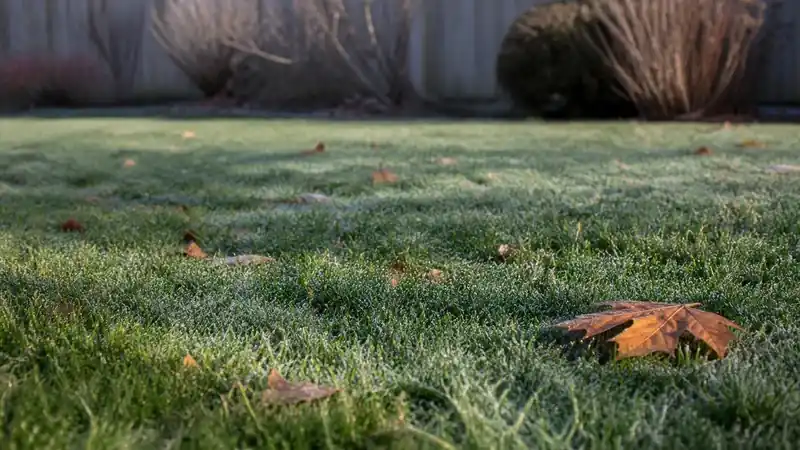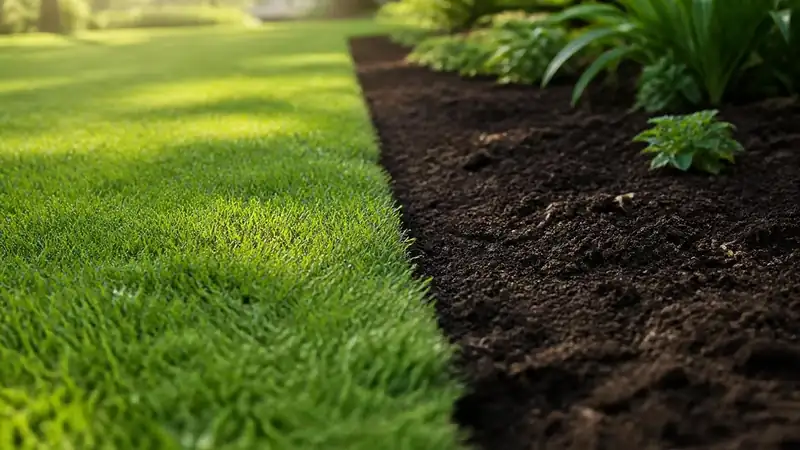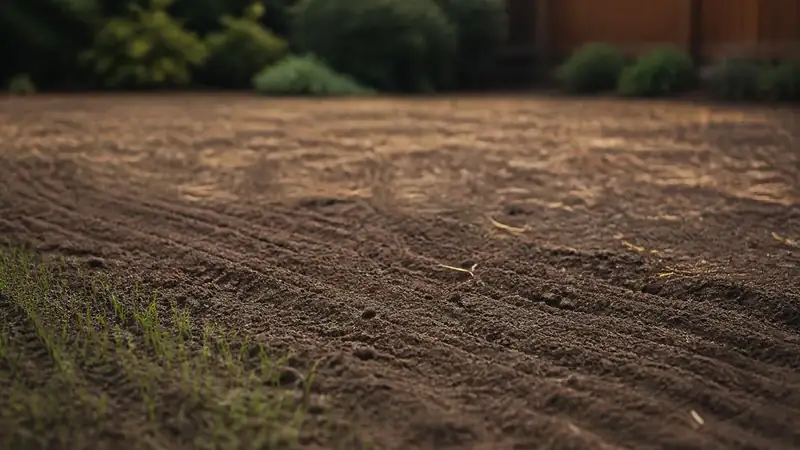
Bermuda grass is a warm-season lawn grass (Cynodon dactylon and hybrids) that spreads by runners, tolerates drought and traffic, browns after frost and needs full sun, mowing at 1 to 2 inches and 2 to 5 lb nitrogen yearly.
Key takeaways
- In the latest national trial, TifTuf posted the top turf quality of 11 commercial bermudagrasses, 6.4 on a 1 to 9 scale across 2020 to 2023, ahead of Latitude 36 and Tahoma 31 at 6.3 and Tifway at 5.9 (NTEP report 24-11).
- Only common-type bermudagrass grows from seed: sow 1 to 2 lb of hulled seed per 1,000 sq ft (UF/IFAS LH007) or 4 to 8 lb unhulled (UGA) between April and July (NC State). Hybrids such as Tifway and TifTuf go in as sod, sprigs or plugs.
- Hulled seed germinated best, 93.0 percent in 28 days, at 68°F nights and 86°F days; below 59°F/77°F germination fell sharply (Evers and Parsons, 2009).
- Mow home lawns at 1 to 2 inches with a rotary mower; below 1 inch you need a reel mower and level ground (Texas A&M ESC-042; NC State AG-431).
- Bermudagrass needs more light than any other maintained turfgrass, per Mississippi State P2892; the best commercial cultivar in NTEP’s College Station shade plot, Celebration, rated only 5.4 of 9.
- Bermudagrass was the largest single sod class in USDA’s April to June 2026 report: 17.95 million sq ft reported sold at a 38.04-cent national farm average (USDA AMS).
| Key number | Value | Source |
|---|---|---|
| Best turf quality, NTEP 2020 to 2023 | TifTuf 6.4 of 9 (LSD 0.2) | NTEP 24-11 |
| Seeding rate, hulled seed | 1 to 2 lb per 1,000 sq ft | UF/IFAS; NC State; UGA |
| Seeding rate, unhulled seed | 4 to 8 lb per 1,000 sq ft | UGA calendar |
| Start fertilizing when soil at 4 in is | 65°F and rising | UGA calendar |
| Mowing height, home lawn, rotary mower | 1 to 2 in | Texas A&M ESC-042 |
| Annual nitrogen | 2 to 5 lb N per 1,000 sq ft (Georgia) | UGA calendar |
| Dethatch when thatch exceeds | 1/2 in | NC State AG-431 |
| TifTuf water use vs Tifway, UGA tests | 38 percent less | UGA CAES |
| Sod, national farm price, Q2 2026 | 38.04¢ per sq ft | USDA AMS |
What is bermuda grass?
Bermuda grass (bermudagrass) is a warm-season perennial lawn grass that spreads by stolons above ground and rhizomes below it. Lawn types are either common bermudagrass, Cynodon dactylon, or hybrids of common and African bermudagrass, C. dactylon × C. transvaalensis (UF/IFAS LH007). UC IPM says it was introduced from Africa, not Bermuda, in 1751 (UC IPM Pest Notes 7453).
It is the default lawn grass across much of the South. The University of Arkansas calls it the most commonly used lawn grass in Arkansas (U. of Arkansas), and 19 of 21 North Carolina sod farms surveyed in 2026 grew it, the most of any species (NC State sod report). Illinois Extension puts the start of the warm-season transition zone at roughly St. Louis (Illinois Extension). The other lawn grasses are profiled in our Turf & Trees section.
The same traits make it a weed elsewhere. UC IPM lists its other names as couchgrass, devilgrass, wiregrass and dogtooth grass, and notes that in undisturbed soil its rhizomes sit 1 to 6 inches deep, deeper under sidewalks and in tilled or sandy ground. In tall fescue lawns it is mainly a looks problem, because it browns in fall while the fescue stays green (UC IPM).
| Trait | Common bermudagrass | Hybrid bermudagrass | Source |
|---|---|---|---|
| Species | Cynodon dactylon | C. dactylon × C. transvaalensis | UF/IFAS LH007 |
| Planted as | Seed (some also sold as sod) | Sod, sprigs or plugs; seed from the cross is often sterile | Texas A&M; NC State AG-431 |
| Leaf and density | Wider blade, less dense, more seedheads | Finer leaf, denser, fewer seedheads; pollen-free | NC State AG-431 |
| Mowing height | 1.5 to 2.5 in (Arkansas); 1 to 2 in (Georgia) | 0.5 to 1.5 in (Arkansas); 1 to 1.5 in (Georgia) | U. of Arkansas; UGA |
| Nitrogen, N.C. Piedmont | 4 to 4.5 lb per 1,000 sq ft a year | 3 to 6 lb per 1,000 sq ft a year | NC State Table 9-1 |
| Upkeep | Lower; Arkansas points homeowners who cannot reel-mow often to seeded types | Looks best mowed 3 times a week with a reel mower | U. of Arkansas |
| Named examples | Arizona Common, Riviera, Yukon, Princess 77, Monaco | Tifway, TifTuf, Latitude 36, Celebration, Tahoma 31 | NC State Table 9-3; NTEP entries |
What does bermuda grass look like?
Bermuda grass looks like a low, wiry mat of smooth, pointed leaves with a ring of white hairs where the blade meets the sheath. Its seedhead is 3 to 7 fingerlike spikes, each 1 to 2 inches long, fanning from a single point at the tip of the stem. Above-ground runners carry a papery sheath at each node and root wherever a node touches moist soil (UC IPM).
Leaf width separates the types. On NTEP’s 1 to 9 texture scale (9 = very fine), the hybrids Celebration (6.7), Latitude 36 (6.6) and TifTuf (6.4) rated finer than the seeded types Monza (5.4) and Sun Queen (5.2); gaps larger than 0.3 are significant (NTEP 24-11). Dormant bermudagrass is tan from the first heavy frost until spring green-up (NC State).
Is it bermuda grass or crabgrass?
Bermuda grass and crabgrass share a fingerlike seedhead, but the spikes give them away. Bermudagrass spikes all start at the same point on the stem; crabgrass spikes start about 1/8 to 1/4 inch apart. Bermudagrass also has hairy ligules and rhizomes, and it survives winter, while crabgrass is an annual that dies at frost (UC IPM).
That difference decides the control. A crabgrass preventer applied from mid-February to early March (NC State) stops annual crabgrass seedlings but does nothing to an established bermudagrass runner. Crabgrass identification and preventer timing are covered in our crabgrass guide.
Is bermuda grass a good grass for lawns?
Bermuda grass is a good lawn grass for full sun, heat, drought and heavy use, and a poor one for shade, cold or low upkeep. NC State’s lawn-grass table rates both common and hybrid bermudagrass 6 of 6 for drought and wear but 1 of 6 for shade and 1 to 2 of 6 for cold, against 4 for zoysiagrass (NC State Table 9-1). It also invades flower beds.
| Rating (6 = best) | Common bermudagrass | Hybrid bermudagrass | Zoysiagrass | Tall fescue | Source |
|---|---|---|---|---|---|
| Shade tolerance | 1 | 1 | 4 | 4 | NC State Table 9-1 |
| Heat tolerance | 5 | 5 | 5 | 4 | NC State Table 9-1 |
| Cold tolerance | 1 | 2 | 4 | 5 | NC State Table 9-1 |
| Drought tolerance | 6 | 6 | 6 | 5 | NC State Table 9-1 |
| Wear tolerance | 6 | 6 | 4 | 5 | NC State Table 9-1 |
| Rate of establishment | Fast | Moderate | Very slow | Fast | NC State Table 9-1 |
| Can be seeded? | Yes | No | Yes | Yes | NC State Table 9-1 |
What are the downsides of bermuda grass?
The downsides of bermuda grass are shade intolerance, a brown winter, invasiveness and upkeep. UF/IFAS lists poor tolerance of many insects, diseases and nematodes, aggressive spread into beds by stolons and rhizomes, thatch buildup, and loss of green color in cold weather (UF/IFAS LH007). Hybrid lawns look best mowed 3 times a week (U. of Arkansas).
Each downside has a cost. Edging along walks and beds becomes a weekly job, because Arkansas notes the runners readily invade ornamental beds and gardens (U. of Arkansas). A thatch layer over 1/2 inch means dethatching in late May, a job priced in our dethatching cost guide. Winter brown can be covered by overseeding ryegrass at 5 to 10 lb per 1,000 sq ft (UGA).
Where runners have already reached a liriope border, the label for fluazifop grass killer EPA Reg. No. 239-2620 lists lilyturf as tolerant; our monkey grass guide gives the two-spray schedule.
Which types of bermuda grass can you buy?
Bermuda grass types split into seeded common cultivars and vegetative hybrids. NC State lists 12 seeded cultivars, from Arizona Common to Yukon, and 9 vegetative ones, from Celebration to Tifway (NC State Table 9-3). The table compiles 20 cultivars named in university publications and the NTEP 2019 trial, with the source for each row.
Swipe the table sideways to see every column.
| Cultivar | Type | Planted as | Origin or trial sponsor | What sets it apart | Source |
|---|---|---|---|---|---|
| Tifway (Tifton 419) | Hybrid | Sod, sprigs, plugs | USDA station, Tifton, Ga., 1960 | NTEP standard entry; quality 5.9; drought quality 5.1 at Riverside | U. of Arkansas; NTEP |
| TifTuf | Hybrid | Sod, sprigs, plugs | University of Georgia, Tifton | Top NTEP quality (6.4) and top Riverside drought quality (6.4); 38 percent less water than Tifway in UGA tests | UGA; NTEP |
| TifGrand | Hybrid | Sod, sprigs, plugs | Listed by UF/IFAS and NC State | Needs fewer hours of direct sun than Tifway or TifSport; promising in moderate shade but not shade tolerant | UF/IFAS; Mississippi State |
| TifSport | Hybrid | Sod, sprigs, plugs | Listed by UF/IFAS and NC State | Golf and athletic use; performs best at 1 to 2 in (North Carolina) | UF/IFAS; NC State |
| Latitude 36 | Hybrid | Sod, sprigs, plugs | Oklahoma State University | Survives colder climates, more resistant to spring dead spot; prone to nematodes in Florida; NTEP quality 6.3 | UF/IFAS; NTEP |
| NorthBridge | Hybrid | Sod, sprigs, plugs | Oklahoma State University | Cold tolerant with early spring green-up | UF/IFAS |
| Tahoma 31 | Hybrid | Sod, sprigs, plugs | NTEP entry sponsored by Sod Production Services | Earliest NTEP green-up (5.8) and darkest color (6.7) of the 11 commercial entries; quality 6.3 | NTEP |
| Celebration | Hybrid | Sod, sprigs, plugs | NTEP entry MSB-1017, Mississippi State | Best shade quality (5.4) and fewest seedheads of the 11 commercial NTEP entries; slowest green-up (4.0); mow 1 to 2 in with a rotary mower | UF/IFAS; NTEP |
| Bimini | Hybrid | Sod, sprigs, plugs | New to Florida market | Growth habit between Celebration and the Tif hybrids; mow as for Celebration | UF/IFAS |
| PremierPRO | Hybrid | Sod, sprigs, plugs | Texas A&M University | Fine texture; mow 0.5 to 2.5 in; in Florida, available only in South Florida | UF/IFAS |
| Astro | Hybrid | Sod, sprigs, plugs | NTEP entry, Oklahoma Sod Producers Assoc. | Least spring dead spot of the 11 commercial entries (7.2 of 9, 9 = none) | NTEP |
| Patriot | Hybrid | Sod, sprigs, plugs | Listed by NC State and U. of Arkansas | Listed as a vegetative hybrid for North Carolina and Arkansas lawns | NC State; U. of Arkansas |
| Arizona Common | Common | Seed | Older selection | Coarser and lighter than improved seeded types | UF/IFAS; U. of Arkansas |
| Riviera | Common (improved) | Seed | Developed at Stillwater, Okla. | Cold tolerant; fastest divot recovery of the 11 commercial NTEP entries (81.1 percent); quality 5.9 | U. of Arkansas; NTEP |
| Yukon | Common (improved) | Seed | Developed at Stillwater, Okla. | Cold tolerant; more likely to survive western and northern North Carolina | U. of Arkansas; NC State |
| Princess 77 | Seeded, fine-textured | Seed | From New Mexico | Fine texture near Tifway quality but lacks cold tolerance for north Arkansas; performed well in Florida | U. of Arkansas; UF/IFAS |
| Monaco | Common (improved) | Seed | NTEP standard entry | NTEP quality 5.9, equal to Tifway | NTEP |
| Monza (JSC 2013-12S) | Common (improved) | Seed | NTEP entry, Johnston Seed Co. | NTEP quality 5.9; green-up 5.4 | NTEP |
| Copperhead (DLF-460/3048) | Common (improved) | Seed | NTEP entry, DLF USA | NTEP quality 5.4; most spring dead spot of the 11 (4.7) | NTEP |
| Sun Queen (PST-R6MM) | Common (improved) | Seed | NTEP entry, Pure Turf | NTEP quality 5.3; most seedheads of the 11 (5.0 of 9, 9 = none) | NTEP |
Seed blends change every year. UF/IFAS warns that retail seed packages often mix two or three cultivars such as Arizona Common, Riviera, Sahara and Sundevil, that the mix depends on seed availability, and that UF has not evaluated those blends (UF/IFAS). Read the cultivar names and percentages on the bag label before you compare prices in our grass seed cost guide.
Which bermuda grass scored best in national trials?
TifTuf scored best. In the 2019 National Bermudagrass Test, rated 2020 to 2023 at 23 site codes in 16 states, TifTuf averaged 6.4 for turf quality on a 1 to 9 scale and finished in the top quarter at 93.3 percent of locations. Latitude 36 and Tahoma 31 followed at 6.3, Celebration at 6.0 and Tifway at 5.9 (NTEP). Only gaps larger than 0.2 are significant.
| Cultivar | Sold as | Quality, all sites | Genetic color (9 = dark green) | Leaf texture (9 = very fine) | Traffic quality, Raleigh, N.C., 2020 | Quality under saline irrigation, Las Cruces, N.M. | Seedheads (9 = none) | Divot recovery, Stillwater, Okla. (%) |
|---|---|---|---|---|---|---|---|---|
| TifTuf | Sod | 6.4 | 6.1 | 6.4 | 5.8 | 8.0 | 6.8 | 72.8 |
| Latitude 36 | Sod | 6.3 | 6.3 | 6.6 | 5.3 | 7.4 | 7.6 | 75.9 |
| Tahoma 31 | Sod | 6.3 | 6.7 | 6.1 | 4.6 | 7.8 | 7.0 | 79.8 |
| Celebration | Sod | 6.0 | 6.6 | 6.7 | 4.2 | 7.5 | 8.2 | 75.2 |
| Tifway | Sod | 5.9 | 6.5 | 6.3 | 3.8 | 7.6 | 7.5 | 71.9 |
| Astro | Sod | 5.9 | 5.5 | 5.7 | 4.6 | 6.6 | 6.8 | 77.9 |
| Riviera | Seed | 5.9 | 6.2 | 5.7 | 5.1 | 6.9 | 6.1 | 81.1 |
| Monaco | Seed | 5.9 | 6.3 | 5.6 | 4.9 | 7.3 | 5.8 | 77.7 |
| Monza | Seed | 5.9 | 6.1 | 5.4 | 5.0 | 6.6 | 5.7 | 79.7 |
| Copperhead | Seed | 5.4 | 6.0 | 5.5 | 4.1 | 7.3 | 5.6 | 80.2 |
| Sun Queen | Seed | 5.3 | 5.9 | 5.2 | 3.9 | 7.0 | 5.0 | 78.3 |
| LSD (0.05) | 0.2 | 0.5 | 0.3 | 1.1 | 2.1 | 0.9 | 5.0 |
The trial also shows trade-offs. Celebration had the fewest seedheads (8.2) but the slowest spring green-up (4.0), while Tahoma 31 greened up first (5.8). The seeded entries recovered from divots fastest: Riviera reached 81.1 percent recovery at Stillwater against 71.9 percent for Tifway, a gap larger than the 5.0-point LSD (NTEP).
Which bermuda grass is most drought tolerant?
TifTuf is the most drought-tolerant bermuda grass in current trials. Under drought stress at Riverside, Calif., it averaged 6.4 for quality against 5.1 for Tifway and 3.7 for Riviera, with an LSD of 0.4 (NTEP Table 23A). UGA reports TifTuf used 38 percent less water than Tifway in its tests (UGA CAES).
Common bermudagrass survives drought differently: it goes dormant. UF/IFAS says the lawn turns brown and stops growing, then resumes growth once irrigated, and advises 1/2 to 3/4 inch of water when leaf blades fold or footprints stay visible (UF/IFAS). Texas A&M says turfgrasses generally perform well when irrigation or rain replaces at least 60 percent of evapotranspiration (Texas A&M ESC-042).
| Cultivar | Drought quality, Riverside, Calif. | Drought quality, College Station, Texas | Wilting under drought, College Station (9 = none) | Shade quality, College Station, Texas |
|---|---|---|---|---|
| TifTuf | 6.4 | 5.8 | 7.3 | 5.0 |
| Celebration | 5.6 | 5.4 | 6.8 | 5.4 |
| Tahoma 31 | 5.1 | 5.2 | 6.8 | 5.1 |
| Tifway | 5.1 | 4.9 | 6.0 | 3.8 |
| Monaco | 4.5 | 4.4 | 6.4 | 4.1 |
| Monza | 4.4 | 4.5 | 5.5 | 4.6 |
| Latitude 36 | 4.2 | 5.0 | 6.3 | 4.4 |
| Astro | 4.1 | 4.9 | 6.5 | 4.0 |
| Sun Queen | 3.8 | 5.0 | 6.2 | 3.8 |
| Riviera | 3.7 | 4.0 | 6.4 | 3.8 |
| Copperhead | 3.7 | 5.0 | 6.4 | 3.7 |
| LSD (0.05) | 0.4 | 1.6 | 1.6 | 1.4 |
Will bermuda grass grow in shade?
Bermuda grass does not grow well in shade. Mississippi State ranks it as needing the most light of all maintained turfgrasses and says even TifGrand and Celebration are “by no means shade tolerant” (MSU P2892). In NTEP’s College Station shade plot, Celebration led the commercial entries at 5.4 of 9, Tahoma 31 rated 5.1 and Tifway 3.8 (NTEP Table 25A).
Shaded bermudagrass grows elongated stems, weak rhizomes and thin turf (MSU P2892). For spots that get about 4 hours of direct sun, the minimum Mississippi State gives for St. Augustinegrass, plant that grass instead. Our St. Augustine grass guide compares its cultivars for shade.
Which bermuda grass greens up first in spring?
Tahoma 31 greened up first in the NTEP trial, averaging 5.8 of 9 across 14 sites, followed by Riviera (5.5) and Latitude 36 (5.4). Celebration (4.0) and Tifway (4.6) were slowest of the commercial entries, with an LSD of 0.5 (NTEP Table 33A). Green-up matters most in the transition zone, where spring frosts can burn back new growth.
Clemson says green-up arrives during April on the South Carolina coast but can wait until mid-May inland, and that a lawn may green up and be burned back by frost several times in late winter (Clemson HGIC 1216). UF/IFAS adds that NorthBridge was bred for early green-up and Latitude 36 for colder climates (UF/IFAS).
| Cultivar | Spring green-up, 14 sites (9 = fully green) | Spring dead spot, Ind. and N.C. (9 = none) | Sold as |
|---|---|---|---|
| Tahoma 31 | 5.8 | 7.0 | Sod |
| Riviera | 5.5 | 5.7 | Seed |
| Latitude 36 | 5.4 | 6.4 | Sod |
| Monza | 5.4 | 6.3 | Seed |
| Astro | 5.3 | 7.2 | Sod |
| TifTuf | 5.2 | 6.1 | Sod |
| Monaco | 5.1 | 5.6 | Seed |
| Tifway | 4.6 | 6.5 | Sod |
| Copperhead | 4.5 | 4.7 | Seed |
| Sun Queen | 4.4 | 4.9 | Seed |
| Celebration | 4.0 | 6.5 | Sod |
| LSD (0.05) | 0.5 | 1.6 |
How do you plant bermuda grass?
Plant bermuda grass in late spring or early summer by one of four methods: seed (common types only, 1 to 2 lb hulled per 1,000 sq ft), sprigs (5 to 10 bushels per 1,000 sq ft), plugs (12 to 24 inches apart) or sod. Plugs on 12-inch centers cover in 3 to 6 months; sod gives a finished surface the day it is laid (UF/IFAS LH007).
| Method | Rate per 1,000 sq ft | Time to full cover | Cultivars available | Source |
|---|---|---|---|---|
| Seed, hulled | 1 to 2 lb (UF, NC State, UGA); 0.5 to 1 lb (UT, Arkansas) | Germination in 10 to 20 days; one season to fill | Common and improved common only | UF/IFAS; UT W160-B |
| Seed, unhulled | 4 to 8 lb | 14 to 21 days or longer to germinate | Common | UGA; UT W160-B |
| Sprigs, broadcast | 5 to 10 bushels (UF); 3 to 10 (NC State) | Not an instant lawn; least expensive method | All, including hybrids | UF/IFAS; NC State Table 9-4 |
| Plugs | 1 plug per sq ft at 12 in; 1 per 4 sq ft at 24 in | 3 to 6 months at 12 in; 6 to 9 months at 24 in | All | UF/IFAS |
| Sod | 1,000 sq ft (about 2 pallets of 500 sq ft) | Roots in 2 to 3 weeks | All, including hybrids | UF/IFAS; UGA |
When should you plant bermuda grass seed?
Plant bermuda grass seed in late spring, once nights stay near 60°F and days reach the upper 70s. NC State’s window is April to July in the Piedmont (NC State Table 9-4), and Texas AgriLife researchers recommend mid-April through June for hulled seed and mid-May through June for unhulled seed in the Southeast (Evers and Parsons). UT puts warm-season germination at 68 to 95°F air temperatures (UT W160-B).
The Texas AgriLife germinator study explains why. Hulled common bermudagrass reached 93.0 percent germination in 28 days at 68°F nights and 86°F days, but only 27.8 percent at 50°F/68°F and 0.5 percent at 41°F/59°F (Evers and Parsons, 2009). Unhulled seed did best at 77°F/95°F. Germination timelines for every lawn grass are in our grass seed germination guide.
- Hulled seed
- Unhulled seed
Source: Evers and Parsons, Texas Journal of Agriculture and Natural Resources 22:74 to 80 (2009), Table 1 Night/day temperatures, 12 hours each, in a laboratory germinator.
Show the numbers
| Hulled seed | Unhulled seed | |
|---|---|---|
| 41/59°F | 0.50 | 0 |
| 50/68°F | 27.80 | 16.30 |
| 59/77°F | 81.50 | 65.30 |
| 68/86°F | 93 | 63 |
| 77/95°F | 72 | 77.50 |
| 86/104°F | 48 | 45.50 |
| Night/day temperature | Hulled seed germination, 28 days | Unhulled seed germination, 28 days | Source |
|---|---|---|---|
| 41°F/59°F (5/15°C) | 0.5% | 0.0% | Evers and Parsons, Table 1 |
| 50°F/68°F (10/20°C) | 27.8% | 16.3% | Evers and Parsons, Table 1 |
| 59°F/77°F (15/25°C) | 81.5% | 65.3% | Evers and Parsons, Table 1 |
| 68°F/86°F (20/30°C) | 93.0% | 63.0% | Evers and Parsons, Table 1 |
| 77°F/95°F (25/35°C) | 72.0% | 77.5% | Evers and Parsons, Table 1 |
| 86°F/104°F (30/40°C) | 48.0% | 45.5% | Evers and Parsons, Table 1 |
Can I just throw down bermuda grass seed?
You can broadcast bermuda grass seed, but seed thrown on unprepared, dry or recently treated ground mostly fails. Arkansas says to seed only where no preemergence herbicide went down in the previous two months (U. of Arkansas), and NC State says to keep the seedbed continually moist with light irrigation several times a day until germination (NC State AG-431). Rolling presses seed into contact with soil.
- Check the date: April to July in North Carolina, nights near 60°F or warmer, and no preemergence herbicide in the past 2 months (NC State; Evers and Parsons; U. of Arkansas).
- Test the soil and adjust pH toward 5.5 to 6.5 with lime or sulfur per the report (UGA).
- Weigh the seed: 1 to 2 lb hulled or 4 to 8 lb unhulled per 1,000 sq ft; double the rate for coated seed (UGA; NC State).
- Sow half the seed in one direction and the other half at right angles (Purdue AY-3), then rake lightly and roll the seedbed so seed touches soil (UT W160-B).
- Water lightly several times a day until seedlings emerge in about 10 to 20 days, then less often (NC State AG-431; UT W160-B).
- Start mowing at 1 1/2 inches once plants reach about 2 1/4 inches, UT’s rule for sod-forming grasses such as bermudagrass (UT W160-B).
- Hold nitrogen until 30 to 60 days after planting (UF/IFAS).
Sod follows a different watering rule. UF/IFAS says to water new sod 2 or more times a day with 1/4 inch until roots hold it fast, usually 2 to 3 weeks, and not to mow until roots peg down, generally 14 to 21 days after planting (UF/IFAS). Installed prices are in our sod installation cost guide.
How much seed, sprigs or sod does a 5,000 sq ft lawn need?
A 5,000 sq ft bermuda grass lawn needs 5 to 10 lb of hulled seed, 20 to 40 lb of unhulled seed, 25 to 50 bushels of sprigs, 1,250 to 5,000 plugs or about 10 pallets of sod. Those figures multiply UF/IFAS and UGA rates by 5. At USDA’s Q2 2026 national farm price of 38.04 cents a sq ft, the sod alone costs about $1,902 before delivery (USDA AMS).
| Material | Rate (source) | Arithmetic for 5,000 sq ft | Result |
|---|---|---|---|
| Hulled seed | 1 to 2 lb per 1,000 sq ft (UF/IFAS) | 5 × 1 to 5 × 2 | 5 to 10 lb |
| Unhulled seed | 4 to 8 lb per 1,000 sq ft (UGA) | 5 × 4 to 5 × 8 | 20 to 40 lb |
| Sprigs | 5 to 10 bushels per 1,000 sq ft (UF/IFAS) | 5 × 5 to 5 × 10 | 25 to 50 bushels |
| Plugs, 24 in centers | 1 plug per 4 sq ft (UF/IFAS spacing) | 5,000 ÷ 4 | 1,250 plugs |
| Plugs, 12 in centers | 1 plug per sq ft (UF/IFAS spacing) | 5,000 ÷ 1 | 5,000 plugs |
| Sod pallets | 500 sq ft per pallet (UGA) | 5,000 ÷ 500 | 10 pallets |
| Sod, farm price | 38.04¢ per sq ft national (USDA AMS) | 5,000 × $0.3804 | $1,902 |
| Sod, N.C. delivered price | $0.47 per sq ft average (NC State 2026) | 5,000 × $0.47 | $2,350 |
Where do bermuda grass sources disagree?
Bermuda grass advice differs by state because each extension service writes for its own climate. The widest gaps are the hulled seeding rate (0.5 to 1 lb per 1,000 sq ft from UT and Arkansas, 1 to 2 lb from UF/IFAS, NC State and UGA), dethatcher blade spacing, where UGA and Clemson disagree, and fall feeding, where a seed company calendar departs from extension advice.
| Topic | One source says | Another source says | What to do |
|---|---|---|---|
| Hulled seeding rate | 0.5 to 1 lb per 1,000 sq ft (UT W160-B; U. of Arkansas) | 1 to 2 lb per 1,000 sq ft (UF/IFAS; NC State; UGA) | Use the lower rate only on a clean, firm seedbed with irrigation; use 2 lb on bare new lawns |
| Dethatcher blade spacing | Vertical mower with blades 1 inch apart, two directions (UGA) | 2- or 3-inch spacing at 1/4 inch depth; never 1-inch spacing (Clemson) | Start with the wider Clemson spacing on home lawns; it removes less turf per pass |
| Hybrid mowing height | 0.5 to 1.5 in (U. of Arkansas) | 1 to 1.5 in (UGA); 1 to 2 in with a rotary mower (Texas A&M) | Below 1 inch only with a reel mower and level ground |
| Annual nitrogen | 0.5 to 4 lb per 1,000 sq ft, 1 to 4 feedings (Texas A&M) | 5 to 7 lb in South Florida (UF/IFAS), which UF calls likely higher than residential lawns need | Use your state’s range; feed less in shade |
| Fall feeding | A seed company calendar says to feed with a weed-and-feed 4 to 5 weeks before the fall frost date (Pennington) | No more than 1/2 lb N in September, to limit spring dead spot (NC State AG-431); last N before Aug. 15 (Clemson) | Follow the extension cap; switch to potash in fall |
| Upper mowing limit | Keep below 2 1/4 in (NC State AG-431) | Up to 2.5 in for common types (U. of Arkansas) | Taller cuts thin the stand; raise height only for heat or drought stress |
How short should you mow bermuda grass?
Mow bermuda grass at 1 to 2 inches with a rotary mower, the Texas A&M recommendation for home lawns (Texas A&M ESC-042). Hybrids can go to 1/2 inch with a reel mower, but NC State says heights below 1 inch need a reel mower and very level ground, so most lawns are kept between 1 and 2 1/2 inches (NC State AG-431).
To smooth a bumpy bermuda lawn before lowering the mower, topdress in passes of no more than 1/2 inch as set out in our how to level a lawn guide.
| Source | Common bermudagrass | Hybrid bermudagrass | Notes |
|---|---|---|---|
| Texas A&M ESC-042 | 1 to 2 in (rotary) | Under 1 in possible with reel mower | Mow weekly; never remove more than 1/3 of the leaf |
| NC State AG-431 | 5/8 to 2 1/2 in range | 3/4 to 1 in is best with a reel mower | Keep below 2 1/4 in; raise 1/2 in before frost |
| Clemson HGIC 1216 | 1 to 2 in | Below 1 in needs a reel mower | Start at 1 1/4 to 1 1/2 in; 2 in for partial shade |
| UGA calendar | 1 to 2 in | 1 to 1 1/2 in | Raise 1/2 in in hot weather |
| U. of Arkansas | 1.5 to 2.5 in | 0.5 to 1.5 in | Mow every 5 to 7 days in summer |
| UF/IFAS LH007 | 1 to 2 in (low to moderate care) | 1/2 in under high maintenance | Celebration 1 to 2 in, rotary OK |
The one-third rule sets the schedule. Texas A&M’s example: a lawn kept at 1 inch gets mowed again when it reaches 1.5 inches, which in midsummer means at least weekly (Texas A&M). NC State says to mow at least twice a week at peak growth, especially at lower heights, and to bag or rake clippings only if they clump (NC State).
What is the best fertilizer for bermuda grass?
The best fertilizer for bermuda grass is the one your soil test calls for, applied at 1/2 to 1 lb of nitrogen per 1,000 sq ft per feeding after the lawn is fully green. Annual totals run 2 to 5 lb in Georgia (UGA) and 2 to 4 lb in South Carolina, where Clemson suggests high-potassium blends such as 15-0-15 for summer feedings (Clemson HGIC 1216).
| Source and region | Annual N (lb per 1,000 sq ft) | Per feeding | Timing rule |
|---|---|---|---|
| UF/IFAS, north Florida | 3 to 5 | 1/2 to 1 lb; max 0.7 lb soluble N | First feeding mid-April |
| UF/IFAS, central Florida | 4 to 6 | 1/2 to 1 lb | First feeding early April |
| UF/IFAS, south Florida | 5 to 7 | 1/2 to 1 lb | Year-round growth |
| Clemson, South Carolina | 2 to 4 | 1/2 to 1 lb | Early May, June or July, and before Aug. 15 |
| UGA, Georgia | 2 to 5 | Label rate | Soil at 4 in 65°F and rising |
| NC State, Piedmont | 4 to 4.5 (common); 3 to 6 (hybrid) | 1 lb every 4 to 6 weeks in summer | Max 1/2 lb in September |
| Texas A&M | 0.5 to 4 | 0.5 to 1 lb, 4 to 8 weeks apart | After the lawn has been mowed 2 to 3 times |
How do you work out how much fertilizer to spread?
Divide the nitrogen you want by the first number on the bag. Clemson’s shortcut: 50 divided by that number gives the pounds of product for 1/2 lb of nitrogen per 1,000 sq ft, and 100 divided by it gives the pounds for 1 lb (Clemson HGIC 1216). The table applies that rule to five common analyses and a 5,000 sq ft lawn.
| Fertilizer analysis | Product for 1 lb N per 1,000 sq ft | Product for 4 lb N a year on 5,000 sq ft | Also supplies (per 1 lb N feeding) |
|---|---|---|---|
| 46-0-0 (urea) | 100 ÷ 46 = 2.2 lb | 20 lb N ÷ 0.46 = 43.5 lb | No phosphorus or potassium |
| 21-0-0 (ammonium sulfate) | 100 ÷ 21 = 4.8 lb | 20 ÷ 0.21 = 95.2 lb | Sulfur; no P or K |
| 15-0-15 | 100 ÷ 15 = 6.7 lb | 20 ÷ 0.15 = 133.3 lb | 1 lb K2O per 1,000 sq ft |
| 13-13-13 | 100 ÷ 13 = 7.7 lb | 20 ÷ 0.13 = 153.8 lb | 1 lb P2O5 and 1 lb K2O |
| 5-10-30 (fall, 1/2 lb N) | 50 ÷ 5 = 10 lb for 1/2 lb N | Fall feeding only | 3 lb K2O per 1,000 sq ft |
That arithmetic answers the 13-13-13 question. It delivers phosphorus at the same rate as nitrogen, and UF/IFAS says most Florida soils are already high in phosphorus, so a soil test often shows none is needed (UF/IFAS). Where a test shows low potassium, NC State recommends 1 lb of K2O per 1,000 sq ft 4 to 6 weeks before frost, from 1 1/2 lb of 0-0-60 (NC State AG-431).
Fertilizer rules are set by state and local law as well as by extension advice. Florida Rule 5E-1.003, for example, allows up to 2 lb of nitrogen per 1,000 sq ft per application only in spring or summer and only from fertilizer with at least 65 percent controlled-release nitrogen (UF/IFAS LH007). Check your state and county rules and the bag label before you spread.
When does bermuda grass green up and go dormant?
Bermuda grass greens up in April on the South Carolina coast and as late as mid-May inland, and goes dormant at the first heavy frost (Clemson; NC State). Fertilizer waits for soil at 4 inches to hold 65°F (UGA), and the last summer feeding goes on before Aug. 15 in South Carolina (Clemson). The calendar below is for the Carolinas and Georgia.
| When | Task | Detail | Source |
|---|---|---|---|
| Mid-February to early March | Preemergence herbicide | Crabgrass and goosegrass preventer | NC State AG-431 |
| April to mid-May | Green-up and first mowing | Mow low, about 1 in, to remove dead leaves | Clemson |
| Several weeks after full green-up | First nitrogen | 1/2 to 1 lb N per 1,000 sq ft | NC State AG-431 |
| Late May | Dethatch and renovate | If thatch exceeds 1/2 in; sprig 3 to 5 bushels per 1,000 sq ft | NC State AG-431 |
| April to July | Seeding window | Piedmont North Carolina | NC State Table 9-4 |
| June to August | Summer nitrogen | 1 lb every 4 to 6 weeks; last feeding before Aug. 15 in S.C. | NC State; Clemson |
| September | Potash, light N, raise mower | Max 1/2 lb N; 1 lb K2O 4 to 6 weeks before frost; mower up 1/2 in | NC State AG-431 |
| Fall (optional) | Ryegrass overseeding for winter color | 5 to 10 lb per 1,000 sq ft | UGA |
| First heavy frost | Dormancy | Lawn turns tan until spring | NC State |
| November to December | Winter weed control | Atrazine or simazine for annual bluegrass and winter weeds | NC State AG-431 |
| December to February | No fertilizer | Soil test every 2 to 3 years | NC State AG-431 |
If you want a green lawn in winter outside frost-free areas, ryegrass overseeding is the route; bermudagrass itself turns tan after frost. Seeding rates and timing are in our overseeding guide. NC State warns that a lawn not overseeded in the Piedmont should have its mowing height raised 1/2 inch in fall for winter-kill protection (NC State AG-431).
Which ryegrass to sow for that winter color, annual or perennial, and how perennial cultivars scored in the latest national trial are covered in our perennial ryegrass guide.
What problems does bermuda grass get?
Bermuda grass gets spring dead spot in the transition zone, nematodes on sandy soil, and insects such as mole crickets, sod webworms, armyworms and bermudagrass mites (UF/IFAS). UF/IFAS calls nematodes the most serious bermudagrass pest in Florida and says no cultivar is resistant. Large patch and dollar spot follow wet turf and thatch (Clemson), and thatch builds fastest under heavy fertilizer and water (NC State).
| Problem | What you see | When | What extension advises | Source |
|---|---|---|---|---|
| Spring dead spot | Circular, sunken tan patches 2 in to 3 ft wide, often on 3 to 5 year old turf | At spring green-up | Fungicide in fall when soil is 60 to 80°F, in 5 gal water per 1,000 sq ft; max 1/2 lb N in September | NC State AG-431 |
| Nematodes | Yellowing, thinning, shallow roots that do not respond to water or fertilizer | Hot, dry periods; sandy soils | No resistant cultivar; chemical control usually needs a commercial applicator | UF/IFAS; NC State |
| Mole crickets | Tunnels and thinning turf | Late spring onward | Treat only if damage is excessive | Clemson |
| Large patch and dollar spot | Dollar spot 2 to 6 in; large patch several feet with smoky brown edges | Turf that stays wet; overwatering | Water less often, control thatch, fungicide if edges rot | Clemson |
| Bermudagrass decline (take-all root rot) | Thinning patches in summer | Summer | Scout and treat per diagnosis | Texas A&M ESC-042 |
| White grubs | Turf rolls back; skunk or bird digging | Adults fly in June | Preventive in June; curative when grubs feed near the surface | NC State AG-431 |
| Thatch | Spongy layer over 1/2 in | Late May after full green-up | Vertical mow; core aerate | NC State; Clemson |
What kills weeds but not bermuda grass?
Broadleaf weeds in bermuda grass are usually treated with two- or three-way products of 2,4-D plus dicamba and/or MCPP, used no more than twice a year at least 30 days apart; quinclorac for crabgrass after it emerges; and halosulfuron for sedges (U. of Arkansas). Every product must list bermudagrass on its label (NC State AG-431). Preemergence goes down from mid-February to early March.
This section is general information, not pesticide advice. The product label is the law: confirm the label lists bermudagrass and your target weed, follow its rates and intervals, and check whether your state requires a license for the product or for applying it on someone else’s lawn.
How do you get rid of bermuda grass?
You get rid of bermuda grass by killing the rhizomes, not just the leaves. UC IPM lists clear-plastic solarization for 4 to 6 weeks in midsummer, black plastic for at least 6 to 8 weeks, repeated summer tilling of dry soil, and glyphosate on actively growing grass in late summer. Contact sprays, vinegar products included, only burn top growth (UC IPM Pest Notes 7453).
| Method | How | Time needed | Limits | Source |
|---|---|---|---|---|
| Clear plastic (solarization) | Mow close, water, cover with UV-protected clear film 2 ft past the runners | 4 to 6 weeks, June to August in California’s Central Valley | Needs full sun; fails on north slopes and in early spring | UC IPM |
| Black plastic | Mow, irrigate, cover with intact black film | At least 6 to 8 weeks in summer | Does not work in winter dormancy; any hole lets it through | UC IPM |
| Dry and till | Withhold water, till or spade 2 or 3 times in summer, rake out rhizomes | Weeks to months | Rain or irrigation lets fragments regrow | UC IPM |
| Glyphosate (nonselective) | Spray actively growing, unmowed grass; wait 7 days before mowing or tilling | Best in late summer; several sprays 3 to 4 weeks apart | Kills any plant it touches | UC IPM; NC State |
| Grass-selective sprays in beds | Fluazifop, sethoxydim or clethodim when regrowth is under 6 in; repeat before 6 in | Spring through summer | Not for use in lawns of other grasses | UC IPM |
| Contact sprays (acetic acid, pelargonic acid) | Burn down green leaves | Repeated | Do not affect rhizomes; suppression only | UC IPM |
Seed in the soil survives most of these methods. UC IPM says bermudagrass seed stays viable for multiple years and only solarization kills it, so expect seedlings after other treatments and remove them early (UC IPM). In beds, landscape fabric under mulch works only if the sheets overlap so runners cannot find a gap.
How do you kill bermuda grass in a fescue lawn?
Kill bermuda grass in a tall fescue lawn by mowing the fescue at 3.5 to 4 inches and repeating a selective herbicide program. Virginia Tech says research shows tall fescue mowed at 4 inches can completely kill bermudagrass without herbicides, and that fescue mowed short makes herbicides nearly useless (Virginia Tech). Fall treatments work better than spring ones.
| Virginia Tech option | Products and rate per acre | Rate per 1,000 sq ft | Timing |
|---|---|---|---|
| 1. Renovate | Glyphosate (e.g., Roundup) 5 qt | 3.7 fl oz | Late June or early July; again 3 to 4 weeks later; seed or sod 1 week after |
| 2. Pylex + Turflon | Topramezone 1 oz + triclopyr 32 oz + 0.5% methylated seed oil | 0.023 oz + 0.73 oz | From mid-August, every 3 weeks, 3 sprays |
| 3. Tenacity + Turflon | Mesotrione 4 oz + triclopyr 32 oz | 0.092 oz + 0.73 oz | Late spring at 50% green-up; 3 to 4 sprays 3 weeks apart |
| 4. Acclaim + Turflon | Fenoxaprop 28 oz + triclopyr 32 oz | 0.64 oz + 0.73 oz | Monthly from 50% green-up; fall works best |
| 5. Ornamec + Turflon | Fluazifop 24 oz + triclopyr 32 oz | 0.55 oz + 0.73 oz | Spring at 50% green-up and again in fall before dormancy |
UC IPM, writing for California, adds that topramezone and clethodim are sold only to licensed pesticide applicators, and that sequential topramezone plus triclopyr sprays increase suppression in cool-season turf (UC IPM). Fall seeding of tall fescue fills the gaps the bermudagrass leaves. Seeding rates and mowing heights for the fescue side are in our tall fescue guide.
Herbicide rates above are the maximum single-use rates Virginia Tech publishes, not a recommendation for your lawn. Read and follow the current label, which may require lower rates for repeat treatments, and use a calibrated sprayer.
Bermuda grass vs zoysia: which should you plant?
Choose bermuda grass over zoysia for full sun, heavy wear and fast establishment; choose zoysia for partial shade, colder sites and lower nitrogen. NC State rates zoysiagrass 4 of 6 for shade against 1 for bermudagrass, and UF/IFAS puts north Florida zoysia at 2 to 3 lb of nitrogen a year against 3 to 5 for bermudagrass (NC State; UF/IFAS LH011).
| Factor | Bermudagrass | Zoysiagrass | Source |
|---|---|---|---|
| Shade tolerance (6 = best) | 1 | 4 | NC State Table 9-1 |
| Cold tolerance (6 = best) | 1 common, 2 hybrid | 4 | NC State Table 9-1 |
| Wear tolerance (6 = best) | 6 | 4 | NC State Table 9-1 |
| Rate of establishment | Fast (common), moderate (hybrid) | Very slow | NC State Table 9-1 |
| Annual N, north Florida | 3 to 5 lb per 1,000 sq ft | 2 to 3 lb per 1,000 sq ft | UF/IFAS LH007; LH011 |
| Plants from seed | Common types, many cultivars | Only Zoysia japonica (Zenith, Compadre) | NC State; UF/IFAS LH011 |
| Sod farm price, Q2 2026 | 38.04¢ per sq ft | 52.32¢ per sq ft | USDA AMS |
| Light requirement rank | Most light of all maintained turfgrasses | Fourth-highest, after bermudagrass, carpetgrass and bahiagrass | Mississippi State P2892 |
The trade-off is time. Bermudagrass plugs on 12-inch centers cover in 3 to 6 months (UF/IFAS), while NC State says Meyer and Emerald zoysia plugs on 12-inch centers often take three years (NC State). Cultivar scores and plug math for zoysia are in our zoysia grass guide. Against St. Augustinegrass, bermudagrass sod costs 16.21 cents a sq ft less at the farm (54.25 vs 38.04 cents, USDA AMS).
Is bermuda grass right for your yard?
Bermuda grass is right for a sunny yard in the South or lower transition zone where you can mow weekly and accept a tan lawn from first frost to spring. It is wrong for spots with about 4 hours of direct sun or less (Mississippi State), for lawns you will not edge, and for the cool-season north. The table gives thresholds for each situation.
| If your situation is | Do this | Why (source) |
|---|---|---|
| About 4 hours of direct sun or less | Plant St. Augustinegrass or zoysiagrass there instead | Bermudagrass needs the most light of any maintained turfgrass (MSU P2892) |
| Partial shade you cannot remove | Celebration or TifGrand sod, mowed at 2 in | Celebration led commercial entries for NTEP shade quality at 5.4 (NTEP 25A); Clemson cuts shade-adapted types at 2 in |
| No irrigation or watering limits | TifTuf sod | Top drought quality 6.4 vs 5.1 for Tifway (NTEP 23A); 38 percent less water (UGA) |
| Upper transition zone (about St. Louis latitude) | Latitude 36 or NorthBridge sod, or Riviera or Yukon seed | Bred or noted for cold tolerance (UF/IFAS; U. of Arkansas) |
| You mow once a week with a rotary mower | Improved common seed (Riviera, Monaco, Monza) at 1 to 2 in | Hybrids look best mowed 3 times a week at 0.5 to 1.5 in (U. of Arkansas) |
| You want a carpet look and will reel-mow below 1 in | Hybrid sod: TifTuf, Tifway or Latitude 36 | Reel mower and level ground needed below 1 in (NC State AG-431) |
| Need full cover in under a month | Lay sod in late spring or summer | Roots in 2 to 3 weeks (UF/IFAS) |
| Seeding on a budget | Sow 1 to 2 lb hulled seed between mid-April and June | UF/IFAS; 93.0 percent germination at 68°F/86°F vs 27.8 percent at 50°F/68°F (Evers and Parsons) |
| Bermudagrass invading tall fescue | Mow fescue at 3.5 to 4 in; fall topramezone plus triclopyr | Tall fescue at 4 in can kill bermudagrass (Virginia Tech) |
| Thatch over 1/2 in | Vertical mow in late May after full green-up | NC State AG-431 |
1Does the spot get about 4 hours of direct sun or less?
YesPlant St. Augustinegrass or zoysiagrass there; bermudagrass needs the most light of any maintained turfgrass (Mississippi State P2892).
NoGo to the next question
2Is the lawn in the upper transition zone, around St. Louis latitude?
YesChoose a cold-tolerant cultivar: Latitude 36 or NorthBridge sod, or Riviera or Yukon seed (UF/IFAS; U. of Arkansas).
NoGo to the next question
3Will the lawn get little or no irrigation?
YesLay TifTuf sod: top NTEP drought quality (6.4 of 9) and 38 percent less water than Tifway in UGA tests.
NoGo to the next question
4Will you reel-mow below 1 inch two or more times a week?
YesLay hybrid sod such as TifTuf, Tifway or Latitude 36 (NC State AG-431; U. of Arkansas).
NoGo to the next question
5Do you need full cover within a month?
YesLay sod in late spring or summer; it roots in 2 to 3 weeks (UF/IFAS).
NoSeed an improved common cultivar such as Riviera, Monaco or Monza at 1 to 2 lb hulled seed per 1,000 sq ft between mid-April and June, and mow at 1 to 2 inches.
Source: Mississippi State P2892; UF/IFAS LH007; U. of Arkansas; NTEP 24-11; UGA; NC State AG-431
How we compiled this
We read 20 documents in October 2026: 16 extension and university publications (UF/IFAS, NC State, Clemson, UGA, Texas A&M, the University of Arkansas, UT, Purdue, Mississippi State, Virginia Tech, Illinois and UC IPM), the NTEP 2019 National Bermudagrass Test final report (24-11), from which we parsed 14 data tables for the 11 commercially available entries, a 2009 germination study, the USDA AMS sod report, and one seed company’s care calendar, used only in the sources-disagree table. No field testing was done. We excluded the 24 experimental NTEP entries and herbicide programs not published by a university.
Frequently asked questions
What is the difference between common and hybrid bermuda grass?
Common bermuda grass, Cynodon dactylon, grows from seed, has wider leaves and more seedheads, and suits a 1 to 2 inch rotary cut. Hybrids are crosses with African bermudagrass, C. transvaalensis, planted only as sod, sprigs or plugs. They are finer, denser and pollen-free (NC State AG-431), and look best mowed at 0.5 to 1.5 inches (U. of Arkansas).
What month should I plant bermuda grass seed?
Plant bermuda grass seed in May or June in most of the South. NC State’s window is April to July, and Texas AgriLife researchers advise mid-April through June for hulled seed and mid-May through June for unhulled seed (NC State; Evers and Parsons). In the Texas AgriLife lab tests, germination fell to 27.8 percent at 50°F nights and 68°F days.
How do I make my bermuda grass thicker?
Mow it lower and more often, and feed it in summer. Texas A&M says frequent mowing encourages lateral growth and density, and that a lawn mowed too tall loses density (Texas A&M). Feed 1/2 to 1 lb of nitrogen per 1,000 sq ft every 4 to 8 weeks from green-up to August, and remove thatch over 1/2 inch in late May (NC State AG-431).
How many times a year should I fertilize bermuda grass?
Fertilize bermuda grass 1 to 4 times a year, 4 to 8 weeks apart, at 0.5 to 1 lb of nitrogen per 1,000 sq ft each time, per Texas A&M (Texas A&M ESC-042). Clemson schedules three feedings: early May, June or July, and before Aug. 15 (Clemson). Do not fertilize from December through February (NC State).
Does pre-emergent stop bermuda grass from spreading?
No. Preemergence herbicides only stop seeds from establishing; they do not affect the stolons and rhizomes that spread an existing patch. UC IPM says preemergence use is generally not a practical way to control bermudagrass in turf, though repeated applications can suppress new seedlings because the seed stays viable in soil for years (UC IPM).
Will vinegar kill bermuda grass?
Vinegar will not kill bermuda grass. UC IPM lists acetic acid products among contact herbicides that burn green leaves and stems but do not affect the roots or rhizomes, so the grass regrows. Repeated contact sprays can suppress it; killing it takes solarization, black plastic, repeated tilling or a translocated herbicide such as glyphosate (UC IPM).
Is bermuda grass more expensive than St. Augustine?
No. Bermuda grass sod is cheaper than St. Augustine at the farm: USDA’s April to June 2026 national weighted averages were 38.04 cents per sq ft for bermudagrass and 54.25 cents for St. Augustinegrass, before delivery (USDA AMS). NC State lists no seeding rate for St. Augustinegrass, which is planted vegetatively, while common bermudagrass is seeded (NC State Table 9-4).
How long does bermuda grass take to spread?
Bermuda grass plugs set 12 inches apart cover in 3 to 6 months, and plugs 24 inches apart in 6 to 9 months, per UF/IFAS (UF/IFAS LH007). In NTEP’s Jay, Fla., establishment plots, Celebration averaged 99.0 percent cover from September 2019 to June 2020 and Tifway 82.4 percent (NTEP).
Sources
- National Turfgrass Evaluation Program (NTEP), 2019 National Bermudagrass Test, 2019 to 2023 Data, Final Report NTEP No. 24-11, 2020 to 2023 ratings. Accessed October 2026.
- NTEP, 2019 National Bermudagrass Test, Summary of Turfgrass Quality Ratings, 2020 to 2023, 2020 to 2023 ratings. Accessed October 2026.
- NTEP, 2019 National Bermudagrass Test, Entries and Sponsors, Commercial status as of 2025. Accessed October 2026.
- NTEP, 2019 National Bermudagrass Test, Table 23A (drought stress, Riverside, Calif.), 2020 to 2023 ratings. Accessed October 2026.
- NTEP, 2019 National Bermudagrass Test, Table 25A (shade, College Station, Texas), 2020 to 2023 ratings. Accessed October 2026.
- NTEP, 2019 National Bermudagrass Test, Table 33A (spring green-up, 14 sites), 2020 to 2023 ratings. Accessed October 2026.
- UF/IFAS Extension, ENH19/LH007, Bermudagrass for Florida Lawns, Current EDIS edition. Accessed October 2026.
- UF/IFAS Extension, ENH11/LH011, Zoysiagrass for Florida Lawns, Current EDIS edition. Accessed October 2026.
- NC State Extension, AG-431, Bermudagrass Lawn Maintenance Calendar, Published July 30, 2021. Accessed October 2026.
- NC State Extension, Extension Gardener Handbook, Chapter 9: Lawns (Tables 9-1, 9-3, 9-4), Current online edition. Accessed October 2026.
- Clemson Cooperative Extension, Home & Garden Information Center, HGIC 1216, Bermudagrass Yearly Maintenance Program, Revised Nov. 2, 2018. Accessed October 2026.
- University of Georgia CAES, Bermudagrass Lawn Calendar, September 2023 edition. Accessed October 2026.
- University of Georgia CAES Field Report, TifTuf Bermuda grass ideal for home lawns, April 13, 2016. Accessed October 2026.
- Texas A&M AgriLife Extension, ESC-042, Bermudagrass Lawn Management Calendar, June 2016. Accessed October 2026.
- University of Arkansas Cooperative Extension, Bermudagrass in Arkansas (lawn care calendar and cultivars), Current web page. Accessed October 2026.
- UC Statewide IPM Program, Pest Notes: Bermudagrass, UC ANR Publication 7453, Updated July 2025. Accessed October 2026.
- Virginia Tech, School of Plant and Environmental Sciences (S. Askew), Selective Bermudagrass Control for Lawns, Current web page. Accessed October 2026.
- Mississippi State University Extension, P2892, Selecting and Managing Turfgrass for Shade, POD-07-24. Accessed October 2026.
- University of Tennessee Extension, W160-B, Turfgrass Establishment: Seeding, October 2007. Accessed October 2026.
- G. W. Evers and M. J. Parsons, Texas AgriLife Research and Extension Center, Temperature Influence on Seeded Bermudagrass Germination, Texas Journal of Agriculture and Natural Resources 22:74 to 80, 2009. Accessed October 2026.
- Purdue Extension, AY-3-W, Establishing Turfgrass Areas From Seed, Current edition. Accessed October 2026.
- USDA Agricultural Marketing Service, National Quarterly Sod Report (April 1 to June 30, 2026), Q2 2026, released July 17, 2026. Accessed October 2026.
- NC State Extension, Sod Producers’ Report for North Carolina, 2026, Survey March 2026. Accessed October 2026.
- University of Illinois Extension (E. Wahle), Bermudagrass: You either love it or hate it, Oct. 1, 2022. Accessed October 2026.
- Pennington Seed, All You Need to Know About Bermudagrass (lawn care calendar), Page as of October 2026. Accessed October 2026.