How to kill grass: spray glyphosate and replant 3 to 10 days later, cut the sod the same day, or cover it with plastic for 4 to 8 summer weeks. Bermuda, zoysia and quackgrass can regrow from rhizomes, so plan on repeats.
How to kill grass comes down to three numbers most guides skip: days until you can plant, cost per 1,000 sq ft, and whether your grass spreads underground. The matrix below puts every method on those measures, using the lawn-replacement directions on EPA Reg. No. 71995-25, the soil temperature target from UC IPM and posted rates from 13 rental stores. One finding changes the choice for warm-season lawns: an 18-inch rental sod cutter tops out at a 2.5-inch cut on Wheeler Machinery’s rate sheet, while bermuda rhizomes run 1 to 6 inches deep.
How to kill grass: 6 methods compared
| Method | Days until you can plant | Cost per 1,000 sq ft, Nov. 2026 | Soil disruption | Regrowth risk |
|---|---|---|---|---|
| Glyphosate spray, non-rhizome lawn such as tall fescue | 3 after the last spray; 10 if green patches force the 7-day respray (label). Full kill can take 14 to 21 (Penn State) | $9 to $13 a pass; 1 or 2 passes | None; dead sod stays and holds soil | Low; Kentucky Extension say fescue clumps may recover |
| Glyphosate spray, bermuda or zoysia | 24 to 31 with a respray at 3 to 4 weeks (Kentucky AGR-218); about 95 on Arkansas’s May, June and August plan (MP477) | $18 to $40; 2 or 3 passes | None | High; Maryland says it will probably return |
| Clear plastic (solarization) | 14 to 21 to kill grass in summer heat, though live roots can remain (Oregon State); 28 to 42 for roots and seed; up to 56 in cool or cloudy spots (UC IPM) | $32 to $70 for 1,300 sq ft of film | Low; no digging, 4 to 6 inch edge trench | Low on the top 6 inches, higher below |
| Black plastic | 42 to 56 (Iowa State; UC IPM) | $50 to $105; rolls reuse if intact | Low | Medium; grass survives through any hole |
| Cardboard plus mulch (sheet mulch) | 120 to 180 (Vermont; UC Master Gardeners), or plant through it sooner (Iowa State) | $222 to $309 for 4 inches of wood chips; cardboard free | None; adds organic matter | Medium; Oregon State says quackgrass may not smother |
| Sod cutter | 0; plant the same day (Iowa State) | $95 to $212 rental; $309 to $496 with soil and landfill | High; takes topsoil with the sod | Low on fescue, high on bermuda |
| Rear-tine tiller | 0; 14 to 28 is better for a stale seedbed (Iowa State) | $85 to $185 a rental day | Highest; degrades structure, raises weed seed | Highest; chopped rhizomes can resprout |
Speed and soil damage trade against each other. A sod cutter and a tiller finish in a day because they move soil, and after digging, Iowa State says organic matter and soil will usually need adding back. Plastic and spray leave every inch in place, and Iowa State notes you can plant straight through herbicide-killed sod, with the dead roots holding the soil against erosion.
That works for seed, not new sod: UF/IFAS wants the dead material removed for soil contact, as our page on laying sod over existing grass explains.
Which method fits your planting date?
1Is the lawn bermuda, zoysia or quackgrass?
YesSpray green growth 2 or 3 rounds, 3 to 4 weeks apart, or use clear plastic for 4 to 6 of the hottest weeks. Skip wood chips and one-pass tilling.
NoGo to the next question
2Must you plant within 2 weeks?
YesRent a sod cutter and cut about 1 inch deep. Budget 3.09 cu yd of topsoil per 1,000 sq ft if you need the grade back.
NoGo to the next question
3Are you willing and allowed to spray, and is the grass green?
YesUse a short-wait glyphosate product at the label rate. Respray patches at 7 days and replant on the label's day.
NoGo to the next question
4Is it June to August in full sun with at least 4 weeks to spare?
YesWater, then cover with clear 1 to 2 mil film, edges buried. Aim for 110 to 125 degrees F at 6 inches.
NoGo to the next question
5Can you wait 6 to 8 weeks?
YesUse black plastic with no holes, while the grass is growing.
NoLay cardboard and 4 to 6 inches of mulch in fall, then plant about 6 months later.
Count back from the day you want seed or sod down. Maryland Extension gives a September to mid-October cool-season planting window, while warm-season lawns go in during late spring, so the two calendars below differ sharply. Dormant grass is the catch: glyphosate works only on green leaves, and UC IPM says black plastic laid over bermuda in winter will not control it.
| Method | Start for Sept. 15 planting | Start for May 15 planting | The limit |
|---|---|---|---|
| Spray, tall fescue or bluegrass | Aug. 25 to Sept. 1 | Apr. 24 to May 1 | Grass must be green; Colorado State sprays 2 weeks before seeding |
| Spray, bermuda or zoysia | By Aug. 15 for 2 sprays; May for 3 | The prior autumn, then again after green-up | A single autumn spray before dormancy cut bermuda cover the next spring in Kansas State trials |
| Clear plastic | Aug. 4 to Aug. 18 | Not recommended | Early-spring treatments can actually promote bermuda growth |
| Black plastic | July 21 to Aug. 4 | Mar. 20 to Apr. 3, if the grass is growing | Fails on dormant warm-season grass |
| Cardboard plus mulch | About Mar. 19 | About Nov. 16 | Iowa State suggests a fall start for spring planting |
| Sod cutter | The week you plant | The week you plant | Irrigate 2 to 3 days before; never cut wet soil |
| Tiller with stale seedbed | Aug. 18 to Sept. 1 | Apr. 17 to May 1 | Till 3 or 4 days after a soaking, once soil will not ball |
Check two rules before you start. In Southern California, the Metropolitan Water District turf rebate pays $2.00 per sq ft on up to 5,000 sq ft a year but requires a reservation before work starts, as of November 2026, so killing the lawn first can cost you the money. In Maryland, Montgomery County bars most synthetic pesticides on lawns and Baltimore City prohibits glyphosate on lawns, which leaves plastic, cardboard or a sod cutter.
What each method costs for your yard
- Concentrate per pass, 71995-25 rate (fl oz)
- 8.3
- Spray solution per pass (gal)
- 3.3
- Plastic film with overlap (sq ft)
- 1,300
- Wood chips at 4 in. (cu yd)
- 12.4
- Cut sod to move (lb, at 37.5 lb per sq yd)
- 4,170
Default: 1,000 sq ft, 1 pass: 8.3 fl oz of concentrate in 3.3 gal, about $9 to $13. Prices checked Nov. 5, 2026; mulch and topsoil October 2026. Excludes tax, fuel, sprayer and trailer. Estimate only; the label is the law.
The calculator multiplies your area by the per-square-foot range for one method, then adds any rental days you switch on. Rental is a flat day rate, so a sod cutter costs far less per square foot on 5,000 sq ft than on 500 sq ft. The worksheet shows the 1,000 sq ft default.
| Line item | Quantity per 1,000 sq ft | Dated price | Cost |
|---|---|---|---|
| Roundup Super Concentrate, one pass | 8.33 fl oz (2.5 fl oz per gal, 3.33 gal) | $37.99 (Village Hardware, Vt.) to $56.48 (Lowe’s via Roundup.com) for 35.2 fl oz | $9 to $13 |
| Clear film | 1,300 sq ft (edges and 2 ft overlap) | $24.78 for 1,000 sq ft of 2 mil (IDI, location-priced) to $53.66 for 4 mil (Interplas) | $32 to $70 |
| Black 6-mil film | 1,300 sq ft | $77.31 (vapor-barrier.com, Google Shopping) to $162 (Uline) for 2,000 sq ft | $50 to $105 |
| Wood chips over cardboard | 12.35 cu yd at 4 inches | $18 to $25 per cu yd, middle half of 9 sellers (our mulch price list) | $222 to $309, plus delivery |
| Sod cutter | 1 day | $95 to $212; median $121 (table below) | $95 to $212 |
| Topsoil to replace a 1-inch cut | 3.09 cu yd | $30 to $47 per cu yd, middle half of 24 lists (our topsoil prices) | $93 to $145 |
| Landfill for cut sod | 3,890 to 4,440 lb at Purdue’s 35 to 40 lb per sq yd | $62.28 per ton, EREF 2024 average via Waste Advantage | $121 to $138, plus hauling |
| Rear-tine tiller | 1 day; 2 or 3 for bermuda | $85 to $185; median $106 (table below) | $85 to $185 a day |
Swipe the table sideways to see every column.
| Store | Machine | Short rental | Day | Week | Rear-tine tiller, day |
|---|---|---|---|---|---|
| Arrow Rental, Longview, TX | Gas 18 in. track sod cutter | $75 | $95 | $450 | n/a |
| Ace Tool Rental, Falls Church, VA | 18 in. sod cutter | $75 | $95 | $320 | n/a |
| Fisher’s Rental, Reading, PA | 18 in. sod cutter | n/a | $95 | $285 | $85 |
| Grand Rental Station, Fairview Heights, IL | 18 in. gas sod cutter | $68 | $98 | $392 | n/a |
| Miller’s Ace Hardware, Stephens City, VA | 18 in. sod cutter | $74.75 | $109.25 | $437 | n/a |
| Penn Hills Rental, Penn Hills, PA | Gas sod cutter | $80 | $110 | n/a | $90 |
| The Rental Branch, St. Joseph, MI | Sod cutter | $90.52 | $120.69 | $478.45 | n/a |
| A&A Rental Center, Melrose Park, IL | Sod cutter | $75 | $125 | $500 | $150 |
| Mass Landscape Supplies, Sterling, MA | Billy Goat SC181H 18 in. hydro | $99 | $129 | n/a | $99 |
| Wheeler Machinery, Utah | 18 in. cut, 2.5 in. max depth | n/a | $149 | $431 | $185 |
| Ace Rental Place, Dixon, IL | 18 in. track hydro | $112.50 | $150 | $600 | n/a |
| A1 Rental, Ann Arbor, MI | Classen HSC18 | $116 | $158 | n/a | $158 |
| Ripley’s Rental, Red Wing, MN | Sod cutter, powered | $115.38 | $212.29 | $849.16 | $106.15 |
We could not read Home Depot’s rental page, so call your store for that price. On a small yard, ask for the short rate before you book: $68 to $116 in this table, against a $121 median day.
Which grasses survive which method?
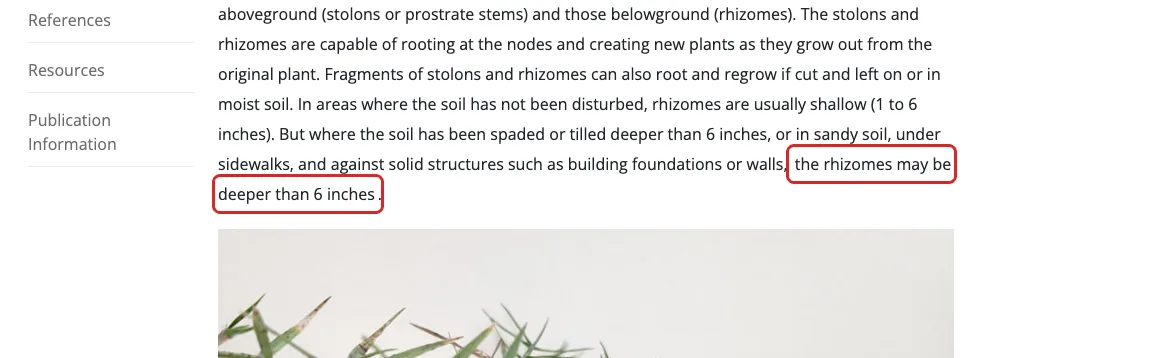
The grass decides more than the method does. Rhizomes and stolons store the energy to come back, and a method that clears tall fescue in one try can leave bermuda alive. Wisconsin Extension says rhizomes or stolons chopped up in tillage develop into new plants and re-invade the lawn.
| Grass | Spreads by | Spray | Plastic | Cardboard or chips | Sod cutter or tiller |
|---|---|---|---|---|---|
| Bermuda | Stolons plus rhizomes 1 to 6 in. deep, deeper in sand or tilled soil (UC IPM) | 2 or 3 rounds; 3 to 4 weeks apart (AGR-218); late summer is best | Clear 4 to 6 weeks, or black at least 6 to 8 in summer; no winter control | Wood chips fail; it pushes through (UC IPM) | Cutter leaves rhizomes below 2.5 in.; till only dry soil, 2 or 3 passes; rain regrows fragments |
| Zoysia | Stolons and rhizomes (NC State) | Multiple rounds on green growth, starting by July or early August (Wisconsin) | No published trial found | No published trial found | Very hard to remove mechanically; fragments propagate (Wisconsin) |
| Quackgrass | Aggressive rhizomes (Wisconsin) | Often multiple rounds | Dies without light in a covered sod pile (Montana State) | May not smother (Oregon State) | Spray first, then cut or till (Penn State) |
| Kentucky bluegrass | Rhizomes (NC State) | One round, then check at 14 to 21 days (Penn State) | 2 to 3 weeks in summer heat for grass generally (Oregon State) | Standard sheet mulch | Cut at 1/4 to 1/2 in. (Oregon State), but live root parts can remain |
| Tall fescue | Bunch type (Wisconsin) | Usually 1 round (Wisconsin); Kentucky warns clumps may recover | Same as bluegrass | Standard sheet mulch | About 1 in. under the roots (Iowa State) |
| St. Augustine | Stolons; UF/IFAS lists no rhizomes | ProVista is glyphosate-tolerant: spray will not kill it | No published trial found | No published trial found | Our inference: a cut lifts the stolons; expect some rooted pieces |
| Creeping bentgrass | Stolons, no rhizomes (UC IPM) | Dense patches may need repeats (Wisconsin) | No published trial found | No published trial found | Spray first, then cut |
Bermuda needs its own plan, and our how to kill bermuda grass page carries it. Johnsongrass and nutsedge also have their own pages; UC IPM rates nutsedge control under solarization as inconsistent even in good conditions, and Kentucky Extension lists it among weeds that may survive glyphosate.
How to kill grass naturally with plastic or cardboard
Clear plastic heats the soil and black plastic starves the plant. UC IPM’s target for clear film is a daily soil maximum of 110 to 125 degrees F in the top 6 inches, and its figures show 108 to 140 degrees at 2 inches. Where air stays too cool to reach it, UC IPM says weeds simply grow under the clear film.
- Pick the 4 to 6 hottest weeks; UC IPM uses late June through August in most of California. Find a flat spot or a south or southwest slope, in full sun.
- Mow as low as the mower goes and remove clippings, then wet the soil to at least 12 inches.
- Lay clear film: 1 to 2 mil heats best, 4 mil suits small plots. Run it 2 feet past the runners on bermuda.
- Dig a 4 to 6 inch trench around the edge, bury the film and pull it tight. Tape any tear.
- Check a soil thermometer at 6 inches. Leave the film up to 8 weeks in cool, windy or cloudy places.
- Afterward, keep cultivation under 2 inches so buried weed seed stays down (UC IPM’s limit is 3 inches on bermuda).
For a lawn in shade or a cool climate, use black plastic instead: Iowa State gives 6 to 8 weeks and UC IPM says at least that long in summer, with no holes. In cool or coastal areas UC IPM says black is sometimes the better film for that reason. Oregon State reports 2 to 3 weeks to kill grass in the heat of summer but warns that living root parts may remain; plan on UC’s 4 to 6 weeks if you want the roots.
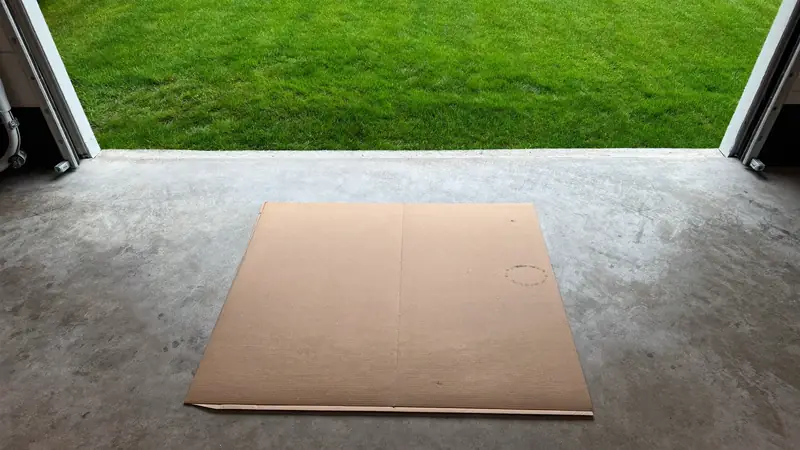
Cardboard is slowest and asks the least. Sources differ on thickness: Iowa State says 1 to 2 layers of cardboard or 6 to 8 sheets of newspaper, Placer County Master Gardeners 1 layer or 6 sheets, Vermont 10 sheets with 8 to 10 inch overlaps, and Oregon State 4 to 6 layers for lasagna beds. Thin is the safer end: Washington State’s Linda Chalker-Scott warns sheet mulches can block water and gas exchange and go hydrophobic when dry. Top with 4 to 6 inches of mulch and wait about 6 months. Chips alone also work on non-rhizome grass: Iowa State uses at least 8 inches, 24.7 cu yd per 1,000 sq ft, and checks at 2 to 4 weeks.
Kitchen remedies solve a different problem. Vinegar burns only what it wets, so our vinegar page shows the roots survive; UC IPM puts acetic acid among contact sprays that do not reach rhizomes. Salt and bleach have their own pages, and neither is among the methods on the Iowa State, Oregon State or Penn State pages we read.
Spraying before you replant: what the label allows
The lawn-replacement directions on Roundup Super Concentrate (EPA Reg. No. 71995-25) are the most specific instructions we found, and the label is the law for any pesticide. Other products carry their own rate and wait, so read the back panel of what you buy.
- Skip one mowing. Arizona Extension warns that scalping first leaves too little leaf to absorb it; UC IPM says no mowing for 2 to 3 weeks on bermuda.
- If soil is dry, water the day before and 2 to 3 days after.
- Mix 2.5 fl oz (5 Tbs) per gallon and spray 1 gallon over each 300 sq ft: 3.33 gallons and 8.33 fl oz per 1,000 sq ft.
- If green patches remain after 7 days, reapply.
- Wait at least 3 days after the last application, then rake or till and seed or sod. UC IPM waits at least 7 days before mowing or tilling bermuda so the herbicide reaches the roots.
Do not buy by brand name. Roundup Weed & Grass Killer4 (71995-65) contains no glyphosate and sets 7 days for lawn grass, and Roundup Max Control 365 (71995-49) bars planting for 1 year. Our 16-label Roundup table lists each wait. That also answers what kills grass permanently: long-residual formulas do, and they block whatever you plant next, which Arizona Extension warns can last years.
This page is general information, not pesticide-use or legal advice. The label is the law: follow the EPA-accepted label on your product, and confirm local pesticide and waste rules before you start.
Cutting sod and tilling: depth, soil loss and where the sod goes
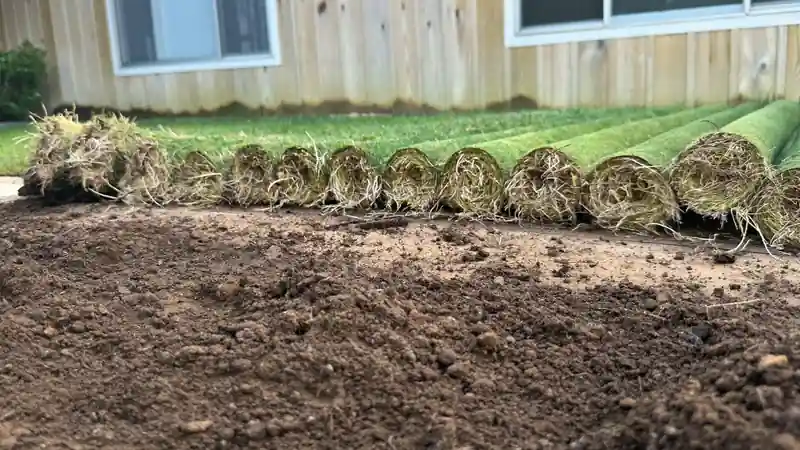
Cut shallow and move less. Oregon State sets the blade at 1/4 to 1/2 inch and Iowa State slides about 1 inch under the roots, against a 2.5-inch machine maximum. Each inch removes 3.09 cu yd per 1,000 sq ft. Flag sprinkler heads and call 811 before any machine digs.
Plan for weight. At Purdue’s 35 to 40 lb per sq yd, 1,000 sq ft of sod is about 2 tons, and curbside programs often refuse it: Alexandria, Va. and Fairfax County, Va. exclude sod from yard waste, while Augusta, Ga. accepts it. The free option is a covered pile: Montana State composts sod under black plastic to block light, and Iowa State notes the pieces can be reused elsewhere in the landscape. Treat bermuda sod with care: UC IPM says even its clippings should be thoroughly composted to kill seeds, rhizomes and stolons before use in the landscape.
Till once for a garden, not for a rhizome lawn. Iowa State says tilling can degrade soil structure, bring up weed seed and chop roots that resprout, and recommends waiting 2 to 4 weeks, then hoeing or spraying the flush. Penn State treats perennial grass with glyphosate first, then tills 4 to 6 inches. On bermuda, tilling works only as UC IPM describes it: dry soil, 2 or 3 passes in summer, no irrigation. For the next steps, see how to plant grass seed or sod vs seed, and run a soil test while the ground is open.
How we compiled this
We read 21 extension publications on killing or replacing turf, 3 EPA-accepted labels and the posted rates of 13 rental stores, plus retailer pages for film and herbicide, all on Nov. 5, 2026. Costs are our arithmetic from those prices and are estimates. We ran no field trials. Where we found no published trial for a grass and method, the table says so.
Frequently asked questions
What is the best way to permanently kill grass?
If you plan to replant, none: anything that stays in the soil also stops your new plants. Roundup Max Control 365 bars planting for 1 year on its label. To replace a lawn, use a short-wait glyphosate product or plastic, then keep the area planted or mulched so seed does not return.
What is the fastest way to remove grass?
A rented sod cutter clears it in a day and you can plant the same day, per Iowa State. On 1,000 sq ft expect about 2 tons of sod to move. Spraying is the fastest no-dig route, with a 3-day label wait after the last application on EPA Reg. No. 71995-25.
What is the cheapest way to kill grass?
Spraying at about $9 to $13 per 1,000 sq ft a pass, using our November 2026 prices and the 71995-25 label rate. Clear plastic runs $32 to $70 and needs no chemical. Cardboard alone is free if you can leave it for about 6 months, though bare cardboard needs weighing down.
Will Dawn and vinegar kill grass?
It can brown the leaves, but vinegar is a contact spray and the roots survive, so established grass grows back. UC IPM lists acetic acid products among those that do not affect bermuda roots or rhizomes. The trial numbers are on our vinegar weed killer page.
Can I spray Roundup on my garden before planting?
Only with the right formula. EPA Reg. No. 71995-25 allows flowers, trees and shrubs after 1 day, and lawn grass, herbs, fruit and vegetable gardens after 3 days. Glyphosate-free 71995-65 is not for use around edible crops, and imazapic “365” formulas bar planting for up to 1 year.
How long does it take to kill grass by covering it?
About 2 to 3 weeks in summer heat under plastic, with live roots possibly left (Oregon State), 4 to 6 weeks for clear film to reach roots and seed, 6 to 8 weeks under black plastic, and about 6 months under cardboard and mulch. Winter covering does not control dormant bermuda, per UC IPM.
Sources
- U.S. EPA, Accepted label, Roundup Weed & Grass Killer Super Concentrate, Reg. No. 71995-25, Jan. 28, 2021. Accessed November 2026.
- U.S. EPA, Accepted label, Roundup Weed & Grass Killer4, Reg. No. 71995-65, Nov. 29, 2023. Accessed November 2026.
- U.S. EPA, Accepted label, Roundup Max Control 365 concentrate, Reg. No. 71995-49, Nov. 21, 2025. Accessed November 2026.
- UC Statewide IPM, Pest Notes: Soil Solarization for Gardens and Landscapes, updated May 2019. Accessed November 2026.
- UC Statewide IPM, Pest Notes: Bermudagrass (7453), current page. Accessed November 2026.
- Iowa State University Extension, How to Kill Grass to Create a New Garden Bed, reviewed June 2026. Accessed November 2026.
- Oregon State University, When it’s time to say goodbye to lawn, uproot it first, news release. Accessed November 2026.
- Oregon State University Extension, EM 9559: Sheet mulching and lasagna composting with cardboard, current page. Accessed November 2026.
- Penn State Extension, Renovation of Lawns, current page. Accessed November 2026.
- Colorado State University Extension, Renovating the Home Lawn, current page. Accessed November 2026.
- University of Kentucky, AGR-218: Lawn weed control tables, Table 4, current PDF. Accessed November 2026.
- University of Kentucky, AGR-51: Renovating Your Lawn, PDF copy. Accessed November 2026.
- University of Arkansas, MP477: Establishing Seeded Bermudagrass, PDF. Accessed November 2026.
- University of Maryland Extension, Bermudagrass (Wiregrass), current page. Accessed November 2026.
- University of Wisconsin Extension, Perennial Grass Weeds in Lawns, current page. Accessed November 2026.
- UF/IFAS, LH010: St. Augustinegrass for Florida Lawns, PDF. Accessed November 2026.
- Kansas State University, Bermudagrass Control Options for Reseeding, July 2019. Accessed November 2026.
- University of Arizona, AZ1371: How to Eliminate a Bermudagrass Lawn Using Glyphosate, Sept. 2005. Accessed November 2026.
- University of Vermont Extension, Sheet Mulching for Lawn-to-Garden Conversion, current page. Accessed November 2026.
- UC Master Gardeners of Placer County, How to Kill Your Lawn by Sheet Mulching, current page. Accessed November 2026.
- NC State Extension, Extension Gardener Handbook, chapter 9: Lawns, current page. Accessed November 2026.
- Washington State University, Linda Chalker-Scott, The Myth of Paper-Based Sheet Mulch, PDF. Accessed November 2026.
- Montana State University Extension, Home Composting, PDF. Accessed November 2026.
- Purdue Extension, AY-28-W: Establishing a Lawn from Sod, May 2013. Accessed November 2026.
- Waste Advantage Magazine, EREF report: U.S. landfill tipping fees, national average $62.28 per ton, 2024 analysis. Accessed November 2026.
- City of Alexandria, Va., Yard Waste Recycling, current page. Accessed November 2026.
- Fairfax County, Va., Curbside Yard Waste, current page. Accessed November 2026.
- Augusta, Ga., Yard Waste Collection, current page. Accessed November 2026.
- SoCal Water$mart, Turf Replacement Program, current page. Accessed November 2026.
- Common Ground Alliance, Call 811, current page. Accessed November 2026.
- Roundup.com, Super Concentrate product page, Lowe’s listed price, checked Nov. 5, 2026. Accessed November 2026.
- Village Hardware, Williston, Vt., Weed & Grass Killer, 35.2 oz Super Concentrate, checked Nov. 5, 2026. Accessed November 2026.
- IDI Distributors, Poly America Husky 2 mil 10 x 100 ft clear sheeting, checked Nov. 5, 2026. Accessed November 2026.
- Interplas, 10 x 100 ft 4 mil clear plastic sheeting, checked Nov. 5, 2026. Accessed November 2026.
- Uline, Black Poly Sheeting, 6 mil, 20 x 100 ft, checked Nov. 5, 2026. Accessed November 2026.
- Arrow Rental, Rental rates: Gas 18 in. track sod cutter, checked Nov. 5, 2026. Accessed November 2026.
- Ace Tool Rental, Rental rates: 18 in. sod cutter, checked Nov. 5, 2026. Accessed November 2026.
- Fisher’s Rental, Rental rates: 18 in. sod cutter, checked Nov. 5, 2026. Accessed November 2026.
- Grand Rental Station, Rental rates: 18 in. gas sod cutter, checked Nov. 5, 2026. Accessed November 2026.
- Miller’s Ace Hardware, Rental rates: 18 in. sod cutter, checked Nov. 5, 2026. Accessed November 2026.
- Penn Hills Rental, Rental rates: Gas sod cutter, checked Nov. 5, 2026. Accessed November 2026.
- The Rental Branch, Rental rates: Sod cutter, checked Nov. 5, 2026. Accessed November 2026.
- A&A Rental Center, Rental rates: Sod cutter, checked Nov. 5, 2026. Accessed November 2026.
- Mass Landscape Supplies, Rental rates: Billy Goat SC181H 18 in. hydro, 2025 price list. Accessed November 2026.
- Wheeler Machinery, Rental rates: 18 in. cut, 2.5 in. max depth, 2025 contractor rate sheet; day is 8 hours. Accessed November 2026.
- Ace Rental Place, Rental rates: 18 in. track hydro, checked Nov. 5, 2026. Accessed November 2026.
- A1 Rental, Rental rates: Classen HSC18, checked Nov. 5, 2026. Accessed November 2026.
- Ripley’s Rental, Rental rates: Sod cutter, powered, 2026 price list. Accessed November 2026.
- Fisher’s Rental, Rental rates: rear-tine tiller, checked Nov. 5, 2026. Accessed November 2026.