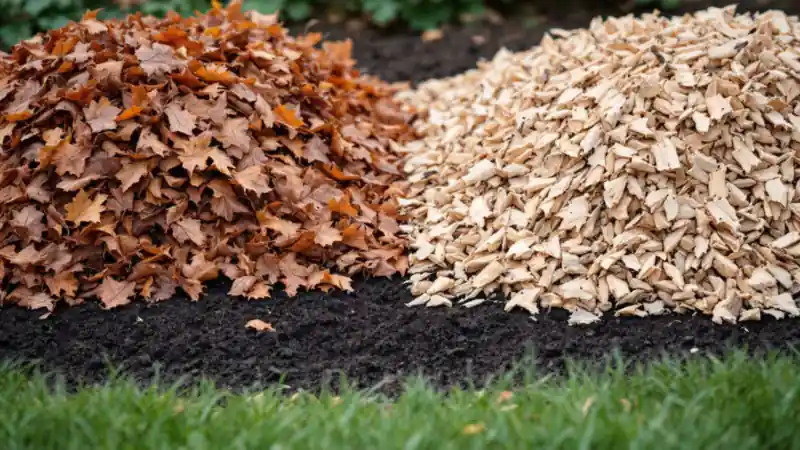
How to get leaves out of mulch: with the leaves dry and the mulch damp, run a blower at its lowest speed (50 to 80 mph on three models that publish one), boost off, then pick out what is left with an 8-inch shrub rake.
How to get leaves out of mulch comes down to one number most guides skip: air speed. Blower makers print it, and the lowest setting on the manuals we read runs 50 to 80 mph, while boost or top speed runs 110 to 210 mph (EGO LB5300 manual, Greenworks GBL80300 manual, Worx WG509 manual). Leaves are thin and flat and catch air; chunky bark does not, so the lowest setting that still moves the leaves is the one that leaves the most bark behind. The rest of the job is timing and the right hand tool for the gaps between plants.
The current top results for this question are a Reddit thread, a YouTube clip, a nozzle maker’s sales page and a Facebook group; none gives a setting, a tool width or a price. This page lines up 9 methods with the manual or maker page behind each row. If the leaves are on the lawn rather than the beds, our breakdown of leaf removal cost and the mulch-mowing research covers that job, and if you would rather turn the pile into bed cover, see how to make mulch from shredded leaves.
Every way to get leaves out of mulch, compared
Working width and published price are the two specs that separate the hand tools; air speed separates the power tools. The table lists what each maker or extension source actually states. We did not time or test any of them, so there is no speed column: only figures you can check.
| Method | Working width or setting | Mulch disturbance (what the source says) | Works best on | Cost (listed Nov. 2026) | Source |
|---|---|---|---|---|---|
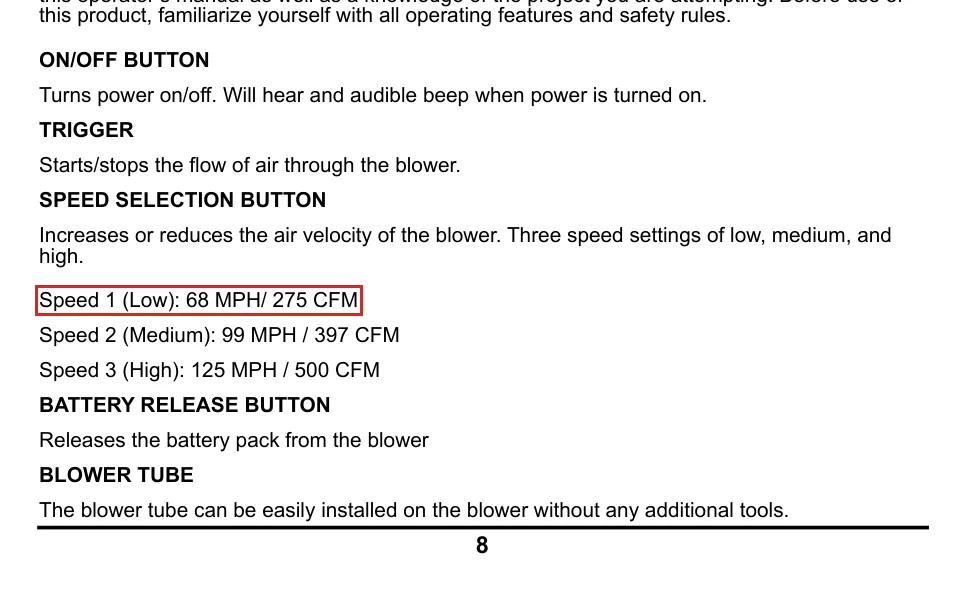
| Blower on lowest setting | Low: 50 mph, 260 CFM (EGO LB5300); 68 mph, 275 CFM (Greenworks GBL80300); 80 mph (Worx WG509) | Both manuals print: “Use rakes and brooms to loosen debris before blowing” | Open beds, shredded or nugget mulch, dry leaves | Blower you own | EGO p. 11, 18; Greenworks p. 8, 13 |
| Blower with a finger-style nozzle add-on (LeafWHIP MULCH) | Fits the blower tube | Maker says it is for blowers “capable of EXTREMELY low air output” and is “NOT recommended for single or most 2 speed blowers” | Beds where low speed alone still moves mulch | Price not shown on the page we read | LeafWHIP |
| 8-inch shrub rake | 8.27 in wide, 11 steel tines (True Temper); 9.5 in wide, 10 tines (Bully Tools) | Narrow head fits between stems; flick leaves up, do not drag | Planted beds, pine straw edges, around shrubs | $23.99 to $47.99 (Bully Tools, short or long handle) | True Temper; Bully Tools |
| 24-inch poly leaf rake | 24 in head, 48 in handle (True Temper Clog Free) | Skim the top; pressing down pulls mulch into the pile | Wide open beds with few plants | Not stated on maker page | True Temper |
| Leaf scoops (hand rakes) | 1 pair, worn on the hands | Lifts leaves only; no air, no tines in the mulch | Tight plantings, pots, gravel | $23.49 listed, shown sold out (Tabor Tools) | Tabor Tools |
| Hands and gloves | Your reach | None | Small beds, bulbs coming up | $0 | n/a |
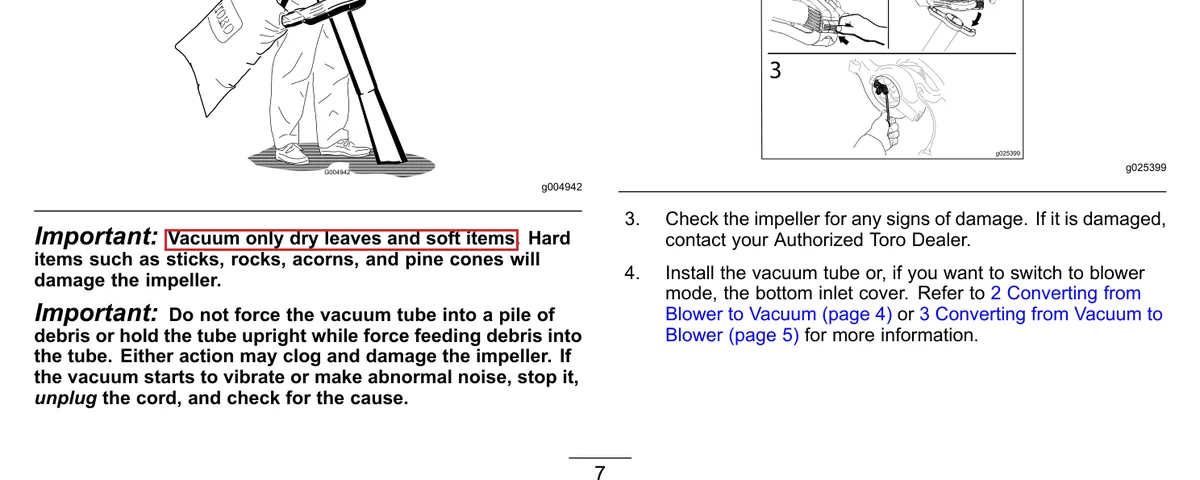
| Leaf vacuum or blower/vac | Worx WG509: 18:1 mulching ratio, 350 CFM | Toro: “Vacuum only dry leaves and soft items”; sticks, acorns and pine cones damage the impeller | Leaves on hardscape or lawn next to the bed, not the bed itself | Vacuum you own | Worx p. 7, 9; Toro 51581 p. 7 |
| Netting before leaf drop | DeWitt pre-cut 7 x 10 ft, 14 x 14 ft, 28 x 28 ft; 3/4 in mesh | None if pulled before it sags | Small formal beds under one tree | $4.99 to $39.99 by size (Blue Thumb) | Blue Thumb |
| Leave them, or shred and return | Up to 4 in around trees and shrubs (Penn State); 2 in shredded (Illinois) | None | Beds under trees, perennial beds over winter | $0 | Penn State; Illinois Extension |
Two patterns stand out. First, the power tools that work in beds are the ones you can turn down: both blower manuals and the nozzle maker treat a low setting as the requirement, not an option. Second, a leaf vacuum is the wrong tool inside a wood mulch bed, because the Toro manual lists sticks and pine cones, the same hard woody pieces a bark bed is made of, as impeller damage.
1Is the bed under trees or shrubs, with leaves under about 4 inches and no groundcover buried?
YesLeave them, or mow-shred them and spread about 2 inches (Penn State; Illinois Extension).
NoGo to the next question
2Are the leaves wet or matted?
YesWait for a dry day. Flick mats loose with a shrub rake or lift them with leaf scoops; vacuums take dry leaves only (Toro).
NoGo to the next question
3Does your blower have a low setting or a variable trigger?
YesBlower on its lowest speed, boost and tapered nozzle off, aimed at drift edges onto a tarp or the lawn.
NoGo to the next question
4Are plants closer together than about 8 inches?
YesLeaf scoops and an 8-inch shrub rake, flicking leaves up rather than dragging.
NoSkim a 24-inch poly leaf rake over the top without pressing, then top up any thin spots of mulch.
Source: EGO, Greenworks and Toro manuals; Penn State, Illinois and Oregon State extension
Which blower setting keeps mulch in the bed?
Use the lowest numbered setting your blower has, and never the boost button. Three of the six blowers below publish a low-speed figure. Ryobi and Makita give only a maximum and a variable trigger, so you set the speed with your finger, and EGO’s LB7650 manual gives top speed with and without its nozzle.
| Model | Settings | Air speed by setting | Air volume by setting | Source |
|---|---|---|---|---|
| EGO LB5300 (56V) | Low / High / Boost | 50 / 85 / 110 mph | 260 / 400 / 530 CFM | Operator’s manual, p. 11 |
| Greenworks GBL80300 (80V) | Speed 1 / 2 / 3 | 68 / 99 / 125 mph | 275 / 397 / 500 CFM | Operator’s manual, p. 8 |
| Worx WG509 TriVac (corded) | Dial 1 to 6 | 80 to 210 mph | 350 CFM (max) | Manual, p. 7 |
| Ryobi RY40LB01B (40V) | Variable trigger | 120 mph (max only) | 550 CFM (max only) | Product page |
| Makita XBU03Z (18V X2) | Variable trigger, cruise lever | 116 mph (max only) | 459 CFM (max only) | Product page |
| EGO LB7650 (56V) | Tapered nozzle on vs off | 74 m/s (166 mph) without, 87 m/s (195 mph) with | 1,300 m3/h (765 CFM) max | AU operator’s manual, p. 8 |
The spread inside one machine is large. The EGO LB5300’s boost is 2.2 times its low setting (110 against 50 mph), and the Worx dial spans 80 to 210 mph. The nozzle matters too: EGO’s LB7650 manual rates the same blower at 74 m/s without its tapered nozzle and 87 m/s with it, about 18 percent faster air from the narrow tip alone.
Blowing leaves off mulch, step by step
- Pick the window: leaves crisp on top, mulch still damp underneath, typically the afternoon after a morning dew or a day after light rain. Penn State says watering mulch after spreading “helps hold it in place” (Penn State, Oct. 2026).
- Set the lowest speed: Low on the EGO LB5300 (50 mph), Speed 1 on the Greenworks GBL80300 (68 mph), dial position 1 on the Worx WG509, the low end of its 80 to 210 mph range. On trigger-only models such as the Ryobi RY40LB01B, start with a light squeeze.
- Take off the tapered or concentrator nozzle if your blower has one; on the EGO LB7650 it raises top air speed from 74 to 87 m/s.
- Loosen first. Flick matted leaves up with a shrub rake, which is what the EGO and Greenworks manuals mean by “use rakes and brooms to loosen debris before blowing.”
- Work from the back of the bed toward the open edge, aiming at the edge of each drift. EGO’s manual says to “blow around the outer edges of a debris pile” and never into the center.
- Land the leaves on a tarp or the lawn, then run the mower over them; Illinois Extension says a light layer mowed in decomposes and adds organic matter (Illinois Extension, Oct. 2025).
- Measure the bed with a ruler at 3 or 4 spots and add mulch only where it reads thin, using our guide to how deep mulch should be by material.
If your blower has one speed, or the low setting still sprays bark, a 2-speed tool will not fix it: the nozzle maker itself says its add-on is not recommended for single or most 2-speed blowers (LeafWHIP). Switch to a shrub rake. For beds where a blower path keeps stripping light mulch every week, a binder is the other option, and our mulch glue guide has coverage rates and when it costs more than an inch of fresh mulch.
When is the best time to clear leaves from mulch?
Dry leaves and damp mulch is the combination that separates them. Water is most of the weight in wood: EPA’s conversion table lists green wood chips at 473 lb a cubic yard against 243 lb dry, about 95 percent heavier for the same volume (EPA, April 2016). Dry, flat leaves carry no such ballast, so they move first. Our mulch weight tables list the as-sold figures by material.
Wet leaves work against you. University of Minnesota Extension notes that leaves “tend to smash down and form a mat” (UMN Extension, November checklist), and a mat lifts as a sheet that drags mulch with it. Toro’s blower/vac manual says to vacuum only dry leaves and not to use the machine on wet surfaces. After a soaking rain, give the top layer a dry day before you start.
Do it in two or three passes during leaf drop rather than one at the end. Annette MaCoy, Penn State Extension’s master gardener coordinator for Franklin County, lists waiting until every leaf has fallen as a common mistake, because masses of leaves make the job harder (Penn State, Oct. 2026). A thin layer blows off on the low setting; a 4-inch drift needs more air, and more air moves mulch.
Rakes, scoops and hands for tightly planted beds
Use an 8-inch shrub rake wherever plants sit closer together than a regular rake head. True Temper’s version is 8.27 inches wide with 11 steel tines and a 48-inch handle (True Temper); Bully Tools lists a 10-tine, 9.5-inch head at $23.99 to $47.99 depending on handle length (Bully Tools, Nov. 2026). Hold it shallow and flick leaves upward so the tines pass over the mulch instead of combing through it.
A 24-inch poly rake such as the True Temper Clog Free clears a wide open bed in fewer strokes (True Temper), but its spread tines reach the bark if you press, so skim it. For gaps around perennials, pots and bulbs coming up, leaf scoops worn on both hands lift leaves with no tines in the mulch at all; Tabor Tools lists a pair at $23.49 (Tabor Tools, Nov. 2026).
Pine straw and rubber change the choice. Long pine needles interlock, so a rake pulls straw out with the leaves; low-speed air or scoops work better, and our pine straw vs mulch comparison covers how straw holds in place. Rubber mulch weighs about 700 lb a cubic yard, so it tolerates more air, but it never rots: leaves left in it become a mix that our rubber mulch pros and cons page says only hand or shovel work can separate after 10 years, so clear rubber beds every fall.
Should you use a leaf vacuum on mulch?
Not inside the bed. A vacuum’s job is to pull everything within reach into an impeller, and Toro’s Ultra blower/vac manual (model 51581) says to vacuum only dry leaves and soft items because sticks, rocks, acorns and pine cones damage the impeller (Toro, Form 3384-356). Bark nuggets and shredded hardwood are the same kind of hard woody piece.
Where a vacuum earns its place is the pile you blew onto the lawn or patio. The Worx WG509 is rated at an 18:1 mulching ratio, and its manual says to keep the tube 1 inch above the debris and never force it into a pile (Worx WG509 manual, p. 9). Treat 18:1 as the maker’s dry-leaf rating, not a measured result. The shredded leaves can go straight back onto the bed, which is the method in our guide to making mulch from leaves.
Can you stop leaves landing in the mulch?
For a small bed under one tree, yes: lay netting before the leaves drop and lift it like a sling afterward. DeWitt’s economy pond netting comes pre-cut at 7 x 10, 14 x 14 and 28 x 28 feet with 3/4-inch mesh, priced $4.99 to $39.99 by size at Blue Thumb in November 2026 (Blue Thumb). Measure the bed and buy the next size up so the edges can be pinned outside it; a 7 x 10 foot net covers a bed up to about 5 x 8 feet with a foot to pin down on every side.
Empty the net every few days during peak drop. A sagging net full of wet leaves presses into the mulch and is heavy to lift, the same mat problem UMN describes. On beds wider than about 28 feet, or under several trees, netting gets awkward, and the blower and rake methods above are the realistic options.
Should you remove leaves from mulch at all?
Often you can leave a thin layer. Oregon State University Extension says fallen leaves “can serve as a natural mulch in flower beds,” protect soil from winter rain and erosion and provide habitat for beneficial organisms; you need only enough to cover the soil “without creating a dense mat” (OSU Extension, Oct. 2026).
| If the bed looks like this | Do this | Source |
|---|---|---|
| Leaves under trees and shrubs, layer under 4 in | Leave them; keep them a few inches off trunks and stems | Penn State, Oct. 2026 |
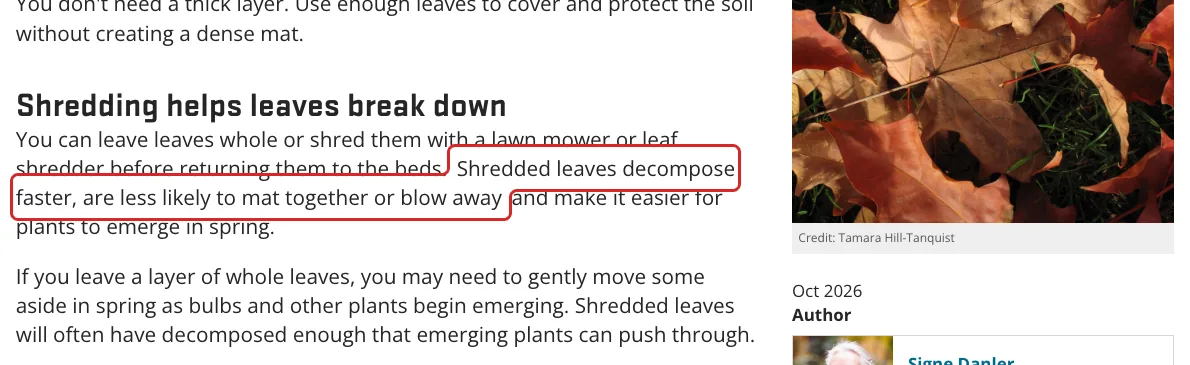
| Whole leaves in a windy or formal bed | Mow to shred, then spread about 2 in; shredded leaves are less likely to mat or blow | Illinois Extension; OSU |
| Tender perennials going into winter | Rake 6 to 8 in of leaves into the bed; pull them off crowns in spring | UMN Extension |
| Leaves bury groundcover or low perennials so no green shows | Remove most of them; shred and reuse or stockpile | Penn State, Oct. 2026 |
| Leaves on paths and steps | Remove; they get slippery | Penn State, Oct. 2026 |
| Bulbs coming up through whole leaves in spring | Move leaves aside gently; shredded leaves are usually thin enough to push through | OSU Extension |
| Spring cleanup in perennial beds | Wait until temperatures rise and hold; many insects overwinter in plant debris | UMN Extension, Clay County |
| Rubber mulch or decorative rock | Remove every fall; leaves rot into the gaps and cannot be raked out later | Rubber mulch guide; mulch vs rock |
A layer kept for wildlife can still look tidy. Penn State’s coordinator suggests a thin top layer of natural, undyed purchased mulch over the leaves to hold them, and notes the natural leaf layer that insects and box turtles use is 6 to 12 inches deep in wooded areas (Penn State, Oct. 2026). Leaves do break down: Illinois Extension says 2 inches of shredded leaves on a bed turns into soft brown leaf mulch by spring, and that a 2-inch layer adds roughly 3.44 lb of nitrogen per 1,000 sq ft (Illinois Extension).
That nitrogen figure is Illinois’ own conversion of about 150 lb an acre, and it comes from the leaves as they decompose over the season. Oak leaves test acidic when fresh, 4.5 to 4.7 pH, but Illinois says they break down to neutral or slightly alkaline and leaf mulch has no significant effect on soil pH, so leaving them will not sour the bed.
How we compiled this
We read 6 blower and blower/vac manuals or product pages (EGO LB5300 and LB7650, Greenworks GBL80300, Worx WG509, Toro 51581, Ryobi RY40LB01B, Makita XBU03Z), 5 extension publications (Oregon State, Penn State, University of Illinois, 2 from University of Minnesota) and EPA’s 2016 volume-to-weight table, plus 5 tool and netting maker pages for widths and list prices, all on Nov. 19, 2026. We did not test any tool or measure mulch loss; the disturbance column quotes what each maker or extension source says, and the timing advice is our reading of those sources.
Frequently asked questions
How do you clean leaves out of mulch?
Wait for a dry day, then run a blower on its lowest speed (50 to 80 mph on the models that publish one) from the back of the bed toward the edge, onto a tarp or lawn. Pick out stragglers with an 8-inch shrub rake or leaf scoops.
How do you remove leaves without removing mulch?
Keep the air low and the leaves loose: boost off, tapered nozzle off, and flick mats up with a rake first, as the EGO and Greenworks manuals advise. Damp mulch is heavier; EPA lists green wood chips at 473 lb a cubic yard against 243 lb dry.
Do leaves decompose in mulch?
Yes. Illinois Extension says a 2-inch layer of shredded leaves on a bed becomes soft leaf mulch by spring; whole leaves take longer, 9 to 12 months in a pile against 6 for shredded.
Should you remove leaves from mulch?
Not always. Penn State allows up to 4 inches around trees and shrubs. Remove them where they bury groundcover, sit on paths or land in rubber or rock mulch.
What is the 3-3-3 rule for mulch?
A memory aid for trees: a ring at least 3 feet across, 3 inches deep and kept 3 inches off the trunk. Our mulch depth guide compares it with extension figures.
Sources
- EGO Power+, LB5300 56V Lithium-Ion Cordless Blower Operator’s Manual, specifications p. 11 and operating p. 18, manual, undated. Accessed November 2026.
- EGO Power+ (Australia), LB7650E 56V Cordless Blower Operator’s Manual, specifications p. 8, April 2022. Accessed November 2026.
- Greenworks, 80V Cordless Brushless Blower GBL80300 Operator’s Manual, pp. 8 and 13, manual, undated. Accessed November 2026.
- Worx, WG509 12 Amp TriVac Blower/Vac/Mulcher Manual, pp. 7 and 9, manual, undated. Accessed November 2026.
- The Toro Company, Ultra Blower/Vacuum Model 51581 Operator’s Manual, Form 3384-356 Rev C, 2020. Accessed November 2026.
- Ryobi, 40V 550 CFM Blower RY40LB01B product page, Nov. 2026. Accessed November 2026.
- Makita USA, XBU03Z 18V X2 LXT Blower product page, Nov. 2026. Accessed November 2026.
- Oregon State University Extension (S. Danler), Should I leave fallen leaves on my flower beds?, Oct. 2026. Accessed November 2026.
- Penn State (A. MaCoy, Penn State Extension), Q&A: Why fallen leaves are a ‘gift’ worth keeping, Oct. 14, 2026. Accessed November 2026.
- University of Illinois Extension, Don’t bag your fall leaves, use them, Oct. 27, 2025. Accessed November 2026.
- University of Minnesota Extension, November garden checklist, current page. Accessed November 2026.
- University of Minnesota Extension (Clay County), Spring yard and garden preparation, current page. Accessed November 2026.
- U.S. Environmental Protection Agency, Volume-to-Weight Conversion Factors, April 2016. Accessed November 2026.
- LeafWHIP, How to remove leaves from mulch (MULCH model page), Nov. 2026. Accessed November 2026.
- True Temper (Ames), 8 Inch Steel Tine Shrub Rake 1789100, Nov. 2026. Accessed November 2026.
- True Temper (Ames), 24 Inch Clog Free Poly Leaf Rake 2914912, Nov. 2026. Accessed November 2026.
- Bully Tools, 8-Inch Shrub Rake with Fiberglass Handle, Nov. 2026. Accessed November 2026.
- Tabor Tools, Leaf Scoops: Garden and Yard Hand Rakes (1 Pair), Nov. 2026. Accessed November 2026.
- Blue Thumb, DeWitt Economy Pond Netting, Nov. 2026. Accessed November 2026.