How to level a lawn: fill dips up to about 3/4 inch with 1/4 to 1/2 inch passes of topdressing that matches your soil, and cut and lift the sod over anything deeper, filling underneath.
Key takeaways
- Extension limits for one topdressing pass run from 1/8 inch (Texas A&M E-139) to 1/2 inch (Clemson HGIC 1227); Purdue allows up to 1/4 inch on home lawns, and Wisconsin says at least half of the leaf height must stay visible (UW A3710).
- Match the fill to your soil. Clemson says sand should only be used to topdress lawns where the native soil is sandy, and Oregon State reports that sand mixed into soil reduces porosity until it reaches about 80 percent by volume (OSU EC 1550).
- A 1/4 inch layer over 1,000 sq ft takes about 0.8 cubic yard of material, and a 1/2 inch layer about 1.5 cubic yards (UT Extension W161-N). One cubic yard of dry sand may weigh as much as 3,000 lb.
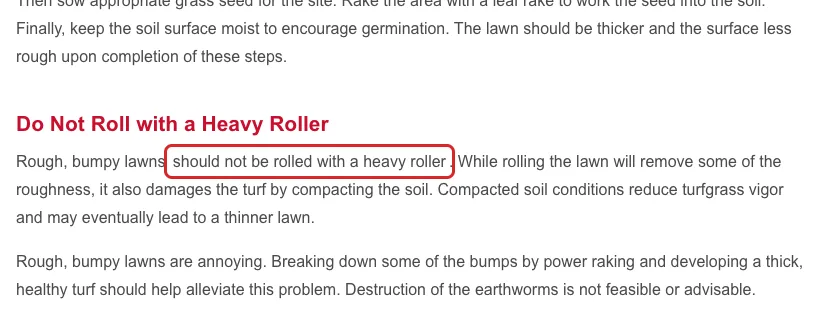
- Heavy rolling is not a leveling method: Iowa State says it compacts the soil (Bumpy, Rough Lawns), and University of Kentucky guidance quoted by Ask Extension says rolling will not correct undulations caused by improper grading (Ask Extension #176569).
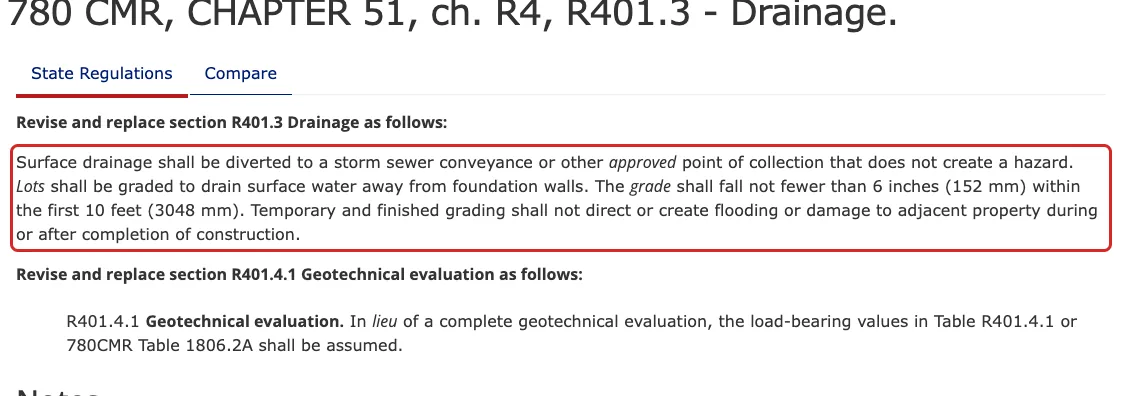
- Near the house, grade matters more than smoothness: model code section IRC R401.3 requires the ground to fall at least 6 inches within the first 10 feet of the foundation, a 5 percent slope (780 CMR R401.3, as adopted in Massachusetts).
- At 13 supply yards checked October 29, 2026, screened topsoil cost $27 to $58 per cubic yard and mason sand $34.75 to $75, so one 1/4 inch pass over 1,000 sq ft takes about $21 to $58 of bulk fill; eight lawn companies post leveling or topdressing at $89 to $1,500 per 1,000 sq ft (price data).
What makes a lawn bumpy, and what should you fix first?
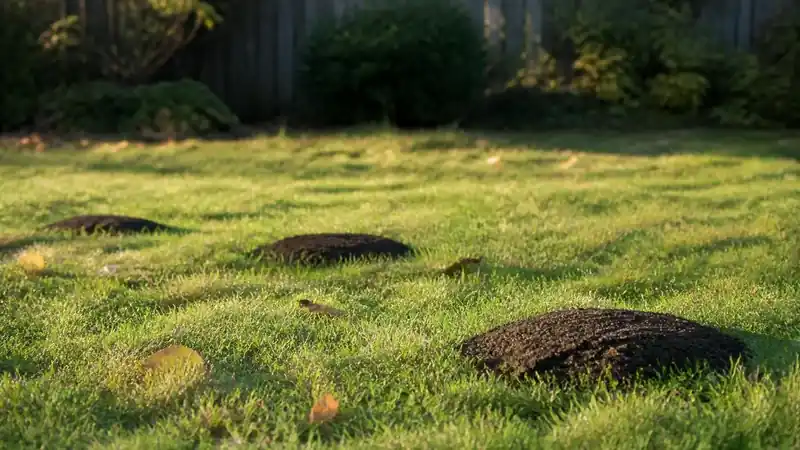
Purdue’s turf program says most lawns are bumpy because of natural soil settling over time (Purdue Turf, Bumpy Lawn?). The other common causes are frost heave, earthworm castings, moles, animals digging for grubs and decaying stumps. Fix the cause first: filling a mole run or a sinking stump hole before the cause is gone means filling it again next season.
| Cause | What you see | Fix before you level | Source |
|---|---|---|---|
| Natural soil settling | Broad, shallow dips | Nothing to stop; topdress or lift and fill once it stops moving | Purdue Turf |
| Unsettled fill on a new lawn | Undulations that appear in the first seasons | Let soil settle with rain, irrigation or time before the final grade | Purdue AY-3-W |
| Decaying stump or roots | A depression that keeps sinking for years | Topdress gradually; the roots around the stump keep decaying | Illinois Extension; Purdue AY-28-W |
| Frost heave | Rough, lifted surface in spring | Thicken thin turf, which heaves more than dense turf | Iowa State; UW A3710 |
| Earthworm castings (nightcrawlers) | Small soil mounds over the whole lawn | Core aerate and drag the plugs; castings come back | Iowa State; CSU GardenNotes 554 |
| Moles | Raised tunnels and mounds | Trapping is the only way to remove moles; tamp the tunnels | Purdue Turf; UMD |
| Skunks, raccoons, crows | Cone-shaped holes about 3 inches wide and deep, torn turf | Dig a square foot and check for white grubs first | UMD; U. of Minnesota |
| Equipment ruts, ant mounds, buried rocks | Linear ruts, local humps | Keep traffic off wet turf; remove rocks | UW A3710 |
| Too much organic matter in the soil | Settling as compost or peat decomposes | Keep organic matter at or under 15 percent by volume | Oregon State EC 1550 |
Animal digging is the cause most often misread. University of Minnesota Extension says lawns torn up by raccoons, moles or crows are usually a symptom of white grubs, so level after the grubs are dealt with. Our guide to grubs in lawns covers the square-foot dig and per-species thresholds.
A spot that stays soft and sinks near a sprinkler head or valve is worth checking for a leak before you fill it, because NC State’s AG-69 says areas that settle unevenly should be refilled to avoid standing water (NC State, Carolina Lawns), and a leaking line keeps re-wetting the fill. Typical repair prices are on our sprinkler repair cost page.
How deep are your low spots, and which fix fits?
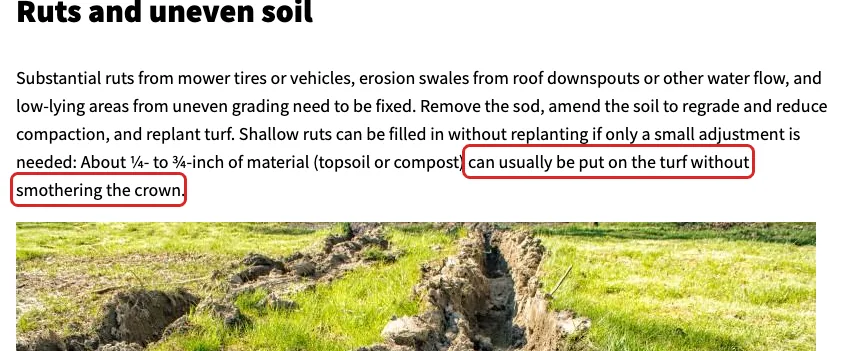
Measure before you buy anything. Lay a straight 8 to 10 foot board across the dip and measure the gap under its middle with a tape. Gaps up to about 3/4 inch can be topdressed in place, the range Maryland Extension says can go on turf without smothering the crown (UMD Extension). Deeper or wider lows need the sod lifted, and a lawn that is uneven everywhere needs regrading.
| Depth of the low spot or bump | Method | Material per pass | Source |
|---|---|---|---|
| Under 1/4 inch, all over (castings, frost heave) | Core aerate, let cores dry, drag them with a mat or chain-link section | None bought; the cores are the fill | UW A3710; CSU |
| 1/4 to 3/4 inch, local dips | Topdress in passes, letting grass grow through between them | 1/8 to 1/2 inch, half the leaf height visible | UMD; UW A3710 |
| Deeper than 3/4 inch, or a large low area | Cut the sod in strips of uniform thickness, fill under it, relay | Soil matching the native soil, firmed in layers | Ask Extension #877901; UMD |
| High spots and humps | Lift the sod, shave soil off, relay | Remove soil; no fill | Penn State (grade off high spots) |
| Severe unevenness over most of the lawn | Kill the turf, till 2 to 4 inches, let it settle, regrade, reseed | Whole-lawn renovation | Purdue Turf |
| Ground that slopes toward the house | Regrade to fall 6 inches in the first 10 feet | Fill soil at the foundation | IRC R401.3 (780 CMR) |
How much topdressing can you put on grass at once?
The answer depends on which extension service you read: published limits for a single pass run from 1/8 inch to 3/4 inch. The common rule behind every number is that the grass must stay above the fill. Wisconsin’s A3710 puts it as at least half of the leaf height visible, or the turf may die from lack of sunlight (UW Extension A3710).
| Source | Low end (in) | High end (in) | What it says | Date |
|---|---|---|---|---|
| Texas A&M AgriLife, E-139 | 1/8 | 1/8 | Soil topdressing, thatch control; not to exceed 1/8 inch | 1998 |
| UMass Amherst turf BMPs, ch. 9 | 1/8 | 1/8 | About 1/8 inch of topsoil similar to the root zone, to even out bumpiness | n.d. |
| University of Tennessee, W161-N | 1/8 | 1/4 | 1/8 to 1/4 inch broadcast per topdressing | 2008 |
| Purdue Turf, Bumpy Lawn? | 1/4 | 1/4 | Up to 1/4 inch each time on home lawns (1/32 inch on golf greens) | 2004, rev. 2019 |
| U. of Minnesota educator, Ask Extension | 1/4 | 1/4 | About 1/4 inch, sprinkled on existing grass | 2018 |
| Kansas State turfgrass | 1/8 | 1/2 | 1/8 to 1/2 inch of compatible soil | n.d. |
| UW Madison Extension, A3710 | 1/4 | 1/2 | Usually no more than 1/4 to 1/2 inch; half the leaf height visible | 2000 |
| Clemson HGIC 1227 | 1/2 | 1/2 | No more than 1/2 inch at a time | 2020 |
| NC State AG-968 (bermudagrass) | 1/4 | 1/2 | 0.25 inch routine; over 1/2 inch likely smothers bermudagrass | 2024 |
| University of Maryland Extension | 1/4 | 3/4 | 1/4 to 3/4 inch of topsoil or compost on shallow ruts | 2026 |
Five of the ten sources cap a pass at 1/4 inch or less, and only Maryland goes past 1/2 inch. Our reading of the ten: 1/4 inch per pass on cool-season bunch grasses, up to 1/2 inch on spreading warm-season grass in summer, never over the tips of the leaves, and the next pass only after the grass has grown through.
Should you level a lawn with sand, topsoil or compost?
Use the material that matches your existing soil: Wisconsin, Tennessee, Penn State, NC State and UMass Extension all give that rule, because a texture mismatch forms a layer that restricts water (UT W161-N). Clemson’s HGIC 1227 says sand should ONLY be used where the native soil is sandy (Clemson HGIC 1227).
| Material | Use it when | Risk | Source |
|---|---|---|---|
| Washed sand (masonry or concrete sand) | Native soil is sandy; warm-season turf on sandy sites | On clay or silt, a sand layer perches water; sand mixed into soil cuts porosity until about 80 percent sand by volume | Clemson; Oregon State EC 1550 |
| Screened topsoil matching your soil | Clay, silt loam or loam lawns; lift-and-fill repairs | Unscreened “black dirt” or muck: an unmixed layer stops drainage and can kill the turf | UW A3710 |
| Compost | Thin passes for organic matter; Maryland lists topsoil or compost for shallow ruts | Settles as it decomposes; over 15 percent organic matter by volume leaves a bumpy lawn | UMD; Oregon State |
| Sand and soil or sand and compost blend | When the blend is close to your soil’s texture | Same layering rule: sand much finer than the root zone forms a perched water table | Purdue, Sand Topdressing Programs |
| Play sand | Not listed by any extension source we read for lawns | Fine, uniform particles; Purdue warns topdressing much finer than the root zone damages soil physical properties | Purdue |
The sand debate in lawn forums mostly comes from golf. Golf greens are built on sand root zones, so sand topdressing matches them. The USGA’s own fairway guidance says sand topdressing on native soil has to be paired with core aeration that mixes the two, or “an increasingly sandy layer will develop” (USGA Green Section Record, 2024). A home lawn on clay has no such program.
Arkansas Extension adds that changing a clay soil’s texture takes 50 percent or more sand by volume, and that clay can bind sand into a denser soil, much as cement binds gravel (University of Arkansas Extension). A 1/4 inch pass of sand will not improve a clay lawn; it sits on top. If you do not know your soil texture, a lab test answers it; see our soil test guide.
Colorado State goes furthest: its GardenNotes #554 says topdressing a bumpy lawn with soil or sand is not recommended as a way to smooth the surface, and points to core aeration instead (CSU GardenNotes 554). Wisconsin says regular topdressing is rarely appropriate for home lawns, although small additions to selected sites can help.
How much leveling mix do you need per 1,000 square feet?
One cubic yard is 27 cubic feet, so it covers 324 sq ft at 1 inch deep, 1,296 sq ft at 1/4 inch and 648 sq ft at 1/2 inch. Per 1,000 sq ft that works out to about 0.8 cubic yard at 1/4 inch and 1.5 at 1/2 inch, the figures in Tennessee Extension’s W161-N table (UT W161-N).
| Depth | Cubic feet per 1,000 sq ft | Cubic yards per 1,000 sq ft | UT W161-N table | 0.5 cu ft bags | Dry sand weight at 3,000 lb per cu yd |
|---|---|---|---|---|---|
| 1/8 inch | 10.4 | 0.39 | 0.4 | 21 | 1,157 lb |
| 1/4 inch | 20.8 | 0.77 | 0.8 | 42 | 2,315 lb |
| 3/8 inch | 31.2 | 1.16 | 1.2 | 62 | 3,472 lb |
| 1/2 inch | 41.7 | 1.54 | 1.5 | 83 | 4,630 lb |
| 3/4 inch | 62.5 | 2.31 | 2.3 | 125 | 6,944 lb |
| 1 inch | 83.3 | 3.09 | 3 (UMD) | 167 | 9,259 lb |
You rarely topdress the whole lawn. Mark the low spots with flags, measure each area’s length and width, and multiply by its average depth. Worked example: a 5,000 sq ft lawn with three low spots that add up to 450 sq ft and average 0.5 inch deep, filled in two 1/4 inch passes.
| Line | Input | Result |
|---|---|---|
| Fill volume | 450 sq ft x 0.5 inch / 324 | 0.69 cubic yard (18.8 cu ft); round up to 1 cubic yard |
| Bulk screened topsoil, picked up | 1 cu yd at $27 to $58 | $27 to $58 |
| Leveling rake rental, one day per pass | 2 days at $14 to $22 | $28 to $44 |
| DIY total, bulk | Material plus rake | $55 to $102, plus hauling or a delivery fee (Plaisted: $150 to $410 per order) |
| Same fill in bags | 38 bags of 0.5 cu ft at $4.95 to $8.59 | $186 to $322 |
| Hired, priced per cubic yard applied | 1 cu yd at $300 to $375 (Oviedo; Gulfscapes) | $300 to $375 |
- Material needed (cubic yards)
- 0.77
- Material needed (cubic feet)
- 20.8
- 0.5 cu ft bags if bagged
- 42
Cost = area x depth factor x cost per 1,000 sq ft at 1/4 inch, from our Oct. 29, 2026 price tables. Volume: 1 cubic yard covers 1,296 sq ft at 1/4 inch. Yards sell whole or half yards, so round up.
Seller coverage claims can be checked with the same math. Super-Sod says one BigYellowBag, 1 cubic yard, of its Level Mix levels 500 to 1,000 sq ft (Super-Sod); that equals an average depth of about 0.65 to 0.32 inch, so the bag stretches to 1,000 sq ft only if you average about 1/3 inch.
How do you level a lawn by topdressing?
Topdressing fills shallow dips in passes while the grass stays alive: spread the fill, work it into the low spots, water it, and repeat after the grass grows through. Each pass stays at 1/8 to 1/2 inch, so a 3/4 inch dip takes two to six passes. Wisconsin’s A3710 says several soil additions may be needed over a period of several months (UW A3710).
- Fix the cause and wait for active growth. Trap moles, treat grubs above threshold and repair leaks first. Work only while the grass is growing, never in a hot, dry spell or dormancy (UW A3710).
- Mow at the low end of your normal height. Do not scalp. The goal is to see the dips and keep at least half of the leaf showing after you spread the fill (UW A3710).
- Core aerate if the soil is compacted or the fill differs from your soil. Aerate when the soil is slightly moist; Wisconsin says to water dry lawns 1 to 2 days before. The USGA pairs sand topdressing with core aeration so the two soils mix (USGA). Our aeration timing guide has the windows by grass type.
- Mark the low spots and measure them. Use flags and a straight 8 to 10 foot board; write down area and average depth for each spot and order material with the volume table above.
- Dump small piles into the low spots only. Use a shovel or wheelbarrow. Keep the material dry enough to flow; wet soil clumps and smothers grass.
- Spread and work it in. Pull the fill across with a leveling rake, the back of a landscape rake or a push broom. Mississippi State describes dragging a mat or a section of chain-link fence to move material from the high spots to the low spots (MSU Extension).
- Check the leaf tips. If grass is fully covered anywhere, rake or brush the fill off until at least half of the leaf height shows.
- Water it in. A gentle sprinkler pass settles the fill between the blades; a hard hose stream washes it out of the dips.
- Repeat after the grass grows through. Wait until the leaves are well above the fill, then measure again and add the next 1/8 to 1/2 inch pass. Wisconsin expects several additions over several months.
If the lawn is thin, overseed right after a pass and rake the seed in lightly. The Michigan Ask Extension answer on leveling Kentucky bluegrass ends the season the same way: core aerate, topdress with compost and overseed by late September. Our overseeding guide gives the seeding rates and timing by grass type.
How do you fix low spots deeper than 3/4 inch?
Lift the sod and fill under it. Ask Extension’s Michigan answer describes cutting the grass out in strips of uniform thickness, filling the low area to within the strips’ thickness, and replacing the strips (Ask Extension #877901). Maryland Extension gives the same fix for substantial ruts or low areas: remove the sod, regrade, replant.
- Water the area 1 to 2 days before, the lead time Wisconsin gives for aerating dry lawns. Moist sod holds together when cut.
- Cut an H or a grid of strips. Use a flat spade or half-moon edger and slice under the roots at one even depth so the strips go back level. A rented sod cutter does this for large areas.
- Roll the strips back and set them in shade, grass side up, and keep them damp.
- Fill with soil that matches the native soil. Add it in thin layers and firm each one with your foot or a hand tamper, so it does not settle into a new dip.
- Mound slightly. A University of Minnesota educator notes that topsoil will settle, so mound the fill slightly (Ask Extension #469010). Check with the straight board that the sod will sit flush with its neighbors.
- Relay the strips and press them down. Butt the edges tight, fill seams with a little soil, and water to wet the soil under the sod.
- Water like new sod until the roots knit, then mow normally.
High spots get the same treatment in reverse: lift the sod, shave soil off until the board sits flat, and relay. For stump holes, plan on repeat fills: Illinois Extension notes the surrounding roots keep decaying and settling for several years (Illinois Extension). Moles leave tunnels that Maryland says to tamp down to collapse air voids before you reseed or resod.
When should you level a lawn?
Level while your grass is actively growing so it can grow up through the fill. Clemson HGIC 1226 says warm-season turf is topdressed in the summer growing season and cool-season turf in spring and fall, avoiding summer heat (Clemson HGIC 1226). Wisconsin adds: never during hot, dry periods or dormancy.
| Grass type | Leveling window | Avoid | Source |
|---|---|---|---|
| Bermudagrass, zoysiagrass, St. Augustinegrass, centipedegrass (warm-season) | Summer growing season, after full green-up; up to 1/2 inch per pass on bermudagrass | Dormancy; more than 1/2 inch smothers bermudagrass | Clemson HGIC 1226; NC State AG-968 |
| Tall fescue, Kentucky bluegrass, perennial ryegrass (cool-season) | Spring and fall | Summer heat and drought | Clemson HGIC 1226; UW A3710 |
| Kentucky bluegrass in Michigan (Ask Extension answer) | Topdress through summer, stop by late September, resume in spring | Late fall passes | Ask Extension #881570 |
| Any lawn | When soil is moist but not wet | Saturated soil; rolling wet soil gives maximum compaction | UW A3710; Ask Extension #176569 |
Pair leveling with the jobs that share its window; Clemson HGIC 1226 times aeration and topdressing to the same active-growth season. Cool-season lawns are aerated and overseeded in late summer and fall, so a pass of fill fits after aeration; month-by-month timing for each task is in our lawn care schedule, and grass-by-grass guides are on our turf and trees hub.
Does your yard need regrading instead of leveling?
Leveling smooths the surface; grading sets the slope, and the slope near the house is a code matter. IRC R401.3, as adopted in Massachusetts, says lots shall be graded so the grade falls not fewer than 6 inches within the first 10 feet of the foundation (780 CMR R401.3), and impervious surfaces within 10 feet must slope at least 2 percent away.
| Rule or guideline | Slope | Drop over 10 feet | Applies to | Source |
|---|---|---|---|---|
| IRC R401.3, lot grading | 5% | 6 inches | First 10 feet from the foundation | 780 CMR R401.3; Maricopa County |
| IRC R401.3, impervious surfaces | 2% | 2.4 inches | Patios, walks within 10 feet | 780 CMR R401.3 |
| DOE Building America | 4.2% (0.5 inch per foot) | 5 inches | Permeable surfaces, first 10 feet | DOE/PNNL |
| NC State AG-69 | 2 to 3% | 2.4 to 3.6 inches | Lawn drainage away from buildings | NC State |
| UMD Extension; UC IPM | 1 to 2% | 1 1/4 to 2 1/2 inches | New lawn grade away from buildings | UMD; UC IPM |
| Purdue AY-28-W | 2% (1 ft in 50 ft) | 2.4 inches | Adequate lawn surface drainage | Purdue AY-28-W |
| Purdue AY-28-W, upper limit | 25% (1 ft in 4 ft) | 30 inches | Steeper slopes bring mowing and erosion problems | Purdue AY-28-W |
| TxDOT mowing standard | 33% (3:1) | 40 inches | Avoid mowing slopes this steep or steeper | TxDOT |
Check it with a string line. Drive a stake at the foundation and another 10 feet out, tie a string to both, level it with a line level, and measure from the string down to the ground at the outer stake.
| Step | Input | Result |
|---|---|---|
| Measured gap at the outer stake | 4 inches below the level string | Ground falls 4 inches in 10 feet |
| Slope | 4 / 120 inches | 3.3 percent |
| Against the extension lawn range (1 to 3%) | 3.3 percent | Drains |
| Against IRC R401.3 (6 inches in 10 feet) | Short by 2 inches | Add about 2 inches at the wall, tapering to 0 at 10 feet |
| Fill for a 40 ft wall section | 40 ft x 10 ft x 1 inch average / 324 | About 1.2 cubic yards of soil |
Build the 6 inch fall by adding fill at the wall and tapering it to nothing at 10 feet, not by piling soil against siding. When water reaches the foundation anyway, the fixes are drains, not leveling; see our French drain cost guide. Slopes too steep to mow are covered in our erosion control methods guide.
What does it cost to level a lawn yourself or hire it out?
Doing it yourself is mostly material: one 1/4 inch pass over 1,000 sq ft takes 0.77 cubic yard, about $21 to $58 of bulk topsoil, sand, compost or leveling mix at the supply yards we checked on October 29, 2026, plus $14 to $22 a day for a rented leveling rake. Eight lawn companies post hired leveling or topdressing at $89 to $1,500 per 1,000 sq ft.
Bulk fill by the cubic yard
Bulk material is sold by the cubic yard at landscape supply yards, and price spreads within one material are wider than the gaps between materials: screened topsoil ran $27 to $58, mason sand $34.75 to $75 and compost $33 to $58 per cubic yard on the price lists below. The last column converts each price into one 1/4 inch pass over 1,000 sq ft, 0.77 cubic yard.
Swipe the table sideways to see every column.
| Material | Seller (state) | Product | Per cubic yard | 1/4 inch over 1,000 sq ft | Source |
|---|---|---|---|---|---|
| Mason sand | State Crushing (MI) | Mason sand (Auburn Hills yard) | $34.75 | $26.81 | price list |
| Mason sand | Canton Topsoil (MI) | Mason sand | $38.00 | $29.32 | price list |
| Mason sand | TS Landscape Supply (OH) | Mason sand | $48.00 | $37.04 | price list |
| Mason sand | Morton’s Materials (OH) | Mason sand | $52.00 | $40.12 | price list |
| Mason sand | MRM Landscape Supply (WA) | Sand (price includes tax) | $60.00 | $46.30 | price list |
| Mason sand | Adams Landscaping and Supply (NY) | Mason sand | $67.00 | $51.70 | price list |
| Mason sand | Ottr Landscape Supply (MA) | Mason sand | $75.00 | $57.87 | price list |
| Screened topsoil | State Crushing (MI) | Topsoil | $27.00 | $20.83 | price list |
| Screened topsoil | Canton Topsoil (MI) | Screened topsoil | $30.00 | $23.15 | price list |
| Screened topsoil | TS Landscape Supply (OH) | Shredded and screened topsoil | $40.00 | $30.86 | price list |
| Screened topsoil | Morton’s Materials (OH) | Topsoil | $40.00 | $30.86 | price list |
| Screened topsoil | MRM Landscape Supply (WA) | 3 Way topsoil (price includes tax) | $40.00 | $30.86 | price list |
| Screened topsoil | Ottr Landscape Supply (MA) | Screened loam | $55.00 | $42.44 | price list |
| Screened topsoil | Mulch Mound (FL) | Topsoil gardening blend, 3 yd minimum | $58.00 | $44.75 | price list |
| Compost | State Crushing (MI) | Premium compost | $33.00 | $25.46 | price list |
| Compost | Morton’s Materials (OH) | Leaf compost | $37.00 | $28.55 | price list |
| Compost | Texas Garden Materials (TX) | Top soil compost 5/16 in | $49.99 | $38.57 | price list |
| Compost | Ottr Landscape Supply (MA) | Compost | $50.00 | $38.58 | price list |
| Compost | Adams Landscaping and Supply (NY) | Leaf and limb compost | $58.00 | $44.75 | price list |
| Leveling mix | Texas Garden Materials (TX) | Lawn Soil Mix, 60/40 coarse sand and biosolids soil | $35.99 | $27.77 | price list |
| Leveling mix | Soil911 (FL) | Premium Lawn Leveling Mix, 7 to 20 yd loads | $36.00 | $27.78 | price list |
| Leveling mix | Plaisted Companies (MN) | Lawn Leveling Mix 60-20-20 (sand, black dirt, peat) | $49.95 | $38.54 | price list |
Bagged sand and branded leveling mix
Bagged play sand works out to $267 to $464 per cubic yard, about 4 to 13 times the bulk price of mason sand. Two sellers state that a 50 lb or 0.5 cu ft bag of play sand covers about 6 sq ft at 1 inch (Circle M; Mulch Pros), so 1/4 inch over 1,000 sq ft takes about 42 bags.
Soil3’s Level Mix, 70 percent sand and 30 percent compost, ships in a 1 cubic yard BigYellowBag for $224.99 picked up or $244.99 delivered (Soil3).
| Seller (state) | Product | Price | Per cubic yard (54 bags) | 1/4 inch over 1,000 sq ft | Source |
|---|---|---|---|---|---|
| Mulch Pros (GA) | Kid-Safe Play-Sand, 0.5 cu ft, about 41 lb | $4.95 per bag | $267 | $206 | listing |
| Circle M Landscape Supply (WA) | Sakrete Play Sand, 50 lb, about 6 sq ft at 1 inch | $4.95 per bag | $267 | $206 | listing |
| Big R Stores (CO) | Pavestone Play Sand, 0.5 cu ft | $6.49 per bag | $350 | $270 | listing |
| Shell Lumber (FL) | Quikrete Play Sand, 50 lb | $7.59 per bag | $410 | $316 | listing |
| Rice Lumber (VT) | Quikrete Play Sand, 50 lb | $8.59 per bag | $464 | $358 | listing |
| Soil3 (GA) | Level Mix BigYellowBag, 1 cu yd, pickup to delivered | $224.99 to $244.99 | $225 to $245 | $174 to $189 | listing |
| Soil3 (GA) | Level Mix bucket, 3.5 gal (54 per cu yd, per seller) | $24.99 per bucket | $1,349 | $1,041 | listing |
Leveling rakes and rental equipment
A plate-style leveling rake costs $44.99 to $47.99 for 30 to 36 inch imports (Costway; Best Choice Products) and $179.99 to $230.50 for an Underhill Level Lawn Greens Keeper (IFA; Underhill). Renting one costs $14 to $22 a day, so buying pays off after about 3 rental days.
| Equipment | Price | Seller (state) | Source |
|---|---|---|---|
| Leveling rake, 30 to 36 inch, buy | $44.99 to $47.99 | Costway; Best Choice Products | Costway; Best Choice |
| Underhill Level Lawn Greens Keeper, buy | $179.99 (30 in) to $230.50 (36 in kit) | IFA (UT); Underhill | IFA; Underhill |
| Underhill Pull Master 72 in tow-behind, buy | $559.99 | Gempler’s | Gempler’s |
| Leveling rake, rent | $14 to $22 per day | Allied Rent-All (MI); Lake City Rental (ID); EQ Rents (WI) | Allied; Lake City; EQ Rents |
| Core aerator, rent | $68 to $80 per day ($48 per 4 hr) | Luckey Farmers (OH); Arco (MO) | Luckey Farmers; Arco |
| Sod cutter, rent | $90 to $212 per day ($69 per 4 hr) | Arco (MO); Luckey Farmers (OH); Ripley’s (MN) | Arco; Luckey; Ripley’s |
| Walk-behind topdresser, 6.7 cu ft, rent | $115 per 4 hr; $150 per day | Hartville Hardware (OH) | Hartville |
| Lawn roller, push or tow, rent | $15 to $30 per day | Allied Rent-All (MI); Ace Rents (IL) | Allied; Ace Rents |
| Mini skid steer (Toro Dingo), rent | $150 per 4 hr; about $200 per day | Kimps Ace (WI) | Kimps |
What lawn companies charge
Posted prices from eight lawn companies run from $130 per 1,000 sq ft for sand leveling in San Antonio (MP Land Services) to $1.50 per sq ft for heavy leveling in New Jersey, where RE-Vitalize Lawn ties each tier to material: 1, 2 and 3 or more cubic yards per 1,000 sq ft (RE-Vitalize Lawn). Per cubic yard applied, two Southern companies charge $300 to $375 with material and delivery.
| Company (state) | Service | Posted price | Per 1,000 sq ft | Source |
|---|---|---|---|---|
| MP Land Services (TX) | Sand lawn leveling, 2,000 sq ft minimum | $130 per 1,000 sq ft | $130 | MP Land |
| Stellar Property Maintenance (IL) | Top dressing, material included | $200 per 1,000 sq ft | $200 | Stellar |
| Dream Greener (PA) | Mushroom compost topdressing, add-on to fall aeration, $500 minimum | $0.089 per sq ft | $89 | Dream Greener |
| Oviedo Lawn and Landscape (FL) | Topdressing and leveling, sand and compost blend | From $300 per cu yd | About $231 at 1/4 inch | Oviedo |
| Gulfscapes (TX) | Sand-based lawn leveling, washed masonry sand | $375 per cu yd | About $289 at 1/4 inch | Gulfscapes |
| RE-Vitalize Lawn (NJ) | Light / moderate / heavy leveling (1 / 2 / 3+ cu yd per 1,000 sq ft) | $0.70 / $1.00 / $1.50 per sq ft | $700 / $1,000 / $1,500 | RE-Vitalize |
| Black Earth Compost (MA) | Compost topdressing, one-time | From $290 | Package | Black Earth |
| Keyman Lawn Care (WI) | Compost topdressing / rough leveling with screened topsoil | From $750 / from $1,250 | Package | Keyman |
Ask a contractor three things before you sign: how many cubic yards per 1,000 sq ft the price includes, what the material is and whether it matches your soil, and how many passes are planned. A quote that buries the grass in one heavy pass contradicts every extension limit above. Our lawn aeration cost guide has aeration prices if you bundle the two.
Do lawn rollers, play sand and equal-parts mixes work?
Three common pieces of leveling advice do not match what Iowa State, Clemson, Wisconsin and Purdue Extension publish: rolling to flatten bumps, using fine play sand, and a standard equal-parts sand, soil and compost recipe for every lawn. The table sets each claim beside what the primary source says.
| What many guides say | What the primary source says | Source |
|---|---|---|
| Rent a lawn roller to flatten bumps | Rough, bumpy lawns should not be rolled with a heavy roller; rolling compacts the soil. Rolling moist soil causes maximum compaction. | Iowa State; Missouri, via Ask Extension |
| Rolling fixes an uneven yard | Rolling will not correct surface undulations caused by improper grading | Kentucky, via Ask Extension #176569 |
| Level any lawn with sand | Sand should only be used where the native soil is sandy | Clemson HGIC 1227 |
| Mix equal parts sand, topsoil and compost | Use a topdressing that matches the underlying soil, for example silt loam over silt loam | UW A3710; UT W161-N |
| Play sand works because it is clean | Topdressing much finer than the root zone can create a perched water table | Purdue |
| Topdressing levels a lawn in one weekend | Topdressing smooths minor undulations over many years | Purdue Turf |
| Fill a deep hole to the top in one go | Mound slightly, the topsoil will settle | Ask Extension #469010 |
Rollers still have one narrow job. Purdue says rolling will smooth mole runs, and Colorado State says heavy rolling can flatten a lawn if core aeration follows (CSU). Wisconsin’s A3710 lists rolling moist soil as a step but warns rollers can hurt turf by compacting the soil.
Which leveling method should you use?
Pick the method from the depth of the problem and its cause, not from the tool you own. Most lawns need only one row of this table; the depth thresholds come from Maryland, Wisconsin and Purdue Extension, the slope rule from IRC R401.3.
| If your situation is | Do this | Why (source) |
|---|---|---|
| Fresh mole tunnels, castings or animal digging | Fix the cause first: trap moles, check for grubs, then core aerate and drag | Purdue: trapping is the only way to remove moles; UMN: digging animals signal grubs |
| Bumps under 1/4 inch over the whole lawn | Core aerate, let cores dry, drag with a mat | UW A3710; CSU GardenNotes 554 |
| Dips 1/4 to 3/4 inch | Topdress 1/4 to 1/2 inch per pass with soil-matched fill; repeat after regrowth | UMD 1/4 to 3/4 inch; UW half the leaf visible |
| Dips deeper than 3/4 inch, or a large low area | Cut and lift the sod, fill and firm, mound slightly, relay | Ask Extension #877901; UMD |
| Soil is sandy | Washed sand or a sand-heavy blend is acceptable | Clemson HGIC 1227 |
| Soil is clay or silt loam | Use screened topsoil of the same texture; avoid sand-only fill | UW A3710; OSU: sand hurts porosity until about 80 percent |
| Ground falls less than 6 inches in the first 10 feet from the house | Regrade at the foundation before leveling the rest | IRC R401.3 |
| Most of the lawn is rough, or slopes exceed 25 percent | Renovate or regrade: kill, till 2 to 4 inches, settle, reseed; hire grading | Purdue Turf; Purdue AY-28-W |
1Is something still causing it (moles, digging animals, a leak, a decaying stump)?
YesFix the cause first: trap moles, check for grubs, repair the leak (Purdue, UMN).
NoGo to the next question
2Does the ground fall less than 6 inches in the first 10 feet from the house?
YesRegrade at the foundation to IRC R401.3 before smoothing anything else.
NoGo to the next question
3Is most of the lawn rough, or is the low spot deeper than 3/4 inch?
YesCut and lift the sod, fill and firm in layers, mound slightly, relay (Ask Extension, UMD). Renovate if it is the whole lawn (Purdue).
NoGo to the next question
4Are the bumps under 1/4 inch and spread across the lawn?
YesCore aerate, let the cores dry, drag them with a mat (UW A3710, CSU).
NoTopdress 1/4 to 1/2 inch per pass with soil-matched fill, keep half the leaf visible, and repeat after regrowth (UW A3710, UMD).
Source: UW A3710, UMD Extension, Purdue Turf, Ask Extension, IRC R401.3
How we compiled this
We read 33 primary documents from 19 university extension services, the USGA Green Section, two adopted versions of IRC R401.3, the DOE Building America guide and two state transportation and environment manuals, all accessed in October 2026. Material, rental and service prices are 90 listings on sellers’ own pages, checked October 29, 2026; the cost ranges are arithmetic on those listings, not job data. We did not test products or level a lawn ourselves.
| Recap | Number | Source |
|---|---|---|
| Fill per pass | 1/8 to 1/2 inch (Maryland: up to 3/4) | 10 extension sources |
| Leaf height that must stay visible | At least half | UW A3710 |
| Material for 1/4 inch over 1,000 sq ft | 0.77 cubic yard (20.8 cu ft) | Arithmetic; UT W161-N |
| Lift the sod above | About 3/4 inch deep | UMD; Ask Extension |
| Grade at the foundation | 6 inches in 10 feet | IRC R401.3 |
Frequently asked questions
What is the easiest way to level a lawn?
For shallow dips, topdressing: spread 1/4 to 1/2 inch of soil that matches your lawn’s soil into the low spots, work it in with a leveling rake or drag mat, water it, and repeat after the grass grows through. For bumps from worm castings, core aerating and dragging the dried cores across the lawn uses no bought material (UW A3710).
Can you put soil on top of grass to level a lawn?
Yes, in thin layers. Maryland Extension says about 1/4 to 3/4 inch of topsoil or compost can usually go on turf without smothering the crown, and Wisconsin says at least half of the leaf height must stay visible. Deeper fill kills the grass under it, so lift the sod instead.
What time of year should you level a lawn?
During active growth. Clemson HGIC 1226 puts warm-season lawns in the summer growing season and cool-season lawns in spring and fall. A Michigan Ask Extension answer for Kentucky bluegrass stops topdressing by late September and resumes in spring. Skip hot, dry spells and dormancy.
Is it better to level a lawn with sand or soil?
Soil that matches your existing soil, for most lawns. Wisconsin, Tennessee, Penn State and UMass Extension all say to match the texture to avoid layering, and Clemson says sand should only be used where the native soil is sandy. On clay, Oregon State says sand reduces porosity until it reaches about 80 percent by volume.
Will grass grow through leveling sand?
Yes, if the layer is thin and the grass is growing. Spreading warm-season grasses such as bermudagrass recover through up to 1/2 inch; NC State says more than that likely smothers bermudagrass and delays recovery by an extra week or two. For cool-season lawns, Purdue’s limit of 1/4 inch per pass is the safer figure.
How much does it cost to get your lawn leveled?
Eight lawn companies we checked post $89 to $1,500 per 1,000 sq ft, October 2026. Sand leveling starts at $130 per 1,000 sq ft in San Antonio (MP Land Services), and RE-Vitalize Lawn in New Jersey charges $0.70 to $1.50 per sq ft depending on 1 to 3+ cubic yards of material. Doing it yourself, one 1/4 inch pass costs about $21 to $58 of bulk fill per 1,000 sq ft.
What is the cheapest way to level a lawn?
Core aeration plus dragging the dried cores across the lawn, because the cores are the fill (UW A3710; CSU GardenNotes 554). When you must buy fill, bulk screened topsoil at $27 to $58 per cubic yard (October 2026) beats bagged play sand, which works out to $267 to $464 per cubic yard. Rent a leveling rake for $14 to $22 a day instead of buying one.
Can I use Quikrete all-purpose sand for lawn leveling?
Only where your native soil is sandy, per Clemson HGIC 1227. Bagged all-purpose and play sands are not sold as turf topdressing. Purdue warns that topdressing much finer than the existing root zone can form a perched water table. On clay or loam, buy screened topsoil instead.
How do you level a lawn without a leveling rake?
Drag the fill with the back of a landscape rake, a push broom, a drag mat or a weighted section of chain-link fence, which Wisconsin and Mississippi State Extension both describe. Rake in two directions so material falls into the dips, then brush any fill off the leaf tips before watering.
Sources
- Purdue University Turfgrass Science, Bumpy Lawn? (Zac Reicher), 2004, modified May 2019. Accessed October 2026.
- Purdue University Turfgrass Science, Sand Topdressing Programs (Adam Moeller), May 2007. Accessed October 2026.
- Purdue Extension, AY-28-W, Establishing a Lawn from Sod, May 2013. Accessed October 2026.
- Purdue Extension, AY-3-W, Establishing Turfgrass Areas From Seed, rev. May 2006. Accessed October 2026.
- University of Wisconsin-Madison Extension, A3710, Lawn Aeration and Topdressing, 2000. Accessed October 2026.
- University of Tennessee Extension, W161-N, Turfgrass Maintenance: Topdressing, March 2008. Accessed October 2026.
- Clemson Cooperative Extension HGIC, HGIC 1227, Topdressing a Home Lawn, September 2020. Accessed October 2026.
- Clemson Cooperative Extension HGIC, HGIC 1226, Turfgrass Cultivation, May 2016. Accessed October 2026.
- University of Maryland Extension, Improving a Struggling Lawn and Repairing Damage, updated March 2026. Accessed October 2026.
- University of Maryland Extension, Starting a New Lawn, updated March 2026. Accessed October 2026.
- University of Maryland Extension, Animals Digging Lawns, updated March 2026. Accessed October 2026.
- University of Minnesota Extension, What’s digging up your yard?, n.d.. Accessed October 2026.
- Iowa State University Extension and Outreach, Bumpy, Rough Lawns, reviewed May 2022. Accessed October 2026.
- Iowa State University Extension and Outreach, Earthworms in the Lawn, September 2016. Accessed October 2026.
- Colorado State University Extension, CMG GardenNotes #554, Earthworms and Nightcrawlers in the Home Lawn (Lawn Care section), rev. October 2014, compiled 2024. Accessed October 2026.
- Ask Extension (University of Minnesota Extension expert), #469010, top dressing, July 2018. Accessed October 2026.
- Ask Extension (Michigan), #877901, Leveling Lawn, July 2024. Accessed October 2026.
- Ask Extension (Michigan), #881570, Leveling, August 2024. Accessed October 2026.
- Ask Extension (quoting University of Kentucky and University of Missouri Extension), #176569, Roll lawn or not?, April 2014. Accessed October 2026.
- Penn State Extension, 8 Steps to an Easy Field Facelift, September 2025. Accessed October 2026.
- NC State Extension, AG-69, Carolina Lawns, July 2021. Accessed October 2026.
- NC State Extension, AG-968, Guide to Fraise Mowing Bermudagrass, August 2024. Accessed October 2026.
- UMass Amherst Extension Turf Program, BMPs for Lawn and Landscape Turf, ch. 9, n.d.. Accessed October 2026.
- Oregon State University Extension, EC 1550, Practical Lawn Establishment and Renovation, 2014, reviewed 2022. Accessed October 2026.
- University of Arkansas Cooperative Extension, Adding sand to soil, n.d.. Accessed October 2026.
- Kansas State University Turfgrass, Lawn Problem Solver: Cultivation and Thatch Control, n.d.. Accessed October 2026.
- Texas A&M AgriLife Extension, E-139, Thatch Management for Home Lawns, November 1998. Accessed October 2026.
- University of Illinois Extension, Ask Extension: lawn depression (stump hole), n.d.. Accessed October 2026.
- Mississippi State University Extension, What does topdress mean and why is it done?, n.d.. Accessed October 2026.
- UC Statewide IPM Program, Turf renovation: prepare the site, n.d.. Accessed October 2026.
- USGA Green Section, Figuring Out Fairway Topdressing, Green Section Record 62(12), July 2024. Accessed October 2026.
- Commonwealth of Massachusetts (Cornell LII), 780 CMR Chapter 51, R401.3 Drainage, current. Accessed October 2026.
- Maricopa County, Ariz., Building Elevation Plan Requirements (IRC R401.3 text), effective September 2008. Accessed October 2026.
- U.S. DOE Building America Solution Center (PNNL), Final Grade Slopes Away from Foundation, n.d.. Accessed October 2026.
- Texas Department of Transportation, Roadside Vegetation Management Manual: Avoid Mowing Steep Slopes, n.d.. Accessed October 2026.
- Super-Sod, How to Topdress and Level a Lawn (seller coverage claim), June 2026. Accessed October 2026.
- State Crushing (MI), bulk price list, checked Oct. 29, 2026. Accessed October 2026.
- Canton Topsoil (MI), bulk price list, checked Oct. 29, 2026. Accessed October 2026.
- TS Landscape Supply (OH), bulk price list, checked Oct. 29, 2026. Accessed October 2026.
- Morton’s Materials (OH), bulk price list, checked Oct. 29, 2026. Accessed October 2026.
- MRM Landscape Supply (WA), bulk price list, checked Oct. 29, 2026. Accessed October 2026.
- Adams Landscaping and Supply (NY), bulk price list, checked Oct. 29, 2026. Accessed October 2026.
- Ottr Landscape Supply (MA), bulk price list, checked Oct. 29, 2026. Accessed October 2026.
- Mulch Mound (FL), bulk price list, checked Oct. 29, 2026. Accessed October 2026.
- Texas Garden Materials (TX), bulk price list, checked Oct. 29, 2026. Accessed October 2026.
- Texas Garden Materials (TX), bulk price list, checked Oct. 29, 2026. Accessed October 2026.
- Soil911 (FL), bulk price list, checked Oct. 29, 2026. Accessed October 2026.
- Plaisted Companies (MN), bulk price list, checked Oct. 29, 2026. Accessed October 2026.
- Mulch Pros (GA), Kid-Safe Play-Sand, 0.5 cu ft, about 41 lb, checked Oct. 29, 2026. Accessed October 2026.
- Circle M Landscape Supply (WA), Sakrete Play Sand, 50 lb, about 6 sq ft at 1 inch, checked Oct. 29, 2026. Accessed October 2026.
- Big R Stores (CO), Pavestone Play Sand, 0.5 cu ft, checked Oct. 29, 2026. Accessed October 2026.
- Shell Lumber (FL), Quikrete Play Sand, 50 lb, checked Oct. 29, 2026. Accessed October 2026.
- Rice Lumber (VT), Quikrete Play Sand, 50 lb, checked Oct. 29, 2026. Accessed October 2026.
- Soil3, Level Mix BigYellowBag, checked Oct. 29, 2026. Accessed October 2026.
- Soil3, Level Mix bucket, checked Oct. 29, 2026. Accessed October 2026.
- Costway, 36 x 10 inch lawn leveling rake, checked Oct. 29, 2026. Accessed October 2026.
- Best Choice Products, Lawn leveling rake 30 x 10, checked Oct. 29, 2026. Accessed October 2026.
- IFA, Underhill Level Lawn Greens Keeper TLLG-30K, checked Oct. 29, 2026. Accessed October 2026.
- Underhill International, Level Lawn Greens Keeper 36 in kit, checked Oct. 29, 2026. Accessed October 2026.
- Gempler’s, Underhill Pull Master 72 in, checked Oct. 29, 2026. Accessed October 2026.
- Allied Rent-All (MI), Lawn leveling rake 30 in rental, checked Oct. 29, 2026. Accessed October 2026.
- Lake City Rental (ID), Leveling rake 36 in rental, checked Oct. 29, 2026. Accessed October 2026.
- EQ Rents (WI), Lawn leveling rake rental, checked Oct. 29, 2026. Accessed October 2026.
- Luckey Farmers Rental Stop (OH), 2026 rental brochure, checked Oct. 29, 2026. Accessed October 2026.
- Arco Lawn Equipment (MO), Rental rates, checked Oct. 29, 2026. Accessed October 2026.
- Ripley’s Rental (MN), 2026 equipment price list, checked Oct. 29, 2026. Accessed October 2026.
- Hartville Hardware (OH), Earth and Turf topdresser rental, checked Oct. 29, 2026. Accessed October 2026.
- Allied Rent-All (MI), Push lawn roller rental, checked Oct. 29, 2026. Accessed October 2026.
- Ace Rents (IL), Towable lawn roller rental, checked Oct. 29, 2026. Accessed October 2026.
- Kimps Ace Rental Place (WI), Toro Dingo rental, checked Oct. 29, 2026. Accessed October 2026.
- MP Land Services (TX), Sand lawn leveling, checked Oct. 29, 2026. Accessed October 2026.
- Stellar Property Maintenance (IL), Top dressing, checked Oct. 29, 2026. Accessed October 2026.
- RE-Vitalize Lawn (NJ), Price list, checked Oct. 29, 2026. Accessed October 2026.
- Oviedo Lawn and Landscape (FL), Central Florida lawn and landscape prices, checked Oct. 29, 2026. Accessed October 2026.
- Gulfscapes (TX), Services, checked Oct. 29, 2026. Accessed October 2026.
- Keyman Lawn Care (WI), Topdressing services, checked Oct. 29, 2026. Accessed October 2026.
- Black Earth Compost (MA), Lawn topdressing, checked Oct. 29, 2026. Accessed October 2026.
- Dream Greener (PA), Compost topdressing with fall aeration, checked Oct. 29, 2026. Accessed October 2026.