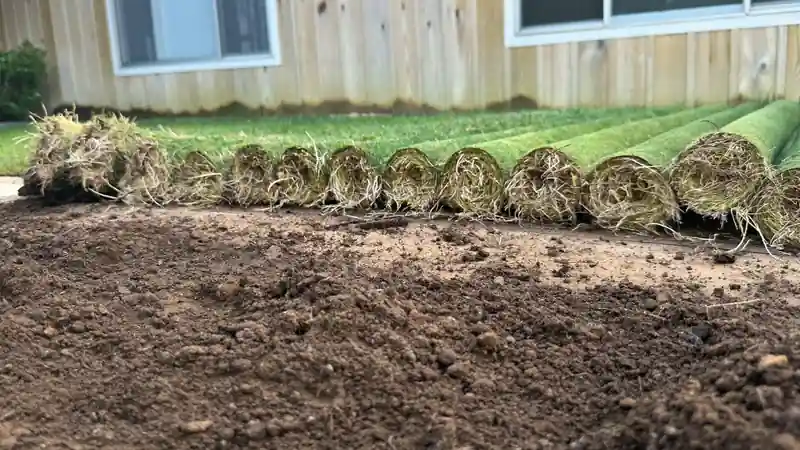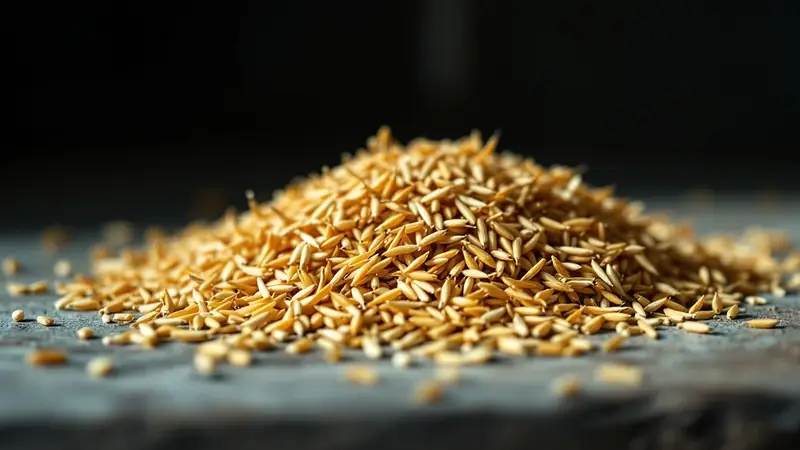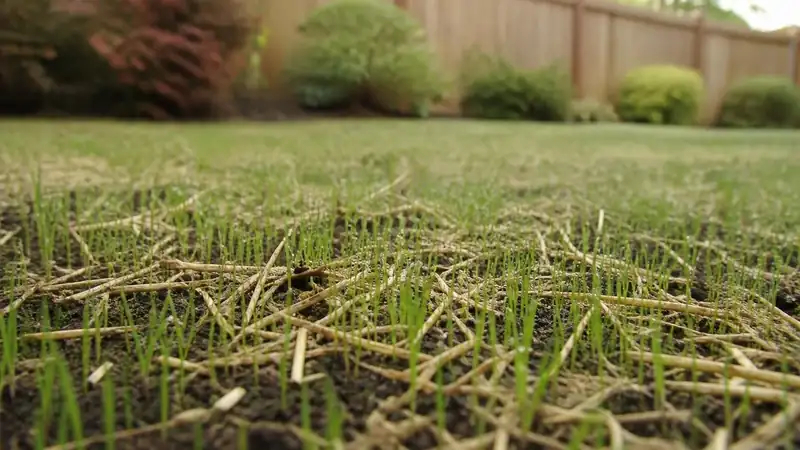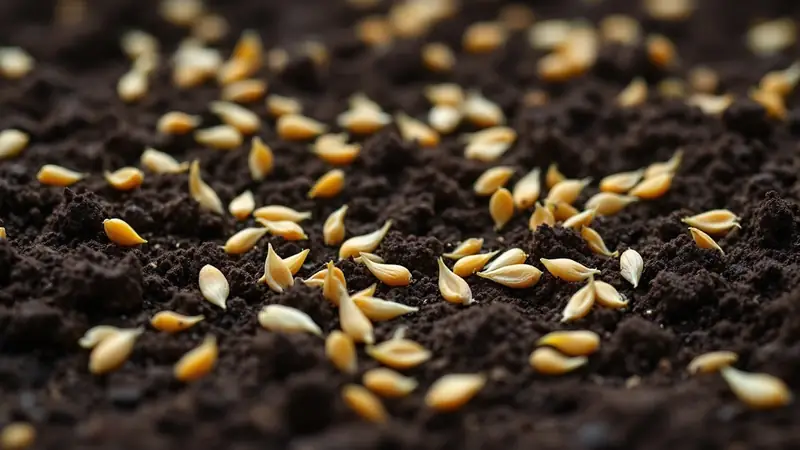
Will grass seed germinate on top of soil? Some will, if the surface never dries, but much fails: exposed seed dries out, washes and feeds birds. Extension services rake it 1/8 to 1/4 inch in and roll it. Light-needing zoysia is the exception.
Will grass seed germinate on top of soil? A seed lying on wet dirt can sprout, and Penn State’s own seeding method leaves some seed visible on the surface. The trouble is keeping it wet. Clemson Extension warns that if the surface dries after the seed has swollen and before roots form, “many of the seedlings will die” (Clemson HGIC, Lawn Establishment), and Kentucky’s guide states it flatly: seed lying on top “will not have access to water to begin the germination process” (University of Kentucky AGR-50, 2016, rev. 2022).
Two things on this page are missing from every top result we could read for this question. The first is a side-by-side of what 14 extension publications actually say about uncovered seed, from Maryland’s “not necessary” to Kentucky’s “will not have access to water.” The second is the one published trial we found that measured seed left uncovered on bare soil: an Arkansas zoysiagrass test where uncovered plots reached 41.7 percent cover at 5 weeks, level with most blankets, while loose straw cut cover to 18.3 percent (University of Arkansas MP476, 2009).
What 14 extension publications say about seed left on top
Read together, the guides agree more than they appear to. None says surface seed cannot grow. Ten of the 14 put cover at 1/4 inch or less (for zoysia, none at all), 3 give no depth, Maryland allows up to 1/2 inch, and Kansas State and Penn State both say some seed will stay visible. Where they differ is tone: Maryland and Iowa State treat raking or rolling as optional, while Kentucky, Rutgers and Purdue treat contact as a requirement.
Swipe the table sideways to see every column.
| Source | What it says about seed on the surface | Cover depth it gives | Rolling |
|---|---|---|---|
| University of Maryland Extension | Raking seed in is “not necessary,” but a light cover “can improve germination rates” | 1/4 to 1/2 in topsoil or compost; cap 1/2 in soil, 1/4 in compost or straw | Not required |
| Kansas State MF1126 | Blend seed in; “Some seed will remain on the soil surface, but this is normal” | 1/8 to 1/4 in | Firm overtilled soil, never roll wet soil |
| Penn State Extension | A light leaf-rake drag covers most seed; “Some of the seeds will be visible” | About 1/4 in | Yes, lightweight roller, dry surface |
| Iowa State Extension | Lightly rake or drag after sowing | 1/8 to 1/4 in | Optional, “while not necessary” |
| Rutgers FS584 | “The seed must be raked in” | About 1/4 in | Yes, lightly |
| Arkansas FSA2113 | Rake with the back of a leaf rake or drag a mat | 1/8 to 1/4 in soil | Yes, water roller 1/3 to 1/2 full |
| Clemson HGIC | Mix seed with the top layer; if the surface dries after seed swells, “many of the seedlings will die” | Top 1/4 in | Yes, light or empty roller |
| Purdue AY-3 | Seed-soil contact is “critical” for quick germination | Light raking (no depth given) | Yes, empty water-fill roller |
| Kentucky AGR-50 | “If seeds lay on top of the soil they will not have access to water” | Rake lightly (no depth given) | Rake or water-ballast roller |
| University of Tennessee W160-B | Cover after raking and rolling | 1/8 to 1/4 in organic matter, or straw | Yes, before mulching |
| University of Georgia (overseeding) | Seed germinating “above the soil surface is more likely to dry-out and die” | Drag seed into the soil | Not stated |
| Arkansas MP477 (bermudagrass) | Incorporate seed by dragging a leaf rake | Top 1/8 in | Not stated |
| Arkansas MP476 (zoysiagrass) | Maximize contact; zoysia seed needs light | No deeper than 1/4 in | Not stated |
| UF/IFAS LH011 (zoysiagrass) | Seed “cannot be covered with soil”; use erosion cloth | None: blanket instead | Not stated |
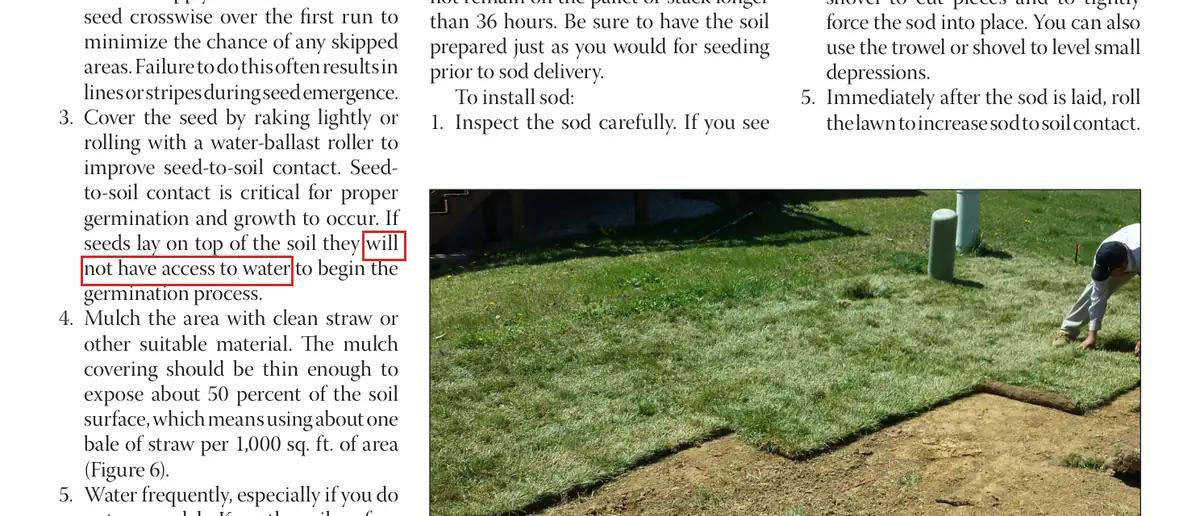
The practical reading: Maryland’s “not necessary” is about raking, not about contact. The same page caps cover at about 1/2 inch of soil or 1/4 inch of compost and says a light cover “can improve germination rates” (UMD Extension, updated March 16, 2026). No guide in the table recommends broadcasting seed on bare soil and walking away.
Why seed on top of soil fails: drying, washing, birds and thatch
Exposed seed is lost 4 ways, and each has a named cause in the extension record. Arkansas FSA2113 says mulch cuts “seed loss from wind, birds and washing” (Arkansas FSA2113, rev. 2024). Kansas State adds crusting: powdery, overtilled soil that “will crust, creating a seal that air cannot get through,” and leaves seed “unprotected” on the surface (Kansas State MF1126, 2002).
- Drying. A swollen seed that dries before rooting often dies (Clemson). Iowa State calls for light watering daily and “sometimes several times a day in sunny, windy conditions” to keep the top inch moist (Iowa State, Seeding a New Lawn). Run times are in our watering schedule for new grass seed.
- Washing. Water that puddles moves loose seed into low spots and footprints; Kansas State’s nail-board harrow exists so the cover pass “does not drag seed around the lawn depositing it in low spots, footprints or wheel tracks” (MF1126).
- Birds. At Tennessee’s 5 to 8 lb rate, tall fescue puts about 1,029 to 1,646 seeds on each square foot, and Arkansas lists birds among the losses mulch prevents. Covers that work are compared in our guide to keeping birds off grass seed.
- Thatch and dead grass. Seed that lands on thatch never touches soil. The University of Georgia says seed that germinates “in thatch or above the soil surface is more likely to dry-out and die” (UGA Field Report, 2013).
Hydroseeding is the commercial version of surface seeding, and Penn State lists its weak point plainly: the seed “is placed on the soil surface and may not be in close contact with the soil (sometimes resulting in seedlings drying out)” (Penn State, Lawn Establishment). The fiber mulch sprayed with it is what holds moisture; our hydroseeding cost guide prices that option.
How seed size sets the depth limit
A grass seed has to push its shoot up on stored food, so small seed tolerates less cover. USDA PLANTS counts 1,389,840 Kentucky bluegrass seeds per pound against 205,720 for tall fescue (USDA PLANTS, Poa pratensis; Schedonorus arundinaceus): a bluegrass seed weighs about 0.33 mg, a tall fescue seed about 2.20 mg, 6.8 times heavier. The guides match that pattern: none allows more than 1/2 inch of soil, and the smallest seed gets the shallowest limit.
| Grass | Seeds per lb (USDA PLANTS) | mg per seed | Seeding rate, lb per 1,000 sq ft (UT) | Seeds per sq ft at that rate | Days to germinate (UT) | Cover guidance |
|---|---|---|---|---|---|---|
| Kentucky bluegrass | 1,389,840 | 0.33 | 1.5 to 2 | 2,085 to 2,780 | 14 to 21 | 1/8 to 1/4 in (Iowa State) |
| Tall fescue | 205,720 | 2.20 | 5 to 8 | 1,029 to 1,646 | 6 to 12 | 1/8 to 1/4 in (Iowa State) |
| Perennial ryegrass | 240,400 | 1.89 | 4 to 6 | 962 to 1,442 | 3 to 7 | 1/8 to 1/4 in (Iowa State) |
| Bermudagrass, hulled | 2,071,120 | 0.22 | 1/2 to 1 | 1,036 to 2,071 | 10 to 20 | Top 1/8 in (Arkansas MP477) |
| Zoysiagrass (Zoysia japonica) | 601,440 | 0.75 | 1/2 to 3 | 301 to 1,804 | 10 to 14 | No deeper than 1/4 in; needs light (Arkansas MP476) |
| Centipedegrass | 568,480 | 0.80 | 1/2 to 3 | 284 to 1,705 | 10 to 20 | Top 1/4 in (Clemson HGIC) |
Bermudagrass is the extreme: about 0.22 mg a seed, which is why Arkansas wants it in only the top 1/8 inch (Arkansas MP477, rev. 2025). Seed counts also shift with processing. The same Arkansas guide photographs one bermudagrass cultivar, Riviera, at 2,900,000 seeds per pound hulled, 1,700,000 unhulled and 725,000 coated, so a pound of coated seed holds a quarter as many seeds as a pound of hulled seed. Germination days by grass and soil temperature are on our grass seed germination time page.
The one trial that measured uncovered seed: zoysiagrass in Arkansas
Zoysiagrass is the grass where surface seeding is the recommendation. UF/IFAS says its seed “requires light for germination and cannot be covered with soil, as is normally recommended” (UF/IFAS LH011, 2022), and Arkansas sets a ceiling of 1/4 inch. To test covers, Arkansas researchers sowed zoysia and laid 10 cover treatments beside an uncovered control. Coverage 5 weeks after planting:
| Treatment | Cover type | Turf coverage at 5 weeks (%) | Statistical group |
|---|---|---|---|
| Deluxe 0.5 oz crop protection fabric | Temporary | 50.0 | a |
| Thermal blanket 3.0 oz | Temporary | 48.3 | a |
| Jute | Permanent | 46.7 | a |
| Clear polyethylene, 4 mil | Temporary | 46.7 | a |
| Futerra | Permanent | 41.7 | a |
| Futerra F4 Netless | Permanent | 41.7 | a |
| Uncovered (seed left on the surface) | None | 41.7 | a |
| Curlex | Permanent | 40.0 | ab |
| Poly Jute | Permanent | 33.3 | ab |
| Straw blanket | Permanent | 31.7 | ab |
| Loose straw | Permanent | 18.3 | b |
Uncovered seed reached 41.7 percent, statistically level with the best blankets, and loose straw was the only treatment significantly worse at 18.3 percent. The authors cite earlier work that straw at 80 lb per 1,000 sq ft “did not enhance germination because they excluded light and reduced soil temperatures.” Two limits matter. The text says uncovered plots “performed well in 2008 and poorly in 2007,” and this is one light-requiring, warm-season grass. It does not show that cool-season seed does well uncovered.
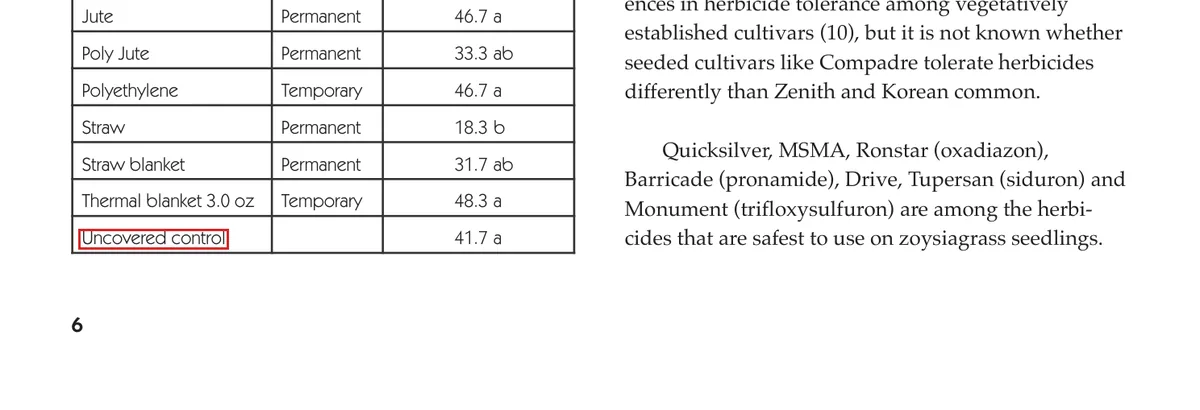
The Arkansas procedure still covers the seed with something: a temporary germination blanket for 14 days if the budget allows. Our zoysiagrass lawn guide covers cultivars and seeding windows.
How to get seed-to-soil contact without burying it
Each method below presses seed against moist soil or shades it, and each has a published depth or rate. On bare soil, the first three are the extension default; add one cover from the rest. The full planting sequence, from soil test to first mowing, is in our guide to how to plant grass seed.
| Method | Depth or rate | What it fixes | Source |
|---|---|---|---|
| Leaf rake dragged lightly, no pressure | Most seed about 1/4 in deep, some visible | Contact, drying | Penn State |
| Nail-board harrow: 3 ft square of 3/4 in plywood, 10 to 16 penny nails 4 in on center, 3 or 4 passes | Upper 1/8 to 1/4 in | Contact without dragging seed into low spots | Kansas State MF1126 |
| Water-fill roller, empty to 1/2 full, on a dry surface | Presses seed into the surface | Contact | Purdue AY-3; Arkansas FSA2113; Penn State |
| Compost, peat or topsoil topdressing | 1/8 to 1/4 in organic matter (UT); 1/4 to 1/2 in topsoil or compost (UMD) | Drying, birds | UT W160-B; UMD |
| Clean straw | 1 bale per 1,000 sq ft, about 50% of soil visible (Purdue); 80 to 100 lb (Penn State, UMD); 50 to 90 lb (Rutgers) | Drying, washing, birds | Purdue AY-3 |
| Slit seeder into an existing lawn | Grooves about 1/4 in deep | Thatch blocks contact | Penn State |
| Dormant seeding on bare soil | Soil at 40°F or lower; Thanksgiving to March in Indiana and Illinois | Freeze-thaw cracks work seed in | Iowa State; Purdue AY-3 |
| Germination blanket (zoysia) | Temporary blanket for 14 days | Erosion, warmth; lets light through | Arkansas MP476 |
If you topdress, the amount is small. The calculator converts your area and layer depth into cubic feet, cubic yards and 2 cu ft bags; the default, 1/8 inch over 1,000 sq ft, is 10.4 cubic feet or about 0.39 cubic yard. Round bags up.
- Cubic feet
- 10.4
- Cubic yards
- 0.39
- 2 cu ft bags (round up)
- 5.2
Default: 1/8 inch over 1,000 sq ft is 10.4 cubic feet, 0.39 cubic yard or 5.2 two-cubic-foot bags. UT W160-B uses 1/8 to 1/4 inch of organic matter over seed; UMD caps compost at 1/4 inch and soil at 1/2 inch.
| Layer depth | Cubic feet per 1,000 sq ft | Cubic yards per 1,000 sq ft | 2 cu ft bags per 1,000 sq ft |
|---|---|---|---|
| 1/8 in | 10.4 | 0.39 | 5.2 |
| 3/16 in | 15.6 | 0.58 | 7.8 |
| 1/4 in | 20.8 | 0.77 | 10.4 |
| 1/2 in (UMD soil cap) | 41.7 | 1.54 | 20.8 |
Two cautions on covers. Clemson says peat moss and aged sawdust “do not make good mulches for seeded lawns” because they compete with seed for water, so use peat only as a thin topdressing kept moist. And more straw is not better: Purdue warns that heavy mulch can shade seedlings and need removal later, which is the same light problem the Arkansas zoysia straw plots showed.
Peat is also hard to rewet once it dries, and a 3.8 cu ft bale covers only about 360 to 720 sq ft at seed-cover depth, two reasons our guide to what peat moss does for soil keeps it to thin, pre-wet layers.
1Is it zoysiagrass seed?
YesLeave it on the surface, roll it, and cover with a light germination blanket for 14 days, not soil or loose straw (UF/IFAS, Arkansas MP476).
NoGo to the next question
2Is the seed sitting on thatch, dead grass or a crust rather than loose soil?
YesIt will not reach soil. Rake, verticut or use a slit seeder that cuts grooves about 1/4 inch deep (Penn State, UGA).
NoGo to the next question
3Is soil at 40°F or lower and staying cold?
YesDormant seeding: leave it on bare soil; freeze and thaw works it in by spring (Iowa State, Purdue). Expect some loss and reseed thin spots.
NoGo to the next question
4Can you keep the surface moist with several light waterings a day for 2 to 3 weeks?
Yes
NoCover it: 1/8 to 1/4 inch of compost or peat, or 1 bale of straw per 1,000 sq ft (UT W160-B, Purdue AY-3).
5Is it a slope or a spot where water runs?
YesUse a stapled erosion blanket or straw so seed does not wash (Arkansas FSA2113).
NoRake it 1/8 to 1/4 inch in, roll with an empty water roller, add a thin cover and water lightly.
Seed thrown on an existing lawn, and seed sown in winter
Over existing grass, the soil surface is what matters. Penn State’s renovation steps run a slicer only 1/4 to 1/2 inch into the soil, or use a slit seeder that cuts grooves about 1/4 inch deep and drops seed into them; Georgia’s overseeding advice is to scalp, verticut and blow off debris first because “the more the turf is opened, the better the establishment rate” (UGA). Rates and tool choice are on our how to overseed a lawn page, and thatch over 1/4 inch is covered in how to dethatch a lawn.
Winter is the one case where leaving seed on bare soil is the plan. Iowa State’s dormant seeding window is late November through early December, with soil at 40°F or lower so seed waits for spring, and it notes that “some seed loss from cold injury, erosion, or wildlife is common” (Iowa State). Purdue explains the mechanism: as soil heaves and cracks over winter, crevices form that catch the seed. In southern Indiana and Illinois, Purdue warns, warm spells can sprout seed that then freezes.
For warm-season grass the dormant window is late winter. Arkansas reports bermudagrass seeded from February to April establishing successfully, with germination starting once soil reaches about 63°F (Arkansas FSA2113). Arkansas’s zoysia guide reports February and March dormant seedings as “largely unsuccessful,” so do not treat the two grasses alike.
How we compiled this
On Nov. 11, 2026 we read 14 extension publications from Maryland, Kansas State, Penn State, Iowa State, Rutgers, Arkansas (3), Clemson, Purdue, Kentucky, Tennessee, Georgia and UF/IFAS, and pulled seed counts for 6 grasses from USDA PLANTS. The zoysia trial figures are copied from Table 1 of Arkansas MP476. Seed weights, seeds per square foot and topdressing volumes are our arithmetic. We planted no seed and ran no trials.
Frequently asked questions
Will grass seed grow if you don’t bury it?
Some will, if the surface stays wet until roots form, but expect a thin stand. Kentucky’s AGR-50 says seed on top lacks access to water, and Clemson says seedlings that dry after the seed swells often die. Rake it 1/8 to 1/4 inch in and roll it.
Do I have to cover grass seed with soil?
No more than a thin layer. Iowa State and Kansas State cover seed 1/8 to 1/4 inch, Maryland caps cover at about 1/2 inch of soil or 1/4 inch of compost, and zoysia seed should not be covered with soil at all (UF/IFAS).
What’s the best thing to cover new grass seed with?
On level ground, clean straw at about 1 bale per 1,000 sq ft with half the soil showing (Purdue AY-3), or 1/8 to 1/4 inch of compost or peat (UT W160-B). On slopes, use a stapled erosion blanket. Skip hay, which carries weed seed.
Will grass grow through 2 inches of topsoil?
Do not bury seed that deep. None of the 14 guides we read allows more than 1/2 inch of soil over seed (UMD’s cap), so 2 inches is 4 times the most any of them permits. If you are adding 2 inches of topsoil, spread and firm it first, then sow on top and rake the seed 1/8 to 1/4 inch in.
How fast will grass seed germinate on top of soil?
UT W160-B gives 3 to 7 days for perennial ryegrass, 6 to 12 for tall fescue and 14 to 21 for Kentucky bluegrass, with a moist seedbed. Surface seed only keeps that pace if it never dries; Clemson says seed that dries after swelling often dies before it roots.
Can I just throw grass seed down on an existing lawn?
It rarely takes. Seed caught in thatch dries out (UGA), so mow low, rake or verticut to open the soil, then seed and rake it in. A slit seeder that cuts grooves about 1/4 inch deep gives the best contact (Penn State).
Sources
- University of Maryland Extension, Starting a New Lawn, updated March 16, 2026. Accessed November 2026.
- Kansas State University Research and Extension, MF1126, Planting a Home Lawn, January 2002. Accessed November 2026.
- Penn State Extension, Lawn Establishment, current online edition. Accessed November 2026.
- Iowa State University Extension and Outreach, Seeding a New Lawn, current online edition. Accessed November 2026.
- Rutgers Cooperative Extension, FS584, Seeding Your Lawn, February 2004. Accessed November 2026.
- University of Arkansas Cooperative Extension, FSA2113, Seeding a Lawn in Arkansas, rev. March 2024. Accessed November 2026.
- Clemson Cooperative Extension, HGIC, Lawn Establishment, updated 2024. Accessed November 2026.
- Purdue Extension, AY-3, Establishing Lawns From Seed, rev. May 2006. Accessed November 2026.
- University of Kentucky Cooperative Extension, AGR-50, Lawn Establishment in Kentucky, 2016, minor revision July 2022. Accessed November 2026.
- University of Tennessee Extension, W160-B, Turfgrass Establishment: Seeding, PDF. Accessed November 2026.
- University of Georgia CAES Field Report, Fall turfgrass interseeding and overseeding: not one in the same, 2013. Accessed November 2026.
- University of Arkansas Cooperative Extension, MP477, Establishing Seeded Bermudagrass on Lawns, Golf Courses or Athletic Fields, rev. January 2025. Accessed November 2026.
- University of Arkansas Cooperative Extension, MP476, Establishing Seeded Zoysiagrass on Lawns and Golf Courses, May 2009. Accessed November 2026.
- UF/IFAS Extension, ENH11/LH011, Zoysiagrass for Florida Lawns, 2022. Accessed November 2026.
- USDA NRCS PLANTS Database, Poa pratensis characteristics, accessed via PLANTS. Accessed November 2026.
- USDA NRCS PLANTS Database, Schedonorus arundinaceus characteristics, accessed via PLANTS. Accessed November 2026.
- USDA NRCS PLANTS Database, Lolium perenne characteristics, accessed via PLANTS. Accessed November 2026.
- USDA NRCS PLANTS Database, Cynodon dactylon characteristics, accessed via PLANTS. Accessed November 2026.
- USDA NRCS PLANTS Database, Zoysia japonica characteristics, accessed via PLANTS. Accessed November 2026.
- USDA NRCS PLANTS Database, Eremochloa ophiuroides characteristics, accessed via PLANTS. Accessed November 2026.