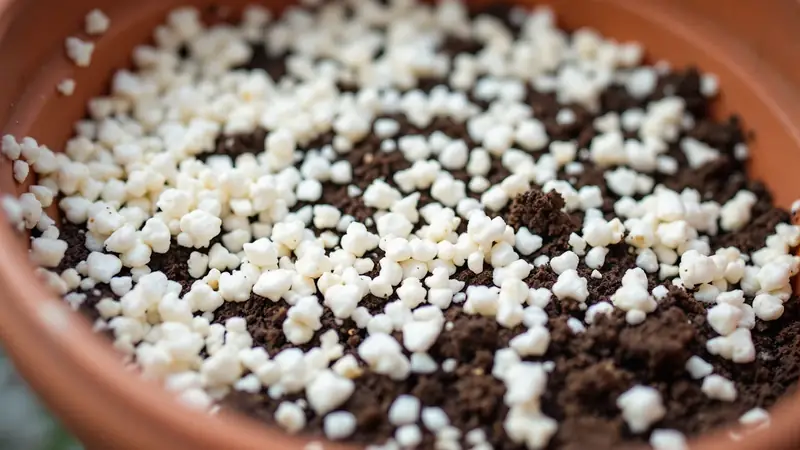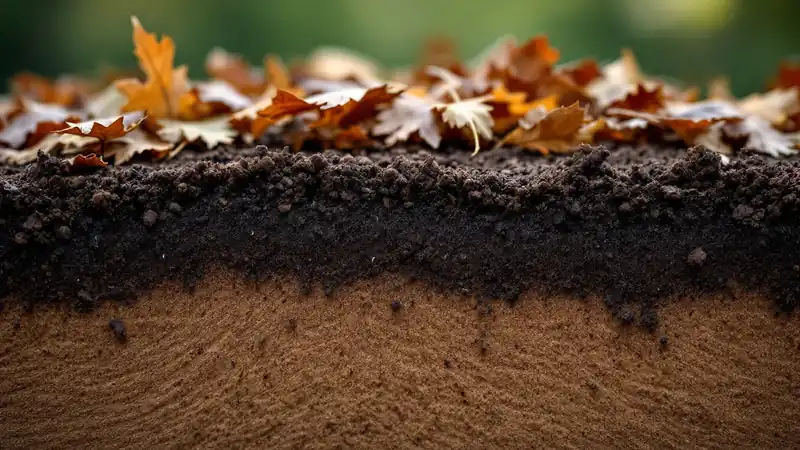
What does peat moss do for soil: it holds 10 to 20 times its weight in water, loosens and aerates, holds nutrients without supplying any, and lowers pH, because unlimed Canadian sphagnum peat tests about pH 3.5 to 4.5.
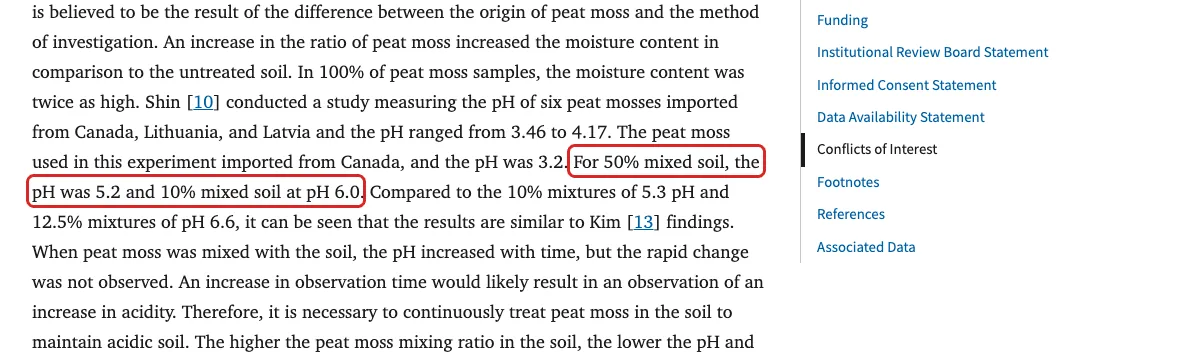
What does peat moss do for soil in practice? It changes texture and acidity, not fertility. Maryland Extension puts its water uptake at 10 to 20 times its weight and says it has “little nutrient value, but a high nutrient-holding capacity” (UMD, Organic Matter and Soil Amendments). The catch is dose. Most guides say peat “lowers pH” without saying by how much, and the answer depends on how much of the root zone is peat. In a measured pot trial, Canadian sphagnum mixed in at 10 percent by volume took a pH 7.3 soil to 6.0, and it took a 50 percent mix to reach 5.2 (Lee et al. 2021, Plants 10:1901).
Below we put those measured numbers next to the rates that extension services actually recommend, so you can see what a 1 inch layer does to your bed before you buy bales. For acid-loving shrubs the fuller fix is sulfur, which our guide on how to make soil acidic with sulfur doses by soil texture, and the target pH for each plant is in our list of plants that like acidic soil.
What peat moss is, and why the bale matters
Sphagnum peat moss is the dead, partly decomposed layer that builds up below living sphagnum in a bog; Iowa State describes it as the “fine, dry, light brown material sold in compressed bales” (Iowa State Extension, April 2003). Cornell says the Canadian bogs it comes from have been forming for about 10,000 years (Cornell Cooperative Extension, Orleans County). Dried long-strand sphagnum moss, sold for lining hanging baskets, is a different product with a different use.
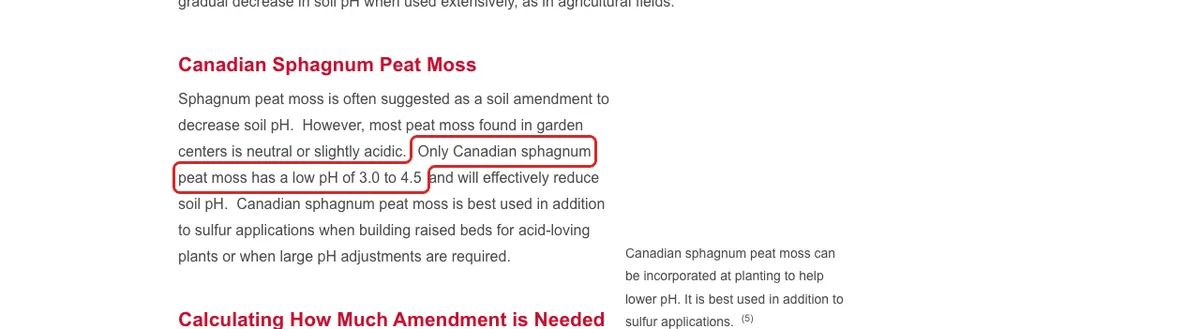
Where your bale came from changes what it does. U.S. mines produced about 330,000 metric tons of peat in 2025, but reed-sedge peat made up about 94 percent of that and sphagnum only about 5 percent; imports of 1.3 million tons, 95 percent of them from Canada in 2021 to 2024, supplied about 80 percent of U.S. consumption (USGS Mineral Commodity Summaries 2026, Peat). Iowa State warns that “most peat moss found in garden centers is neutral or slightly acidic” and that only Canadian sphagnum, at pH 3.0 to 4.5, will reliably lower soil pH (Iowa State Yard and Garden, How To Change Your Soil’s pH). Read the bag for “Canadian sphagnum” and for any added lime or fertilizer.
Measured properties of sphagnum peat
Every benefit gardeners credit to peat traces to a measured property. The 9 rows below give each value with its source and what it means once the peat is in your soil.
| Property | Measured value | What it does in soil | Source |
|---|---|---|---|
| pH, unlimed | 3.5 to 4.5 (Premier Tech); 3.0 to 4.5 for Canadian sphagnum (Iowa State); 3.2 in one Hoffman Canadian bale | Lowers soil pH in proportion to how much of the root zone it makes up | Greenhouse Grower, Nov. 2012; Iowa State; Lee 2021 |
| pH after liming (bagged mixes) | 5.5 to 6.2 | Limed peat in potting mixes no longer acidifies much | Premier Tech via Greenhouse Grower |
| Water held | 10 to 20 times its dry weight | Sandy soil holds more water between waterings | UMD Extension; Iowa State |
| Pore space | 97 percent of volume (one Canadian peat; 76.5 to 82.7 percent reported by origin) | Lighter, more open soil; lower bulk density | Lee 2021 |
| Cation exchange capacity | 108 to 162 meq/100 g, mean 139, across 64 Alberta peats | Holds calcium, magnesium and potassium against leaching | Rippy and Nelson, HortScience 42(2), 2007 |
| Base saturation | 15 to 71 percent of CEC, mean 30 percent | Most exchange sites hold acidity, not nutrients | Rippy and Nelson 2007 |
| Nutrients | “Little nutrient value” | Feed separately; peat adds no meaningful N, P or K | UMD Extension |
| Rewetting | “Harder to rewet after drying than other types of organic media” | Dry peat sheds water; pre-wet before mixing | UF/IFAS EP623, 2022 |
| Breakdown | Slower than other organic materials, but it does break down | The texture benefit fades over seasons | UF/IFAS EP623; Clemson HGIC |
The CEC figure explains a common misreading. Peat averages 139 meq/100 g, which is why Maryland calls it nutrient-holding. But with base saturation averaging 30 percent, roughly 7 of every 10 exchange sites in unlimed peat hold hydrogen rather than plant nutrients (Rippy and Nelson 2007). Peat stores fertilizer you add; it does not supply it.
Peat that dries out turns water-repellent, so soak it before it goes into a bed. Our guide to fixing hydrophobic soil covers the wetting agents and drop test, and peat-based potting mix loses its wetting agent about 9 months after manufacture, as our page on whether potting soil goes bad explains.
- Open the bale and loosen the amount you need into a tub or wheelbarrow: about 1.7 cu ft of loose peat per compressed cu ft, from the AgCare yield of 6.5 cu ft per 3.8 cu ft bale.
- Add warm water a few gallons at a time and stir until the peat darkens all the way through, then squeeze a handful: a few drops, not a stream, means it is ready.
- Spread it at the rate in the next section and work it in the same day, so the top layer cannot dry back to a crust.
How much does peat moss lower soil pH?
It depends on what share of the root zone ends up as peat, and even the maker hedges: Sun Gro’s own wording is that its Canadian sphagnum “may slightly lower the pH of more alkaline soils” (Sun Gro, Sunshine Canadian Sphagnum Peat Moss). The best measured dose response we found is a 2021 pot trial from Kyungpook National University, which mixed Hoffman Canadian sphagnum (pH 3.2) into a field soil at pH 7.3 (Lee et al. 2021).
| Peat in the mix (by volume) | Soil pH measured | Change from untreated | Note |
|---|---|---|---|
| 0 percent (untreated) | 7.3 | Field soil, Uiseong, Korea, 2020 | |
| 10 percent | 6.0 | minus 1.3 | Text value; 20 and 30 percent shown only in a figure |
| 50 percent | 5.2 | minus 2.1 | Lowest mixed value reported |
| 100 percent peat | 3.2 | minus 4.1 | The peat itself |
| Elemental sulfur, for comparison | 6.8 to 4.4 in 42 days; 3.3 by day 84 | minus 2.4 then 3.5 | Separate sulfur series in the same study |
Two limits apply before you copy these numbers to your yard. They come from one soil in 1 kg pots, and the authors saw peat-treated pH creep back up during the trial, concluding that peat must be added again to hold acidity. Their sulfur series pulled pH lower and kept going, which is why they called sulfur the cheaper route for blueberry growers.
To see where a real application lands on that curve, we converted the published extension rates into the share of the mixed root zone that ends up as peat. The arithmetic assumes the peat layer mixes evenly through the stated depth, and 1 cu yd spread over 1,000 sq ft is a 0.324 inch layer.
| Extension rate | Peat share of mixed zone | Nearest Lee 2021 result | Source of rate |
|---|---|---|---|
| 1 to 2 cu yd per 1,000 sq ft (0.32 to 0.65 in) into the top 6 to 8 in | 4 to 10 percent | 10 percent: pH 7.3 to 6.0 | NC State AG-69, Carolina Lawns |
| 1 in layer worked into the top 4 in | 20 to 25 percent | Between 10 and 50 percent | Iowa State Extension, 2003 |
| 1 to 2 in layer worked 4 to 6 in deep | 14 to 33 percent | Between 10 and 50 percent | Penn State Extension, Lawn Establishment |
| Half peat, half soil in the planting hole for acid-loving plants | 50 percent | 50 percent: pH 7.3 to 5.2 | Iowa State Extension, 2003 |
The practical reading: the NC State lawn rate lands at or below the 10 percent mix, and that effect fades, while only the half-and-half planting-hole mix reaches the pH 4.5 to 5.2 the Lee authors give for blueberries. Iowa State says Canadian sphagnum “is best used in addition to sulfur applications” for that reason (Iowa State). Test first with a soil test; on soil already below pH 6, peat pushes you the wrong way.
What peat moss does in beds, lawns and pots
Garden beds
In sandy beds, peat’s water-holding is the point: Colorado State lists sphagnum and peat for water retention “particularly in sandy soils” (CSU Extension 7.235). In clay, Iowa State credits peat with letting more air into tight soils and speeding infiltration, and its own Reiman Gardens worked in a 3 inch layer to rescue flowerbeds on heavy clay (Iowa State, 2003). Penn State calls sphagnum peat “ideal” for sand and clay but expensive for lawn-scale use and says good compost is usually cheaper (Penn State Extension). For clay, our guide to improving clay soil compares compost, core aeration, cover crops and gypsum.
New lawns and seed
Two uses get confused. Mixed in before planting, NC State’s 1 to 2 cu yd per 1,000 sq ft into the top 6 to 8 inches helps heavy clay or very sandy lawns (NC State AG-69); our page on whether grass can grow in sand runs those rates for sandy sites. Spread on top of seed, it is a thin moisture cover at best: Tennessee uses 1/8 to 1/4 inch of organic matter after seeding (UT Extension W160-B), while Clemson says peat moss and aged sawdust “do not make good mulches for seeded lawns” because they compete with seed for water and are slow to decay (Clemson HGIC, Lawn Establishment).
If you do topdress seed with peat, keep it at 1/8 to 1/4 inch and keep it wet; a 3.8 cu ft bale covers about 90 sq ft at 1 inch, so roughly 360 to 720 sq ft at those depths. Clemson’s most common seed cover is weed-free straw at 1 bale (60 to 80 lb) per 1,000 sq ft, as our guide to grass seed on top of soil details.
Pots and seed-starting mixes
In containers peat is the base, not an additive: Premier Tech calls it “the major component in most potting soils” and limes it to pH 5.5 to 6.2 (Greenhouse Grower, 2012). The same source notes sphagnum peat “has few, if any, possible weed seeds,” which is why seed-starting mixes lean on it. Peat holds water; perlite holds air, which is the split our sibling page on what perlite does for soil covers, and how to make potting soil gives the ratios.
1Does your soil test read below pH 6.0 already?
YesSkip peat for this bed: it pushes pH lower. Add compost for organic matter instead.
NoGo to the next question
2Are you planting blueberries, azaleas or rhododendrons?
YesPlant in half Canadian sphagnum, half soil with a 2 inch peat layer on top (Iowa State), and add sulfur at the soil-test rate.
NoGo to the next question
3Is this a pot, window box or seed-starting tray?
YesUse a peat- or coir-based mix; bagged peat mixes are limed to pH 5.5 to 6.2 (Premier Tech).
NoGo to the next question
4Is the bed sandy soil that dries out within a day or two?
YesWork 1 to 2 inches of pre-wet peat or compost 4 to 6 inches deep (Penn State).
NoGo to the next question
5Are you covering newly sown grass seed?
YesUse 1/8 to 1/4 inch kept moist (UT W160-B), or weed-free straw at 1 bale per 1,000 sq ft (Clemson).
NoCompost is usually the cheaper organic amendment for lawns and beds (Penn State); about $1.30 per cu ft bulk vs $2.46 to $3.08 for loose peat in our Nov. 17, 2026 prices.
Peat moss vs coir vs compost
Coir and compost are the two substitutes every extension source names. The table puts the measured properties and prices we captured on Nov. 17, 2026 side by side; loose peat is priced per expanded cubic foot so the rows compare.
| Material | pH | Water and air | Nutrients and CEC | Price per loose cu ft (Nov. 17, 2026) | Source |
|---|---|---|---|---|---|
| Canadian sphagnum peat, unlimed | 3.0 to 4.5 | 10 to 20 times its weight in water; 97 percent pore space in one sample | Little nutrient value; CEC 108 to 162 meq/100 g | $2.46 ($16.00 bale, AgCare) to $3.08 ($20.00 bale, Fanelli’s), at 6.5 loose cu ft per 3.8 cu ft bale | Iowa State; UMD; Rippy 2007; AgCare; FLS Supply |
| Coir (coconut pith) | 5.5 to 6.8 (UF); 5.8 to 6.5 (Gro-Med listing) | Holds water better than peat (UF); renewable | Has CEC (UF gives no figure); rinse for salts | $5.61 (Gro-Med 5 kg, $14.99, 20 gal) to $9.05 (True Coirs 5 kg, $23.99, 75 L) | UF/IFAS EP623; Midwest Grow Kits; True Coirs |
| Compost | Varies by feedstock; test it | Less organic matter than the best peats (Penn State); look for 40 to 60 percent OM (CSU) | Supplies nutrients; manure-based products can be high in salts | $1.30 bulk ($35 per cu yd, Springfield, Mo.); $5.00 to $9.99 bagged | Penn State; CSU 7.235; City of Springfield; Chalet |
| Composted pine bark | About 6 to 7 | Good water holding and pore space; breaks down fairly fast | Some CEC | Not priced here | UF/IFAS EP623 |
- Loose cubic feet
- 8.3
- 3.8 cu ft peat bales (6.5 loose cu ft each)
- 2
- Cubic yards
- 0.31
Area x layer depth x price per loose cu ft from our comparison table. Default: 100 sq ft at 1 inch = 8.3 cu ft, 2 bales of peat, $21 to $26. The bale count applies to peat only.
Worked example: a 1 inch layer over a 1,000 sq ft lawn site is 83 cu ft of loose peat, or 13 bales at 6.5 cu ft each, about $208 to $260 at the two bale prices above. The same inch of bulk compost is about 3.1 cu yd, roughly $108 at Springfield’s $35 a yard; Colorado State uses 3 cu yd per 1,000 sq ft per inch as its rule of thumb. Peat wins on acidity and weed-free consistency; compost wins on price at lawn scale and on feeding the soil, the trade-off our page on compost vs mulch also covers.
Is peat moss sustainable? The numbers on both sides
The case against: peatlands cover at least 3 percent of the world’s land yet hold more than 600 gigatonnes of carbon, up to 44 percent of all soil carbon, and drained peatlands emit about 1.9 gigatonnes of CO2e a year, roughly 5 percent of human emissions (IUCN Issues Brief, Peatlands and climate change). Maryland Extension says harvesting peat releases CO2 and recommends compost and pine bark fines instead where possible (UMD).
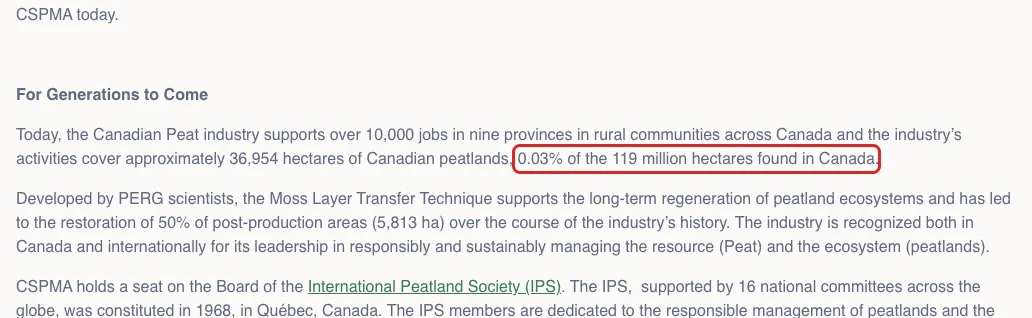
The industry’s numbers: Canadian horticultural peat extraction covers about 36,954 hectares, 0.03 percent of Canada’s 119 million hectares of peatland, and 5,813 hectares, half of post-production area, has been restored (Canadian Sphagnum Peat Moss Association, About Us). Rain cut the 2026 harvest below plan in most provinces, with Alberta at 56 percent of expected extraction by Aug. 31 (CSPMA 2026 extraction report).
England promised in 2022 to ban retail peat sales by 2024, and that deadline passed with no law in any of the 4 UK nations (Peat-free Partnership legislation timeline). As of Nov. 17, 2026, Sarah Dyke’s Horticultural Peat (Prohibition of Sale) Bill still sits at second reading in the Commons (UK Parliament, Bill 122 2024-25), and the timeline quotes the government’s October 2025 delivery plan as promising to legislate “when Parliamentary time allows.”
How we compiled this
On Nov. 17, 2026 we read 1 peer-reviewed pot trial (Lee et al. 2021), 1 peat chemistry study (Rippy and Nelson 2007), 10 extension publications (Iowa State 2, Maryland, Penn State, NC State, Clemson, Tennessee, Colorado State, UF/IFAS, Cornell), a Premier Tech trade article, Sun Gro’s product page, the USGS 2026 peat summary, the IUCN issues brief, 2 CSPMA pages and the UK bill record, plus 6 retailer pages for prices. Peat-share and per-cubic-foot figures are our arithmetic from those inputs. We did not test, grow or buy anything; prices are single listings on one day and exclude delivery. Every number on this page, with its source link, is in our 48-row dataset (CSV).
Frequently asked questions
Why do gardeners not like peat moss?
Three reasons recur: peat bogs store large amounts of carbon that harvesting releases (IUCN puts peat soils at more than 600 gigatonnes of carbon), peat adds almost no nutrients, and dry peat repels water. Its defenders point to CSPMA’s figure that extraction covers 0.03 percent of Canada’s peatland.
When should you add peat moss to soil?
Before planting, when you can mix it 4 to 8 inches deep: Penn State works a 1 to 2 inch layer 4 to 6 inches in, NC State mixes 1 to 2 cu yd per 1,000 sq ft into the top 6 to 8 inches. Pre-wet it first.
Can you just put peat moss on top of soil?
Only as a thin seed cover of 1/8 to 1/4 inch, kept moist (UT W160-B). Thicker layers dry into a crust that sheds water, and Clemson says peat makes a poor mulch for seeded lawns because it competes with seed for water.
Will peat moss help grass seed grow?
It can hold moisture around seed if kept wet, but it is not the best cover. Clemson names weed-free straw, 1 bale per 1,000 sq ft, as the most common cover, and peat costs about $16 to $20 per 3.8 cu ft bale, which covers about 360 to 720 sq ft at seed-cover depth.
Which plants love peat moss?
Acid-loving plants such as blueberries, azaleas and rhododendrons. Iowa State plants them in a 50/50 peat and soil mix and adds a 2 inch peat layer on top; in Lee 2021 a 50 percent mix took a pH 7.3 soil to 5.2.
How long does peat moss last in soil?
Longer than compost or bark, but not permanently. UF/IFAS says peat breaks down more slowly than other organic media yet still decomposes, and Lee 2021 saw peat-treated soil pH drift back up during a weeks-long pot trial, so plan to reapply.
Sources
- Lee S.-Y., Kim E.-G., Park J.-R. et al., Plants 10(9):1901, Effect on Chemical and Physical Properties of Soil Each Peat Moss, Elemental Sulfur, and Sulfur-Oxidizing Bacteria, Sept. 14, 2021. Accessed November 2026.
- Rippy J.F.M. and Nelson P.V., HortScience 42(2):349 to 352, Cation Exchange Capacity and Base Saturation Variation among Alberta, Canada, Moss Peats, April 2007. Accessed November 2026.
- Iowa State University Extension, Yard and Garden, How To Change Your Soil’s pH, Current page. Accessed November 2026.
- Iowa State University Extension news release, Reiman’s Pick: sphagnum peat moss, April 2003. Accessed November 2026.
- University of Maryland Extension, Organic Matter and Soil Amendments, Current page. Accessed November 2026.
- Premier Tech (Buechel and Bloodnick), Greenhouse Grower, 10 Must-Know Growing Media Facts, Nov. 16, 2012. Accessed November 2026.
- UF/IFAS Extension, EP623 (ENH1359), Common Media Used in Hydroponics, 2022. Accessed November 2026.
- Penn State Extension, Lawn Establishment, Current page. Accessed November 2026.
- NC State Extension, AG-69, Carolina Lawns, July 2, 2021. Accessed November 2026.
- Clemson Cooperative Extension, HGIC, Lawn Establishment, Current page. Accessed November 2026.
- University of Tennessee Extension, W160-B, Turfgrass Establishment: Seeding, PDF, 2023 upload. Accessed November 2026.
- Colorado State University Extension, 7.235, Choosing a Soil Amendment, Current page. Accessed November 2026.
- Cornell Cooperative Extension, Orleans County, Peat Moss and Sustainability, Current page. Accessed November 2026.
- Sun Gro Horticulture, Sunshine Canadian Sphagnum Peat Moss product page, Read Nov. 17, 2026. Accessed November 2026.
- U.S. Geological Survey, Mineral Commodity Summaries 2026: Peat, January 2026. Accessed November 2026.
- Canadian Sphagnum Peat Moss Association, About Us (industry footprint and restoration), Read Nov. 17, 2026. Accessed November 2026.
- Canadian Sphagnum Peat Moss Association, Report on Extraction of Canadian Horticultural Peat as of August 31, 2026, Sept. 17, 2026. Accessed November 2026.
- IUCN, Issues Brief: Peatlands and climate change, Current page. Accessed November 2026.
- Peat-free Partnership, Legislation timeline, Read Nov. 17, 2026. Accessed November 2026.
- UK Parliament, Horticultural Peat (Prohibition of Sale) Bill, Bill 122 2024-25, Last updated May 5, 2026. Accessed November 2026.
- AgCare Products, Peat Moss Sphagnum 3.8 cf bale ($16.00; yields 6.5 cu ft), Price checked Nov. 17, 2026. Accessed November 2026.
- Fanelli’s Landscape Supply, Peat Moss 3.8 CF Bale ($20.00), Price checked Nov. 17, 2026. Accessed November 2026.
- Midwest Grow Kits, Gro-Med 5 kg coco coir brick ($14.99; 20+ gallons), Price checked Nov. 17, 2026. Accessed November 2026.
- True Coirs, Premium coconut coir pith 5 kg ($23.99; up to 75 L), Price checked Nov. 17, 2026. Accessed November 2026.
- Chalet Nursery, Chalet Compost 1 cu ft bag ($9.99), Price checked Nov. 17, 2026. Accessed November 2026.
- City of Springfield, Mo., MO Products: Compost and Mulch (MOPost $35 per cu yd; $5 per cu ft bag), Prices from July 1, 2026. Accessed November 2026.