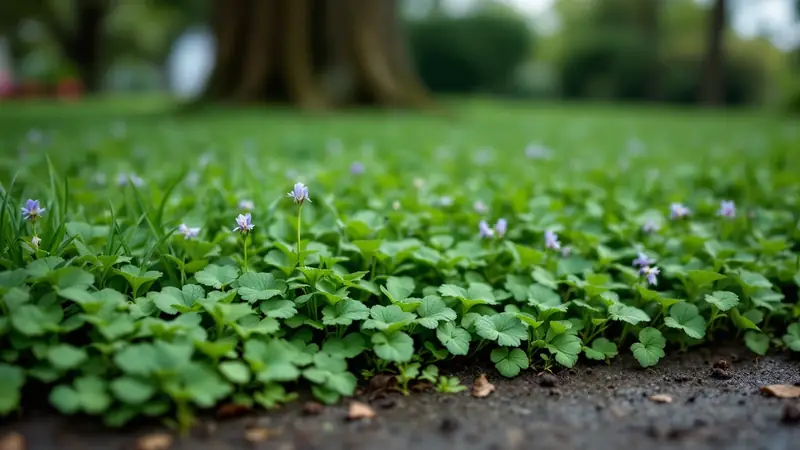
What are herbicides: pesticides made to kill or suppress unwanted plants. U.S. law treats a weed as a pest, so each herbicide carries an EPA registration number, and weed scientists sort them into numbered groups by the plant process they block.
What are herbicides on a store shelf? Every product sold as a weed killer, weed preventer or weed and feed. The Federal Insecticide, Fungicide, and Rodenticide Act (FIFRA), 7 U.S.C. 136 defines a weed as “any plant which grows where not wanted” and lists weeds among the pests a pesticide is meant to destroy, so an herbicide is simply a pesticide aimed at plants. The jug that spares your lawn and the one that kills it can sit side by side, and the active ingredient decides which is which.
The fastest way to tell herbicides apart is the mode-of-action group number, the same number weed scientists use to track resistance. Of the 51 EPA-accepted herbicide labels we read, 23 of 25 professional labels print it, but only 2 of 26 consumer lawn and garden labels do. The table further down fills that gap: it gives the group for every active ingredient on those consumer products, with the EPA registration number to check.
What makes a chemical an herbicide?
Intent and registration, not the chemistry. Under 7 U.S.C. 136(u), a pesticide is any substance “intended for preventing, destroying, repelling, or mitigating any pest,” and section 136(t) names weeds as pests. A product sold to kill weeds therefore needs an EPA registration number on the label, whether its active is glyphosate or 20 percent acetic acid. Herbicide-strength vinegar is a registered pesticide for that reason; our review of vinegar as a weed killer covers where the minimum-risk exemption stops.
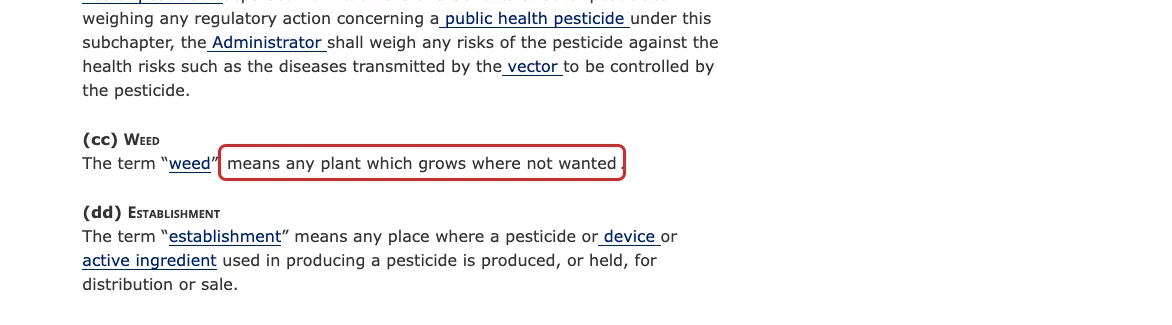
The label is the law in a literal sense. 7 U.S.C. 136j(a)(2)(G) makes it unlawful “to use any registered pesticide in a manner inconsistent with its labeling,” so the rate, the grass list, the rain limit and the reseeding wait on a herbicide label are legal limits, not suggestions. That is why the lawn weed killers we compared by EPA label differ so much: the same 2,4-D can be legal on tall fescue and banned on Floratam St. Augustine depending on which label it carries.
The four ways herbicides are classified
Most guides list five or six “types of herbicides.” They are really four questions, and every product answers all four at once. Roundup Weed and Grass Killer Super Concentrate (EPA Reg. No. 71995-25) is non-selective, post-emergent, systemic and short-residual; Scotts Turf Builder Weed and Feed5 (538-333) is selective, post-emergent and systemic. Answer the four questions for any jug and you know what it will and will not do.
| Classification | Question it answers | Example on a label | The opposite | What it means for you |
|---|---|---|---|---|
| Selective or non-selective | Does it spare some plants? | Selective: 2,4-D, mecoprop-p and dicamba in Ortho Weed B Gon (239-2744) kill broadleaf weeds; the label lists bluegrass, fescue, ryegrass, bermuda and zoysia as tolerant | Non-selective: glyphosate in 71995-25, whose label says it kills lawn grasses | Never put a non-selective spray on turf you want to keep |
| Pre-emergent or post-emergent | Does it stop seedlings or kill plants already up? | Pre: prodiamine (Barricade 4FL, 100-1139), dithiopyr (Dimension 2EW), pendimethalin (Roundup Landscape Weed Preventer) | Post: almost every spray sold as a weed killer | A pre-emergent does nothing to a dandelion already flowering; Dimension 2EW also blocks grass seed for 3 months |
| Contact or systemic | Does it move inside the plant? | Contact: diquat, which gives first symptoms in 9 to 12 hours in Roundup Concentrate Plus (71995-29); acetic acid | Systemic: glyphosate alone shows symptoms in 2 to 4 days and complete kill in 1 to 2 weeks (71995-25) | Contact burns the top; perennials with roots, tubers or rhizomes regrow unless the active is systemic |
| Residual or non-residual | Does it keep working in the soil? | Long residual: imazapic in Roundup Max Control 365 (71995-49), a label that bars lawns and seeding for a year | Short residual: glyphosate-only Super Concentrate allows lawn seed after 3 days | Read the replant line on the label before you spray where you plan to seed |
Selectivity is also a matter of rate and grass type, not a fixed trait. Our check of the labels behind whether 2,4-D kills grass found how much rate matters: the Ortho Weed B Gon label allows 4 fl oz per 1,000 sq ft on cool-season grass, 2 fl oz on bermuda and zoysia, 1 fl oz on centipede and non-Floratam St. Augustine, and none on bentgrass, and Roundup products sold for lawns contain no glyphosate at all.
Herbicide groups: what the number means
A group number names the plant process the herbicide blocks. The numbers follow the Herbicide Resistance Action Committee (HRAC) classification, which the International Herbicide-Resistant Weed Database prints beside the older letter codes; it counts 31 known herbicide sites of action. Two products with the same number attack the same target, so switching from one Group 4 jug to another Group 4 jug is not a change of chemistry, even when the brand, the price and the active name all differ.
| Group | What it blocks | Active ingredients on lawn and garden labels | What you see on the weed | Products and EPA Reg. Nos. we read | Resistant weed species worldwide |
|---|---|---|---|---|---|
| 1 | ACCase inhibitors (fat synthesis in grass growing points) | Fluazifop-P-butyl, fenoxaprop, sethoxydim | New grass growth stops; broadleaf plants are naturally resistant. Fusilade II: do not mow treated weeds within 7 days | Fusilade II (100-1084), Acclaim Extra (432-950), Poast (7969-58) | 56 |
| 2 | ALS inhibitors (branched-chain amino acids) | Halosulfuron, imazapic, penoxsulam, thiencarbazone, iodosulfuron | Slow: growth stops as amino acids run out; SedgeHammer waits 4 weeks before seeding | SedgeHammer (81880-1), Celsius WG (432-1507); imazapic in 71995-49; penoxsulam in 2217-1010 | 176 |
| 3 | Microtubule assembly (cell division in new roots and shoots) | Prodiamine, pendimethalin, dithiopyr, trifluralin | Seedlings die as they emerge; established weeds are untouched | Barricade 4FL (100-1139), Pendulum (241-416), Dimension 2EW (62719-542), Preen Garden Weed Preventer (961-280) | 12 |
| 4 | Synthetic auxins (plant growth hormone mimics) | 2,4-D, MCPA, mecoprop-p, dicamba, triclopyr, quinclorac | Deformed, twisting new growth; EPA says foliage effects can show within minutes | Ortho Weed B Gon (239-2744), Trimec Classic (2217-543), Drive XLR8 (7969-272), Turflon Ester Ultra (62719-566) | 44 |
| 5 | Photosystem II inhibitors (photosynthesis) | Atrazine | Chlorophyll loss, then leaves dry out | Scotts Bonus S (538-18), Southern Ag Atrazine (19713-567) | 89 |
| 9 | EPSP synthase inhibitor (aromatic amino acids) | Glyphosate | Yellowing in 2 to 4 days, full kill in 1 to 2 weeks, roots included | Roundup Super Concentrate (71995-25), Ranger Pro (524-517) | 63 |
| 10 | Glutamine synthetase inhibitor | Glufosinate-ammonium | Symptoms in 2 to 4 days (Finale label) | Finale (7969-444) | 7 |
| 14 | PPO inhibitors (chlorophyll and heme synthesis) | Sulfentrazone, carfentrazone | Injury within hours, death in 7 to 10 days (SpeedZone EW, with Group 4 partners) | SpeedZone EW (2217-1053), Spectracide Weed Stop (9688-342) | 18 |
| 22 | Photosystem I electron diverters | Diquat, paraquat | Contact burn: first symptoms in 9 to 12 hours on 71995-29 | Reward (100-1091); diquat in Roundup Concentrate Plus (71995-29) and Weed and Grass Killer4 (71995-65) | 33 |
| 27 | HPPD inhibitors (carotenoid protection of chlorophyll) | Mesotrione, topramezone | New growth turns white in 4 to 7 days | Tenacity (100-1267), Pylex (7969-327), Roundup For Lawns Crabgrass Destroyer (71995-70) | 8 |
| None printed | Contact desiccants and chelated iron | Acetic acid, iron HEDTA, pelargonic acid | Weeds turn brown or black within hours; Sunday says repeat in 3 to 4 weeks | Sunday Dandelion Doom (67702-27) | Not tracked |
Resistance is the reason the number matters. WeedScience.org lists 550 cases of resistance worldwide in 276 species, with weeds resistant to 21 of the 31 sites of action and to 168 herbicides. Group 2 leads with 176 resistant species, Group 5 has 89 and glyphosate (Group 9) 63, while Group 27, home of mesotrione and topramezone, has 8.
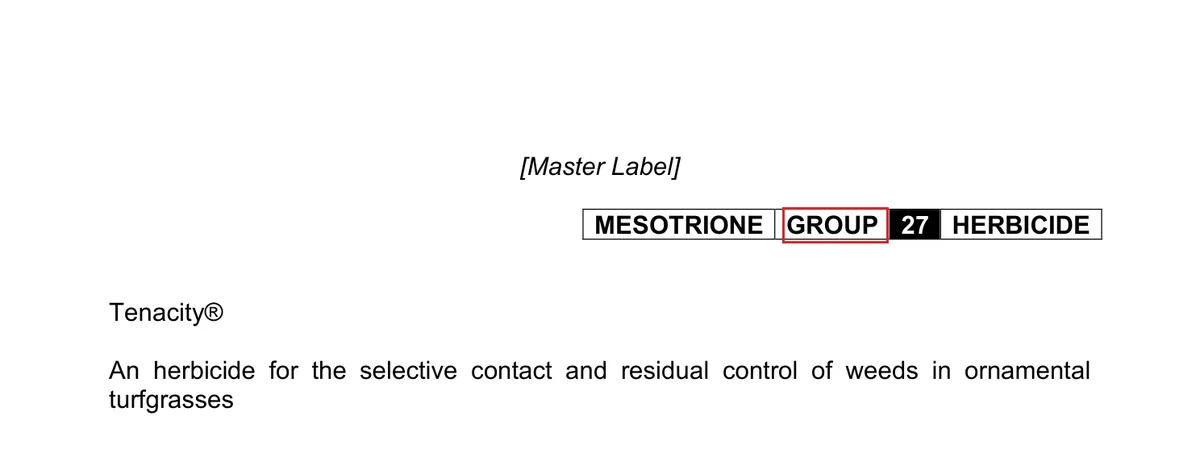
Does your weed killer print its group number?
Usually not, if you bought it at a garden center. We checked each label’s full text for a group statement such as “GROUP 27 HERBICIDE.” 23 of 25 professional and agricultural labels carried one; the 2 exceptions were older Trimec Classic and Trimec Southern labels from 2014. Among 26 consumer labels from Ortho, Roundup, Scotts, Spectracide, Preen, BioAdvanced, Sunday and Southern Ag, only 2 printed it: SedgeHammer (Group 2) and Southern Ag’s atrazine (Group 5).
Swipe the table sideways to see every column.
| Product | EPA Reg. No. | Market | Active ingredients | Groups (by active) | Group printed on label? | Signal word |
|---|---|---|---|---|---|---|
| Ortho Weed B Gon / WeedClear Weed Killer for Lawns concentrate | 239-2744 | Consumer | 2,4-D, mecoprop-p, dicamba | 4 | No | Caution |
| Spectracide Weed Stop for Lawns concentrate | 9688-342 | Consumer | 2,4-D, mecoprop-p, dicamba, sulfentrazone | 4, 14 | No | Caution |
| Roundup For Lawns1, Northern | 2217-917 | Consumer | MCPA, quinclorac, dicamba, sulfentrazone | 4, 14 | No | Caution |
| Scotts Turf Builder Weed and Feed5 | 538-333 | Consumer | 2,4-D, dicamba | 4 | No | Caution |
| Preen Lawn Weed Control | 961-418 | Consumer | 2,4-D, mecoprop-p, dicamba | 4 | No | Caution |
| Roundup Weed and Grass Killer Super Concentrate | 71995-25 | Consumer | glyphosate | 9 | No | Caution |
| Roundup Weed and Grass Killer Concentrate Plus | 71995-29 | Consumer | glyphosate, diquat | 9, 22 | No | Caution |
| Roundup Weed and Grass Killer4 | 71995-65 | Consumer | triclopyr, fluazifop-P-butyl, diquat | 4, 1, 22 | No | Caution |
| Roundup For Lawns Crabgrass Destroyer RTU | 71995-70 | Consumer | topramezone | 27 | No | Caution |
| SedgeHammer | 81880-1 | Consumer | halosulfuron-methyl | 2 | Yes: Group 2 | Caution |
| Southern Ag / Hi-Yield Atrazine St. Augustine Weed Killer | 19713-567 | Consumer | atrazine | 5 | Yes: Group 5 | Caution |
| Tenacity | 100-1267 | Professional | mesotrione | 27 | Yes: Group 27 | Caution |
| Drive XLR8 | 7969-272 | Professional | quinclorac | 4 | Yes: Group 4 | Caution |
| Ranger Pro (glyphosate) | 524-517 | Professional | glyphosate | 9 | Yes: Group 9 | Caution |
| Dimension 2EW | 62719-542 | Professional | dithiopyr | 3 | Yes: Group 3 | Warning |
| SpeedZone EW | 2217-1053 | Professional | 2,4-D, mecoprop-p, dicamba, carfentrazone | 4, 14 | Yes: Group 4 and 14 | Caution |
The gap matters when a weed survives. If dandelions shrug off Ortho Weed B Gon, switching to Gordon’s Trimec (2217-539) or BioAdvanced Southern (92564-4) changes the brand but keeps the same three Group 4 actives; Spectracide Weed Stop adds only sulfentrazone (Group 14). Moving to a different group, or to digging, is the change that tests whether the weed is tolerant. Our rainfast times by label rule out the other common cause of a failed spray: rain within the label’s window.
Which herbicides do Americans use most?
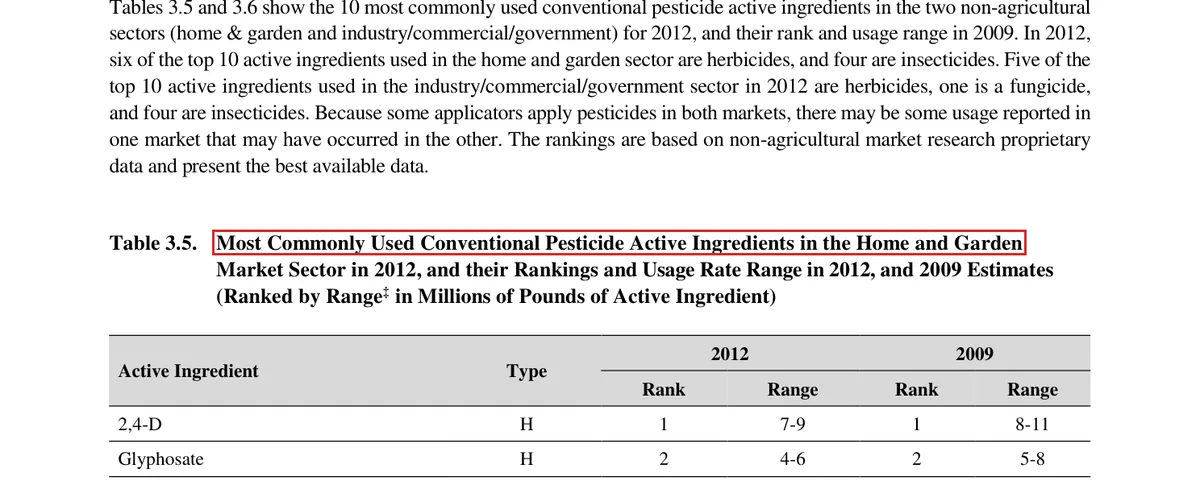
Herbicides are the largest pesticide class by weight. EPA’s most recent Pesticides Industry Sales and Usage report estimates 618 million pounds of herbicide active ingredient used in the U.S. in 2012: 564 million in agriculture, 26 million in industrial, commercial and government use, and 28 million in homes and gardens.
| Active ingredient | Group | Home and garden use, 2012 (million lb) | Rank among all home and garden pesticides | Agricultural use, 2012 (million lb) |
|---|---|---|---|---|
| 2,4-D | 4 | 7 to 9 | 1 | 30 to 40 (rank 5) |
| Glyphosate | 9 | 4 to 6 | 2 | 270 to 290 (rank 1) |
| Mecoprop (MCPP) | 4 | 2 to 4 | 3 | Not in top 25 |
| Pendimethalin | 3 | 2 to 4 | 4 | 6 to 16 (rank 11) |
| Dicamba | 4 | 1 to 3 | 8 | 3 to 7 (rank 18) |
| MCPA | 4 | 1 to 3 | 9 | Not in top 25 |
| Atrazine | 5 | Not in top 10 | Not ranked | 64 to 74 (rank 2) |
Four of the six top home herbicides are Group 4 auxins, which matches the store shelf: 2,4-D, mecoprop and dicamba together are the actives in Ortho Weed B Gon, Gordon’s Trimec, Preen Lawn Weed Control and BioAdvanced Southern. Glyphosate dominates farms at 270 to 290 million pounds, 45 to 70 times its home use; EPA notes it is applied mainly to genetically engineered glyphosate-resistant soybeans, corn, canola and cotton.
Are herbicides harmful to people and pets?
Some are much more hazardous than others, and the signal word tells you which. 40 CFR 156.64 requires DANGER on Toxicity Category I products, WARNING on Category II and CAUTION on Category III, and 40 CFR 156.62 sets the cutoffs: an oral LD50 of 50 mg/kg or less, or a corrosive eye effect, puts a product in Category I.
| Signal word | Toxicity category | Oral LD50 range | Eye effect | Labels in our set of 51 |
|---|---|---|---|---|
| DANGER | I | 50 mg/kg or less | Corrosive; corneal opacity not reversible within 7 days | 1 consumer (Southern Ag 2,4-D Amine), 5 professional (2,4-D amine concentrates) |
| WARNING | II | Over 50 to 500 mg/kg | Corneal opacity reversible within 7 days | 0 consumer, 4 professional (Finale, Poast, Dimension 2EW, Enlist One) |
| CAUTION | III (IV optional) | Over 500 to 5,000 mg/kg | No corneal opacity; irritation reversible within 7 days | 25 consumer, 16 professional |
The DANGER on 2,4-D amine concentrates is about the concentrate: the Southern Ag Amine label reads “Corrosive; causes irreversible eye damage” at 46.3 percent 2,4-D salt, while lawn mixes with about 8 percent 2,4-D salt, such as Ortho Weed B Gon, carry CAUTION. The Ortho Weed B Gon label adds the household rule: do not allow people or pets into the treated area until sprays have dried.
Restricted use is a separate tier from the signal word. EPA says restricted use products “are not available for purchase or use by the general public” and may be applied only by a certified applicator or someone under that applicator’s direct supervision. Hired lawn applicators generally need a state license even for general-use products; our pesticide applicator license guide lists the categories by state.
This page is general information, not safety, legal or medical advice. The label on your container is the legal authority for how that product may be used; if someone swallows or splashes a pesticide, call Poison Control at 1-800-222-1222.
Which kind of herbicide fits your weed problem?
Start from the weed and the plants around it, then pick the class; the brand comes last. Identify the weed first with our guide to common lawn weeds, because broadleaf weeds, grassy weeds and sedges need different groups.
1Are the weeds not up yet, and you want to stop seeds such as crabgrass?
YesPre-emergent, Group 3 (prodiamine, dithiopyr, pendimethalin), applied before germination. Do not seed for the label's wait: 3 months on Dimension 2EW.
NoGo to the next question
2Do you want every plant in a patch dead, such as a patio crack or a bed you are replanting?
YesNon-selective post-emergent: glyphosate (Group 9) for roots, diquat (Group 22) for a fast top-kill. Glyphosate-only Super Concentrate allows lawn seed after 3 days.
NoGo to the next question
3Is it a broadleaf weed (dandelion, clover, plantain) in a lawn you are keeping?
YesSelective Group 4 mix (2,4-D, mecoprop, dicamba or triclopyr) whose label lists your grass as tolerant.
NoGo to the next question
4Is it a grassy weed such as crabgrass growing in the lawn?
YesGrass-selective post-emergent matched to your lawn grass: quinclorac (Group 4), mesotrione or topramezone (Group 27), fenoxaprop (Group 1).
NoGo to the next question
5Is it nutsedge (triangular stems, leaves in threes)?
YesSedge herbicide: halosulfuron (Group 2) or sulfentrazone (Group 14), before the 5th leaf.
NoIdentify the weed first; a survivor after one spray usually needs a different group, not a different brand.
Crabgrass shows why the order matters. Before it germinates, a Group 3 pre-emergent stops it; after it tillers, you need a grass-selective post-emergent such as quinclorac (Group 4) or mesotrione (Group 27), and which one depends on your lawn grass: Tenacity’s label calls bermuda and zoysia sensitive, while Drive XLR8 is labeled for both. Nutsedge needs halosulfuron (Group 2) or sulfentrazone (Group 14); our nutsedge control guide covers timing.
How we compiled this
In November 2026 we re-read 51 EPA-accepted herbicide labels (26 consumer, 25 professional or agricultural) that we had downloaded from the EPA Pesticide Product and Label System for earlier pages, searching each full text for a group statement and the front-panel signal word. Group numbers by active come from the professional labels and the WeedScience.org site-of-action summary, which also supplied the resistance counts (Nov. 16, 2026). Use figures come from EPA’s 2008 to 2012 sales and usage report, and definitions from FIFRA and 40 CFR Part 156. We did no field trials or spray tests; consumer versus professional is our classification by brand and package size.
Frequently asked questions
What are examples of herbicides?
By U.S. home and garden use, the top six are 2,4-D, glyphosate, mecoprop, pendimethalin, dicamba and MCPA (EPA, 2012 estimates). Other common ones: prodiamine and dithiopyr (crabgrass preventers), atrazine (Southern lawns), mesotrione, quinclorac, triclopyr, halosulfuron and diquat.
What is the difference between a pesticide and a herbicide?
A herbicide is one kind of pesticide. FIFRA defines a pesticide as a substance meant to prevent, destroy, repel or mitigate any pest and names weeds as pests (7 U.S.C. 136); herbicides target plants, insecticides insects and fungicides fungi.
Is Roundup an herbicide?
Yes, but Roundup is a brand, not one chemical. Roundup Super Concentrate is glyphosate (Group 9, 71995-25); Weed and Grass Killer4 is triclopyr, fluazifop and diquat (71995-65); Roundup For Lawns1 is MCPA, quinclorac, dicamba and sulfentrazone (2217-917) and spares listed lawn grasses.
Are herbicides harmful to humans?
Acute hazard is printed on the front panel: DANGER (Category I), WARNING (II) or CAUTION (III). In our set of 51 labels, 25 of 26 consumer products carried CAUTION. Follow the label’s protective gear and re-entry lines, and keep children and pets off until the spray dries.
What are the 5 types of herbicides?
Lists of 5 usually mix two systems. By how they are used: selective, non-selective, pre-emergent, post-emergent, contact and systemic. By how they work: numbered groups such as 1, 2, 3, 4, 5, 9, 10, 14, 22 and 27, of 31 known sites of action.
Is weedicide the same as herbicide?
Yes, both mean a weed killer. U.S. labels and federal law use “herbicide,” and either way the product is a pesticide that needs an EPA registration number under 7 U.S.C. 136.
Sources
- Legal Information Institute, Cornell Law School, 7 U.S.C. 136, Definitions (FIFRA section 2), current code. Accessed November 2026.
- Legal Information Institute, Cornell Law School, 7 U.S.C. 136j, Unlawful acts (FIFRA section 12), current code. Accessed November 2026.
- eCFR, 40 CFR 156.62, Toxicity Category, current. Accessed November 2026.
- eCFR, 40 CFR 156.64, Signal word, current. Accessed November 2026.
- U.S. EPA, Pesticides Industry Sales and Usage, 2008 to 2012 Market Estimates, 2017. Accessed November 2026.
- U.S. EPA, Restricted Use Products (RUP) Report, current page. Accessed November 2026.
- U.S. EPA, CADDIS Volume 2: Herbicides, undated page. Accessed November 2026.
- Heap, I., International Herbicide-Resistant Weed Database, Herbicide resistant weeds by site of action summary table, Nov. 16, 2026. Accessed November 2026.
- Heap, I., International Herbicide-Resistant Weed Database, Current status (home page summary), Nov. 16, 2026. Accessed November 2026.
- U.S. EPA Pesticide Product and Label System, WBG 553 Concentrate (Ortho Weed B Gon Weed Killer for Lawns), EPA Reg. No. 239-2744, label accepted 2023-08-23. Accessed November 2026.
- U.S. EPA Pesticide Product and Label System, Scotts Turf Builder Weed and Feed5, EPA Reg. No. 538-333, label accepted 2026-09-17. Accessed November 2026.
- U.S. EPA Pesticide Product and Label System, Roundup Weed and Grass Killer Super Concentrate, EPA Reg. No. 71995-25, label accepted 2021-01-28. Accessed November 2026.
- U.S. EPA Pesticide Product and Label System, Roundup Weed and Grass Killer Concentrate Plus, EPA Reg. No. 71995-29, label accepted 2022-04-06. Accessed November 2026.
- U.S. EPA Pesticide Product and Label System, Roundup Max Control 365 concentrate, EPA Reg. No. 71995-49, label accepted 2025-11-21. Accessed November 2026.
- U.S. EPA Pesticide Product and Label System, Roundup Landscape Weed Preventer, EPA Reg. No. 71995-63, label accepted 2024-04-05. Accessed November 2026.
- U.S. EPA Pesticide Product and Label System, Roundup Weed and Grass Killer4, EPA Reg. No. 71995-65, label accepted 2023-11-29. Accessed November 2026.
- U.S. EPA Pesticide Product and Label System, Roundup For Lawns Crabgrass Destroyer RTU, EPA Reg. No. 71995-70, label accepted 2025-06-05. Accessed November 2026.
- U.S. EPA Pesticide Product and Label System, Roundup For Lawns1, Northern, EPA Reg. No. 2217-917, label accepted 2025-09-10. Accessed November 2026.
- U.S. EPA Pesticide Product and Label System, Roundup For Lawns, Southern, EPA Reg. No. 2217-1010, label accepted 2024-06-14. Accessed November 2026.
- U.S. EPA Pesticide Product and Label System, Tenacity, EPA Reg. No. 100-1267, label accepted 2022-09-28. Accessed November 2026.
- U.S. EPA Pesticide Product and Label System, Reward Landscape and Aquatic Herbicide, EPA Reg. No. 100-1091, label accepted 2025-09-29. Accessed November 2026.
- U.S. EPA Pesticide Product and Label System, Barricade 4FL, EPA Reg. No. 100-1139, label accepted 2024-02-21. Accessed November 2026.
- U.S. EPA Pesticide Product and Label System, Dimension 2EW, EPA Reg. No. 62719-542, label accepted 2021-07-02. Accessed November 2026.
- U.S. EPA Pesticide Product and Label System, Drive XLR8, EPA Reg. No. 7969-272, label accepted 2019-11-01. Accessed November 2026.
- U.S. EPA Pesticide Product and Label System, SedgeHammer, EPA Reg. No. 81880-1, label accepted 2026-09-01. Accessed November 2026.
- U.S. EPA Pesticide Product and Label System, Sunday Dandelion Doom, EPA Reg. No. 67702-27, label accepted 2026-09-04. Accessed November 2026.
- U.S. EPA Pesticide Product and Label System, Gordon’s Trimec Lawn Weed Killer, EPA Reg. No. 2217-539, label accepted 2021-08-06. Accessed November 2026.
- U.S. EPA Pesticide Product and Label System, Preen Garden Weed Preventer, EPA Reg. No. 961-280, label accepted 2026-06-16. Accessed November 2026.