Common lawn weeds fall into three groups: broadleaf weeds such as dandelion and clover, grassy weeds such as crabgrass and annual bluegrass, and sedges such as nutsedge. Name the group and life cycle first: that sets the control window.
Key takeaways
- Lawn weeds sort into broadleaf weeds (net-veined leaves), grassy weeds (hollow round stems with nodes) and sedges (solid, triangular stems you can roll between your fingers), per UF/IFAS ENH884, rev. December 2024. The group decides which herbicide can work.
- Life cycle sets the calendar: summer annuals such as crabgrass and goosegrass sprout in spring, winter annuals such as annual bluegrass, chickweed and henbit sprout in late summer and fall, and perennials regrow from taproots, rhizomes, stolons or tubers (UGA Bulletin 978, reviewed July 2024).
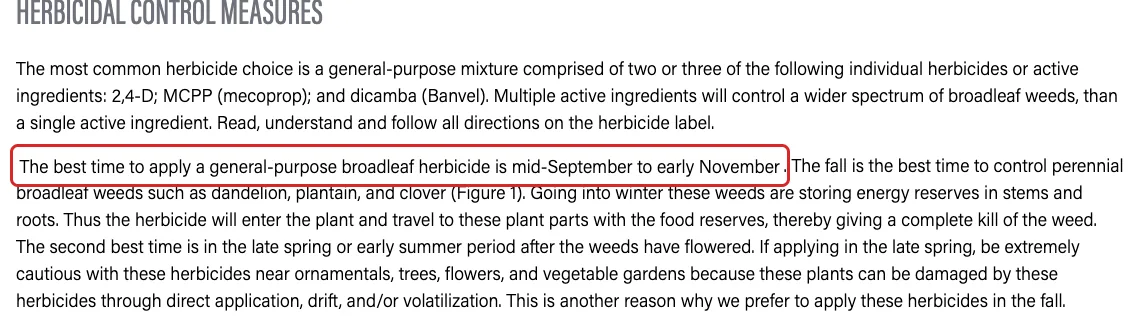
- Fall is the main window for perennial broadleaf weeds: Purdue and Illinois name mid-September to early November for a broadleaf herbicide, sprayed at 50 to 85°F (Purdue AY-9).
- Several weeds point to a fixable site problem: UC IPM ties annual bluegrass, goosegrass and dallisgrass to overwatering and compacted soil, and black medic and white clover to low nitrogen (UC IPM Pest Notes 74113).
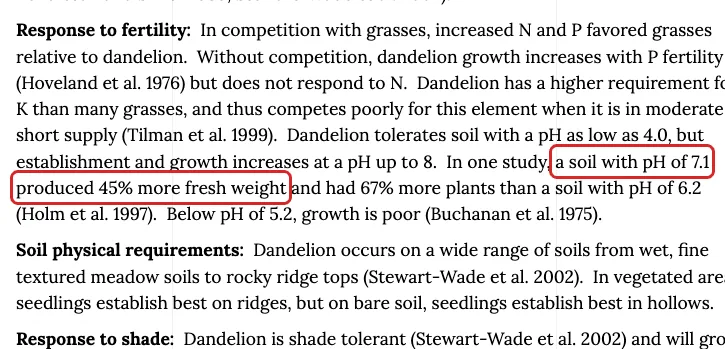
- Weeds are weak pH gauges. Cornell’s weed profile reports dandelion grew 45 percent more fresh weight at soil pH 7.1 than at 6.2 (Cornell Weed Science), the opposite of the acid-soil claim in some popular lawn guides; a soil test settles pH.
What are the most common lawn weeds?
The 20 weeds below all appear on the lawn-weed lists of the land-grant extension services we compiled, from Maryland to UC IPM and UF/IFAS: 14 broadleaf weeds, 5 grassy weeds and 1 sedge. Each row gives the field marks that separate the weed from its look-alikes, the season it shows, and the source page. Crabgrass, which Penn State calls the most common grass weed of Pennsylvania turf, has its own page.
Swipe the table sideways to see every column.
| Weed | Type | Life cycle | How to tell it apart | When you see it | Source |
|---|---|---|---|---|---|
| Dandelion (Taraxacum officinale) | Broadleaf | Perennial | Basal rosette of toothed leaves 2 to 14 in. long; milky sap; yellow heads on leafless hollow stalks; taproot mostly in the top 6 to 18 in. | Flowers first in spring, then sporadically; seeds sprout all season once soil is at least 50°F | UC IPM; UMD; Purdue |
| White clover (Trifolium repens) | Broadleaf | Perennial | Three oval leaflets 1/4 to 3/4 in. with a pale inverted-V watermark; creeping stems root at nodes; white globe flowers 1/2 to 3/4 in. | Flowers spring to fall, peak late spring to early summer | Penn State; NC State |
| Broadleaf and buckhorn plantain (Plantago major, P. lanceolata) | Broadleaf | Perennial | Rosettes with veins running parallel to the leaf edge; broadleaf: oval blades 2 to 7 in.; buckhorn: narrow blades 3 to 12 in., woolly tan crown | Flowers May to August or September | UC IPM; NC State |
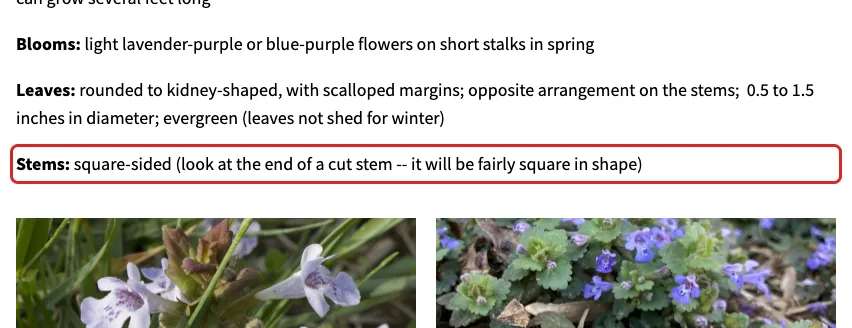
| Ground ivy (creeping Charlie) (Glechoma hederacea) | Broadleaf | Perennial | Square stems that root at the nodes; opposite, scalloped, kidney-shaped leaves 0.5 to 1.5 in.; minty smell when crushed | Blue-purple flowers April and May | UMD; Penn State |
| Wild violet (Viola spp.) | Broadleaf | Perennial | Glossy, hairless heart-shaped leaves up to 3.5 in.; rhizomes about the size of a little finger; 5-petal flowers 1/2 to 3/4 in. | Flowers April and May | Penn State; Purdue |
| Yellow woodsorrel (oxalis) (Oxalis stricta) | Broadleaf | Perennial or annual | Three heart-shaped leaflets 1/4 to 1/2 in. that fold at night; 5-petal yellow flowers; upright capsules that fling seed several feet | Flowers and seeds late spring to early fall | Penn State |
| Virginia buttonweed (Diodia virginiana) | Broadleaf | Perennial | Opposite, stalkless, slightly thick leaves with rough edges, often mottled yellow by a virus; white 4-petal star-shaped flowers; ridged, hairy fruit | Grows spring through summer; flowers summer and fall | UGA B1397; LSU AgCenter; NC State |
| Dollarweed (pennywort) (Hydrocotyle spp.) | Broadleaf | Perennial | Round, shiny, scalloped leaves up to silver-dollar size with the stalk joined at the center like an umbrella; one leaf per stalk; white rhizomes | Hydrocotyle umbellata flowers April to October (NC State) | UF/IFAS; UF/IFAS EP634; NC State |
| Common chickweed (Stellaria media) | Broadleaf | Winter annual | Opposite, smooth-edged pointed leaves 1/2 to 1 in.; stems with a line of hairs; tiny white flowers whose 5 split petals look like 10 | Sprouts in fall at about 55 to 65°F, flowers in spring | UMD; Penn State |
| Henbit (Lamium amplexicaule) | Broadleaf | Winter annual | Square stems; scalloped rounded leaves, the upper ones clasping the stem with no stalk; pink-purple tubular flowers 1/2 to 3/4 in. | Sprouts in early fall or early spring; flowers in spring | UMD; NC State |
| Purple deadnettle (Lamium purpureum) | Broadleaf | Winter annual | Square stems; fuzzy, triangular leaves tinged red or purple and crowded at the top; upper leaves have short stalks, unlike henbit | Sprouts in fall; most visible in April | Penn State; NC State |
| Spotted (prostrate) spurge (Euphorbia maculata) | Broadleaf | Summer annual | Flat mat from one taproot that does not root at nodes; milky sap; leaves 1/2 to 3/4 in. often with a purple blotch | Emerges early to mid-summer; can flower 3 to 4 weeks later | Penn State; NC State |
| Black medic (Medicago lupulina) | Broadleaf | Summer annual | Three oval leaflets 1/2 to 3/4 in.; the middle leaflet sits on its own short stalk, unlike clover; yellow flower clusters 1/4 to 1/2 in. that turn into black pods | Sprouts in spring; flowers late spring to early fall | Penn State; UMD |
| Common lespedeza (Kummerowia striata) | Broadleaf | Summer annual | Small oval leaflets in threes with fine parallel veins angled off the midvein; wiry, prostrate stems with downward-pointing hairs; tiny pink-purple flowers | Emerges late spring to early summer; blooms late summer | LSU AgCenter; UMD; NC State |
| Annual bluegrass (Poa annua) (Poa annua) | Grassy weed | Winter annual | Light green, boat-shaped leaf tips; crinkled blades 1 to 3 in.; membranous ligule 1 to 3 mm, no auricles; whitish seedheads even when mowed low | Sprouts late summer and fall as soil drops below 70°F; seedheads in spring | UC IPM; NC State |
| Goosegrass (Eleusine indica) | Grassy weed | Summer annual | Flat rosette with a white to silver flattened center; jagged ligule 1 to 1.5 mm, no auricles; zipper-like seedhead of 2 to 7 spikes; does not root at nodes | Sprouts 3 to 4 weeks after crabgrass, at 60 to 65°F soil; seedheads July to September | Penn State; NC State |
| Dallisgrass (Paspalum dilatatum) | Grassy weed | Perennial | Clumps of coarse gray-green blades 1/4 to 1/2 in. wide; ligule about 1/4 in., no auricles; short rhizomes with ring-like joints; 2 to 10 drooping seedhead branches | Seeds sprout at 60 to 65°F soil in spring and summer | UC IPM; LSU AgCenter |
| Quackgrass (Elymus repens) | Grassy weed | Perennial | Long, slender claw-like auricles that clasp the stem; ligule only 1/32 in.; long white rhizomes with sharp tips | Grows in spring and fall; seedheads late May to September | Illinois Extension; UW-Madison |
| Nimblewill (Muhlenbergia schreberi) | Grassy weed | Perennial | Short blue-green blades 0.75 to 2 in. held nearly flat; very short membranous ligule (bermudagrass has a fringe of hairs); wiry stems rooting at nodes | Green in summer; tan dormant patches in late fall and winter | Penn State; Illinois Extension |
| Yellow nutsedge (Cyperus esculentus) | Sedge | Perennial | Solid triangular stem; leaves in sets of three, light green and glossy with long tapered tips; straw-colored seedhead; tubers at rhizome tips | Tubers sprout once soil stays above 43°F; new tubers form from late June | UC IPM; Purdue TURF-45; NC State |
Perennials dominate the chart, and they are the weeds that survive mowing and come back from roots. Purdue and Illinois note that broadleaf weed seed persists in soil for 30 or more years (Purdue AY-9), so a weed-free lawn is not a realistic target. For crabgrass dates and products, see our crabgrass guide; for the full grass-and-tree library, the Turf and Trees section.
How do you tell broadleaf weeds, grassy weeds and sedges apart?
Check the leaf veins, then the stem. Broadleaf weeds have net-like veins; grasses have parallel veins and hollow, round stems with joints; sedges have solid, triangular stems you can feel by rolling them between your fingers (UF/IFAS ENH884). UC IPM notes fluazifop kills only grasses (UC IPM), and Purdue says the products used on dandelions and crabgrass miss nutsedge (Purdue TURF-45), so this first call matters.
- Pull one plant with roots. Note a taproot (dandelion), creeping stems rooting at nodes (ground ivy, white clover) or small tubers (nutsedge) (UGA B-978).
- Look at the leaf veins. Net veins mean a broadleaf; parallel veins mean a grass or sedge (UF/IFAS). Plantains are the exception: broadleaf weeds whose veins run parallel to the leaf edge (UC IPM).
- Roll the stem. Triangular and solid is a sedge; round and hollow with joints is a grass; square is a mint-family broadleaf such as ground ivy, henbit or purple deadnettle (UMD; Penn State).
- Break a stem. Milky sap points to dandelion or spurge (UMD; Penn State).
- Note the month. A weed flowering in March or April that sprouted last fall is a winter annual; a grass that appears in June or July and dies at frost is a summer annual (UGA; UW-Madison).
| Feature | Broadleaf weeds | Grassy weeds | Sedges | Source |
|---|---|---|---|---|
| Leaf veins and arrangement | Net-like | Parallel; leaves in sets of 2 | Parallel; leaves in sets of 3 | UF/IFAS ENH884; UC IPM key |
| Stem | Varies; square in the mint family | Round, hollow, with nodes | Triangular, solid | UF/IFAS ENH884 |
| Seed leaves at sprouting | Two (dicot) | One (monocot) | One (monocot) | UF/IFAS ENH884 |
| Examples in lawns | Dandelion, clover, plantain, ground ivy, spurge | Crabgrass, goosegrass, annual bluegrass, dallisgrass | Yellow and purple nutsedge, kyllinga | UF/IFAS; UMD |
| Herbicide class that targets it | Selective broadleaf mixes (2,4-D, MCPP, dicamba) | Preemergents for annuals; spot glyphosate for perennials | Halosulfuron, sulfentrazone or sulfosulfuron, two applications | Purdue AY-9; UC IPM |
1Is the stem triangular and solid when you roll it between your fingers?
YesSedge, most likely yellow or purple nutsedge. Dry out the site and use a sedge herbicide (UF/IFAS, UC IPM).
NoGo to the next question
2Are the leaf veins parallel and the stem round and hollow with joints?
YesGrassy weed. Check the leaf tip, ligule and seedhead in the look-alike table.
NoGo to the next question
3Is the stem square?
YesMint-family broadleaf: ground ivy if it roots at the nodes, henbit or purple deadnettle if it does not (NC State, UMD).
NoGo to the next question
4Does a broken stem leak milky sap?
YesDandelion if it is a rosette with yellow heads; spurge if it is a flat mat with purple leaf blotches.
NoGo to the next question
5Does each leaf have three leaflets?
YesWhite clover (oval leaflets, watermark), black medic (yellow flowers, tiny tip on the middle leaflet) or oxalis (heart-shaped leaflets).
NoAnother broadleaf weed: match the leaf shape, flower and season in the 20-weed chart.
Source: UF/IFAS ENH884; NC State TurfFiles; University of Maryland Extension
Which broadleaf weeds are most common in lawns?
Broadleaf weeds are the largest group in most lawns, and their life cycle sets the control date. Winter annuals sprout in late summer and fall and die in late spring; summer annuals sprout in spring; perennials such as dandelion live for years (UGA B-978). The 14 broadleaf weeds in the chart split into these three groups.
Whether a dandelion counts as a weed at all depends on where it grows: it is on none of the 51 state noxious-weed seed lists, a gap our page on whether dandelions are weeds or flowers lays out list by list.
Winter annuals: chickweed, henbit and purple deadnettle
Winter annuals germinate from late summer through fall, overwinter and keep growing in early spring (University of Maryland Extension). Chickweed sprouts best at about 55 to 65°F (UMD), so a late-summer preemergent stops it before it shows.
Henbit and purple deadnettle are both square-stemmed mints. Henbit’s upper leaves clasp the stem with no stalk, while purple deadnettle’s upper leaves have short stalks and a red or purple tinge (NC State TurfFiles). Deadnettle often dies back in mid to late spring before broadleaf sprays go down (Penn State), so a spring spray usually arrives after the plants are already finishing.
| Weed | Stem | Leaves | Growth habit | Flower | Source |
|---|---|---|---|---|---|
| Ground ivy (perennial) | Square | Opposite, kidney-shaped, scalloped, 0.5 to 1.5 in. | Creeping mats that root at the nodes | Blue-purple, April and May | UMD; NC State |
| Henbit (winter annual) | Square | Rounded, scalloped; upper leaves clasp the stem with no stalk | Does not creep or root at the nodes | Pink-purple tubes 1/2 to 3/4 in. | UMD; UW-Madison |
| Purple deadnettle (winter annual) | Square | Fuzzy, triangular, red or purple at the top; upper leaves short-stalked | Upright stems above the turf canopy | Pinkish-purple tubes about 1/2 in. | Penn State; NC State |
| Common chickweed (winter annual) | Round, with a line of hairs | Opposite, smooth-edged, pointed, 1/2 to 1 in. | Dense mats; stems up to 20 in. root at the nodes | White; 5 split petals look like 10 | Penn State; Cornell |
Summer annuals: spurge, black medic and lespedeza
Summer annual broadleaf weeds sprout after the soil warms and die at frost. Spotted spurge emerges in early to mid-summer and can flower within 3 to 4 weeks (NC State), which is why Purdue calls summer annual broadleaf weeds very difficult to control with a single spray (Purdue AY-9).
Black medic and common lespedeza both carry three small leaflets and both point to dry, under-fed turf. Tell them apart by the middle leaflet: on black medic it sits on its own short stalk, while all three lespedeza leaflets attach the same way (UMD). Lespedeza hardens off and becomes hard to control as summer goes on (Mississippi State Extension), so treat it in late spring.
Perennials: dandelion, clover, plantain, ground ivy, violet and oxalis
Perennials come back from storage organs, so pulling the top rarely works. A dandelion taproot sits mostly in the top 6 to 18 inches of soil, and root sections as short as 1 inch can regrow (UC IPM). Purdue and Illinois rank ground ivy and wild violets among the hardest because they spread by creeping stems or rootstocks and may need several applications (Purdue AY-9).
Two perennials matter mostly in the South. LSU calls Virginia buttonweed one of the leading weeds of Southern lawns and reports it often takes 4 herbicide applications to keep in check (LSU AgCenter). Dollarweed’s round leaves with a center-attached stalk mark a lawn that stays wet; UF/IFAS calls it a reliable indicator of wet environments (UF/IFAS EP634). Clover is the one perennial some owners keep on purpose; our clover lawn guide weighs that trade.
Which weeds look like grass, and how do you spot them?
Five grassy weeds and one sedge account for most grass look-alikes in lawns: annual bluegrass, goosegrass, dallisgrass, quackgrass, nimblewill and yellow nutsedge, plus crabgrass. Separate them by leaf tip, ligule and auricles, stem shape and seedhead. UC IPM’s quickest test: nutsedge stems are solid and triangular, grass stems hollow and round (UC IPM).
| Weed | Leaf tip and blade | Ligule, auricles, stem | Seedhead or other giveaway | Source |
|---|---|---|---|---|
| Annual bluegrass | Boat-shaped tip; light green, crinkled blades 1 to 3 in. | Membranous ligule 1 to 3 mm; no auricles | Whitish seedheads in spring even at low mowing heights | UC IPM; NC State |
| Goosegrass | Folded in the bud; flat, mat-forming rosette | Jagged ligule 1 to 1.5 mm, split in the center; no auricles | White to silver flattened center; 2 to 7 zipper-like spikes | Penn State; Cornell |
| Dallisgrass | Coarse, gray-green, 1/4 to 1/2 in. wide | Ligule about 1/4 in.; no auricles | Clumps with ring-jointed rhizomes; 2 to 10 drooping branches | UC IPM |
| Quackgrass | Blades 1/8 to 1/2 in. wide | Ligule 1/32 in.; long claw-like auricles clasp the stem | Long white rhizomes with sharp tips | Illinois Extension |
| Nimblewill | Blue-green, 0.75 to 2 in., held nearly flat | Very short membranous ligule (bermudagrass: fringe of hairs) | Tan dormant patches late fall to spring | Penn State |
| Crabgrass | Wider and paler than bluegrass or fescue | Short membranous ligule; no auricles | 3 to 11 finger-like spikes leaving the stem 1/8 to 1/4 in. apart; roots at nodes | our crabgrass guide; NC State |
| Yellow nutsedge (sedge) | Glossy, yellow-green, long tapered tip; leaves in threes | No ligule; solid triangular stem | Straw-colored seedhead; tubers at rhizome tips | UC IPM; NC State |
Season is a free clue. In Wisconsin, a coarse grass that is green and mature in April or May cannot be crabgrass, which does not show until warm weather well into June or July (UW-Madison Extension). Annual bluegrass is the reverse: it sprouts as soil falls below 70°F in late summer and flowers in spring (UC IPM).
Perennial grass weeds are the hardest group because the lawn is also a grass. Illinois Extension says no selective herbicide controls quackgrass in lawns, so the option is spot glyphosate and reseeding (Illinois Extension); UC IPM says dallisgrass needs at least 3 applications and that renovating a heavily infested home lawn is often cheaper (UC IPM).
The same biology is why 2,4-D, the active in most lawn weed killers, leaves quackgrass, dallisgrass and crabgrass alone, as our label-by-label answer to does 2,4-D kill grass explains.
Nutsedge needs its own herbicides: Purdue recommends halosulfuron or sulfentrazone (Purdue TURF-45). Purple nutsedge, the warm-season relative, forms tubers in chains, has a reddish-purple seedhead and is much harder to control (NC State TurfFiles). Purdue expects 2 to 3 years of control to cut viable yellow nutsedge tubers by 90 percent.
What do lawn weeds say about your soil and lawn care?
Some weeds cluster where the grass is losing for a reason you can fix. UC IPM’s lawn guide ties annual bluegrass, goosegrass and dallisgrass to overwatering and compacted soil, and black medic and white clover to low nitrogen (UC IPM Pest Notes 74113). UConn adds shade: turf needs at least 4 to 6 hours of sun a day (UConn Extension).
| Condition | Weeds extension guides tie to it | What to check or change | Source |
|---|---|---|---|
| Compacted soil | Annual bluegrass, goosegrass, prostrate knotweed, broadleaf plantain, spotted spurge, dandelion, white clover | Core-aerate; overseed with compaction-tolerant perennial ryegrass | UConn; UC IPM |
| Wet soil, overwatering or poor drainage | Yellow nutsedge, common chickweed, annual bluegrass, dollarweed, ground ivy | Cut irrigation; fix drainage before spraying | UConn; UMD; UF/IFAS |
| Low nitrogen | White clover, black medic, spurges (UC IPM); plantain, red sorrel (UConn) | Soil test, then feed at the rate for your grass | UC IPM; UConn |
| Dry, infertile soil | Common lespedeza, buckhorn plantain, black medic | Water deeply and less often; add organic matter | UMD; UC IPM; UConn |
| Shade, under 4 to 6 hours of sun | Ground ivy, violets, nimblewill, moss, annual bluegrass, chickweed | Prune trees; overseed fine or tall fescue; Kentucky bluegrass needs over 6 hours | UConn |
| Mowing too short | Crabgrass, spurges, henbit | Raise the deck; take no more than one-third of the blade | UC IPM; UMD |
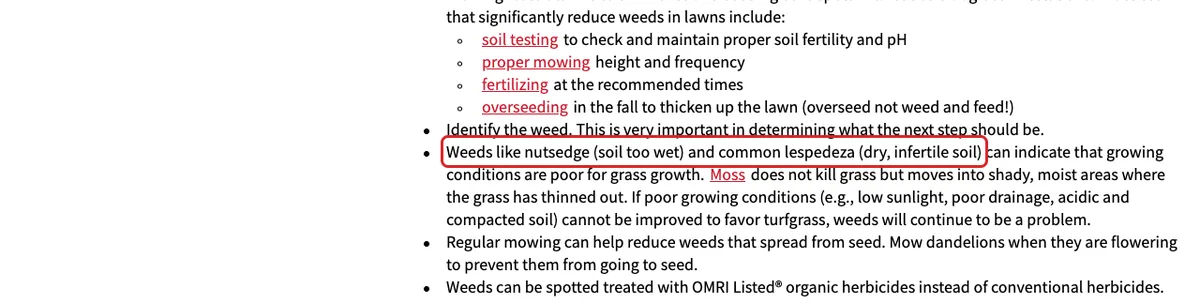
UF/IFAS puts the logic in one line: “weeds don’t create a void; they fill a void” (UF/IFAS ENH884). If the condition stays, the weed returns after any herbicide, which is why UConn tells readers to correct the soil or site before spraying (UConn Extension). Our guide to when to aerate your lawn covers the compaction fix by grass type.
Wet-soil weeds are the clearest signal. UF/IFAS says nutsedges thrive where soil stays wet from poor drainage or excess irrigation and that the first step is correcting the wet site (UF/IFAS). Our lawn watering guide shows how to measure what a sprinkler puts down.
Are weeds reliable signs of soil pH and nutrients?
Only loosely. Extension lists tie weeds to compaction, wetness, shade and low nitrogen, but popular pH and calcium claims mostly fail against weed-biology research. Cornell reports dandelion grows better at pH 7.1 than at 6.2 (Cornell), and two extension services file broadleaf plantain under opposite pH conditions. Test the soil instead of reading the weeds.
| Claim in popular guides | What the primary source says | Source |
|---|---|---|
| Dandelions mean acidic soil with high potassium and low calcium (LawnStarter, Oct. 2026) | Half right. High potassium does favor dandelion over grasses, but growth increases up to pH 8, soil at pH 7.1 gave 45 percent more fresh weight and 67 percent more plants than pH 6.2, and excessive liming promotes it | Cornell Weed Science, dandelion profile |
| Oxalis signals moist soil high in magnesium and low in calcium (LawnStarter) | Cornell calls yellow woodsorrel an indicator of moist, fertile soil that also tolerates drought; Penn State finds it in sun and shade, moist and dry soil. Neither names magnesium or calcium | Cornell; Penn State |
| Crabgrass means high fertility from over-fertilizing (LawnStarter) | UConn lists crabgrass among weeds of low-fertility and drought-prone soils; UC IPM ties it to frequent light watering and mowing too short | UConn; UC IPM |
| Broadleaf plantain marks acidic soil (UConn table) | UC IPM calls broadleaf plantain an indicator of alkaline (high pH), low-fertility, compacted soil; Cornell links both plantains to fields at pH 6.5 to 7.8 | UC IPM; Cornell |
| Clover means compacted, acidic soil (LawnStarter) | Penn State and UC IPM tie white clover to low nitrogen; UConn files it under low fertility, drought and compaction, not acidity | Penn State; UConn |
The pH figures below show why a weed is a poor pH meter. UConn’s target for turf is pH 6.0 to 7.2 (UConn), and every weed in the table tolerates or prefers part of that range. The chart plots the same numbers; the column on the right says what each figure measures, because the studies did not measure the same thing.
| Plant | Soil pH figure | What the figure means | Source |
|---|---|---|---|
| Turfgrass target | 6.0 to 7.2 | Range to maintain for nutrient availability | UConn |
| Dandelion | 4.0 to 8.0 | Tolerates 4.0; growth rises up to 8; poor below 5.2 | Cornell |
| Common chickweed | 5.2 to 8.2 | Grows well; severely depressed below 5.2 | Cornell |
| Henbit | 5.0 to 7.0 | Density insensitive to pH on sandy soil | Cornell |
| Annual bluegrass | 5.5 to 6.5 | Best growth; rarely found below 5.3 | Cornell |
| Broadleaf and buckhorn plantain | 6.5 to 7.8 | pH of fields where they occurred | Cornell |
| Goosegrass | 5.0 to 10.0 | Seeds germinate well across this range | Cornell |
The practical rule: a weed tells you the turf is weak, not which nutrient is off. Cornell even finds that excessive liming promotes dandelion (Cornell), so liming to fight dandelions can backfire. UConn recommends a soil test every 1 to 3 years to track pH and nutrients (UConn); our soil test guide covers how to take one.
When should you control each type of lawn weed?
Time control to the life cycle. Preemergents go down 2 to 3 weeks before annual weeds germinate: early spring for crabgrass and goosegrass, early fall for annual bluegrass, chickweed and henbit (UC IPM; UGA). Perennial broadleaf weeds die best to a fall spray, mid-September to early November in Indiana (Purdue AY-9).
| Weed group | Examples | Control window | Trigger or limit | Source |
|---|---|---|---|---|
| Summer annual grasses | Crabgrass, goosegrass | Preemergent in early spring; goosegrass 3 to 4 weeks later | Crabgrass germinates when soil holds 55 to 60°F for about a week: mid-March to mid-April in central Maryland | UMD; UF/IFAS |
| Summer annual broadleaf weeds | Spurge, knotweed, lespedeza, black medic | Spray small plants in late spring to early summer; isoxaben preemergent in April | One spray may miss later flushes | Purdue AY-9; NC State |
| Winter annuals | Annual bluegrass, chickweed, henbit, deadnettle | Preemergent late summer to early fall; spray small plants October to November | Florida: when nights drop to 55 to 60°F for several days | UGA B-978; Purdue; UF/IFAS |
| Perennial broadleaf weeds | Dandelion, clover, plantain, ground ivy, violet | Mid-September to early November; second choice late spring after flowering | Air 50 to 85°F, moist soil, no mowing 3 days before or after | Purdue AY-9 |
| Perennial grasses | Dallisgrass, quackgrass, nimblewill, bermudagrass in fescue | Spot-spray glyphosate or fluazifop while actively growing, best early fall | Kills the lawn grass it touches; reseed after | UC IPM; UW-Madison |
| Sedges | Yellow and purple nutsedge | Early summer, before the fifth leaf and before new tubers form in late June; 2 applications | No preemergent kills nutsedge tubers in cool-season turf | UC IPM; UC IPM pn7432; NC State |
Late fall still counts. Purdue’s turf program reports broadleaf herbicides applied in Indiana until about mid-November still give effective control, and that November applications on ground ivy matched September and October when rated the next June (Purdue Turfgrass Science). Winter annuals are small then, so the same spray takes henbit, chickweed and deadnettle.
Two limits apply to new lawns. UGA recommends preemergents only on turf established for at least one year (UGA B-978), and Purdue waits until new seedlings have been mowed three times, or 4 to 6 weeks on new sod, before a broadleaf herbicide (Purdue AY-9). Our lawn care schedule places these windows in a month-by-month calendar.
| Step | Input | Arithmetic | Result |
|---|---|---|---|
| 1. Summer-annual preemergent, central Florida | UF/IFAS rule of thumb: Feb. 15 | Start date as published | Feb. 15 |
| 2. Goosegrass is the main weed | Wait 3 to 4 weeks longer | Feb. 15 + 21 days; Feb. 15 + 28 days | Mar. 8 to Mar. 15 |
| 3. Season-long cover | Second application 6 to 9 weeks after the first | Feb. 15 + 42 days; Feb. 15 + 63 days | Mar. 29 to Apr. 19 |
| 4. Winter-annual preemergent, same lawn | Nights at 55 to 60°F; late Oct. to early Nov. in central Florida | Date as published | Late Oct. to early Nov. |
| 5. Central Maryland crabgrass | Germination mid-Mar. to mid-Apr. (UMD); apply 2 to 3 weeks earlier (UC IPM) | Mar. 15 minus 21 days; Apr. 15 minus 14 days | About Feb. 22 to Apr. 1 |
Row 5 is a wide window because it combines a germination range with a lead time. Narrow it with a soil thermometer: the 55°F trigger and city-by-city dates are in our crabgrass timing tables.
Which lawn weeds are most common in your region?
The weed list shifts with grass type and climate. Cool-season lawns in New England and the Midwest fight dandelion, ground ivy, violets and quackgrass; the transition zone adds goosegrass, lespedeza and nutsedge; Florida and the Gulf add dollarweed and Virginia buttonweed (UConn; UMD; UGA; UF/IFAS). The table names each region’s weeds from its own extension guide.
| Region | Weeds the extension guide names | Regional detail | Source |
|---|---|---|---|
| New England | Crabgrass, annual bluegrass, plantains, white clover, violets, nimblewill; ground ivy and Japanese stiltgrass, both listed as Connecticut invasives | Turf needs 4 to 6 hours of sun; Kentucky bluegrass over 6 | UConn Extension, 2018 |
| Mid-Atlantic | Chickweed, henbit, deadnettle, annual bluegrass, black medic, lespedeza, spurge, crabgrass, goosegrass, dandelion, ground ivy, plantain, white clover, wild garlic, quackgrass, dallisgrass, nimblewill, yellow nutsedge | Crabgrass germinates mid-March to mid-April in central Maryland | University of Maryland Extension, 2023 |
| Midwest | Dandelion (called the most common lawn weed), ground ivy, wild violet, spurge, knotweed; perennial grass weeds quackgrass, nimblewill, creeping bentgrass, pasture tall fescue | Broadleaf sprays still work in Indiana to about mid-November | Purdue and Illinois AY-9; UW-Madison; Purdue |
| Southeast and transition zone | Crabgrass, goosegrass, lespedeza, prostrate knotweed, annual bluegrass, chickweed, henbit, nutsedge, dallisgrass, Virginia buttonweed | Virginia buttonweed ranges from New Jersey west to Missouri and south to the Gulf Coast | UGA B-978; UGA B1397 |
| Florida | Dollarweed, goosegrass, annual bluegrass, sedges, Florida pusley, Virginia buttonweed, chamberbitter, lawn burweed | Preemergent by Feb. 1 in south, Feb. 15 in central and Mar. 1 in north Florida | UF/IFAS ENH884, rev. 2024 |
| California | Annual bluegrass, crabgrass, goosegrass, bermudagrass, dallisgrass, burclover, black medic, knotweed, spurges, white clover, creeping woodsorrel, dandelion, English daisy, plantains, kyllinga, nutsedge | English daisy is mostly a moist, cool coastal-climate weed | UC IPM Pest Notes 74113 |
Lawn burweed, which Mississippi State says is also called sticker weed or spurweed, is a winter annual that germinates from October to December and forms spiny burs in spring; once the burs form, control is futile (Mississippi State Extension Publication 4180). UF/IFAS lists it among the annual broadleaf weeds a fall preemergent controls, applied when Florida nights fall to 55 to 60°F for several days (UF/IFAS ENH884).
What should you do about the weeds in your lawn?
Match the response to the weed group and the density. A few perennial broadleaf weeds get a fall spot spray; a weed that tracks a site problem gets the site fixed first; annual grasses get a preemergent next season; a lawn that is mostly weeds gets renovated (UC IPM; Purdue AY-9). The table and flowchart below hold the same logic.
| If your situation is | Do this | Why (source) |
|---|---|---|
| Less than half the lawn is the grass you want | Renovate: kill, remove, fix the cause, replant | Kentucky suggests re-establishing below 50 percent desired turf (UK AGR-51); Minnesota when weeds cover about 30 to 50 percent and turf cannot fill in (UMN) |
| Scattered dandelions, clover or plantain | Spot-spray mid-September to early November; dig a few by hand | Fall sprays gave over 90 percent dandelion control vs 50 percent or less in spring (K-State; Purdue AY-9) |
| Ground ivy or wild violet patches | Triclopyr or fluroxypyr after the first fall frost; plan repeat sprays | Best actives and timing (Penn State; Penn State) |
| Crabgrass or goosegrass last summer | Preemergent 2 to 3 weeks before germination; redo 6 to 8 weeks later for goosegrass | (UC IPM; Penn State) |
| Annual bluegrass, chickweed or henbit last spring | Preemergent in late summer as soil falls below 70°F | (UC IPM; UMD) |
| Nutsedge or dollarweed in a wet spot | Cut irrigation and fix drainage, then a sedge herbicide in early summer | Weeds fill a void (UF/IFAS); timing (UC IPM) |
| Quackgrass, dallisgrass or nimblewill patches | Spot glyphosate and reseed; mesotrione series for nimblewill | (Illinois; UC IPM; Illinois) |
| Weeds concentrated in shade | Prune or overseed fine or tall fescue; herbicide alone will not hold | Turf needs 4 to 6 hours of sun (UConn) |
| Lawn seeded or sodded this year | No preemergent until established 1 year; broadleaf spray after 3 mowings or 4 to 6 weeks on sod | (UGA B-978; Purdue AY-9) |
1Is less than half the lawn the grass you want?
YesRenovate: fix the cause, kill and remove the old turf, replant (UK AGR-51, UC IPM).
NoGo to the next question
2Do the weeds sit in a wet, compacted or shaded spot?
YesFix the site first: drainage and watering, core aeration, or more light and a shade grass (UConn, UF/IFAS).
NoGo to the next question
3Are they perennial broadleaf weeds such as dandelion, clover or ground ivy?
YesSpot-spray mid-September to early November at 50 to 85°F (Purdue AY-9).
NoGo to the next question
4Are they annual grasses or winter annuals that came back this year?
YesPlan a preemergent 2 to 3 weeks before next germination (UC IPM).
NoGo to the next question
5Are they nutsedge or perennial grasses?
YesSedge herbicide in early summer, or spot glyphosate and reseed (UC IPM, Illinois).
NoHand-pull young weeds with the root and keep mowing height and feeding right for your grass (UC IPM).
Source: UC IPM Pest Notes 74113; Purdue AY-9; UConn; UF/IFAS ENH884; UK AGR-51
Product choice by active ingredient, rates, temperature limits and the grasses each herbicide injures are covered in our lawn weed killer guide; household vinegar’s limits are in our vinegar weed killer review. Applying herbicides on someone else’s lawn for pay requires a state license, explained in our pesticide applicator license guide.
How we compiled this
In October 2026 we compiled about 50 weed fact sheets, pest notes, bulletins and weed-biology profiles from 16 land-grant universities, from Purdue and Cornell to UC IPM and UF/IFAS. One commercial lawn guide is cited only for the claims we checked. We did no field identification, soil testing or herbicide trials; the worked example is date arithmetic on published rules.
| Question | Number to use | Source |
|---|---|---|
| Is it broadleaf, grass or sedge? | Net veins = broadleaf; hollow round stem = grass; solid triangular stem = sedge | UF/IFAS |
| When to spray perennial broadleaf weeds | Mid-September to early November, at 50 to 85°F | Purdue AY-9 |
| When to apply a preemergent | 2 to 3 weeks before germination; crabgrass at 55 to 60°F soil | UC IPM; UMD |
| Target soil pH for turf | 6.0 to 7.2 | UConn |
| Minimum sun for turf | 4 to 6 hours a day | UConn |
This page is general information, not pesticide advice. The label is the law: read and follow the label on any herbicide you buy, and check your state’s rules before applying it.
Frequently asked questions
What are the worst weeds to have in a lawn?
Perennials that regrow from tubers, rhizomes or creeping stems. Purdue expects 2 to 3 years to cut yellow nutsedge tubers by 90 percent (Purdue), Illinois says no selective herbicide controls quackgrass in lawns (Illinois), dallisgrass needs at least 3 sprays (UC IPM), and LSU often needs 4 for Virginia buttonweed.
What are some common types of grass weeds?
Crabgrass and goosegrass (summer annuals), annual bluegrass (a winter annual), and the perennials dallisgrass, quackgrass, nimblewill and bermudagrass in cool-season lawns, per the University of Maryland Extension list. Nutsedge looks like a grass but is a sedge with a solid triangular stem.
What are 10 common types of weeds?
Dandelion, white clover, broadleaf plantain, ground ivy, common chickweed, henbit, prostrate spurge, crabgrass, annual bluegrass and yellow nutsedge all appear on the University of Maryland Extension lawn-weed list. Seven are broadleaf weeds, two are grassy weeds and nutsedge is a sedge, so no single herbicide covers all ten.
What are some invasive weeds that look like grass?
Yellow nutsedge, quackgrass and Japanese stiltgrass. UConn lists Japanese stiltgrass, a Connecticut invasive, among its shade weeds (UConn); quackgrass spreads by long white rhizomes; nutsedge spreads by tubers. Bermudagrass also acts as a weed in tall fescue lawns, and UC IPM ties it to close mowing, sun and heat (UC IPM).
How do I identify the weeds in my lawn?
Pull one plant and check four things: leaf veins (net or parallel), stem shape (round, square or triangular), sap (milky or clear) and roots (taproot, stolons, rhizomes or tubers). Then match the season it appeared. UC IPM’s online key sorts broadleaf, grass and sedge by leaf and stem (UC IPM).
What will kill weeds but not your grass?
A selective herbicide matched to the weed and your grass. UC IPM notes 2,4-D kills broadleaf plants but not grasses, while triclopyr injures bermudagrass and other creeping warm-season grasses (UC IPM). Nutsedge needs a sedge product. Our lawn weed killer guide compares products by active ingredient.
What should you do if a lawn is mostly weeds?
Renovate. University of Kentucky Extension suggests re-establishing a lawn when less than 50 percent of it is the desired grass (UK AGR-51). Find out why the weeds won first, kill and remove the old cover, then reseed: late August is the optimum for cool-season grass in Wisconsin (UW-Madison).
What does creeping Charlie look like in your lawn?
Low mats of square stems that root at the nodes, with opposite, scalloped, kidney-shaped leaves 0.5 to 1.5 inches across and a minty smell when crushed (UMD). It flowers blue-purple in April and May and favors damp, shaded soil. Henbit looks similar but does not root at the nodes.
Which lawn weeds look like clover?
Black medic, yellow woodsorrel (oxalis) and common lespedeza. Black medic has yellow flowers and a stalked middle leaflet; oxalis has heart-shaped leaflets that fold at night (Penn State); lespedeza has small oval leaflets with fine veins and pink-purple flowers. White clover has white flowers and a pale V watermark (Penn State).
Sources
- UC Statewide IPM Program, M. LeStrange and C.A. Reynolds, Pest Notes: Weed Management in Lawns, UC ANR Publication 74113 (Table 1, weeds and associated conditions), March 2016. Accessed October 2026.
- UConn Extension, V. Wallace and A. Siegel-Miles, Weeds as Indicators of Soil and Growing Conditions in Turf, Updated March 2018. Accessed October 2026.
- UF/IFAS Extension, J.B. Unruh et al., Weed Management Guide for Florida Lawns, ENH884/EP141, Rev. December 2024. Accessed October 2026.
- UF/IFAS Extension, N. Samuel and C. Marble, Weeds as Indicators of Soil Conditions in Lawns and Landscapes, EP634, May 9, 2023. Accessed October 2026.
- University of Maryland Extension, Common Home Lawn Weeds in Maryland, Updated May 2, 2023. Accessed October 2026.
- Purdue Extension and University of Illinois Extension, AY-9-W, Control of Broadleaf Weeds in Home Lawns, Current page. Accessed October 2026.
- Purdue Turfgrass Science, A. Patton, How Late Is Too Late to Control Broadleaf Weeds?, Current page. Accessed October 2026.
- Purdue Extension, TURF-45-W, Yellow Nutsedge Control in Turf, Modified April 21, 2026. Accessed October 2026.
- Purdue Turfgrass Science, A. Patton, Wild Violets, Current page. Accessed October 2026.
- UGA Extension, P. McCullough and C. Waltz, Bulletin 978, Weed Control in Home Lawns, Reviewed July 2024. Accessed October 2026.
- UGA Extension, Bulletin 1397, Virginia Buttonweed Control in Turfgrass, Reviewed June 11, 2024. Accessed October 2026.
- UW-Madison Extension, Wisconsin Horticulture, Perennial Grass Weeds in Lawns, Current page. Accessed October 2026.
- UW-Madison Extension, Wisconsin Horticulture, Quackgrass: Difficult to Deal With, Aug. 17, 2026. Accessed October 2026.
- University of Illinois Extension, Home, Yard and Garden Newsletter, Quackgrass, May 19, 2021. Accessed October 2026.
- University of Illinois Extension, Home, Yard and Garden Newsletter, Nimblewill, April 22, 2021. Accessed October 2026.
- UC Statewide IPM Program, Pest Notes: Dandelions, Jan. 2018. Accessed October 2026.
- UC Statewide IPM Program, Pest Notes: Plantains, Feb. 2020. Accessed October 2026.
- UC Statewide IPM Program, Pest Notes: Nutsedge, pn7432, June 2024. Accessed October 2026.
- UC Statewide IPM Program, Pest Notes: Dallisgrass, pn7491, Sept. 2022. Accessed October 2026.
- UC Statewide IPM Program, Pest Notes: Annual Bluegrass, pn7464, May 2012. Accessed October 2026.
- UC Statewide IPM Program, Turfgrass weed key: broadleaf, grass or sedge, Current page. Accessed October 2026.
- Penn State Extension, P. Landschoot, Lawn and Turfgrass Weeds: White Clover, Oct. 28, 2025. Accessed October 2026.
- Penn State Extension, P. Landschoot, Lawn and Turfgrass Weeds: Ground Ivy, Jan. 27, 2026. Accessed October 2026.
- Penn State Extension, P. Landschoot, Lawn and Turfgrass Weeds: Wild Violet, Sept. 11, 2025. Accessed October 2026.
- Penn State Extension, P. Landschoot, Lawn and Turfgrass Weeds: Common Chickweed, Jan. 27, 2026. Accessed October 2026.
- Penn State Extension, P. Landschoot, Lawn and Turfgrass Weeds: Dead Nettle, Jan. 27, 2026. Accessed October 2026.
- Penn State Extension, P. Landschoot, Lawn and Turfgrass Weeds: Spotted Spurge, March 25, 2026. Accessed October 2026.
- Penn State Extension, P. Landschoot, Lawn and Turfgrass Weeds: Yellow Woodsorrel, Feb. 13, 2026. Accessed October 2026.
- Penn State Extension, Lawn and Turfgrass Weeds: Black Medic, Oct. 1, 2025. Accessed October 2026.
- Penn State Extension, Lawn and Turfgrass Weeds: Goosegrass, June 6, 2025. Accessed October 2026.
- Penn State Extension, Lawn and Turfgrass Weeds: Nimblewill, July 15, 2024. Accessed October 2026.
- University of Maryland Extension, Ground Ivy, Oct. 19, 2026. Accessed October 2026.
- University of Maryland Extension, Dandelion, March 2, 2023. Accessed October 2026.
- University of Maryland Extension, Chickweeds: Identification and Management, Oct. 22, 2026. Accessed October 2026.
- University of Maryland Extension, Henbit, March 2, 2023. Accessed October 2026.
- University of Maryland Extension, Black Medic, Oct. 23, 2026. Accessed October 2026.
- University of Maryland Extension, Common Lespedeza or Japanese Clover, Oct. 23, 2026. Accessed October 2026.
- NC State TurfFiles, Weeds in turf: white clover, buckhorn plantain, henbit, purple deadnettle, spotted spurge, common lespedeza, 2022. Accessed October 2026.
- NC State TurfFiles, Weeds in turf: yellow nutsedge, Oct. 7, 2022. Accessed October 2026.
- NC State TurfFiles, Weeds in turf: purple nutsedge, Oct. 7, 2022. Accessed October 2026.
- NC State TurfFiles, Weeds in turf: goosegrass, Oct. 7, 2022. Accessed October 2026.
- NC State TurfFiles, Weeds in turf: annual bluegrass, Oct. 7, 2022. Accessed October 2026.
- LSU AgCenter, Control of Virginia Buttonweed, March 19, 2015. Accessed October 2026.
- LSU AgCenter, Common Lespedeza, Current page. Accessed October 2026.
- LSU AgCenter, Dallisgrass, Current page. Accessed October 2026.
- Mississippi State University Extension, Publication 2910, Lespedeza Control in Maintained Turfgrass, Current edition. Accessed October 2026.
- Mississippi State University Extension, Publication 4180, Lawn Burweed (Soliva sessilis) Control in Turfgrass, Current edition. Accessed October 2026.
- UF/IFAS Gardening Solutions, Dollarweed, Current page. Accessed October 2026.
- University of Kentucky Cooperative Extension, AGR-51, Renovating Your Lawn, October 2014. Accessed October 2026.
- University of Minnesota Extension, Renovating a Lawn for Quality and Sustainability, Reviewed 2024. Accessed October 2026.
- K-State Research and Extension, Wild West District, Fall Is the Best Time to Control Dandelions and Perennial Weeds, October 2021. Accessed October 2026.
- Cornell University Weed Science, Weed profiles: dandelion, yellow woodsorrel, common chickweed, deadnettles, plantains, annual bluegrass, goosegrass, Current pages. Accessed October 2026.
- Penn State Extension, Lawn and Turfgrass Weeds: Smooth Crabgrass and Large Crabgrass, Current page. Accessed October 2026.
- UW-Madison Extension, Wisconsin Horticulture, S. Mahr, Henbit, Lamium amplexicaule, Revised May 14, 2026. Accessed October 2026.
- NC State Extension Gardener Plant Toolbox, Hydrocotyle umbellata (dollarweed), Current page. Accessed October 2026.
- NC State Extension Gardener Plant Toolbox, Diodia virginiana (Virginia buttonweed), Current page. Accessed October 2026.
- LawnStarter (cited only for the claims checked), Read Your Weeds: Identify Them to Learn About Your Lawn’s Health, Oct. 23, 2026. Accessed October 2026.