Johnson grass is Sorghum halepense, a 2 to 8 ft perennial that spreads by thick white rhizomes. Kill it with labeled sulfosulfuron in warm-season lawns, fluazifop in beds, and fall glyphosate spot sprays elsewhere, repeated for several seasons.
Key takeaways
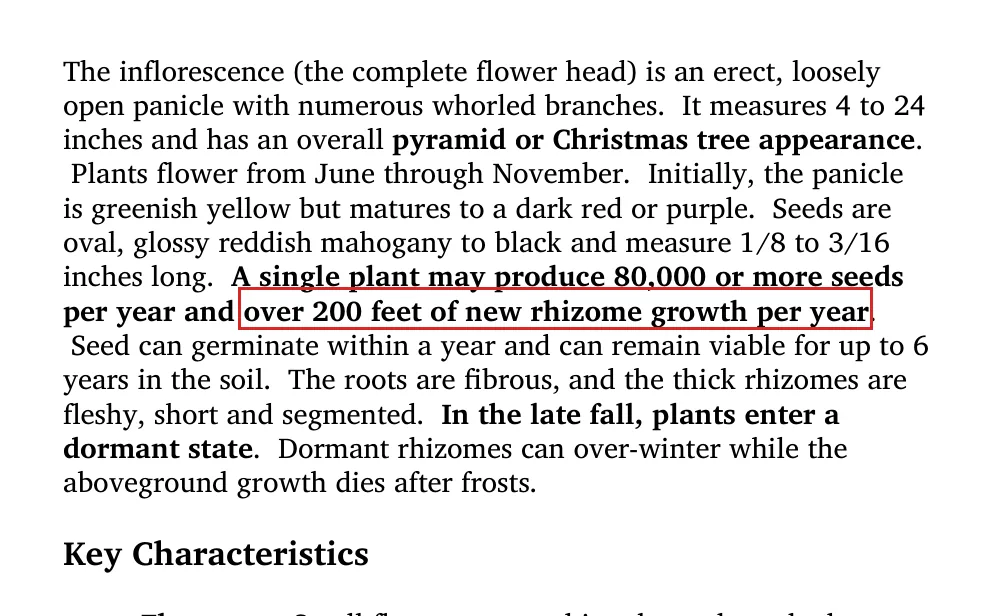
- One johnsongrass plant can make 80,000 or more seeds and over 200 feet of new rhizome a year, and its seed stays viable in soil for up to 6 years (Maryland Department of Agriculture).
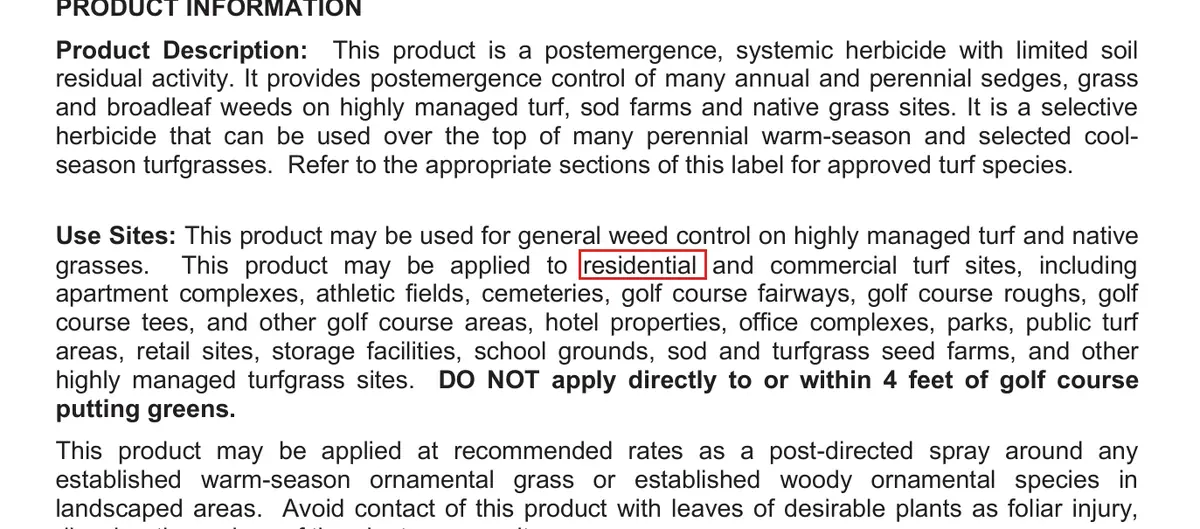
- Lawn type decides the tool. The Certainty label (EPA Reg. No. 59639-226) lists johnsongrass on residential bermuda, zoysia, centipede, St. Augustine, bahia and buffalo turf at 1.25 to 2.0 oz per acre and in pure Kentucky bluegrass at 0.75 oz, but it also kills tall fescue (EPA-accepted label, Nov. 7, 2024).
- Tall fescue has no selective johnsongrass herbicide, so UGA and Alabama Extension use glyphosate spot sprays or wiper applications (UGA Bulletin 1513; Alabama Extension). Fall treatments move more herbicide into rhizomes than spring ones.
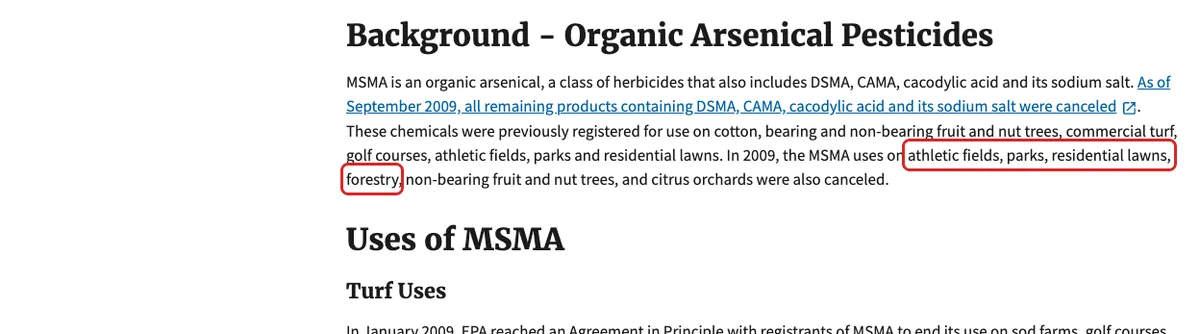
- MSMA is not a lawn option: EPA cancelled its residential lawn uses in 2009 and keeps it only on cotton, sod farms, golf courses and highway rights-of-way (EPA).
- Stressed johnsongrass can poison livestock. Purdue treats forage above 200 ppm hydrogen cyanide as fed as potentially dangerous (Purdue); UT Extension says keep stock off it for at least 2 weeks after a freeze (UT W1336).
- We verified johnsongrass in the current rules or agency lists of 14 states (12 noxious weed lists, Kentucky’s seed law and Missouri’s county-option statute), from Washington’s Class A to Kansas’s Category C; it is on neither federal list (7 CFR 360.200).
What is johnson grass, and why is it so hard to kill?
Johnson grass (Sorghum halepense, also spelled johnsongrass) is a warm-season perennial grass in the sorghum genus, native from southern Europe through India and brought to the southeastern U.S. as forage in the early 1800s (Cornell weed profile). It is hard to kill because the plant lives in its rhizomes: Cornell cites single plants making 200 to 300 ft and 18 lb of new rhizome a year, and every fragment can sprout.
| Measure | Johnsongrass value | Source |
|---|---|---|
| Height | 2 to 8 ft (Cornell); 6 to 8 ft typical (UT); up to 8 to 10 ft (UGA) | Cornell; UT; UGA |
| Leaf blade | 6 to 20 in long, up to 1.5 in wide, thick white midvein | MDA |
| Ligule | Membrane 3 to 4 mm long, often fringed with hair; no auricles | MDA; TurfFiles |
| Seedhead | Open, pyramid-shaped panicle 4 to 24 in; green turning dark red or purple | MDA |
| Seeds | 1/8 to 3/16 in, glossy reddish mahogany to black; 80,000+ per plant per year | MDA |
| Seed life in soil | Up to 6 years | MDA; Cornell |
| New rhizome per plant per year | Over 200 ft (MDA); 200 to 300 ft and 18 lb (Cornell) | MDA; Cornell |
| Rhizome depth | 2 to 3 in in clay, 4 to 6 in in sandy loam; 10 to 20 in in cracked soil | Cornell; MDC |
| Seedling to rhizome | As few as 19 days | Purdue |
| Flowering | About 7 weeks after emergence; June to November | Cornell; MDA |
Seed adds a second front. The Maryland Department of Agriculture fact sheet puts output at 80,000 or more seeds per plant per year, with seed viable in soil for up to 6 years. A 2-year garden study in Mississippi counted 28,000 seeds per plant, Cornell notes, and seed buried 9 inches deep survived 6 years while shallow seed lasted under 2.
Speed is the third problem. Purdue says seedlings can start rhizomes as few as 19 days after emergence (Purdue FNR-647), and Maryland’s rule of thumb is to destroy seedlings within 3 to 4 weeks, before rhizomes form. Flowering starts about 7 weeks after emergence and runs to frost, per Cornell. The Missouri Department of Conservation counts more than 300,000 infested acres in the Missouri Bootheel alone (MDC field guide).
What does johnson grass look like?
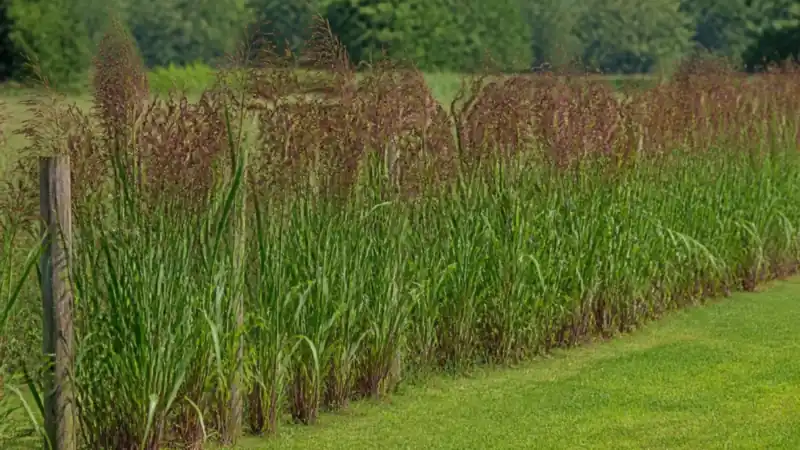
Johnson grass looks like a coarse corn plant without ears: upright, round, hairless stems 2 to 8 ft tall, flat leaves with a thick white midvein, a membranous ligule with a hairy fringe, and an open purple panicle shaped like a Christmas tree. The deciding test is underground: dig a plant, and johnsongrass has thick white rhizomes with scaly nodes (UW Madison fact sheet).
Stems are pink to rusty red near the base and often carry a whitish powdery bloom, and rhizomes run white or cream to brown with reddish or purple spots at the nodes (MDA). NC State’s TurfFiles gives leaf blades of 0.4 to 1.2 inches (10 to 30 mm), rolled vernation, a continuous collar and no auricles.
Johnson grass vs shattercane, sudangrass, corn and other look-alikes
Shattercane and sudangrass are annual sorghums with no rhizomes; corn seedlings carry a much larger seed on the root. Vaseygrass and guinea grass are bunch grasses that UF/IFAS says are often misnamed johnsongrass, and the mistake matters because their herbicide programs differ (UF/IFAS SS-AGR-363). Columbus grass (Sorghum almum) is the one look-alike with short rhizomes.
| Plant | Life cycle | Rhizomes | How to tell it from johnsongrass | Source |
|---|---|---|---|---|
| Johnsongrass (Sorghum halepense) | Perennial | Thick, white, scaly | Smooth hairless stems; white midrib; smaller seed with a knob on the rachilla | UW Madison; Purdue Agry 105 |
| Shattercane (Sorghum bicolor) | Annual | None | Seedling ligule half membrane, half hairs; hairs on both blade surfaces near the collar; stems purple-spotted, up to 13 ft | Cornell; Iowa State |
| Sudangrass (S. bicolor ssp. drummondii) | Annual | None; seed only | 3 to 6 ft; larger seed, rachilla knob almost always broken off | Purdue Agry 105 |
| Corn seedling (Zea mays) | Annual | None | Much larger seed still attached to the root | Iowa State |
| Columbus grass (Sorghum almum) | Perennial | Short rhizomes | Johnsongrass x sorghum hybrid; regulated with johnsongrass in Illinois and Utah | Iowa State; 8 Ill. Adm. Code 220.60 |
| Vaseygrass | Perennial | Bunch type, no significant rhizomes | Indented midrib, crinkled leaf margins; wet sites and ditches | UF/IFAS |
| Guinea grass | Perennial | Bunch type, no significant rhizomes | Hairy stems; rough leaf undersides; smaller green seed | UF/IFAS |
| Eastern gamagrass (Tripsacum dactyloides) | Native perennial | Not used to separate them | Stems flattened at the base; johnsongrass stems are round | MDC |
| Fall panicum (Panicum dichotomiflorum) | Annual | None | Hairy ligule; johnsongrass lacks dense hairs on leaf undersides and sheaths | Cornell |
In lawns, mowing hides most of these traits. TurfFiles says johnsongrass is not a common turf weed because it does not grow well under frequent, close mowing, so a coarse grass with a white midrib that survives weekly mowing is worth digging up before you spray. Our common lawn weeds guide covers the shorter grassy weeds, and the foxtail guide covers the bristly annual seedheads often confused with young sorghum panicles.
Is johnson grass a noxious weed, and where is it regulated?
Yes, in many states. We confirmed it in the current rules or agency lists of 14 states, from Washington (Class A) to Kansas (Category C), counting Kentucky’s seed law and a Missouri statute that lets counties vote to enforce control. Johnsongrass is not a federal noxious weed: it is absent from 7 CFR 360.200 and from the Federal Seed Act noxious seed list in 7 CFR 201.16(b).
Swipe the table sideways to see every column.
| State | Status | Legal citation | Source |
|---|---|---|---|
| Arizona | Class C noxious weed | A.A.C. R3-4-245, Table 6 | UA AZ Invasive Plants; rule text |
| Colorado | List C noxious weed | Colorado Noxious Weed Act; 8 CCR 1206-2 | Colorado Dept. of Agriculture |
| Illinois | Noxious weed (perennial sorghums incl. Sorghum almum) | 8 Ill. Adm. Code 220.60(g) | Cornell LII |
| Kansas | Category C noxious weed | K.A.R. 4-8-44(d)(4) | Cornell LII |
| Kentucky | Prohibited noxious weed seed, zero tolerance in seed lots | 12 KAR 1:120 (seed law) | UK Regulatory Services |
| Maryland | Noxious weed, first on the list (added 1969) | COMAR 15.06.05.03(A) | Cornell LII; MDA |
| Minnesota | Prohibited, Eradicate list (added 2023) | Minnesota Noxious Weed List | MDA Minnesota |
| Missouri | Nuisance in counties that vote to enforce control | RSMo 263.255 and 263.262 | RSMo 263.255; 263.262 |
| Nevada | Category C weed | NAC 555.010 | Cornell LII |
| Ohio | Prohibited noxious weed | OAC 901:5-37-01(C) | Cornell LII |
| Pennsylvania | Class B noxious weed | Controlled Plant and Noxious Weed Act, 3 Pa.C.S. ch. 15 | Pa. Dept. of Agriculture |
| Utah | Class 3, Containment (Table 4), as a perennial Sorghum | Utah Admin. Code R68-9-3 | Cornell LII |
| Washington | Class A noxious weed | WAC 16-750-005 | WAC 16-750-005 |
| Wisconsin | Prohibited invasive species | Wis. Adm. Code NR 40.04 | Wisconsin DNR |
| Oregon | Not on the A or B noxious weed lists (2024) | ODA classification system 2024 | Oregon Dept. of Agriculture |
| Federal | Not listed | 7 CFR 360.200; 7 CFR 201.16(b) | eCFR 360.200; eCFR 201.16 |
Several secondary counts disagree with the rule text. Wikipedia says 19 states list johnsongrass, and the 2022 Minnesota risk assessment, citing a National Plant Board list, adds that it is a noxious weed seed under the Federal Seed Act (MDA risk assessment). The current 7 CFR 201.16(b) list names no Sorghum species, and Oregon’s 2024 classification no longer carries johnsongrass on its A or B lists. Idaho, Michigan, South Dakota and West Virginia appear on that 2022 list; we could not re-verify them this month, so they are left out of the table.
A listing changes what you must do, not just what you may do. Kansas rule K.A.R. 4-8-44(d) subjects new Category C populations to control aimed at reducing or eradicating them (K.A.R. 4-8-44), and Maryland’s law bars moving noxious weeds and requires infested land to be managed for eradication or control (MDA). In Missouri, a petition by 100 landowners can put enforcement to a county vote. Call your county weed board before you haul johnsongrass hay, fill or rhizome-laden soil across county lines.
Is johnson grass poisonous to horses and cattle?
It can be. Drought, frost and heavy nitrogen make johnsongrass build prussic acid (hydrogen cyanide) and nitrate. Purdue treats forage above 200 ppm hydrogen cyanide as fed as potentially dangerous and nitrate above 1 percent as toxic (Purdue toxic plants page). Alabama Extension says horses should not graze it at all because of equine cystitis (Alabama Extension FAQ).
| Situation | Risk and rule | Source |
|---|---|---|
| Hydrogen cyanide in pasture forage | Above 200 ppm as fed: potentially dangerous; above 500 ppm dry matter: suspect | Purdue |
| Nitrate in forage | Toxic above 1% nitrate or 5,000 ppm in dry matter; more common than cyanide poisoning | Purdue |
| After a freeze | Keep livestock off for at least 2 weeks; frost-killed standing forage at least 2 weeks | UT W1336; Alabama |
| After drought-ending rain | Wait at least 5 days after good rainfall | Alabama |
| Young regrowth | Highest risk when plants or tillers are under 24 in tall | Purdue |
| Hay | Prussic acid dissipates in properly cured hay; nitrate does not, so test stressed hay | Alabama; UT |
| Horses | Do not graze: risk of equine (sorghum) cystitis | Alabama; UT |
| Unstressed cattle grazing | 2 to 5 tons per acre, 10 to 14% crude protein; keep 6 to 8 in stubble | UT W1336 |
Purdue lists bright cherry-red blood as a sign of cyanide poisoning and chocolate-brown blood as a sign of nitrate poisoning. If cattle must graze a johnsongrass pasture, UT Extension suggests testing forage that was fertilized or drought-stressed, and Alabama notes that continuous grazing by cattle can eliminate a stand within a few years.
How do you get rid of johnson grass in a lawn?
Match the herbicide to the lawn grass. In bermuda, zoysia, centipede, St. Augustine, bahia, buffalo and pure Kentucky bluegrass, sulfosulfuron (Certainty, EPA Reg. No. 59639-226) is labeled for johnsongrass on residential turf. In tall fescue or ryegrass, nothing selective exists, so spot-spray clumps with glyphosate in late summer or fall and reseed the dead spots after the label wait.
Read the Certainty label before you buy: it lists johnsongrass under “Additional Weeds Controlled” for warm-season turf at 1.25 to 2.0 oz of product per acre, with a second 1.25 oz application allowed 4 or more weeks later and no more than 2 applications a year. In established pure Kentucky bluegrass the rate is 0.75 oz per acre; in mixed bluegrass stands the label promises suppression only. The same label has a section on killing tall fescue, which is why it does not belong on a fescue lawn.
Step by step: spot-treating johnsongrass in a warm-season lawn
These steps follow the Certainty label’s hand-sprayer directions and the timing from UGA and Maryland. They assume a homeowner with a 1 or 2 gallon pump sprayer; the label, not this list, is the legal instruction, and some states require a pesticide applicator license to apply it for hire.
- Confirm the weed: dig one clump and look for thick white rhizomes; no rhizomes means shattercane, crabgrass or a bunch grass instead.
- Wait for active growth: treat when the grass is growing and not drought-stressed; the Certainty label says drought-stressed weeds are less susceptible.
- Skip mowing for 2 days before and 2 days after spraying, as the label directs.
- Mix 1 large scoop (0.8 g) of Certainty in 2.0 gallons of water for the 1.25 oz per acre rate, plus 2 teaspoons (1/3 fl oz) of nonionic surfactant per gallon.
- Spray that 2 gallons evenly over 1,000 sq ft; on St. Augustine or seashore paspalum, test a small area first, as the label advises.
- Keep rain and irrigation off for 2 hours; heavier rain sooner can wash product off.
- Expect yellowing or browning in 2 to 3 weeks; growth stops within 24 hours.
- Repeat at 1.25 oz per acre 4 or more weeks later if regrowth appears, and stop at 2 applications that year.
What if the lawn is tall fescue or a cool-season mix?
Use glyphosate only on the johnsongrass itself in a tall fescue lawn. UGA’s Bulletin 1513 says no selective herbicide controls johnsongrass in tall fescue and recommends spot treatment or a wick bar. On the Roundup Weed & Grass Killer Super Concentrate label (EPA Reg. No. 71995-25), the tough-weed rate is 2.5 fl oz per gallon of water sprayed over 300 sq ft, and lawn grass can be replanted 3 days later.
| Treated area | Certainty 1.25 oz/A: product | Certainty: spray volume | Glyphosate 50.2% at 2.5 fl oz/gal: product | Glyphosate: spray volume |
|---|---|---|---|---|
| 100 sq ft | 0.08 g | 0.2 gal | 0.83 fl oz | 0.33 gal |
| 300 sq ft | 0.24 g | 0.6 gal | 2.5 fl oz | 1 gal |
| 1,000 sq ft | 0.8 g (1 large scoop) | 2 gal | 8.3 fl oz | 3.3 gal |
| 5,000 sq ft | 4.0 g (5 large scoops) | 10 gal | Not practical: spot spray only | Not practical |
Timing does more than rate. UGA says fall applications give better long-term control because johnsongrass moves sugars from leaves into rhizomes in fall, carrying systemic herbicide with them; spring sprays burn off leaves and the rhizomes regrow. Missouri Department of Conservation gets its best results spraying plants 18 inches tall to early flowering (MDC control page), so let a mowed clump grow back before you treat it. Overseeding the dead patches is covered in our overseeding guide.
Glyphosate concentration on extension sheets varies: MDC uses a 2 percent Roundup solution, Purdue lists a 2 to 3 percent spot spray (Purdue FNR-647), and UGA uses 5 percent made from a 41 percent concentrate. The label in your hand sets the rate. At 2.5 fl oz per gallon, the Super Concentrate mix is 1.95 percent product by volume (2.5 divided by 128).
MSMA is off the table for home lawns. EPA cancelled MSMA use on residential lawns, parks and athletic fields in 2009 (EPA MSMA page), and the current MSMA 6 Plus label (EPA Reg. No. 19713-42) lists only cotton, golf courses, sod farms and highway rights-of-way, with golf course use limited to 100 sq ft spot treatments on no more than 25 percent of the acreage a year.
How do you kill johnson grass in flower beds and gardens?
Around shrubs and perennials, use a grass-only herbicide with fluazifop-P-butyl, such as Ortho Grass-B-Gon Garden Grass Killer (EPA Reg. No. 239-2620), which lists johnsongrass and is labeled to kill weedy grasses without injuring ornamental plants when used as directed. Its label calls for 2 applications 7 days apart on tough perennial grasses. Keep it off the lawn: the same label lists bermuda, St. Augustine, tall fescue and Kentucky bluegrass among grasses it kills.
The professional version, Fusilade II Turf and Ornamental (EPA Reg. No. 100-1084), lists both rhizome and seedling johnsongrass at the 8 to 18 inch growth stage. Its label asks for 1 to 2 gallons of spray per 1,000 sq ft, no mowing or hand weeding within 7 days before or after spraying, a 1 hour rainfast period, and no more than 1.125 lb of fluazifop-P-butyl per acre per year. Purdue notes that clethodim and sethoxydim are other grass-selective options and that a second clethodim spray 2 to 3 weeks after the first is often needed on rhizome johnsongrass (Purdue FNR-647).
In vegetable beds, dig before you spray. MDC recommends hand pulling in June just after a rain, removing every rhizome piece (MDC). Heat works too: Cornell cites rhizome pieces dying in 1 to 3 days at 122 to 140°F on the soil surface, and covering a small area with clear or black plastic during the hottest weeks, stirring the soil between covers. Vinegar is a contact burn; our vinegar weed killer guide explains why rhizome grasses regrow after it.
| Product (active) | EPA Reg. No. | Where it may go | Johnsongrass directions | Source |
|---|---|---|---|---|
| Certainty (sulfosulfuron 75%) | 59639-226 | Residential and commercial warm-season turf; pure Kentucky bluegrass | 1.25 to 2.0 oz/A warm-season; 0.75 oz/A bluegrass; max 2 apps per year | label, Nov. 2024 |
| Roundup Weed & Grass Killer Super Concentrate (glyphosate 50.2%) | 71995-25 | Spot spray anywhere; kills lawn grass it touches | 2.5 fl oz per gal over 300 sq ft; replant lawn 3 days later | label, Jan. 2021 |
| Ortho Grass-B-Gon Garden Grass Killer (fluazifop-P-butyl 0.48%) | 239-2620 | Around ornamentals; not on lawns | 2 sprays 7 days apart for tough perennial grasses | label, Oct. 2024 |
| Fusilade II Turf and Ornamental (fluazifop-P-butyl 24.5%) | 100-1084 | Ornamentals; some zoysia and fescue uses | Treat rhizome johnsongrass at 8 to 18 in; no disturbance 7 days | label, July 2026 |
| Outrider (sulfosulfuron 75%) | 59639-223 | Bermuda and bahia pasture, noncrop, roadsides | 1.33 oz/A at 18 to 24 in up to heading; max 2.66 oz/A per year | label, Sept. 2025 |
| MSMA 6 Plus (MSMA) | 19713-42 | Cotton, golf, sod farms, highway rights-of-way only | Not allowed on home lawns | label, June 2015; EPA |
What kills johnson grass in pastures and hayfields?
In bermuda or bahia pasture, sulfosulfuron (Outrider) at 1.33 oz per acre with nonionic surfactant, applied when johnsongrass is 18 to 24 inches tall and before heading, is the standard UGA, UF/IFAS and Alabama recommendation. Pastora works in bermudagrass only. In tall fescue pasture, the only route is glyphosate through a rope wick once johnsongrass stands at least 6 inches above the fescue (UT W1336).
| Herbicide (product) | WSSA group | UGA efficacy | Labeled grasses | Grazing wait | Hay wait | Rate per acre |
|---|---|---|---|---|---|---|
| clethodim (Select Max) | 1 | E (90 to 100%) | alfalfa, perennial peanut | 15 days | 15 days | see label |
| sethoxydim (Poast) | 1 | E (90 to 100%) | alfalfa | 7 days | 14 days | see label |
| imazamox (Raptor 1L) | 2 | F (70 to 79%) | alfalfa | 20 days | 20 days | 4 to 6 fl oz |
| imazapic (Impose 2AS) | 2 | F to G (70 to 89%) | bermudagrass, perennial peanut | see label | 7 days | 4 to 8 oz |
| imazethapyr (Pursuit) | 2 | G (80 to 89%) | alfalfa | 30 days | 30 days | 1.1 to 2.2 oz (70DG) |
| nicosulfuron + metsulfuron (Pastora) | 2 | G (80 to 89%) | bermudagrass | 0 days | 0 days | 1 to 1.5 oz |
| sulfosulfuron (Outrider) | 2 | E (90 to 100%) | bahiagrass, bermudagrass | 0 days | 14 days | 0.75 to 2 oz |
| glyphosate (Roundup, others) | 9 | E (90 to 100%) | bermudagrass | see label | see label | see label |
Read the label limits, which are tighter than the extension tables suggest. The Outrider label allows a follow-up application no sooner than 40 days after the first, caps the year at 2.66 oz of product per acre and 2 applications, and says not to mow or cut hay for 2 weeks before or after spraying. UF/IFAS adds that Pastora is limited to 2.5 oz per acre per year and injures bermuda less than Panoramic (imazapic) at 4 to 6 oz (UF/IFAS).
For tall fescue, UT Extension recommends a 33 to 75 percent glyphosate solution through a rope wick in mid to late summer, when fescue is dormant and johnsongrass is actively growing, and a 1 qt per acre glyphosate spot spray for small patches once johnsongrass is heading. Alabama adds that wiping needs two passes in opposite directions and misses seedlings shorter than the fescue canopy.
Does mowing or tilling kill johnson grass?
Mowing weakens it but rarely kills an established stand alone. Maryland recommends cutting every 3 weeks through the growing season, UGA monthly, and Purdue at least monthly; all three pair mowing with herbicide. Tilling cuts both ways: shallow or growing-season disking spreads rhizome pieces, while heavy fall tillage that exposes rhizomes to freezing kills them (Purdue FNR-647).
The timing window comes from rhizome reserves. Cornell cites rhizome carbohydrates bottoming out 10 to 30 days after shoots emerge, when plants are 6 to 12 inches tall with 4 to 8 leaves, so cutting or tilling then removes shoots before the rhizomes recharge. Maryland pairs the two methods: mow, then let johnsongrass regrow 2 to 3 weeks before spraying, so there is fresh leaf to carry the herbicide (MDA).
| Temperature | What happens | Source |
|---|---|---|
| 16°F daily minimum soil temperature (field) | Rhizomes freeze and die | Cornell |
| 21 to 27°F for 8 hours (lab) | Rhizomes freeze and die | Cornell |
| 47°F | Minimum for seedling emergence (Argentina study) | Cornell |
| 49°F | Minimum for shoots from rhizomes (Italy study) | Cornell |
| 61°F | Seedlings begin emerging in Texas | Cornell |
| 82°F | Optimum for rhizome sprouting | Cornell |
| 90°F | Fastest rhizome bud break; fastest flower development | Cornell |
| 97°F | Fastest seed germination | Cornell |
| 122 to 140°F | Rhizome pieces on the surface die in 1 to 3 days | Cornell |
Missouri’s conservation department lists repeated tillage, such as 6 passes at 2-week intervals through the growing season, as a way to stop rhizome development on abandoned cropland (MDC). Purdue’s threshold for fall tillage is heavy work exposing more than 70 percent of the soil at a 3 to 5 inch depth. In a lawn, neither is practical; keep turf dense at its recommended height, per TurfFiles, and see our lawn care schedule for mowing heights by grass.
Do pre-emergent herbicides or Roundup alone stop johnson grass?
Pre-emergents stop only the seedlings. UGA says dinitroaniline pre-emergents (the class used for crabgrass) can block johnsongrass from seed but do nothing to shoots from rhizomes, and clearing out annual grasses can release johnsongrass. Roundup alone works when timed to fall, but Purdue and UT Extension both report johnsongrass populations resistant to glyphosate, fluazifop and other grass herbicides.
Resistance changes the plan only if a correctly timed spray fails. The Certainty label tells users to switch to another mode of action if a weed population keeps spreading after treatment; on this page that means rotating between WSSA Group 2 (sulfosulfuron), Group 1 (fluazifop, clethodim) and Group 9 (glyphosate) where the site allows it, and digging survivors.
Which johnson grass control fits your situation?
Start from the site, then the grass you want to keep; more turf weed and grass guides sit in our Turf and Trees section. The decision table below holds the thresholds from the labels and extension sources on this page, and the flowchart walks the same logic. Where two options appear, the first is the one with a label naming johnsongrass at that site.
| If your situation is | Do this | Why (source) |
|---|---|---|
| A few clumps under 3 weeks old, no rhizomes yet | Dig them out, roots and all | Seedlings start rhizomes in as few as 19 days; MDA says destroy them within 3 to 4 weeks (Purdue; MDA) |
| Bermuda, zoysia, centipede, St. Augustine, bahia or buffalo lawn | Certainty at 1.25 to 2.0 oz/A, repeat after 4+ weeks, max 2 per year | Johnsongrass listed for residential warm-season turf (EPA 59639-226) |
| Pure Kentucky bluegrass lawn | Certainty at 0.75 oz/A | Same label; mixed bluegrass stands get suppression only |
| Tall fescue, ryegrass or mixed cool-season lawn | Glyphosate spot spray on clumps in late summer or fall; reseed after 3 days | No selective option in tall fescue (UGA); replant wait on 71995-25 |
| Shrub or perennial bed | Fluazifop (Grass-B-Gon or Fusilade II T&O) at 8 to 18 in; repeat | EPA 239-2620; EPA 100-1084 |
| Vegetable garden | Hand dig in June after rain; solarize with plastic in peak heat | MDC; Cornell (122 to 140°F kills rhizomes) |
| Bermuda or bahia pasture | Outrider 1.33 oz/A at 18 to 24 in, before heading | EPA 59639-223; UGA |
| Tall fescue pasture or hayfield | Rope wick 33 to 75% glyphosate when johnsongrass is 6 in above fescue | UT W1336 |
| Grazing after frost or drought | Keep stock off 2 weeks after a freeze, 5 days after drought-ending rain; no horses | UT; Alabama |
| Anyone suggests MSMA for a home lawn | Decline: residential use cancelled in 2009 | EPA |
1Is it a seedling under about 3 weeks old with no rhizomes?
YesDig it out now, before rhizomes form (Purdue: as few as 19 days).
NoGo to the next question
2Is it in a bermuda, zoysia, centipede, St. Augustine, bahia, buffalo or pure Kentucky bluegrass lawn?
YesCertainty (EPA 59639-226) at the label rate for your grass; max 2 applications a year.
NoGo to the next question
3Is it in a tall fescue, ryegrass or mixed cool-season lawn?
YesGlyphosate spot spray on the clumps in late summer or fall; reseed after 3 days.
NoGo to the next question
4Is it in a shrub or perennial bed?
YesFluazifop (Grass-B-Gon 239-2620 or Fusilade II T&O 100-1084) at 8 to 18 in; repeat.
NoGo to the next question
5Is it in a bermuda or bahia pasture?
YesOutrider 1.33 oz per acre at 18 to 24 in, before heading.
NoGo to the next question
6Is it in a tall fescue pasture or hayfield?
YesRope wick glyphosate 33 to 75% once johnsongrass is 6 in above the fescue.
NoVegetable garden or bare ground: dig in June after rain, or solarize under plastic in peak heat.
Source: EPA labels 59639-226, 71995-25, 239-2620, 100-1084, 59639-223; UGA B1513; UT W1336; Purdue FNR-647
How we compiled this
We pulled 14 herbicide labels from EPA’s Pesticide Product Label System and cite 6, checked 15 state rules or agency lists and 2 eCFR sections, and read 16 extension, university and agency publications, all in October 2026. We did not grow, test or spray johnsongrass: rates and waits come from the labels, and the worked mix table is arithmetic from them.
This page is general information, not legal, veterinary or pesticide-application advice. Herbicide labels and state weed lists change; read the label on the product you buy and check with your state department of agriculture before you treat, move or report johnsongrass.
| Question | Short answer | Source |
|---|---|---|
| What is it? | Sorghum halepense, a rhizomatous warm-season perennial, 2 to 8 ft | Cornell |
| Best lawn option (warm-season) | Certainty, 1.25 to 2.0 oz/A, max 2 per year | EPA 59639-226 |
| Best lawn option (tall fescue) | Glyphosate spot spray, fall | UGA |
| Beds | Fluazifop, 8 to 18 in stage | EPA 100-1084 |
| Pastures | Outrider 1.33 oz/A, 18 to 24 in | EPA 59639-223 |
| Livestock | No grazing 2 weeks after frost; no horses | UT |
| Legal status | In 14 state rules or lists verified here; not federal | eCFR |
Frequently asked questions
What kills johnson grass but not bermuda grass?
Sulfosulfuron. The Certainty label (EPA Reg. No. 59639-226) lists johnsongrass on bermuda lawns at 1.25 to 2.0 oz per acre, and Outrider (59639-223) covers bermuda pastures at 1.33 oz per acre. Pastora also works in bermuda pastures only. Bermuda may yellow briefly; UT Extension says stunting is temporary. Our bermuda grass guide covers the lawn’s other weeds.
When is the best time to spray johnson grass?
Late summer to fall, before frost. UGA says fall sprays give better long-term control because johnsongrass is moving sugars into its rhizomes and carries systemic herbicide with them. For in-season sprays, target plants 18 to 24 inches tall and not yet heading, the stage on the Outrider label and in MDC’s glyphosate advice.
Will Roundup kill johnson grass?
Usually, if timed right and repeated. MDC reports good results from a 2 percent glyphosate spray on plants 18 inches tall to early flowering, continued for 3 to 4 years. Glyphosate also kills the lawn grass it touches, so spot-spray only, and expect regrowth from rhizomes after spring sprays. Purdue and UT note some glyphosate-resistant populations.
Does pre-emergent stop johnson grass?
Only from seed. UGA says dinitroaniline pre-emergents can stop johnsongrass seedlings but do not stop shoots coming from rhizomes, which is how established patches return each spring. In pastures, Alabama lists Prowl H2O (pendimethalin) for dormant-season seedling control in established warm-season grasses, and Purdue lists imazapic in April.
Why is johnson grass bad?
It crowds out other plants, poisons stressed livestock and spreads fast. MDC says heavy infestations can cut Missouri corn or soybean yields to a few bushels per acre, and Maryland notes it hosts maize dwarf mosaic virus over winter. Its rhizome mats also release allelopathic compounds, UGA says, that suppress nearby grasses.
Is johnson grass good for anything?
Yes, as cattle forage when it is not stressed. UT Extension reports 2 to 5 tons per acre with 10 to 14 percent crude protein and up to 60 percent total digestible nutrients, grazed at a 6 to 8 inch stubble. The catch is prussic acid after frost or drought and the ban on grazing horses.
How deep are johnson grass roots?
Most rhizomes sit in the top 4 to 6 inches, MDC says, reaching 10 to 20 inches where soil cracks. Cornell cites rhizomes 2 to 3 inches deep in clay and 4 to 6 inches in sandy loam, with over 10 percent below 12 inches in one study. Dig at least a spade’s depth when hand pulling.
Can you mow johnson grass out of a lawn?
Often, in a dense lawn mowed weekly. NC State TurfFiles says johnsongrass does not grow well under frequent, close mowing, which is why it is uncommon in turf. Mowing alone rarely clears established patches along fences or beds, where Maryland suggests cutting every 3 weeks and spraying regrowth 2 to 3 weeks after a cut.
Sources
- Maryland Department of Agriculture, Johnsongrass Identification and Management (fact sheet), Current page. Accessed October 2026.
- University of Georgia Extension, Bulletin 1513, Johnsongrass Control in Pastures, Roadsides, and Noncropland Areas, Published Feb. 17, 2022. Accessed October 2026.
- Purdue University Extension, FNR-647-W, Johnsongrass Control, 2025. Accessed October 2026.
- University of Tennessee Extension, W1336, Johnsongrass in Forage Systems: Control, Risks, and Benefits, October 2025. Accessed October 2026.
- Alabama Cooperative Extension System, Johnsongrass: Frequently Asked Questions, Current page. Accessed October 2026.
- Purdue University, Toxic plants: Johnsongrass, Current page. Accessed October 2026.
- NC State Extension, TurfFiles, Johnsongrass (Fred Yelverton), Updated Oct. 7, 2022. Accessed October 2026.
- Cornell University, Weed profile: Johnsongrass, Current page. Accessed October 2026.
- Cornell University, Weed profile: Shattercane, Current page. Accessed October 2026.
- Iowa State University, Encyclopedia: Shattercane, Current page. Accessed October 2026.
- University of Wisconsin-Madison, Wisconsin Weed Identification: Johnsongrass, Revised November 2023. Accessed October 2026.
- Purdue University, Agronomy 105, Sudangrass, Current page. Accessed October 2026.
- UF/IFAS Extension, SS-AGR-363, Identification and Control of Johnsongrass, Vaseygrass, and Guinea Grass in Pastures, Current PDF. Accessed October 2026.
- Missouri Department of Conservation, Field guide: Johnson grass, Current page. Accessed October 2026.
- Missouri Department of Conservation, Johnson Grass Control, Current page. Accessed October 2026.
- U.S. EPA, Monosodium Methanearsonate (MSMA), an Organic Arsenical, Current page. Accessed October 2026.
- U.S. EPA PPLS, Certainty Turf Herbicide label, EPA Reg. No. 59639-226, Accepted Nov. 7, 2024. Accessed October 2026.
- U.S. EPA PPLS, Outrider Herbicide label, EPA Reg. No. 59639-223, Accepted Sept. 5, 2025. Accessed October 2026.
- U.S. EPA PPLS, Fusilade II Turf and Ornamental Herbicide label, EPA Reg. No. 100-1084, Accepted July 15, 2026. Accessed October 2026.
- U.S. EPA PPLS, Grass-B-Gon Grass Killer Formula II label, EPA Reg. No. 239-2620, Accepted Oct. 28, 2024. Accessed October 2026.
- U.S. EPA PPLS, MSMA 6 Plus label, EPA Reg. No. 19713-42, Accepted June 1, 2015. Accessed October 2026.
- U.S. EPA PPLS, Roundup Weed and Grass Killer Super Concentrate label, EPA Reg. No. 71995-25, Accepted Jan. 28, 2021. Accessed October 2026.
- eCFR, 7 CFR 360.200, Designation of noxious weeds, Current. Accessed October 2026.
- eCFR, 7 CFR 201.16, Noxious-weed seeds, Current. Accessed October 2026.
- Minnesota Department of Agriculture, Minnesota Noxious Weed Risk Assessment: Johnsongrass, 2022. Accessed October 2026.
- Minnesota Department of Agriculture, Minnesota Noxious Weed List, Updated January 2026. Accessed October 2026.
- University of Arizona, AZ Invasive Plants: Johnsongrass, Current page. Accessed October 2026.
- Arizona Administrative Code, via Cornell LII, A.A.C. R3-4-245, Noxious Weeds, Current rule. Accessed October 2026.
- Colorado Department of Agriculture, Noxious weed species ID (List C), Current page. Accessed October 2026.
- Illinois Administrative Code, via Cornell LII, 8 Ill. Adm. Code 220.60, Noxious Weeds, Current rule. Accessed October 2026.
- Kansas Administrative Regulations, via Cornell LII, K.A.R. 4-8-44, Designation of noxious weeds, Current rule. Accessed October 2026.
- University of Kentucky Regulatory Services, Prohibited Noxious Weed Seeds (12 KAR 1:120), Current page. Accessed October 2026.
- Code of Maryland Regulations, via Cornell LII, COMAR 15.06.05.03, Noxious Weed List, Current rule. Accessed October 2026.
- Revisor of Missouri, RSMo 263.255 and 263.262, Johnson grass control, Current statutes. Accessed October 2026.
- Nevada Administrative Code, via Cornell LII, NAC 555.010, Designation and categorization of noxious weeds, Current rule. Accessed October 2026.
- Ohio Administrative Code, via Cornell LII, OAC 901:5-37-01, Prohibited noxious weeds, Current rule. Accessed October 2026.
- Oregon Department of Agriculture, Noxious Weed Policy and Classification System, 2024. Accessed October 2026.
- Pennsylvania Department of Agriculture, Controlled Plant and Noxious Weed Lists, Current page. Accessed October 2026.
- Utah Administrative Code, via Cornell LII, R68-9-3, Designation and Publication of State Noxious Weeds, Current rule. Accessed October 2026.
- Washington State Legislature, WAC 16-750-005, State noxious weed list: Class A, Amended effective April 27, 2026. Accessed October 2026.
- Wisconsin DNR, Johnsongrass (NR 40 Prohibited), Current page. Accessed October 2026.
- Wikipedia, Johnson grass (cited only as a secondary count we checked), Current page. Accessed October 2026.