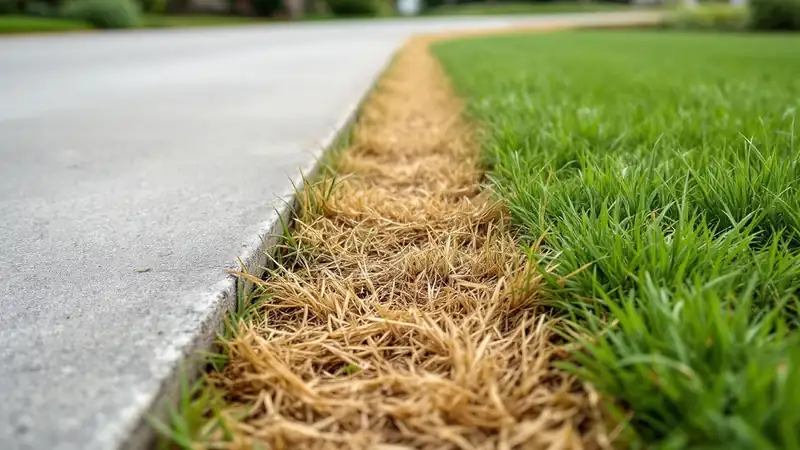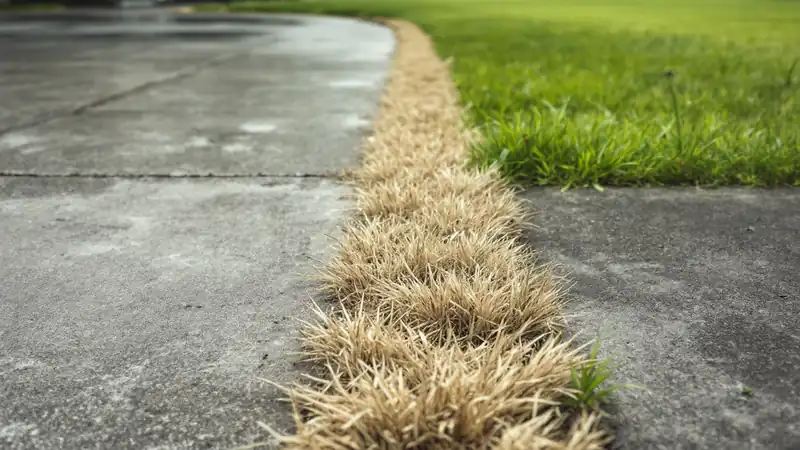
Does gasoline kill weeds? Yes, on contact: it kills the leaves and stems it soaks, like 1940s petroleum weed oils. Perennial roots can survive, gasoline gives off ignitable vapor at minus 45°F, and in New York any spill onto soil must be reported.
Does gasoline kill weeds well enough to replace a weed killer? No. It is a contact poison, the class the Alaska Agricultural Experiment Station put oil in when its 1952 Circular 18 said contact killers “destroy most vegetation with which they come in contact.” That includes the lawn grass next to the weed, and the damage stops where the liquid stops, so perennials regrow from roots it never reached. It is the same limit as flame weeding, which kills only the tissue the heat reaches.
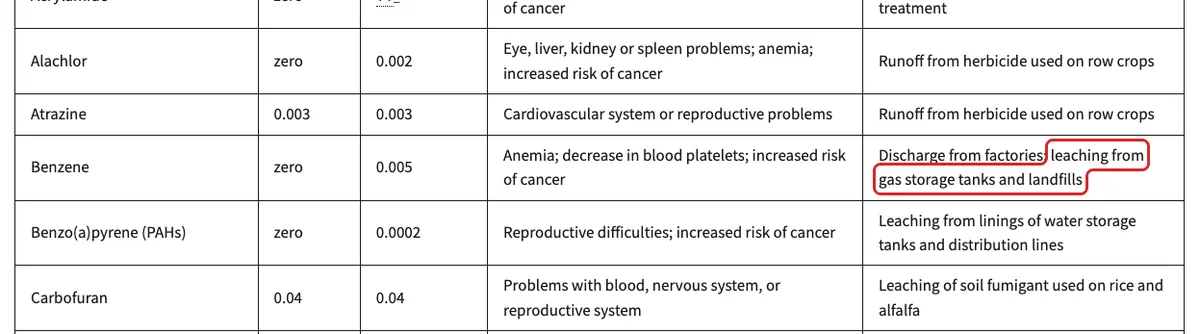
What forum answers leave out is the arithmetic and the law. Refiners may average 0.62 percent benzene in gasoline under 40 CFR 1090.210, and EPA’s drinking water limit for benzene is 0.005 mg/L. So one gallon carries about 20.6 g of benzene, enough to put about 1.09 million gallons of water at that limit. State spill rules decide what you owe after pouring it: New York and New Jersey have no small-spill pass for soil, while Florida and Texas draw lines at 25 gallons.
Why gasoline kills weeds, and why they come back
Petroleum was a real herbicide before modern sprays. Circular 18 told Alaska growers to spray Stoddard solvent on carrots, celery and parsnips at 100 to 130 gallons per acre, undiluted, and warned that it “must be used and stored with the same caution as in handling gasoline.” In California, van Overbeek and Blondeau (Weeds, 1954) estimated 10 million gallons of cracked gas oils a year went on canal banks, roadsides and barnyards for general weed control.
Those oils were chosen and dosed for the job; pump gasoline is not. It carries no EPA pesticide registration or label rate, and 7 U.S.C. 136j(a)(1)(A) makes it unlawful to sell or distribute an unregistered pesticide, which is why no store sells fuel as a weed killer. Registered products state what they do: our explainer on how herbicides are classified, contact versus systemic shows why a contact product, like horticultural vinegar, browns the top and leaves the root.
How fast? We found no primary measurement of gasoline on weeds. The University of Georgia’s turf disorders bulletin (B1258) says gasoline on turf leaves “a roughly circular dead area with a definite margin,” which is the dead patch most readers end up with.
| Liquid | Kills weeds? | Flash point | What happens in soil and water | Status as a weed killer |
|---|---|---|---|---|
| Gasoline | Contact kill of wetted leaves and stems; grass dies too | Minus 45°F (NIOSH); minus 36°F (OSHA) | Most of a surface spill evaporates; some dissolves and moves with water, a few chemicals stick to soil (ATSDR) | Not registered; benzene 0.62% average by rule |
| Diesel fuel (No. 2) | Contact kill; used as a general weed oil in California by the 1950s | 125°F (OSHA) | Some chemicals are broken down slowly in soil (ATSDR, fuel oils) | Not registered |
| Kerosene | Contact kill (fuel oil group) | 100 to 162°F (OSHA) | Same ATSDR fuel-oil fate: slow breakdown in soil | Not registered |
| Stoddard solvent (historic weed oil) | Selective on young carrots, celery, parsnips; 100 to 130 gal/acre | 102 to 110°F (OSHA) | Not stated in Circular 18 | Recommended by Alaska AES in 1952; a crop practice, not a home remedy |
| Used motor oil | Not a weed oil in any source we found | Not listed | EPA: oil from one oil change can contaminate 1 million gallons of fresh water | Use as a dust suppressant banned in every state (40 CFR 279.82) |
| Registered fence-line product, e.g. EPA Reg. No. 71995-49 | Glyphosate 18.0%, imazapic 1.6%, diquat; kills and prevents | Label signal word CAUTION | Label: up to 1 year of control; longer in heavy clay; not for lawns | Registered; the label is the law |
The flash point is the number that matters at home. Gasoline gives off vapor that can ignite at any temperature above minus 45°F, its lower flammable limit is 1.4 percent in air (NIOSH), and NOAA’s CAMEO Chemicals notes the vapor is heavier than air, so it pools low around the weeds you just soaked. Diesel’s 125°F flash point is why it feels safer; it is also why it lingers.
How much water can one gallon of gasoline spoil?
The “1 gallon contaminates 1 million gallons” line is real, but it belongs to EPA’s used oil page, which says oil from one oil change can contaminate 1 million gallons of fresh water. For gasoline we ran the benzene numbers: the 0.62 percent average from 40 CFR 1090.210, benzene’s density of 0.8765 g/mL (PubChem) and the 0.005 mg/L limit.
| Gasoline poured | Benzene in it (g) | Water it could bring to the 0.005 mg/L limit |
|---|---|---|
| 1 fl oz | 0.16 | about 8,500 gallons |
| 1 cup (8 fl oz) | 1.29 | about 67,900 gallons |
| 1 quart | 5.14 | about 271,700 gallons |
| 1 gallon | 20.57 | about 1.09 million gallons |
| 1 gallon at the 1.30% maximum average | 43.13 | about 2.28 million gallons |
- Benzene (grams)
- 5.14
- Water at the limit (gallons)
- 271,715
Default: 32 fl oz (1 quart) at 0.62% benzene holds 5.14 g, enough to bring about 271,700 gallons of water to 0.005 mg/L. A ceiling: it assumes all benzene dissolves and none evaporates.
Read it as potential, the way EPA’s used-oil figure is meant. ATSDR says most chemicals in a surface gasoline spill will probably evaporate, so the real number is lower. The risk sits where groundwater is shallow: UF/IFAS fact sheet SL251 notes groundwater supplies about 90 percent of residents’ drinking water there, and benzene is listed by EPA for anemia and increased cancer risk above its limit.
Is it illegal to kill weeds with gasoline?
No federal law names it. The exposure comes from spill and water law, which counts an intentional pour the same as an accident: New Jersey’s definition of discharge in N.J.A.C. 7:1E-1.6 lists “pouring” onto the lands of the State, and 7:1E-1.7 makes all petroleum a hazardous substance. Here is when a pour becomes a report.
| Jurisdiction | Petroleum onto soil: report when | Deadline | Rule |
|---|---|---|---|
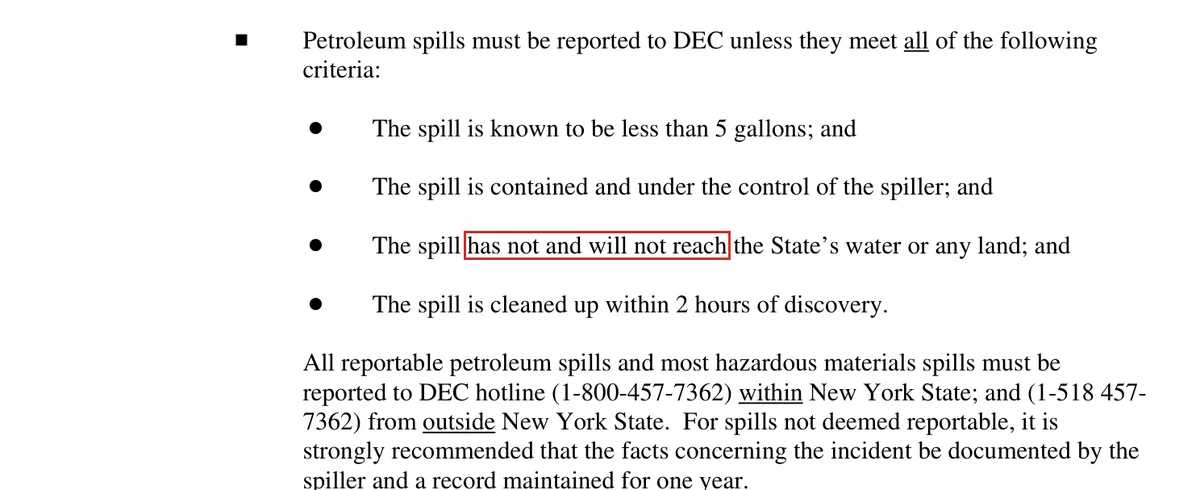
| New York | Any amount; the small-spill exemption requires that it has not reached water or any land | Within 2 hours, DEC hotline 1-800-457-7362 | DEC Spill Guidance Manual 1.1 (Navigation Law 175) |
| New Jersey | Any discharge; the 25-gallon exemption covers only non-PCB transformer fluid | Immediately; over 15 minutes is presumed late; 877-927-6337 | N.J.A.C. 7:1E-5.3 |
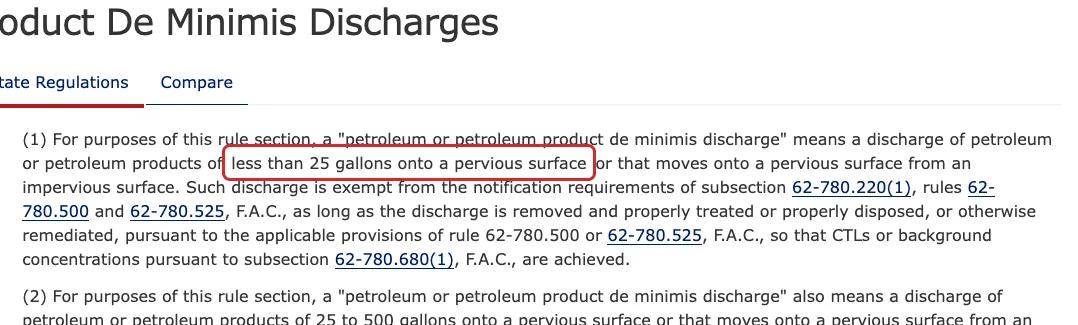
| Florida | 25 gallons or more on a pervious surface. Under 25: no notice only if removed to cleanup levels, otherwise report within one week | No later than 24 hours (25+ gal) | 62-780.210; 62-780.560 |
| Texas | 25 gallons of petroleum product onto land in any 24-hour period | As soon as possible, no later than 24 hours after discovery | 30 TAC 327.4(b)(2); 327.3(b) |
| Any state, federal | Enough to leave a film or sheen on a stream, pond or shoreline | National Response Center, 1-800-424-8802 | 40 CFR 110.3 |
Diesel and kerosene are petroleum products under the same rules. Used motor oil adds one: 40 CFR 279.82 bans spreading it as a dust suppressant, and its list of exempt states is reserved, meaning empty.
This page is general information, not legal or safety advice. Spill rules differ by state; call the agency named for your state before you decide a spill is too small to report.
Already poured gasoline on weeds? Do this
1Is a running engine, grill, pilot light or cigarette within reach of the vapor?
YesShut it off and keep people back. NIOSH lists a flash point of minus 45°F, and NOAA notes the vapor is heavier than air.
NoGo to the next question
2Has any reached a ditch, stream, pond or storm drain, or left a sheen on water?
YesCall the National Response Center at 1-800-424-8802 and your state spill line; a sheen is a reportable discharge under 40 CFR 110.3.
NoGo to the next question
3Are you in New York or New Jersey?
YesReport it: NY DEC hotline 1-800-457-7362 within 2 hours; NJDEP 877-927-6337 immediately (within 15 minutes).
NoGo to the next question
4Was it 25 gallons or more, in Florida or Texas?
YesFlorida: report within 24 hours (62-780.210). Texas: report to TCEQ within 24 hours of discovery (30 TAC 327.3 and 327.4).
NoSoak up the liquid, dig out the stained soil, and take soil and leftover fuel to your household hazardous waste program. In Florida a spill under 25 gallons needs no notice only if it is removed to cleanup levels; otherwise report it within one week.
- Shut off mowers, grills and anything with a pilot light within reach of the vapor; NIOSH lists gasoline as a Class IB flammable liquid.
- Soak up standing liquid with an absorbent such as cat litter or pads, and use non-sparking tools, per UGA B1258 and the UF/IFAS spill fact sheet.
- Dig out the stained soil. Florida treats a sub-25-gallon spill as de minimis only if it is removed or treated to cleanup levels (62-780.560).
- Bag the soil and the leftover fuel for your household hazardous waste program. NY DEC’s gasoline sheet says never to pour gasoline on the ground or put it in household trash.
- Reseed or patch only after the soil is replaced; fixing a patchy lawn covers seed rates for the bare spot.
Old fuel was usually the reason for the pour. Draining stale gas from a mower lists the 1 to 5 reconditioning ratio NY DEC allows and where the rest goes, and our yellow-lawn diagnosis table separates a fuel spot from dog urine.
What kills weeds instead
| Where the weeds are | Use | Why | Our page |
|---|---|---|---|
| Gravel driveway or fence line | A registered non-selective product with residual, such as 71995-49 | Label allows gravel areas and fence lines, up to 1 year; not for lawns or root zones of plants you keep | Herbicide groups and residual |
| Patio and paver joints | Pull, then spot spray, flame or boiling water, then refill joints | Joint weeds return from the bedding sand | Weeds between pavers |
| In the lawn | Selective broadleaf or grass-weed product matched to your grass | Gasoline kills turf as readily as weeds | Lawn weed killers by label |
| Garden beds | Mulch plus hand weeding | No residue near edible or ornamental roots | Flower bed weed control |
| No chemicals at all | Boiling water or flame on seedlings | Contact kill like fuel, without the spill | Boiling water dose |
Cost is not a reason to use fuel either. At Circular 18’s weed-oil rate of 100 to 130 gallons per acre, 1,000 sq ft takes 2.3 to 3.0 gallons: $9.17 to $11.92 of regular gasoline at EIA’s Nov. 9, 2026 U.S. average of $3.995, or $14.07 to $18.29 of diesel at $6.127.
How we compiled this
On Nov. 16, 2026 we read 23 primary documents: the 1952 Alaska AES circular, the 1954 Weeds abstract, FIFRA, 40 CFR 1090.210, 110.3 and 279.82, EPA’s drinking water table, NIOSH, OSHA and NOAA chemical data, two ATSDR fact sheets, spill rules for New York, New Jersey, Florida and Texas, an EPA-accepted label, EIA prices and three extension or agency sheets. We did not test gasoline on plants. The water figures are our arithmetic, shown under the table.
Frequently asked questions
Does diesel kill weeds?
Yes, on contact, and it was used that way: van Overbeek and Blondeau put general weed oil use in California at 10 million gallons a year in 1954. Diesel’s 125°F flash point (OSHA) makes it less flammable than gasoline, but ATSDR says fuel oil chemicals break down slowly in soil, and spill rules treat it as petroleum.
How long does it take for gasoline to kill grass?
We found no primary measurement. UGA’s turf bulletin B1258 describes gasoline injury as a roughly circular dead area with a definite margin, and says fresh spills treated quickly with detergent and an absorbent such as activated charcoal suffer less damage.
How long does diesel stay in soil?
ATSDR says some chemicals in fuel oils are broken down slowly in soil by sunlight or small organisms; it gives no single time. Florida’s rule 62-780.560 requires removal or treatment to cleanup target levels, not waiting, for a spill to count as de minimis.
Can I use old engine oil to kill weeds?
Do not. EPA says oil from one oil change can contaminate 1 million gallons of fresh water, and 40 CFR 279.82 bans used oil as a dust suppressant in every state. Take it to a used oil collection point.
What really kills weeds permanently?
Nothing applied once. The longest label claim we read, EPA Reg. No. 71995-49, promises up to 1 year on gravel and fence lines and says heavy rainfall areas may need treatment every 6 to 8 months. Perennials need a systemic product or repeated removal.
What do golf courses use to kill weeds?
We did not survey golf courses. The tools open to any turf manager are registered selective sprays and pre-emergents such as prodiamine (Barricade 4FL, EPA Reg. No. 100-1139), used at label rates for the grass; our lawn weed killer comparison lists those rates by grass.
Sources
- Alaska Agricultural Experiment Station, Circular 18, Chemical Weed Killers and Their Use (C. H. Dearborn), May 1952. Accessed November 2026.
- Weeds (Weed Science Society of America), van Overbeek and Blondeau, Mode of Action of Phytotoxic Oils, vol. 3, no. 1, pp. 55 to 65 (abstract), January 1954. Accessed November 2026.
- Legal Information Institute, 7 U.S.C. 136j, Unlawful acts (FIFRA section 12), current code. Accessed November 2026.
- eCFR, 40 CFR 1090.210, Benzene standards, current. Accessed November 2026.
- U.S. EPA, National Primary Drinking Water Regulations (benzene MCL 0.005 mg/L), current page. Accessed November 2026.
- NIH PubChem, Benzene, CID 241 (density 0.8765 g/mL at 20°C), current record. Accessed November 2026.
- U.S. EPA, Managing, Reusing, and Recycling Used Oil, current page. Accessed November 2026.
- eCFR, 40 CFR 279.82, Use as a dust suppressant, current. Accessed November 2026.
- CDC NIOSH, Pocket Guide to Chemical Hazards: Gasoline, current page. Accessed November 2026.
- OSHA, Occupational Chemical Database: Gasoline, current page. Accessed November 2026.
- OSHA, Occupational Chemical Database: Diesel Fuel, current page. Accessed November 2026.
- OSHA, Occupational Chemical Database: Kerosene (Jet Fuels), current page. Accessed November 2026.
- OSHA, Occupational Chemical Database: Stoddard Solvent, current page. Accessed November 2026.
- NOAA, CAMEO Chemicals: Gasoline, current record. Accessed November 2026.
- ATSDR, ToxFAQs for Automotive Gasoline, 1995 profile. Accessed November 2026.
- ATSDR, ToxFAQs for Fuel Oils, 1995 profile. Accessed November 2026.
- New York State DEC, Spill Guidance Manual, Section 1.1, Spill Reporting and Initial Notification Requirements, undated manual. Accessed November 2026.
- New York State DEC, Household Hazardous Waste: Gasoline Disposal, undated sheet. Accessed November 2026.
- Legal Information Institute, N.J.A.C. 7:1E-5.3, Discharge notification, current. Accessed November 2026.
- Legal Information Institute, N.J.A.C. 7:1E-1.6, Definitions, current. Accessed November 2026.
- Legal Information Institute, N.J.A.C. 7:1E-1.7, Hazardous substances, current. Accessed November 2026.
- Legal Information Institute, Fla. Admin. Code R. 62-780.210, Contamination Reporting, current. Accessed November 2026.
- Legal Information Institute, Fla. Admin. Code R. 62-780.560, Petroleum or Petroleum Product De Minimis Discharges, current. Accessed November 2026.
- Legal Information Institute, 30 Tex. Admin. Code 327.4, Reportable Quantities, effective May 23, 1996. Accessed November 2026.
- Legal Information Institute, 30 Tex. Admin. Code 327.3, Notification Requirements, current. Accessed November 2026.
- eCFR, 40 CFR 110.3, Discharge of oil in such quantities as may be harmful, current. Accessed November 2026.
- U.S. EIA, Gasoline and Diesel Fuel Update, week of Nov. 9, 2026. Accessed November 2026.
- University of Georgia Extension, B1258, Abiotic Injuries and Disorders of Turfgrasses in Georgia, current page. Accessed November 2026.
- U.S. EPA Pesticide Product and Label System, Roundup Max Control 365 master label, EPA Reg. No. 71995-49, accepted Nov. 21, 2025. Accessed November 2026.
- UF/IFAS EDIS, SL251, Cleaning Up Petroleum Releases to Soil (archival), 2007. Accessed November 2026.