How to kill weeds in flower beds depends on the weed: spray grassy weeds with a grass-only herbicide, pull or hoe broadleaf seedlings while soil is moist, and paint or shield-spray perennials with glyphosate. Check the label’s plant list first.
Most advice on how to kill weeds in flower beds stops at “spray carefully.” The EPA labels say more, and they disagree with each other. Pampas grass, Madagascar periwinkle and Bar Harbor juniper are rated 4, “severe injury may occur,” on the fluazifop label Acme Ornamec (EPA Reg. No. 33955-559), yet all three sit in the tolerant-plant lists of the sethoxydim labels Poast (7969-58) and Segment II (7969-398). We read 13 current labels in November 2026 and put 19 common bed plants side by side; the full table is in our downloadable dataset (CSV).
This page is general information, not pesticide advice. The label is the law: the plant lists, rates and waits printed on your own container govern, and they can differ from the master labels quoted here.
Match the method to the weed, then to what grows beside it
Three questions settle it: is the weed a grass, a sedge or a broadleaf plant; is it an annual or a spreading perennial; and is the bed plant next to it a grass too? Grass killers block a form of the ACCase enzyme unique to grasses (Mississippi State Extension), and NC State Extension calls them safe over most broadleaf plants, with about 2 weeks of soil residual. That same chemistry is why they hurt ornamental grasses.
| Weed in the bed | Beside flowers, shrubs, liriope, daylily | Beside ornamental grasses | Source |
|---|---|---|---|
| Grassy weeds: crabgrass, foxtail, bermuda, quackgrass, lawn grass creeping in | Grass-only herbicide (fluazifop, sethoxydim or clethodim) sprayed over the weed; most labels allow over-the-top spray on listed plants | Do not spray. Dig the weed, or wipe glyphosate onto the weed leaves only | Virginia Tech; EPA 239-2620 |
| Annual broadleaf seedlings: spurge, chickweed, oxalis, purslane | Pull after a soaking rain, or hoe less than 1 in deep before seed set; then a preemergent | Same: hand removal is the only method that is safe next to every plant | UC IPM; Iowa State |
| Perennial vines and creepers: field bindweed, creeping charlie (ground ivy) | Pull or hoe every 2 to 3 weeks; paint 2 percent glyphosate on leaves laid on newspaper; never a broadleaf lawn herbicide | Same, with the glyphosate kept off the grass blades | UC IPM bindweed; Iowa State |
| Nutsedge (nutgrass): triangular stems, leaves in threes | Pull before 5 to 6 leaves, about every 2 to 3 weeks in summer; grass killers do not control sedges | Same | UC IPM nutsedge; EPA 239-2620 |
| Any weed in a bed you are about to replant | Glyphosate-only spray (ornamentals plant 1 day later); not a 365 or extended-control formula | Same; dig ornamental grasses you are keeping before spraying | EPA 71995-29; EPA 71995-51 |
1Is the weed growing inside or against an ornamental grass (fountain grass, pampas, blue fescue, miscanthus)?
YesDig the weed or wipe glyphosate onto its leaves only. Grass killers can injure ornamental grasses: Ornamec rates pampas grass 4, severe injury.
NoGo to the next question
2Is the weed a grass (crabgrass, bermuda, lawn grass) among broadleaf flowers, shrubs, liriope or daylily?
YesSpray a grass-only herbicide (fluazifop, sethoxydim or clethodim) while the grass is 2 to 8 inches tall and growing. Check your plants against the label list first.
NoGo to the next question
3Does it have a triangular stem with leaves in threes (nutsedge)?
YesPull it before 5 to 6 leaves, about every 2 to 3 weeks in summer. Grass killers do not control sedges.
NoGo to the next question
4Is it a vine or creeper that came back after pulling (bindweed, creeping charlie)?
YesPull or hoe every 2 to 3 weeks, or paint 2 percent glyphosate on leaves laid on newspaper. No broadleaf lawn herbicides in beds.
NoAnnual broadleaf seedling: pull after a soaking rain or hoe under 1 inch deep before it seeds, then apply a preemergent.
Source: EPA labels 33955-559 and 239-2620; UC IPM; Iowa State Extension; Virginia Tech
Grassy weeds and lawn grass: a grass-only spray
Crabgrass, bermuda and lawn grass creeping in from the edge are the one weed group with a true selective fix. The Grass-B-Gon label (239-2620) lists 16 ground covers and flowers, 18 low shrubs and 25 trees as generally tolerant, and calls for 2 sprays 7 days apart on established bermuda, crabgrass and quackgrass. Treated grass turns yellow and dies in 1 to 4 weeks, so a green weed 3 days later is not a failed spray.
| Product | EPA Reg. No. | Active | Mix and coverage | Timing | Limits on the label |
|---|---|---|---|---|---|
| Ortho Grass-B-Gon Garden Grass Killer (ready to use) | 239-2620 | Fluazifop-P-butyl 0.48% | No mixing; hold sprayer 1 to 2 ft from the weed | 2 sprays 7 days apart on bermuda, crabgrass, quackgrass; dies in 1 to 4 weeks | Sprays over listed flowers; does not control broadleaf weeds or sedges |
| Acme Ornamec (homeowner concentrate) | 33955-559 | Fluazifop-P-butyl 1.7% | 10 fl oz per gallon; 1 gallon treats 1,000 to 1,200 sq ft | Annual grass 2 to 8 in tall, before tillering; bermuda runners 4 to 8 in | Cap 26.5 fl oz per 1,000 sq ft a year; 1 to 4 tolerance rating per plant |
| EH 951 Grass Herbicide (Ornamec 170) | 2217-751 | Fluazifop-P-butyl 1.7% | Broadcast 6 to 9 fl oz per 1,000 sq ft; spot spray 10 fl oz per gallon | No rain within 1 hour | Table 7 allows over-the-top spray; Tables 8 to 10 report up to 20, up to 50 and over 50 percent injury over the top |
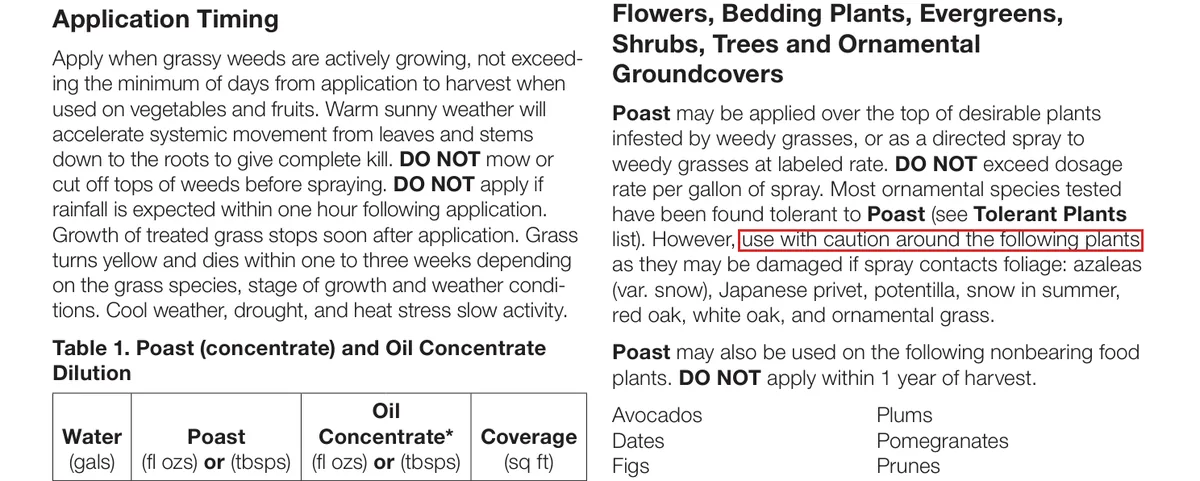
| Poast (sethoxydim), homeowner tank-sprayer section | 7969-58 | Sethoxydim 18% | 1 fl oz plus 1 fl oz crop oil concentrate per gallon; 1 gallon treats 1,800 sq ft | Over the top or directed | Caution list: snow azalea, Japanese privet, potentilla, snow in summer, red and white oak, ornamental grass |
| Select Grass Killer GL | 59639-175 | Clethodim 12.6% | 1 fl oz per gallon; 1 gallon covers up to 1,300 sq ft | Rainfast 1 hour; second spray 2 to 3 weeks later; dies in about 2 weeks | Cap 32 fl oz per acre a year, 4 sprays; warns of spotting on geranium and coleus |
Retail sethoxydim bottles are distributor versions of Poast. EPA’s label system lists Hi-Yield Grass Killer, Ferti-lome Over-The-Top II, Grass Beater II Over the Top and Grass Getter under 7969-58, so their own booklets may print different mix rates; follow the bottle in your hand.
Spray grass while it is young. Ornamec wants annual grasses 2 to 8 inches tall, before they tiller or head, and bermuda runners 4 to 8 inches long. Do not mow first: Grass-B-Gon says not to cut the tops before spraying. If the grass runs under the bed edge from a neighbor’s lawn, Virginia Tech weed scientist Jeff Derr suggests cutting the runners at the property line first so the systemic spray does not move back into that lawn.
A 4-inch-deep cut edge, the depth Illinois Extension says contains bluegrass, slows the next invasion; the method is in how to edge a lawn.
| Grass weed | Fluazifop (Fusilade, Ornamec, Grass-B-Gon) | Clethodim (Envoy) | Sethoxydim (Segment) | Fenoxaprop (Acclaim) |
|---|---|---|---|---|
| Crabgrass | G | G | E | F-G |
| Bermudagrass | G | G | F-G | P |
| Johnsongrass | G-E | G-E | G | G |
| Annual bluegrass | P | G | P | P |
| Fescue | P | F | P | P |
The ratings explain product choice. For crabgrass, sethoxydim rated excellent. For bermuda, fluazifop and clethodim rated good and sethoxydim fair to good. Only clethodim rated good on annual bluegrass, and none rated better than fair on fescue clumps. Bermuda gets its own page: our guide to killing bermuda grass by where it grows has the repeat schedule.
How much concentrate for your bed
- Concentrate (fl oz)
- 2.00
- Concentrate (tablespoons)
- 4.0
- Concentrate (ml)
- 59
Label rates as read November 2026. Ornamec covers 1,000 to 1,200 sq ft per gallon, Select GL up to 1,300, Poast 1,800, Roundup 300. Spray the weeds, not the whole bed. Your container's label wins.
| Product and label rate | Concentrate for a 200 sq ft bed | Water |
|---|---|---|
| Acme Ornamec, 10 fl oz per gallon per 1,000 sq ft | 2 fl oz (4 tablespoons) | About 0.2 gallon |
| EH 951, perennial grasses, 9 fl oz per 1,000 sq ft | 1.8 fl oz | Per label spray volume |
| Select Grass Killer GL, 1 fl oz per gallon per 1,300 sq ft | 0.15 fl oz (about 1 teaspoon) | About 0.15 gallon |
| Poast, 1 fl oz per gallon per 1,800 sq ft | 0.11 fl oz, plus the same of crop oil | About 0.11 gallon |
Plant by plant: where the grass-killer labels disagree
A grass killer is only as safe as the plant list on its label, and fluazifop and sethoxydim labels draw different lines. The 4 plants in the first rows below are rated over 50 percent injury on EH 951 (2217-751) and 4 on Ornamec, but tolerant on both sethoxydim labels. If one of them is in your bed, a sethoxydim product or a directed spray kept off its leaves is the label-consistent choice.
Swipe the table sideways to see every column.
| Bed plant | Fluazifop: Ornamec 33955-559 rating | Fluazifop: EH 951 2217-751 | Sethoxydim: Poast 7969-58 and Segment II 7969-398 | Clethodim: Select GL 59639-175 | Fluazifop: Grass-B-Gon 239-2620 |
|---|---|---|---|---|---|
| Madagascar periwinkle (annual vinca), Catharanthus roseus | 4: severe injury; direct spray | Table 10: over 50% injury over the top | Tolerant (both lists) | Not listed | Not listed |
| Pampas grass, Cortaderia selloana | 4: severe injury; direct spray | Table 10: over 50% | Tolerant (both lists); Poast cautions on ornamental grass | Not listed | Not listed |
| Bar Harbor creeping juniper | 4: severe injury; direct spray | Table 10: over 50% | Tolerant (both lists) | Juniper listed, no cultivar | Juniper: spray around, not on, foliage |
| Hino Crimson azalea | 4: severe injury; direct spray | Table 10: over 50% | Tolerant (both lists) | Azalea listed, no cultivar | Azalea listed |
| Mondo grass, Ophiopogon japonicus | 2: slight injury; direct spray | Table 8: up to 20% | Tolerant (both lists) | Tolerant (dwarf, white) | Not listed |
| Green fountain grass, Pennisetum | 2: slight injury; direct spray | Table 8 (as Grass, Fountain): up to 20% | Only red fountain grass listed | Not listed | Not listed |
| Red fountain grass, Pennisetum setaceum | 1: no injury; over the top | Table 7: over the top | Tolerant (both lists) | Not listed | Not listed |
| Blue fescue, Festuca ovina | Not listed | Not listed | Tolerant (both lists) | Not listed | Not listed |
| Liriope (lilyturf) | 1: over the top | Table 7: over the top | Tolerant (both lists) | Tolerant | Tolerant |
| Daylily | 1: over the top | Table 7: over the top | Tolerant (both lists) | Tolerant | Not listed |
| Hosta | 1: over the top (variegated) | Table 7: over the top | Tolerant (both lists) | Tolerant | Not listed |
| Rose | 1: over the top | Table 7: over the top | Not listed | Tolerant | Tolerant |
| Petunia | 1: over the top | Table 7: over the top | Tolerant (both lists) | Tolerant | Tolerant |
| Marigold | 1: over the top | Table 7: over the top | Tolerant (both lists) | Tolerant | Tolerant |
| Zinnia | 1: over the top | Table 7: over the top | Tolerant (both lists) | Tolerant | Tolerant |
| Coleus | 1: over the top | Table 7 (Jade Wizard) | Tolerant (both lists) | Listed, but label warns of spotting and stunting | Tolerant |
| Geranium (cranesbill and Pelargonium) | 1: over the top | Table 7: over the top | Tolerant (both lists) | Cranesbill listed; label warns geraniums may spot | Tolerant |
| Autumn sage, Salvia greggii | 1: over the top | Table 7: over the top | Tolerant (both lists) | Salvia listed | Not listed |
| Periwinkle, Vinca minor | 1: over the top | Table 7: over the top | Tolerant (both lists) | Tolerant (lesser periwinkle) | Tolerant |
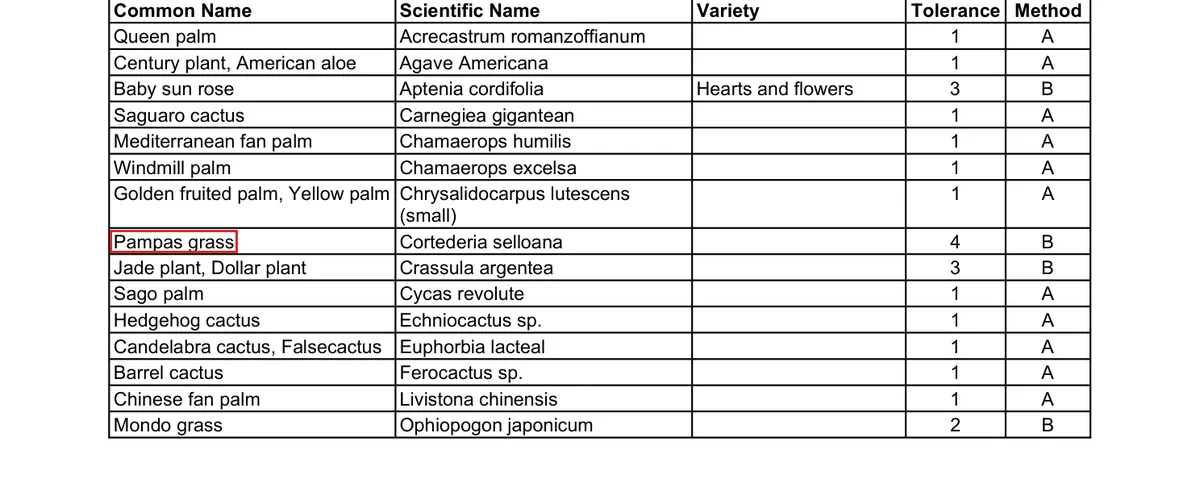
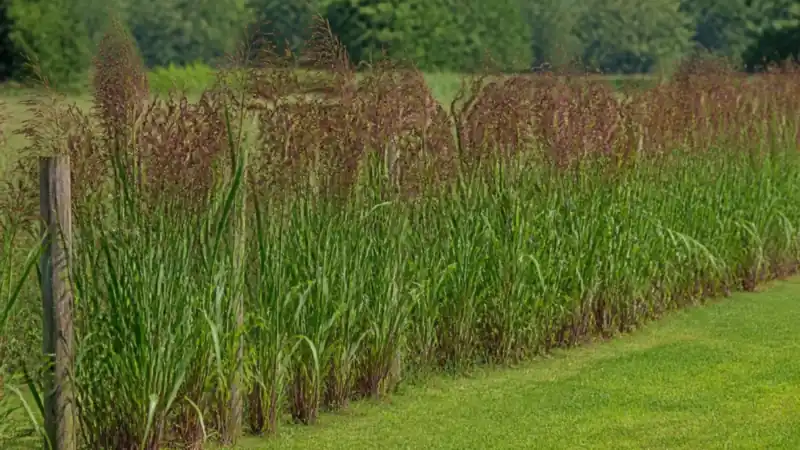
Ornamental grasses are the trap. None of the 6 grass-killer labels lists miscanthus, Japanese forest grass, switchgrass or feather reed grass, the Poast label tells users to take caution around “ornamental grass,” and Virginia Tech says not to let the spray touch ornamental grasses at all. NC State marks blue fescue unsafe for fluazifop and clethodim. Around ornamental grasses, dig the weed or wipe it.
Broadleaf weeds among flowers: pull, hoe or paint
No spray tells a dandelion from a daisy. Iowa State Extension says broadleaf lawn herbicides should not go on flower and vegetable gardens because they damage the plants along with the weed. That leaves 3 tools, in this order of preference.
- Pull after a soaking rain or a deep watering, the timing Iowa State gives for pulling creeping charlie. Get weeds before they seed: a single field bindweed plant averages about 550 seeds (UC IPM).
- Hoe shallow, under 1 inch deep. UC IPM warns that deeper cultivation brings buried seed to the surface and cuts shallow ornamental roots.
- Spot-spray glyphosate behind a shield. Roundup Concentrate Plus (71995-29) mixes 3 fl oz per gallon, says to shield nearby plants with cardboard or plastic, to rinse any plant that gets hit, and to plant ornamentals 1 day later.
- Paint instead of spraying when the weed twines through a shrub: UC IPM describes a 2 percent glyphosate solution painted on bindweed leaves laid on newspaper, removed once dry.
Perennial weeds that come back after pulling
Spreading perennials regrow from what pulling leaves behind, so the method changes. UC IPM says field bindweed roots reach 20 feet, pieces as short as 2 inches form new plants, and seedlings are easy to kill only for 3 to 4 weeks after they sprout.
| Weed | Why it returns | What works in a planted bed | Source |
|---|---|---|---|
| Field bindweed | Roots to 20 ft; 2 in fragments regrow; seed lives up to 60 years | Hoe or pull every 2 to 3 weeks; paint glyphosate; fabric with no holes takes 3 to 5 years | UC IPM |
| Creeping charlie (ground ivy) | Stems root at every node | Pull and dig, removing every stem piece; spot-spray or sponge-wipe a nonselective herbicide with plants covered by buckets or boxes | Iowa State |
| Nutsedge | Tubers resprout; grass killers skip sedges | Remove plants before 5 to 6 leaves, every 2 to 3 weeks in summer; see our nutsedge guide | UC IPM |
| Bermudagrass | Rhizomes and stolons | Fluazifop or clethodim, 2 sprays 7 days apart, then repeat on regrowth | EPA 239-2620 |
For creeping charlie, Iowa State says hand pulling is the most effective control in garden beds and that persistence decides it. For natural options, vinegar and boiling water burn the leaves they touch, flowers included, and leave perennial roots to regrow.
Weed and grass sprays that keep you from replanting
Several bottles labeled for use around flower beds carry a soil residual. A top-ranking blog post says its weed and grass spray “does not get into the ground,” which matches the 9688-208 label’s “no soil activity” statement but not the extended-control versions. The wait before you can plant flowers runs from 1 day to 1 year.
| Product | EPA Reg. No. | Actives | Plant flowers after | Bed rule on the label |
|---|---|---|---|---|
| Roundup Weed & Grass Killer Concentrate Plus | 71995-29 | Glyphosate 18%, diquat 0.73% | 1 day | Shield plants with cardboard or plastic; 3 fl oz per gallon covers 300 sq ft |
| Roundup Weed & Grass Killer4 Concentrate | 71995-64 | Triclopyr, fluazifop, diquat; no glyphosate | 1 day for ornamentals | An optional label line bars mowing, cutting or replanting for 1 to 30 days; check your bottle |
| Spectracide Weed & Grass Killer (ready to use) | 9688-208 | Dicamba 0.04%, diquat 0.18%, fluazifop 0.06% | 1 day | Label: no soil activity, so it will not affect nearby untreated plants |
| Spectracide Weed & Grass Killer with Extended Control | 9688-264 | Adds oxyfluorfen 0.1% residual | 3 months (90 days) | Not around newly planted trees, shrubs or flowers; replant with untreated soil in the hole |
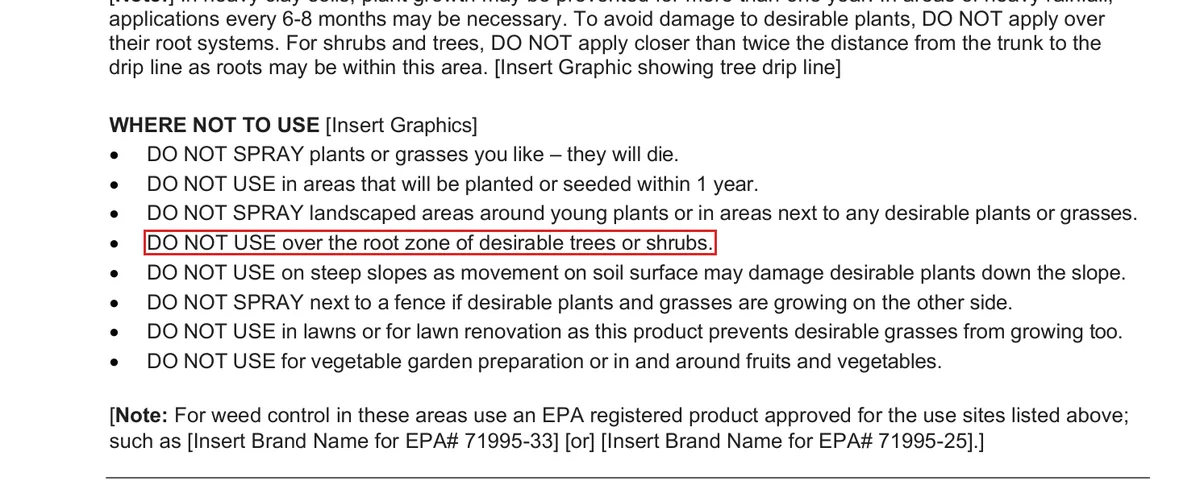
| Roundup Max Control 365 (ready to use) | 71995-51 | Glyphosate 1%, imazapic 0.08%, diquat | 1 year | Not on or around flowers, trees or shrubs, or over their root zones; stay 2 times the trunk-to-drip-line distance away |
After the cleanup: stop the next flush
A preemergent stops seeds, not weeds already up. Preen Garden Weed Preventer (trifluralin, 961-280) says to remove existing weeds first, spread 1 oz per 10 sq ft, water it in with 0.5 inch within 24 hours, keep it off flower seeds and plants under 2 to 3 inches tall, and reapply every 9 to 12 weeks. Preen Extended Control (961-421) adds isoxaben, goes on at 0.98 oz per 10 sq ft every 6 months, no sooner than 60 days apart.
Oxalis is the bed weed where that matters most: UC IPM says no selective postemergent herbicide controls creeping woodsorrel in ornamental plantings, so our guide on how to get rid of oxalis in lawns and beds pairs hand-weeding with two preemergent applications about 8 weeks apart in early fall.
If the bed is getting fresh mulch at the same time, our page on Preen before or after mulch compares each Preen label’s mulch direction with UC IPM’s placement table.
Time the first spring dose to the weeds. Mississippi State Extension applies before crabgrass emerges, while soil at 1 inch is still below 55°F, then again 6 to 10 weeks later. Mulch adds a physical layer; our page on whether mulch prevents weeds has the depth trials, and our mulch calculator sizes the order.
Common purslane sprouts later than crabgrass, once the soil surface reaches 75 to 86°F by Maryland Extension’s figures, so beds with purslane need the preventer renewed into summer; the timing and labels are on our page on how to get rid of purslane.
How we compiled this
In November 2026 we downloaded the newest EPA-accepted master label for 13 registrations from the Pesticide Product and Label System: 6 grass-selective herbicides, 5 nonselective weed and grass sprays sold for beds, and 2 Preen preemergents. We read every plant-tolerance table, mix rate, rain rule and replant wait, then checked them against 7 extension publications (NC State, UC IPM x3, Iowa State, Virginia Tech, Mississippi State). We did not test any product. Tolerance entries are the registrants’ label statements; retail distributor labels under 7969-58 are not posted in the label system and may differ.
Frequently asked questions
Is there anything that will kill weeds but not flowers?
For grassy weeds, yes: fluazifop, sethoxydim and clethodim kill grasses and leave most broadleaf flowers alone. Grass-B-Gon (239-2620) lists 16 tolerant flowers and ground covers. No spray kills broadleaf weeds without risking broadleaf flowers; pull, hoe or paint those.
What can I spray in my flower beds to kill weeds?
A grass-only herbicide for grasses, checked against its plant list, and a glyphosate-only product for spot work behind a cardboard shield. Roundup Concentrate Plus (71995-29) lets you plant ornamentals 1 day later; avoid 365 or extended-control formulas in planted beds.
How do I kill grass in flower beds but not flowers?
Spray the grass with a grass killer while it is 2 to 8 inches tall and actively growing, twice 7 days apart for bermuda or quackgrass. Keep it off ornamental grasses: Ornamec rates pampas grass 4, severe injury.
How do I get rid of weeds permanently in flower beds?
No single treatment is permanent. Clear existing weeds, apply a preemergent such as trifluralin at 1 oz per 10 sq ft and water it in, then remove escapes before they seed. Field bindweed seed can live 60 years, UC IPM says.
Does vinegar and Dawn really kill weeds in flower beds?
Vinegar, with or without dish soap, burns any leaf it touches, flowers too, and household 5 percent vinegar mostly kills weeds in their first 2 weeks. Perennial roots regrow, so it is a seedling tool, not a bed cleanup.
Sources
- U.S. EPA PPLS, Grass-B-Gon Grass Killer Formula II (Ortho Grass-B-Gon Garden Grass Killer), EPA Reg. No. 239-2620, Oct. 28, 2024. Accessed November 2026.
- U.S. EPA PPLS, Acme Ornamec Herbicide, EPA Reg. No. 33955-559, Feb. 3, 2026. Accessed November 2026.
- U.S. EPA PPLS, EH 951 Grass Herbicide (Ornamec 170), EPA Reg. No. 2217-751, Sept. 25, 2026. Accessed November 2026.
- U.S. EPA PPLS, Poast Herbicide (sethoxydim), EPA Reg. No. 7969-58, Dec. 3, 2020. Accessed November 2026.
- U.S. EPA PPLS, Segment II Herbicide (sethoxydim), EPA Reg. No. 7969-398, Sept. 12, 2024. Accessed November 2026.
- U.S. EPA PPLS, Select Grass Killer GL (clethodim), EPA Reg. No. 59639-175, May 7, 2024. Accessed November 2026.
- U.S. EPA PPLS, Roundup Weed & Grass Killer Concentrate Plus, EPA Reg. No. 71995-29, Apr. 6, 2022. Accessed November 2026.
- U.S. EPA PPLS, Roundup Concentrate (Weed & Grass Killer4), EPA Reg. No. 71995-64, June 5, 2023. Accessed November 2026.
- U.S. EPA PPLS, Chemsico Herbicide RTU DFC (Spectracide Weed & Grass Killer), EPA Reg. No. 9688-208, July 7, 2026. Accessed November 2026.
- U.S. EPA PPLS, Chemsico Herbicide RTU 4A (Spectracide extended control), EPA Reg. No. 9688-264, Mar. 4, 2024. Accessed November 2026.
- U.S. EPA PPLS, RD 1687 Herbicide (Roundup Ready-To-Use Max Control 365), EPA Reg. No. 71995-51, Nov. 21, 2025. Accessed November 2026.
- U.S. EPA PPLS, Preen the Weed Preventer (Preen Garden Weed Preventer), EPA Reg. No. 961-280, June 16, 2026. Accessed November 2026.
- U.S. EPA PPLS, Preen Weed Preventer with Snapshot (Preen Extended Control), EPA Reg. No. 961-421, Sept. 20, 2022. Accessed November 2026.
- U.S. EPA, Pesticide Product and Label System (distributor product search), searched Nov. 9, 2026. Accessed November 2026.
- NC State Extension, Joe Neal, Postemergence Grass Control in Landscapes and Nurseries, revised Feb. 13, 2024. Accessed November 2026.
- UC Statewide IPM Program, Pest Notes: Weed Management in Landscapes, current web edition. Accessed November 2026.
- UC Statewide IPM Program, Pest Notes: Field Bindweed, current web edition. Accessed November 2026.
- UC Statewide IPM Program, Pest Notes: Nutsedge, current web edition. Accessed November 2026.
- Iowa State University Extension, Control of Ground Ivy (Creeping Charlie) in Lawns and Gardens, current web edition. Accessed November 2026.
- Virginia Tech Turfgrass, Jeff Derr, Grassy-Weed Control in Ornamental Beds, current web edition. Accessed November 2026.
- Mississippi State University Extension, Publication 3279, Weed Management Strategies for Ornamental Landscape Beds and Ground Covers, POD-10-24. Accessed November 2026.