How to get rid of lespedeza depends on which one you have. In lawns, spray young common lespedeza by early summer with dicamba, metsulfuron or atrazine, and feed nitrogen. In pastures, spray sericea lespedeza with triclopyr in June or metsulfuron at flower bud.
How to get rid of lespedeza is two different jobs under one name. In mowed lawns it is almost always common lespedeza (Kummerowia striata, also called Japanese clover) or Korean clover (K. stipulacea): summer annuals that form flat, wiry mats in thin, underfed turf (UGA Extension Bulletin 1395). In pastures, roadsides and old fields it is sericea lespedeza (Lespedeza cuneata), an upright perennial that can reach 5 feet and is a Category C noxious weed in Kansas.
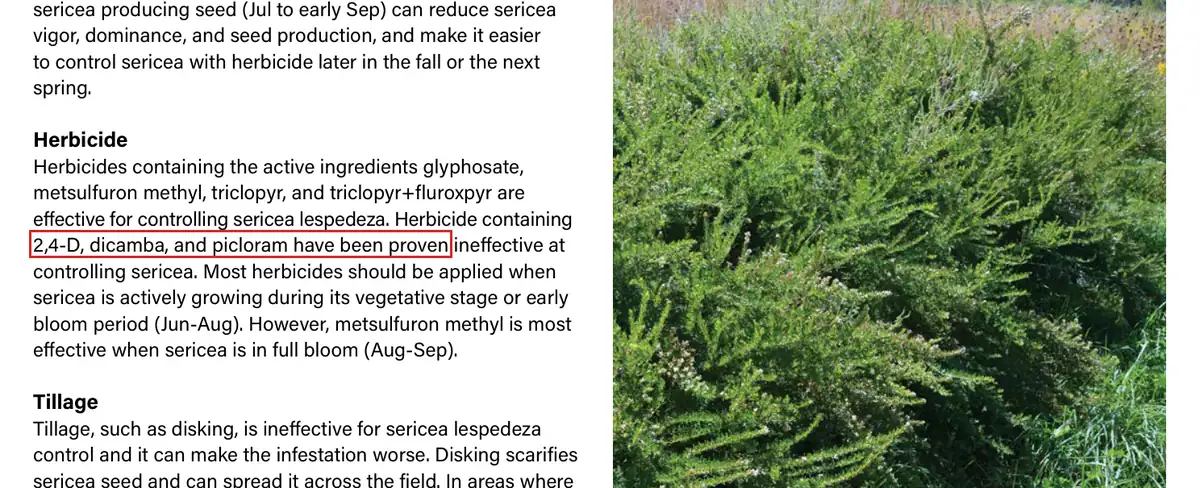
The sprays overlap less than most pages suggest. UGA rates dicamba excellent on common lespedeza in turf, while Purdue Extension FNR-645 lists 2,4-D, dicamba and picloram as proven ineffective on sericea. The ranking pages each cover one plant: the Missouri Department of Conservation covers sericea, Sod Solutions covers lawns. This page puts both on one calendar with the EPA registration number and label rate for 14 products. Our lawn weed identification guide places lespedeza among the other summer annuals.
This page summarizes EPA labels and extension research; it is not a product endorsement or legal advice. The label is the law: read the current label of the product you buy, follow its grazing and haying limits, and check whether your state requires a pesticide applicator license before anyone sprays for pay.
Which lespedeza do you have?
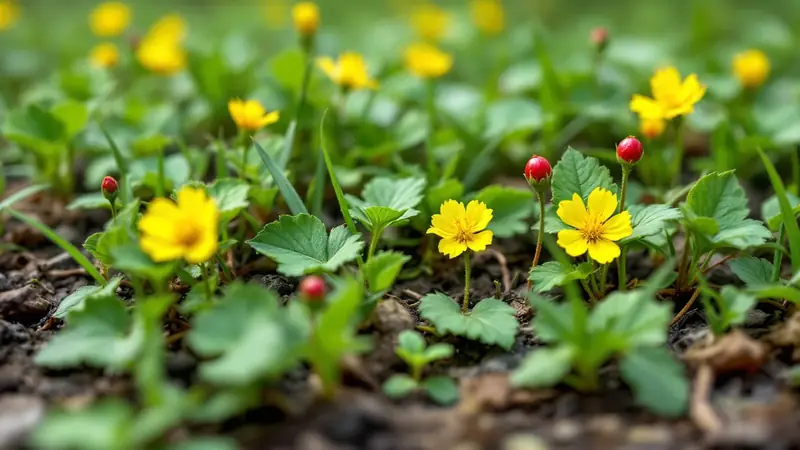
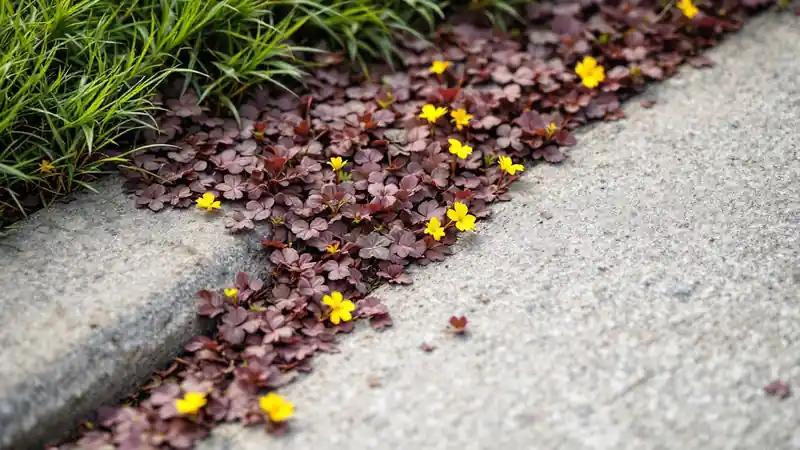
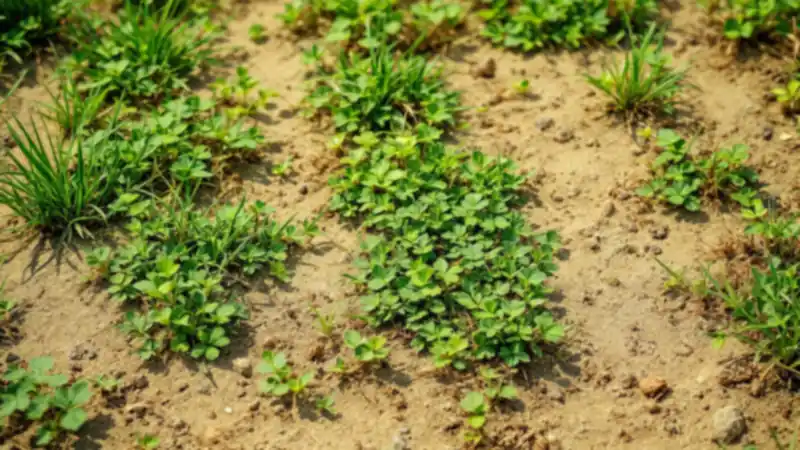
Height and leaflet shape settle it in 10 seconds. Mowed lawn lespedeza stays flat: Mississippi State says common lespedeza survives mowing below 1 inch (MSU Extension P2910). Sericea stands 3 to 5 feet in fields, with leaflets under 1 inch long and under 1/4 inch wide, wedge-shaped at the base (Miami County, Kan., weed sheet).
| Plant | Life cycle | Habit | Leaves and stems | Flowers | Source |
|---|---|---|---|---|---|
| Common lespedeza (Japanese clover), Kummerowia striata | Summer annual | Flat mat; stems turn woody by late summer | 3 oblong leaflets with fine parallel veins; stem hairs point down | Pink to purple, single, in leaf axils, late summer | UGA B1395; Clemson HGIC 2322 |
| Korean clover (Korean lespedeza), K. stipulacea | Summer annual | Taller, coarser; less common in low-mowed turf | Broader leaflets; stem hairs point up | Pinkish purple | MSU P2910; UMD Extension |
| Sericea lespedeza, Lespedeza cuneata | Perennial; taproot 3 to 4 ft deep | Erect, 3 to 5 ft (up to 7 ft in Nebraska) | Wedge-shaped leaflets under 1 in by 1/4 in, hairy below | White or cream with purple markings, 1 to 4 per axil, July to October | Purdue FNR-645; K-State MF2408; UNL CropWatch |
| Black medic, Medicago lupulina | Annual | Low and trailing | Middle leaflet sits on its own short stalk | Small yellow heads | UMD Extension |
| White clover, Trifolium repens | Perennial | Creeping, roots at nodes | Rounder leaflets spaced evenly around the stem | White ball-shaped heads | UMD Extension |
Black medic is the look-alike that changes the plan least: it also signals dry, underfed turf. UMD says all 3 lespedeza leaflets attach the same way, while black medic’s center leaflet has a stalk, and our guide on how to get rid of black medic covers it. White clover is a perennial with its own fall timing; see how to get rid of clover in a lawn.
Do not spray every upright lespedeza in a meadow. Purdue FNR-645 names round-headed bush clover (Lespedeza capitata) and slender bush clover (L. virginica) as native, non-invasive and useful to wildlife; both lack sericea’s crowded, wedge-shaped leaflets.
How do you get rid of lespedeza in a lawn?
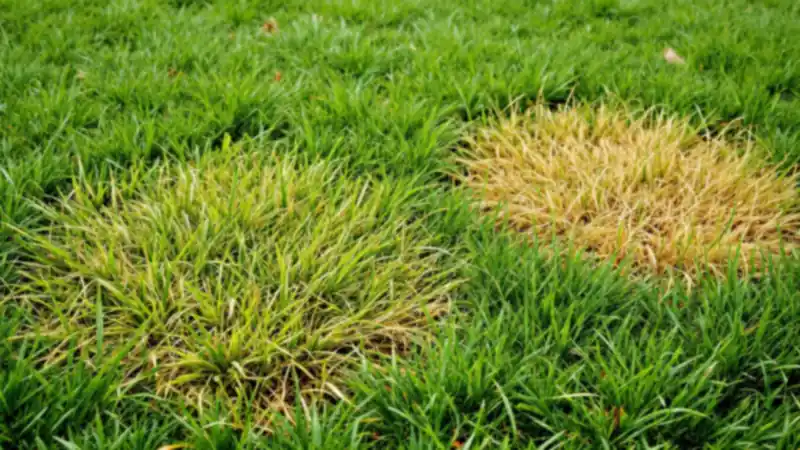
Hit it young, before mid-summer. MSU says common lespedeza seedlings emerge from March through June in Mississippi and “harden off” as summer goes on, so scouting starts in March on the coast and April in the north of the state. LSU AgCenter adds that plants left into late summer “can be very difficult to manage.”
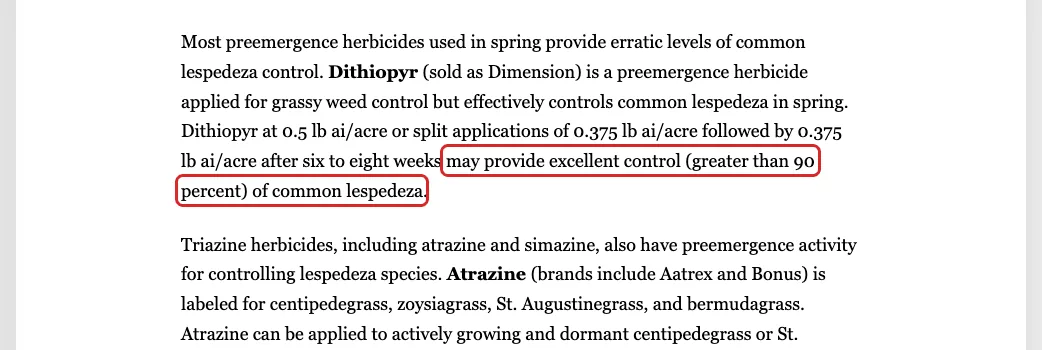
- Spring, before seedlings: when soil in the top 4 inches reaches the low to mid 50s °F, apply dithiopyr at 0.5 lb active ingredient per acre (0.73 fl oz of Dimension 2EW per 1,000 sq ft), or 0.375 lb twice, 6 to 8 weeks apart. UGA measured greater than 90 percent control (UGA B1395).
- April to June: spray small, actively growing plants with a label that lists lespedeza and your grass (table below). Clemson’s 3-way plan repeats as a spot spray about 30 days later (Clemson HGIC 2322).
- Skip the spray above 90°F, on drought-stressed turf, during spring green-up of warm-season grass, and on a new lawn mowed fewer than 3 times (Clemson HGIC 2322). Do not mow for 48 hours after most sprays.
- Late summer: plants are woody. UGA says repeat metsulfuron applications may be needed then; atrazine or simazine still work on warm-season grass.
- All season: feed nitrogen, raise the mowing height during peak germination and core-aerate compacted spots while the grass is growing (UGA B1395; MSU P2910).
Which herbicides work on each lespedeza?
Swipe the table sideways to see every column.
| Active ingredient (example) | Common lespedeza in turf: UGA B1395 | Common lespedeza: MSU P2910 | Sericea lespedeza | Lawn grass caution |
|---|---|---|---|---|
| 2,4-D alone | Not rated | Poor | Not effective (MDC; Purdue) | Safe on 5 lawn grasses (MSU) |
| 2,4-D + MCPP + dicamba (Trimec and other 3-ways) | Good | Fair (Trimec Southern) | No added benefit with metsulfuron in Kansas trials (K-State) | Intermediate on centipede, St. Augustine |
| Dicamba | Excellent | Fair | Ineffective (Purdue) | Intermediate on St. Augustine |
| Metsulfuron (Manor, MSM Turf) | Excellent | Excellent | Effective at flower bud to full bloom | Intermediate on tall fescue (UGA); not labeled (MSU) |
| Metsulfuron + sulfentrazone (Blindside) | Good to excellent | Excellent | Not rated | Not safe on tall fescue; intermediate on St. Augustine |
| Atrazine | Excellent post; fair to good pre | Good | Not rated | Not safe on tall fescue; bermuda only when dormant |
| Simazine | Excellent post; fair to good pre | Not rated | Not rated | Not safe on tall fescue |
| Triclopyr (Turflon Ester) | Good | Good | Effective in June to mid-July (Remedy Ultra) | Not safe on bermuda, centipede, St. Augustine |
| Triclopyr + clopyralid (Confront) | Excellent | Excellent | Not rated | Sources differ on bermuda and centipede |
| Triclopyr + fluroxypyr (PastureGard HL) | Not a turf product | Not rated | “Most effective and economical” (MDC) | Pasture and rangeland label |
| Fluroxypyr + 2,4-D + dicamba (Escalade 2) | Good | Excellent | Not rated | Intermediate (UGA) or not labeled (MSU) on centipede, St. Augustine |
| Thiencarbazone + iodosulfuron + dicamba (Celsius WG) | Not rated | Good | Not rated | Warm-season grasses only |
| Dithiopyr, preemergent (Dimension) | Excellent | Varying | Not rated | Most lawn grasses on the label |
| Glyphosate | Kills turf | Kills turf | Effective at higher rates, mid-June to seed set (MDC) | Non-selective: spot use only |
The 2,4-D row is the trap. Both homeowner 3-way concentrates in the label table below pair 2,4-D with mecoprop and dicamba, and Clemson says the dicamba and MCPP do the lespedeza work: MSU rates 2,4-D alone poor on common lespedeza, and MDC found it ineffective on sericea. Our guide to whether 2,4-D kills lawn grass covers which grasses tolerate these mixes.
Two popular retail recommendations rate lower in the primary sources. Sod Solutions lists a prodiamine granule as a lespedeza preemergent (Sod Solutions), but the Barricade 4FL prodiamine label (100-1139) we read does not list lespedeza, and UGA rates only dithiopyr excellent. Sod Solutions also lists SpeedZone Southern, which MSU rates fair.
Lawn labels that list lespedeza
| Product (EPA Reg. No.) | Active ingredient | Lawn grasses and rate | Timing and limits | Who applies |
|---|---|---|---|---|
| Dimension 2EW (62719-542) | Dithiopyr; preemergent | Most cool- and warm-season lawns: max 0.73 fl oz per 1,000 sq ft per application, 2.2 fl oz a year | Spring, soil low to mid 50s °F; no reseeding for 3 months | Labeled for lawns |
| Greenview Green Power Crabgrass Prevention and Control (961-392) | Dithiopyr 0.13% granules; preemergent | Listed grasses: 2.2 to 3.1 lb per 1,000 sq ft North, 3.4 to 4.5 lb South | Lists common lespedeza; no reseeding for 12 weeks | Homeowner |
| Ortho Weed B Gon Weed Killer for Lawns Concentrate (239-2744) | 2,4-D, mecoprop-p, dicamba | Per 1,000 sq ft: cool-season 4 fl oz; bahia, common bermuda, zoysia 2 fl oz; centipede, St. Augustine 1 fl oz. Not Floratam | 2 applications a year, 30 days apart; not above 90°F | Homeowner |
| BioAdvanced Southern Weed Killer for Lawns (92564-4) | 2,4-D, mecoprop-p, dicamba | Per 500 sq ft: fescue, bluegrass, ryegrass, bermuda, buffalo, zoysia 2 fl oz; bahia, centipede, St. Augustine 1 fl oz. Not Floratam | Spray when the day stays under 90°F | Homeowner |
| Southern Ag Atrazine St. Augustine Weed Killer (19713-567-829) | Atrazine 4% | St. Augustine, centipede: 8.6 fl oz per 1,000 sq ft | 2 applications a year; not above 90°F | Homeowner. Farm atrazine such as Aatrex 4L (100-497) is restricted use |
| Turflon Ester Ultra (62719-566) | Triclopyr | Bluegrass, ryegrass, tall fescue, zoysia: 1/2 to 1 qt per acre, or 3/8 to 3/4 fl oz per 1,000 sq ft spot | Higher rate for mature plants; not on bermuda, centipede or St. Augustine (UGA) | Professional product |
| Celsius WG (432-1507) | Thiencarbazone, iodosulfuron, dicamba | St. Augustine, bermuda, centipede, zoysia: annual lespedeza at 3.2 g (0.113 oz) per 1,000 sq ft. Not cool-season grass | Max 4.8 g per 1,000 sq ft a year; Clemson: repeat 2 to 4 weeks later, safe at green-up | Licensed commercial applicators only |
| Manor (228-373) | Metsulfuron-methyl | Listed turf: lespedeza at 0.33 to 0.5 oz per acre | Not above 85°F; overseed ryegrass after 8 weeks; not within 2 times the drip line of hardwoods (Clemson) | Professional per-acre product |
St. Augustine and centipede lawns have the narrowest menu: 2,4-D mixes go on at the reduced 1 fl oz rate, triclopyr is off the table, and atrazine, which UGA rates excellent, goes on at 8.6 fl oz per 1,000 sq ft in the homeowner product. Our St. Augustine grass guide lists the cultivar limits, including Floratam.
- Product per application (mL)
- 118.3
- Product per application (fl oz)
- 4.00
Default: 1,000 sq ft at the Ortho 239-2744 cool-season rate takes 118.3 mL (4 fl oz). Worked example: 5,000 sq ft of tall fescue takes 591.5 mL (20 fl oz) of 239-2744; 3,000 sq ft of centipede takes 763.0 mL (25.8 fl oz) of atrazine; 1 acre of sericea takes 354.9 mL (12 fl oz) of PastureGard HL at 0.75 pt. Rates from the labels on this page, read Nov. 24, 2026. Dry products (Escort XP, Cimarron Plus, Chaparral, Manor, Celsius WG) are weighed in ounces or grams.
Worked example: 5,000 sq ft of tall fescue takes 591.5 mL (20 fl oz) of the Ortho 239-2744 concentrate at 4 fl oz per 1,000 sq ft; 3,000 sq ft of centipede takes 763.0 mL (25.8 fl oz) of atrazine; 1 acre (43,560 sq ft) of pasture at the 0.75 pint PastureGard HL rate takes 354.9 mL (12 fl oz). Measure product, then add the water volume the label gives.
What kills sericea lespedeza in a pasture or field?
Triclopyr early, metsulfuron late. K-State Agronomy times triclopyr products to active vegetative growth from June to mid-July and metsulfuron products from flower bud to full bloom, mid-July on, and says not to spray plants that are not actively growing. MDC calls triclopyr plus fluroxypyr (PastureGard) “the most effective and economical” option.
| Product (EPA Reg. No.) | Active ingredient | Rate for sericea | Timing | Who applies |
|---|---|---|---|---|
| Remedy Ultra (62719-552) | Triclopyr 4 lb/gal | 1 to 2 pt per acre; K-State 1 to 1.5 pt; spot 1% (1.33 fl oz per gal) | After maximum foliage, late spring to early summer, before bloom | General use |
| PastureGard HL (62719-637) | Triclopyr 3 lb + fluroxypyr 1 lb per gal | 0.75 pt per acre; 1.5 pt for dense stands; spot 0.5 fl oz per gal | Plants 12 to 15 in tall, before bloom; at least 10 gal of spray per acre by ground | General use |
| Escort XP (101563-167) | Metsulfuron-methyl 60% | Label tier 0.5 to 1 oz per acre; K-State 0.5 oz plus surfactant; spot 1 g per gal | Flower bud initiation to full bloom (mid-July on) | General use |
| Cimarron Plus (101563-183) | Metsulfuron 48% + chlorsulfuron 15% | Label tier 0.625 to 1.25 oz per acre; K-State 0.625 oz | Flower bud through full bloom; not in drought | General use |
| Chaparral (62719-597) | Aminopyralid + metsulfuron | 2.5 to 3.0 oz per acre | Flower bud initiation through full bloom | General use |
| Surmount (62719-480) | Picloram + fluroxypyr | 2 pt per acre; 2.5 pt for dense stands | Plants 12 to 15 in tall, before bloom | Restricted use: certified applicators only |
| Glyphosate (MDC) | Glyphosate | Higher label concentrations, spot only | Mid-June until seed set; kills grass too | General use |
| Plateau, imazapic (241-365), as MDC gives it | Imazapic; preemergent | 4 oz per acre clean field; 5 to 6 oz moderate litter; 7 to 8 oz heavy litter | Last week of March to April 15; injures cool-season grasses and legumes | Native warm-season grass sites |
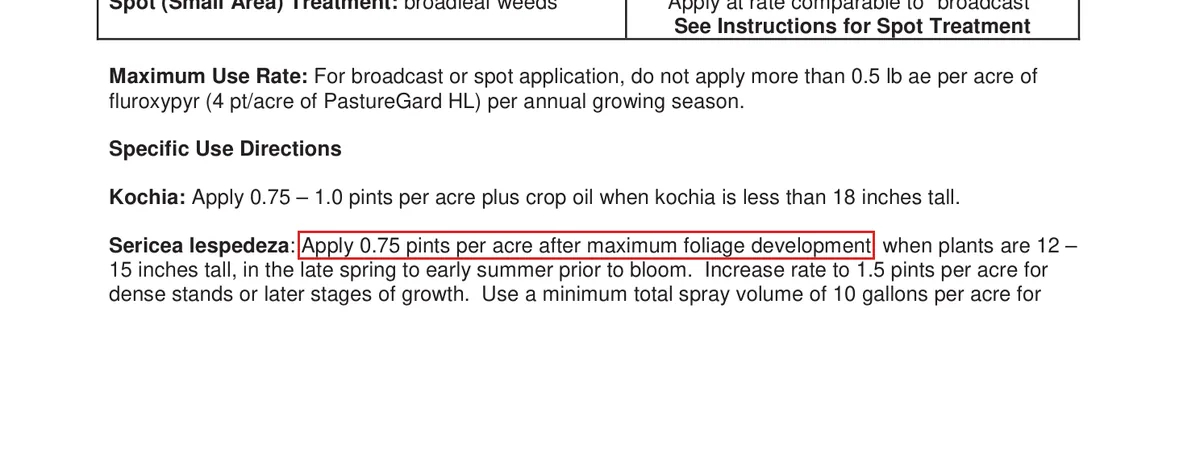
Spray volume matters more than on a lawn. K-State asks for at least 10 gallons per acre by ground, up to 20 for dense stands, and 3 to 5 by air; spot sprays should wet the plant without dripping. Purdue’s do-and-don’t list: do treat with triclopyr in June to August and metsulfuron at flowering in August to September; do not rely on 2,4-D.
The seed bank is why sericea takes years. K-State’s identification bulletin (MF2408, 2007) says one stem can carry more than 1,000 seeds and an acre can yield 300 to 850 lb of seed at about 350,000 seeds per pound: 105 million to 298 million seeds per acre in a year, by our arithmetic. MDC says the seed stays viable 20 years or longer and plans for follow-up treatments over 4 to 5 years, with results showing by year 2 or 3.
Non-spray tools help only in combination. MDC lists mowing at the flower bud stage for 2 to 3 straight years, a September 1 to 21 burn, and grazing with goats or sheep. Purdue warns that disking spreads the seed and that a dormant-season burn without a follow-up spray can make the stand worse. For hay meadows, K-State says cut by mid-July, before budding, then spray a half rate about 6 weeks later if regrowth is active.
When should you spray each one?
The two plants run on opposite clocks: lawn lespedeza is easiest in spring, sericea is sprayed from June into September once it is 12 to 15 inches tall. The calendar lines them up by month from extension and agency sources in 7 states, Mississippi to Indiana. Shift a few weeks later north of the transition zone.
| When | Lawn: common lespedeza and Korean clover | Pasture: sericea lespedeza |
|---|---|---|
| Late February to April | Preemergent when soil at 4 in reaches the low to mid 50s °F; second dithiopyr pass 6 to 8 weeks later (UGA) | Dormant-season burn (November to April) only with a later spray (Purdue); imazapic from the last week of March to April 15 (MDC) |
| March to June | Seedlings emerge (MSU); spray small plants; repeat spot spray about 30 days later (Clemson) | Plants regrow from the crown; wait for 12 to 15 in of growth |
| June to mid-July | Last easy window before stems harden; not above 90°F | Triclopyr or triclopyr + fluroxypyr during active growth (K-State); PastureGard from June 1 once 12 in tall (MDC) |
| Mid-July to September | Woody stems; repeat metsulfuron or atrazine on warm-season grass (UGA); pink-purple flowers | Metsulfuron products at flower bud to full bloom (K-State); mow at flower bud (MDC); burn September 1 to 21 (MDC) |
| September to October | Seed drops; plants die by the end of autumn (UMD); core-aerate and overseed cool-season lawns | Seed production September to October (Purdue); do not mow or hay after seed set |
1Is the plant upright, 2 to 5 ft tall, with narrow wedge-shaped leaflets and cream flowers marked purple?
YesSericea lespedeza: triclopyr or PastureGard HL from June to mid-July, metsulfuron at flower bud to bloom; plan on 4 to 5 years of follow-up (MDC). Noxious in Kansas and Nebraska.
NoGo to the next question
2Is it in a flower or vegetable bed?
YesPull it with the taproot while the soil is moist (UMD), or spot-spray 5% glyphosate behind a cardboard shield (Clemson HGIC 2322).
NoGo to the next question
3Is it a low mat in the lawn and is it before mid-July?
YesSpray now with a label that lists lespedeza and your grass: 3-way at the grass rate, atrazine on St. Augustine or centipede, triclopyr on tall fescue or zoysia; repeat in about 30 days.
NoGo to the next question
4Is it late summer and the stems are woody?
YesOn warm-season grass, repeat metsulfuron or atrazine; elsewhere mark the patches, feed nitrogen and plan a spring preemergent.
NoBefore seedlings next spring: dithiopyr at 0.73 fl oz of Dimension 2EW per 1,000 sq ft when soil at 4 in reaches the low to mid 50s °F (UGA B1395).
Source: UGA B1395; Clemson HGIC 2322; MSU P2910; K-State Agronomy; MDC
Is sericea lespedeza a noxious weed where you live?
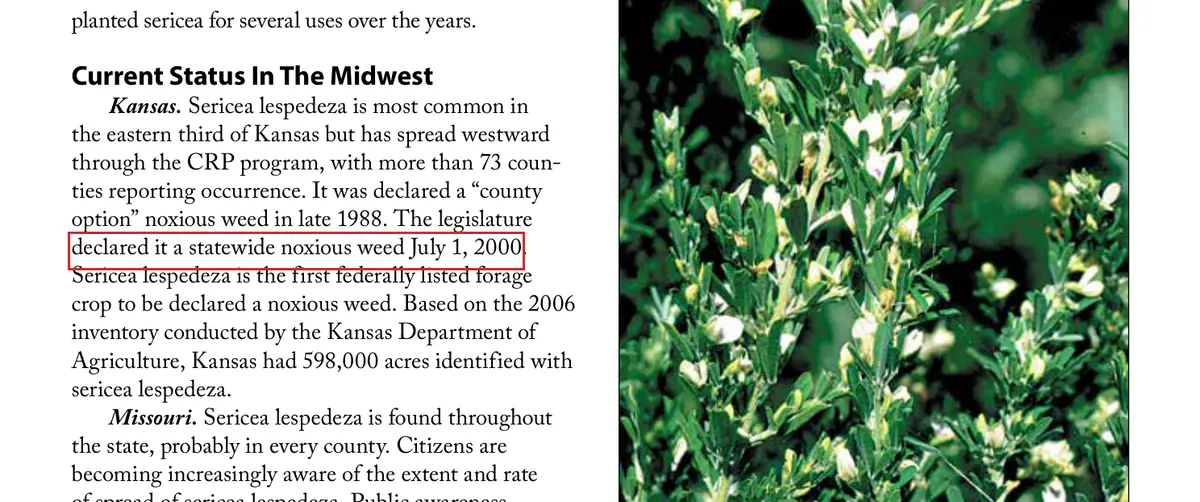
In Kansas and Nebraska, yes. Kan. Admin. Regs. 4-8-44 lists sericea lespedeza as a Category C noxious weed statewide, where new populations are subject to control and known ones are managed by an approved method. K-State’s MF2408 dates it to a county-option listing in late 1988 and a statewide listing on July 1, 2000, with 598,000 Kansas acres in the 2006 inventory.
Nebraska made it a state noxious weed effective April 1, 2013 (UNL CropWatch, March 2013), and it is still on the Nebraska Department of Agriculture list. One correction: MDC’s control page says it is noxious “in several Kansas counties”; the regulation is statewide. Elsewhere, check your state department of agriculture list before buying seed mixes.
Why does lespedeza keep coming back in your lawn?
Because it feeds itself. Lespedeza is a legume: root nodules fix nitrogen, so it wins where the grass is underfed, and MSU says supplemental nitrogen is needed for turf to compete in every lawn grass except centipede. Clemson ties it to low nitrogen and calls it more common in centipede lawns. Our guide on how to add nitrogen to lawn soil turns a target dose into pounds of product.
Compaction is the second cause. MSU recommends core aeration with the cores removed and sand or compost top-dressed into the holes; UGA warns that early spring aeration on warm-season grass leaves voids that summer annuals fill, so aerate during active growth. Our aeration guide gives the timing by grass. Mow at the top of UGA’s range: 3 inches for tall fescue, 2 to 3 for St. Augustine, 1 to 2 for centipede grass.
In flower beds, pull it with the taproot while the soil is moist (UMD Extension), or spot-spray a 5% glyphosate solution with a cardboard shield over nearby plants (Clemson HGIC 2322).
How we compiled this
In November 2026 we read 8 extension publications (UGA, Mississippi State, Clemson, UMD, LSU, K-State, Purdue, Missouri Department of Conservation), the Kansas noxious weed regulation, Nebraska’s listing, and 15 EPA-registered labels, 14 of them from EPA’s Pesticide Product Label System. Every rate in the tables is copied from a label or the named extension source; the seed-per-acre range is our arithmetic. We did not test any product.
Frequently asked questions
What will kill lespedeza in a lawn without killing the grass?
A product whose label lists lespedeza and your grass: a dicamba 3-way at the reduced rate on centipede or St. Augustine, atrazine on those two, or triclopyr on tall fescue and zoysia. UGA rates dicamba, atrazine and metsulfuron excellent. Spray young plants by early summer.
Is lespedeza invasive?
Sericea lespedeza is: Purdue calls it invasive, and Kansas and Nebraska list it as a noxious weed. Common lespedeza is a non-native annual lawn weed (Clemson HGIC 2322). Native bush clovers such as L. capitata are not invasive.
Will glyphosate kill sericea lespedeza?
Yes, as a spot spray. MDC says glyphosate works at higher concentrations from mid-June until seed set, and Clemson uses a 5% solution for lespedeza in beds. It kills grass too, so triclopyr or metsulfuron products are the selective choice in pasture.
When does sericea lespedeza go to seed?
Purdue Extension (FNR-645, 2025) gives flowering from late July to early October and seed production in September and October. Mow or spray before then; mowing after seed set spreads it.
How do you get rid of lespedeza naturally?
In lawns, pull young plants with the taproot, feed nitrogen and mow higher during spring germination. In pastures, MDC lists goats or sheep, mowing at flower bud for 2 to 3 years and a September 1 to 21 burn; none clears the seed bank alone.
Sources
- University of Georgia Extension (McCullough), Lespedeza Identification and Control in Turfgrass, Bulletin 1395, Full review June 11, 2024. Accessed November 2026.
- Mississippi State University Extension (McCurdy), Lespedeza Control in Maintained Turfgrass, Publication 2910, 2025. Accessed November 2026.
- Clemson HGIC (Judy, Williamson, Gore), Lespedeza, HGIC 2322, Revised Jan. 9, 2022. Accessed November 2026.
- University of Maryland Extension, Lespedeza: Identification and Management, Current page. Accessed November 2026.
- LSU AgCenter, Common lespedeza, Current page. Accessed November 2026.
- Missouri Department of Conservation, Sericea Lespedeza Control, Current page. Accessed November 2026.
- Kansas State University Agronomy, Controlling Sericea Lespedeza, Current page (updates SRP1162, 2021). Accessed November 2026.
- Purdue Extension, Sericea Lespedeza Control, FNR-645-W, April 2025. Accessed November 2026.
- K-State Research and Extension (Ohlenbusch et al.), Sericea Lespedeza: History, Characteristics, and Identification, MF2408, October 2007. Accessed November 2026.
- Kansas Administrative Regulations (via Cornell LII), K.A.R. 4-8-44, Designation of noxious weeds, Current text. Accessed November 2026.
- UNL CropWatch, Sericea Lespedeza Newest Noxious Weed, March 28, 2013. Accessed November 2026.
- Nebraska Department of Agriculture, Noxious Weeds, Current page. Accessed November 2026.
- Miami County, Kansas, Sericea Lespedeza (weed sheet), Undated. Accessed November 2026.
- Sod Solutions, How to Remove Lespedeza From Your Lawn (cited for its claims), Current page. Accessed November 2026.
- U.S. EPA PPLS, Dimension 2EW, EPA Reg. No. 62719-542, July 2, 2021. Accessed November 2026.
- U.S. EPA PPLS, Greenview Green Power Crabgrass Prevention and Control, EPA Reg. No. 961-392, Dec. 10, 2025. Accessed November 2026.
- U.S. EPA PPLS, Barricade 4FL, EPA Reg. No. 100-1139, Feb. 21, 2024. Accessed November 2026.
- U.S. EPA PPLS, Ortho Weed B Gon Weed Killer for Lawns Concentrate, EPA Reg. No. 239-2744, Aug. 23, 2023. Accessed November 2026.
- U.S. EPA PPLS, BioAdvanced Southern Weed Killer for Lawns, EPA Reg. No. 92564-4, June 25, 2026. Accessed November 2026.
- Southern Agricultural Insecticides, Atrazine St. Augustine Weed Killer label, EPA Reg. No. 19713-567-829, Mar. 30, 2022. Accessed November 2026.
- U.S. EPA PPLS, Turflon Ester Ultra, EPA Reg. No. 62719-566, Mar. 21, 2019. Accessed November 2026.
- U.S. EPA PPLS, Celsius WG, EPA Reg. No. 432-1507, Sept. 1, 2021. Accessed November 2026.
- U.S. EPA PPLS, Manor, EPA Reg. No. 228-373, May 10, 2019. Accessed November 2026.
- U.S. EPA PPLS, Remedy Ultra, EPA Reg. No. 62719-552, Feb. 25, 2016. Accessed November 2026.
- U.S. EPA PPLS, PastureGard HL, EPA Reg. No. 62719-637, Feb. 25, 2016. Accessed November 2026.
- U.S. EPA PPLS, Escort XP, EPA Reg. No. 101563-167, Apr. 24, 2025. Accessed November 2026.
- U.S. EPA PPLS, Cimarron Plus, now EPA Reg. No. 101563-183 (label accepted as 432-1572), Apr. 10, 2019. Accessed November 2026.
- U.S. EPA PPLS, Chaparral, EPA Reg. No. 62719-597, Sept. 27, 2024. Accessed November 2026.
- U.S. EPA PPLS, Surmount, EPA Reg. No. 62719-480 (restricted use), June 20, 2012. Accessed November 2026.