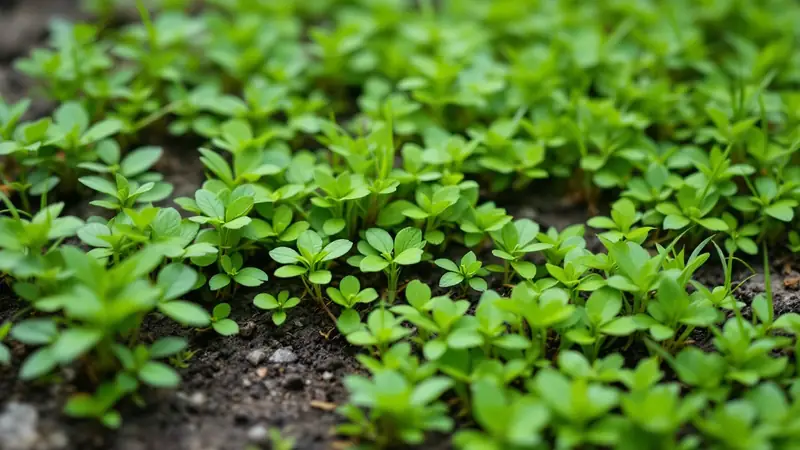
How to get rid of black medic: pull small patches at the crown in moist soil, spray a triclopyr or 3-way lawn herbicide labeled for your grass in late spring or early fall, then feed the lawn nitrogen, because black medic marks underfed turf.
Learning how to get rid of black medic starts with what the weed is telling you. Black medic (Medicago lupulina) is a legume that fixes its own nitrogen in root nodules, so it wins where grass is underfed, dry and packed: University of Connecticut IPM puts it on both its low-fertility and its drought-prone indicator lists, and UW-Madison Extension finds it along curbs and sidewalks where soil is compacted. Spray it without fixing those 3 conditions and next year’s seedlings fill the same gaps.
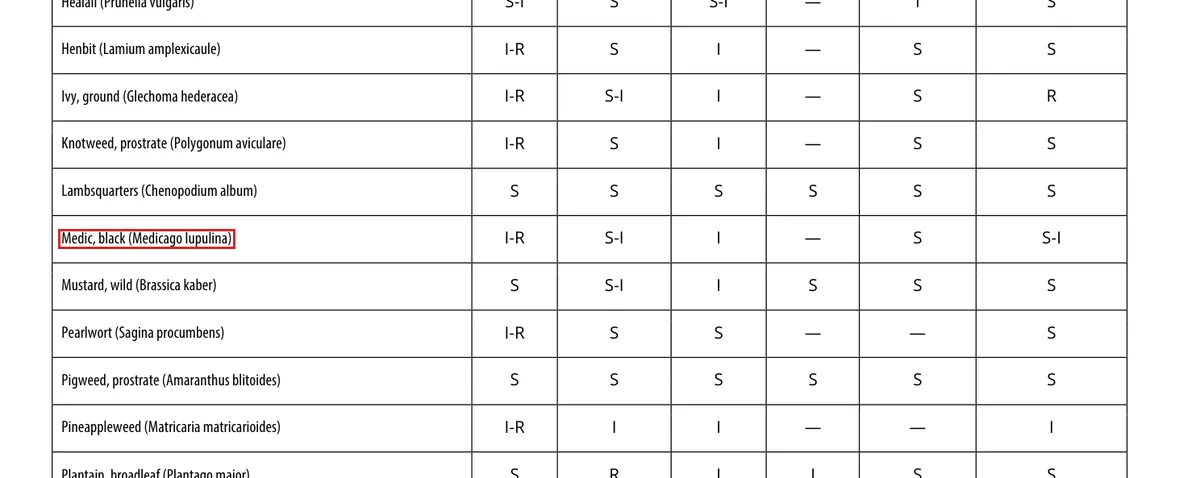
The top-ranked answers list a few active ingredients and stop. This page adds 3 things they lack: the nitrogen dose by lawn grass that removes the weed’s edge, with a bag calculator; 11 EPA labels that name black medic, sorted by the grasses each allows; and the Pacific Northwest Weed Management Handbook rating that explains why 2,4-D alone disappoints: intermediate to resistant on black medic, while mixes with triclopyr rate susceptible. Our lawn weed identification chart places it beside the other three-leaflet weeds.
This page summarizes EPA labels and extension research; it is not a product endorsement or legal advice. The label is the law: read the current label of the product you buy, and check whether your state requires a pesticide applicator license before anyone treats a lawn for pay.
Is it black medic, clover or oxalis?
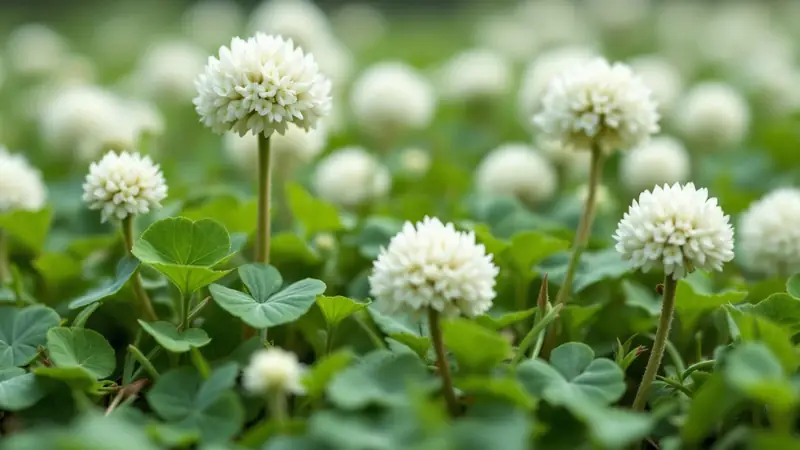
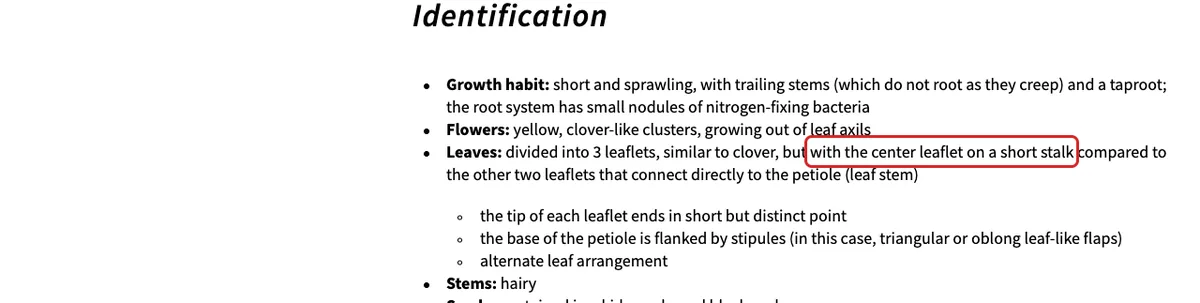
Look at the middle leaflet. On black medic it sits on its own short stalk while the 2 side leaflets attach directly, and each leaflet ends in a tiny point (University of Maryland Extension, updated Oct. 2026). White clover’s 3 leaflets meet at one spot and usually carry a pale V watermark; yellow woodsorrel has heart-shaped, notched leaflets that fold at night (Penn State Extension, Feb. 2026).
| Trait | Black medic | White clover | Hop clovers (Trifolium campestre, T. dubium) | Yellow woodsorrel (oxalis) | Source |
|---|---|---|---|---|---|
| Middle leaflet | On a short stalk; side leaflets attach directly | All 3 attach at one point (sessile) | Stalked in low and small hop clover; sessile in large hop clover | All 3 attach at one point | UMD; Virginia Tech |
| Leaflet shape and tip | Oval, 1/2 to 3/4 in, toothed toward a small spur at the tip | Oval, slight notch at tip, pale V watermark | Toothed from mid-blade to tip | Heart-shaped, notched, smooth edges, folds at night | Penn State; Penn State; Virginia Tech |
| Flowers | Yellow balls 1/4 to 1/2 in, 10 to 50 florets | White or pinkish heads 1/2 to 3/4 in | Yellow heads, 20 to 50 florets (fewer in small hop) that dry light brown and stay on | Yellow, 5 separate petals, cup-shaped, 1/4 to 1/2 in | UW-Madison; Penn State; Virginia Tech |
| After bloom | Coiled kidney-shaped pods, 2 to 3 mm, black when ripe, 1 seed each | No black pods; use the leaflet rows | Florets dry light brown and fall back, like hops | No black pods; use the leaflet rows | UC IPM; UMN Extension; Virginia Tech |
| Stems | Trailing, up to 2 ft, do not root | Runners root at the nodes | Upright, branched; no stolons | Creeping rhizomes | UW-Madison; Penn State; UMD |
| Life cycle | Summer annual; sometimes winter annual, biennial or short-lived perennial | Perennial | Cool-season (winter) annual | Annual or perennial | UMD; Rutgers FS385; Penn State |
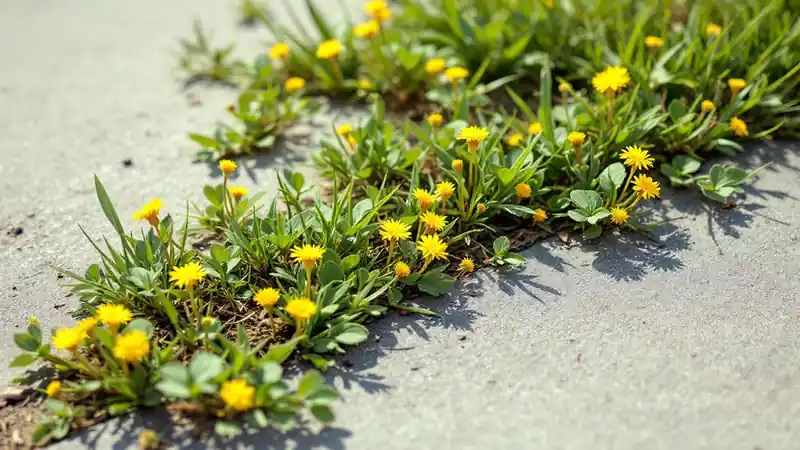
Hop clover is the closest match, and the pods settle it. Black medic’s yellow heads turn into tight black coils, which is where the name comes from (UMN Extension, June 2024); hop clover florets dry brown and hang on like hops. The plan below works for both: UMN says most herbicides that control black medic also control hop clover. Narrow leaflets with fine parallel veins and pink flowers point to common lespedeza, which has its own guide on getting rid of lespedeza.
If the leaflets meet at one point, follow our guide on getting rid of clover in a lawn. If they are heart-shaped, the product list changes: quinclorac controls white clover but not woodsorrel (Rutgers FS385), and our guide on how to get rid of oxalis sorts the labels that cover it.
What is black medic telling you about your lawn?
It says the grass is short of nitrogen, short of water, or growing in packed soil, often all 3. The weed supplies its own nitrogen: UMN Extension measured 25 to 45 lb per acre a year from pure stands, which works out to 0.6 to 1.0 lb per 1,000 sq ft, about one feeding your grass never got. Its taproot can reach 3 to 5 feet (UF/IFAS EP664, Feb. 2026), so it keeps growing after shallow turf roots dry out.
| What you see | What it points to | Fix, with the number | Source |
|---|---|---|---|
| Patches in full sun on a lawn not fed for a couple of years | Low nitrogen | Feed 2 to 4 lb N per 1,000 sq ft a year on a moderately kept cool-season lawn; no more than 1 lb of soluble N per feeding | Purdue AY-22, Table 2; CSU PlantTalk 2128 |
| Patches along curbs, walks and paver joints | Compacted soil | Core aerate: September for cool-season lawns, May to July for warm-season | UW-Madison; UMD |
| Patches spread in summer while the grass browns | Dry soil | 1 to 1.5 in of water a week, in one soaking or two 3 to 4 days apart | Purdue AY-7; UConn IPM |
| Lawn cut short | Light reaches the flat stems | Mow in the 3-inch range on cool-season grass | UW-Madison; USU, Mar. 2026 |
| Thin cool-season stand | Open soil for seedlings | Overseed each fall | UMD |
| Bare soil in beds or paths | Light reaches buried seed | 2 to 3 in of mulch; USU says at least 3 in | UF/IFAS EP664; USU |
| Soil pH | Not a cause on its own | It grows from pH 4.8 to 7.8, so lime or sulfur will not remove it; let a soil test decide | UF/IFAS EP664 (Turkington and Cavers 1979) |
The pH row corrects a common claim. Preen says black medic thrives in alkaline soil, but the range UF/IFAS gives runs from acid to slightly alkaline, so the weed is no reason to add sulfur or lime. Our soil test guide covers what to send in; the months for each aeration window are in our guide on when to aerate a lawn by grass type.
How much nitrogen does your grass need a year?
| Grass | Nitrogen, lb per 1,000 sq ft a year | Mowing height | Source |
|---|---|---|---|
| Cool-season, lowest care (clippings left, no irrigation) | 1 to 3 | Mow in the 3-inch range | Purdue AY-22; UW-Madison |
| Cool-season, moderate care | 2 to 4 | Mow in the 3-inch range | Purdue AY-22 |
| Cool-season, highest care with irrigation | 3 to 5 | Mow in the 3-inch range | Purdue AY-22 |
| Bermudagrass | Up to 3 | 1 to 2 in | LSU AgCenter, June 2026 |
| St. Augustinegrass | Up to 3 | 2.5 to 3 in | LSU AgCenter |
| Zoysiagrass | Up to 2 | 1 to 2.5 in | LSU AgCenter |
| Centipedegrass | Up to 2 | 1 to 2.5 in | LSU AgCenter |
| Black medic’s own supply, pure stand | About 0.6 to 1.0 (25 to 45 lb per acre) | Not applicable | UMN Extension; our conversion |
Timing matters as much as the total. Colorado State PlantTalk 2128 says legume weeds become competitive where lawns have not been fed adequately for a couple of years, and that late-season nitrogen, September to early November, helps reduce them on cool-season grass. Warm-season lawns are fed in summer; our guide on when to fertilize your lawn sets the months by grass.
- Product per feeding (lb)
- 0.8
- Product per feeding (kg)
- 0.3
Default: 1,000 sq ft at 0.75 lb N with 32-0-4 takes 2.3 lb of product. Worked example: 5,000 sq ft of tall fescue at 1.0 lb N with 46-0-0 takes 10.9 lb; 3,000 sq ft of centipede at 0.5 lb N with 16-4-8 takes 9.4 lb. Product = lb N x 100 / first number on the bag. Annual totals by grass are in the table above (Purdue AY-22; LSU AgCenter). Your bag's label and any state fertilizer law limit the rate.
Worked example: a 5,000 sq ft tall fescue lawn fed 1 lb of nitrogen per 1,000 sq ft with 46-0-0 urea takes 10.9 lb of product per feeding; at 0.5 lb N with a 16-4-8 bag, 3,000 sq ft of centipede takes 9.4 lb. The arithmetic is pounds of N times 100, divided by the first number on the bag. Feeding thins the weed slowly: in trials compiled on our page on whether fertilizer kills weeds, 3.1 lb of N a year cut white clover 61 to 88 percent over 4 years, and none reached zero.
When should you spray or pull black medic?
In most of the country black medic is a summer annual: seed sprouts in spring and the plant flowers and sets seed continuously from April to September (Utah State Extension). UF/IFAS says plants flower within 6 weeks of emerging and can set seed in 9 to 10 weeks, so a seedling that appears in May can drop seed by July. Along the Gulf Coast it behaves as a winter annual, sprouting in fall and flowering in spring (LSU AgCenter, June 2026).
| When | What to do | Source |
|---|---|---|
| Late winter to early spring | Preemergent before seedlings appear: dithiopyr or isoxaben labels list black medic | UF/IFAS EP664; Dimension and Gallery labels |
| Mid spring to early summer | Spray young plants before bloom; pull small patches when the soil is moist | UW-Madison; UMD |
| Summer heat, above 85°F | Do not spray: control drops, turf injury and drift rise; most labels stop at 90°F | CSU 2128; labels below |
| Early to mid autumn | Second spray window; feed nitrogen September to early November on cool-season grass | UW-Madison; CSU 2128 |
| Early fall to midwinter (Gulf South) | Preemergent before seed sprouts: dithiopyr, isoxaben or oryzalin, listed for St. Augustine, centipede, zoysia and bermuda | LSU AgCenter |
| After the first killing frost (South) | Image (imazaquin) on dormant bermuda, zoysia, centipede or buffalograss; not on St. Augustine for winter weeds | Image label 73342-4 |
1Do all 3 leaflets attach at one point, with white or pink flower heads?
YesThat is white clover: follow the clover plan (quinclorac or triclopyr labels that list white clover).
NoGo to the next question
2Are the leaflets heart-shaped and folded at night, with 5-petaled yellow flowers?
YesThat is yellow woodsorrel (oxalis): use a triclopyr label; quinclorac does not control it.
NoGo to the next question
3Is it in a flower bed, gravel or a paver path?
YesPull at the crown when the soil is moist, mulch beds 2 to 3 inches, and mow or pull path plants before they flower; glyphosate only as a directed spot spray.
NoGo to the next question
4Is it midsummer with days above 85°F?
YesDo not spray now: pull before pods blacken, water 1 to 1.5 inches a week, and plan an early-fall spray and feeding.
NoGo to the next question
5Is the lawn St. Augustine, centipede or bahia?
YesUse a 3-way at the reduced rate (Ortho 239-2744 at 1 fl oz per 1,000 sq ft on centipede and St. Augustine, not Floratam), not the triclopyr chickweed, clover and oxalis product.
NoCool-season, zoysia or buffalo lawn: spray a triclopyr product (239-2491 at 5 fl oz per 1,000 sq ft) or a 3-way in late spring or early fall, then feed 2 to 4 lb N per 1,000 sq ft a year and mow in the 3-inch range.
Source: UMD; Penn State; UF/IFAS EP664; CSU 2128; Purdue AY-7, AY-22; EPA labels 239-2744 and 239-2491
What kills black medic without killing grass?
A broadleaf herbicide with triclopyr, or a 3-way of 2,4-D, MCPP and dicamba with a fourth active. The PNW handbook rates each active against each weed, and black medic is harder than the clovers it resembles: plain 3-way mixes drop to S-I, and 2,4-D alone to I-R. Penn State names dicamba, MCPP and fluroxypyr as the actives that matter; University of Delaware adds that products with carfentrazone burn it down faster.
| Active ingredient | Black medic | White clover | Hop clover | Yellow woodsorrel |
|---|---|---|---|---|
| 2,4-D alone | I-R | I | I | R |
| Dicamba | S-I | S | S | I |
| MCPP (mecoprop) | I | S-I | S-I | I-R |
| MCPA | Not rated | I | I | Not rated |
| Mixtures with triclopyr | S | S | S | S |
| Mixtures without triclopyr | S-I | S | S | I-R |
The 11 labels below all name black medic. Rates are per 1,000 sq ft unless stated, and the grass column is the one to check first: the triclopyr product sold for chickweed, clover and oxalis is off-label on bahia, bermuda, centipede and St. Augustine.
| Product (EPA Reg. No.) | Active ingredients | Lawn grasses and rate for black medic | Limits | Who applies |
|---|---|---|---|---|
| Ortho Weed B Gon Weed Killer for Lawns Concentrate (239-2744) | 2,4-D, MCPP-p, dicamba | Cool-season 4 fl oz; bahia, common bermuda, zoysia 2 fl oz; centipede, St. Augustine 1 fl oz; not Floratam | 2 applications a year, 30 days apart; not above 90°F | Homeowner |
| BioAdvanced Southern Weed Killer for Lawns (92564-4) | 2,4-D, MCPP-p, dicamba | Per 500 sq ft: fescue, bluegrass, ryegrass, bermuda, buffalo, zoysia 2 fl oz; bahia, centipede, St. Augustine 1 fl oz; not Floratam | Spray when the day stays under 90°F | Homeowner |
| Spectracide Weed Stop for Lawns Concentrate2 (9688-342-8845) | 2,4-D, MCPP-p, dicamba, sulfentrazone | Hose-end: 4 fl oz on bluegrass, fescue, ryegrass, zoysia; 2 fl oz on bahia, bentgrass, bermuda, centipede; 1.5 fl oz on St. Augustine (not Floratam or Bitterblue) | Lists the weed as “black medick” | Homeowner |
| Ortho Weed B Gon Chickweed, Clover and Oxalis Killer for Lawns Concentrate (239-2491) | Triclopyr | 1 fl oz per gallon per 200 sq ft (5 fl oz per 1,000) on fescues, bluegrass, ryegrass, buffalo, zoysia. Not bahia, bermuda, centipede, kikuyu or St. Augustine | Repeat in 2 to 3 weeks if needed; max 5.4 fl oz per 100 sq ft a year; not above 90°F | Homeowner |
| EH-1681 / SpeedZone EW (2217-1053) | Carfentrazone, 2,4-D, MCPP-p, dicamba | Cool-season 1.1 to 1.8 fl oz; bermuda, zoysia, buffalo 0.75 to 1.5 fl oz. Not St. Augustine, bahia or centipede | Not above 90°F unless injury is acceptable | Professional product |
| Turflon Ester Ultra (62719-566) | Triclopyr ester | Spot treatment 3/8 to 3/4 fl oz on cool-season turf; bahia, bentgrass, bermuda, centipede, St. Augustine only if injury is acceptable | Spot max 1.5 fl oz per 1,000 sq ft per application | Professional product |
| Celsius WG (432-1507) | Thiencarbazone, iodosulfuron, dicamba | St. Augustine, bermuda, centipede, zoysia: black medic at 3.2 g (0.113 oz) | Max 7.4 oz per acre a year | Licensed commercial applicators only |
| Image Herbicide (73342-4) | Imazaquin | Dormant bermuda, buffalo, centipede, zoysia: 4 fl oz (2.5 fl oz per 625 sq ft) | After the first killing frost; not on St. Augustine for winter weeds | Homeowner |
| Gallery SC (62719-658) | Isoxaben; preemergent | Established cool- and warm-season turf: black medic at 0.7 fl oz (21 mL) | Needs 0.5 in of rain or irrigation within 21 days; no overseeding for 60 days | General-use label, per-acre rates |
| Dimension 2EW (62719-542) | Dithiopyr; preemergent | Cool- and warm-season turf: max 0.73 fl oz per application, 2.2 fl oz a year | Will not control emerged broadleaf weeds; no reseeding for 3 months | Homeowner directions on label |
| Confront (62719-92) | Triclopyr, clopyralid | Not for home lawns: “Do not use on residential turf” | Golf courses only for turf in CA, NY, OR, WA; clippings may not go to compost | Non-residential turf only |
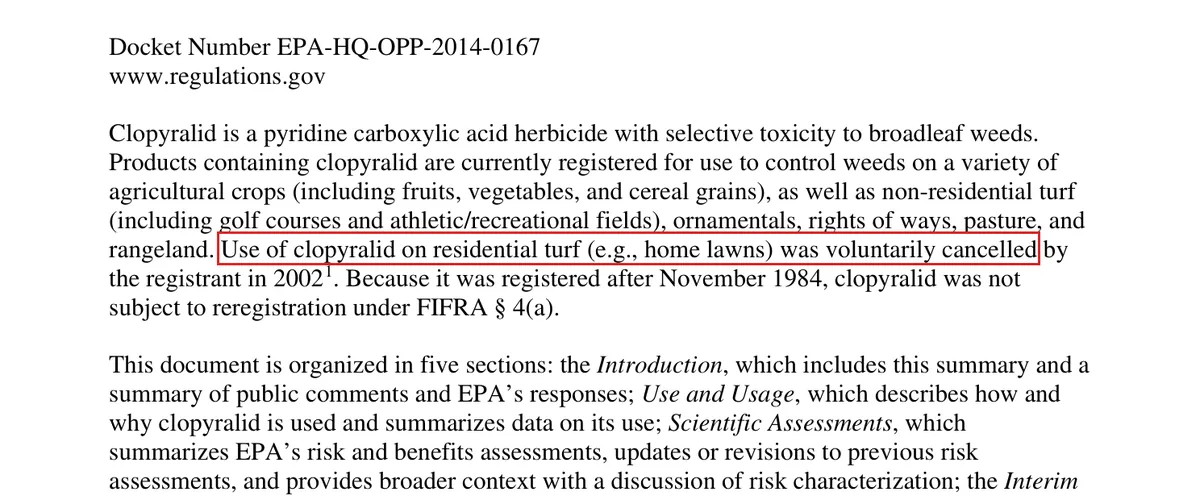
Skip clopyralid on a home lawn. Penn State’s product table lists clopyralid products but notes they should not be used on residential lawns, and the 2020 EPA interim decision records that residential turf uses were voluntarily cancelled in 2002 after residues in clippings contaminated compost, then extended the ban to every label. Washington makes clopyralid products labeled for lawns state restricted use (WAC 16-228-1235).
Of the 11 labels, Celsius WG is the only St. Augustine option that is not a 3-way, and its label limits it to licensed commercial applicators. On any lawn, spot-spray patches rather than the whole yard: CSU prefers spot treatment with every postemergent because less product reaches trees, shrubs and beds, and UMD warns that roots of trees and shrubs absorb dicamba, so keep it off their root zone.
How do you get rid of black medic without chemicals?
Pull it. Penn State says the long taproot can be pulled out at the crown, and UMD says moist soil makes it easier; Washington State Hortsense warns that digging lifts buried seed to the surface. In walkways and paths, UF/IFAS suggests mowing before the plants flower so they set no seed, and in beds a mulch layer of 2 to 3 inches blocks most seedlings. Our guide to flower bed weed control covers the bed side.
Vinegar sprays give short wins. Utah State says acetic acid at 5 percent or more and pelargonic acid burn back the shoots, but black medic usually resprouts from the crown, and glyphosate belongs only in beds and paths as a directed spot spray. The seed bank sets the pace: a pound of seed holds more than 275,000 seeds (UMN), and SARE says up to 96 percent can be hard seed, some of which waits 2 years to sprout. Pull before the pods turn black.
Is black medic good for anything?
Yes, outside a lawn. Honeybees and other bees work its flowers (UW-Madison), part of the nitrogen it fixes reaches nearby plants, and farmers sow the cultivar ‘George’ as a dryland cover crop in the Northern Plains (SARE). UC IPM calls it good livestock forage. If you can live with some, our page on clover lawn pros and cons weighs the same trade for its cousin.
How we compiled this
On Nov. 24, 2026 we read 11 herbicide labels (10 EPA-stamped copies from EPA’s Pesticide Product Label System and 1 marketed label), EPA’s 2020 clopyralid decision, Washington’s WAC 16-228-1235, the PNW handbook susceptibility table, and extension publications from Penn State, Maryland, UW-Madison, Utah State, LSU, UF/IFAS, Washington State, UC IPM, Colorado State, Minnesota, Virginia Tech, Rutgers, UConn, Delaware and Purdue. We did not run trials or test products. The nitrogen conversion and the calculator are arithmetic on the published rates.
Frequently asked questions
What kills black medic in a lawn?
A lawn herbicide whose label lists black medic and your grass. The PNW handbook rates mixes with triclopyr susceptible; on St. Augustine, centipede and bahia, use a 3-way such as 239-2744 at its reduced rate instead.
Is black medic a clover?
No. It is a legume like clover but in the alfalfa genus, Medicago, not Trifolium. Its middle leaflet sits on a short stalk and its pods turn black; white clover’s leaflets all attach at one point (UMD).
Does black medic fix nitrogen?
Yes. Rhizobium bacteria in its root nodules fix it, and UMN measured 25 to 45 lb per acre a year in pure stands. That is why it outcompetes grass fed below the rate for its type, such as 2 to 4 lb per 1,000 sq ft a year for a moderately kept cool-season lawn (Purdue AY-22).
How do I get rid of black medic naturally?
Pull it at the crown when the soil is moist, before the pods blacken, then fix the cause: feed nitrogen, aerate packed soil and mow in the 3-inch range. Vinegar burns the tops but USU says the crown usually resprouts.
Why is it called black medic?
For its seed pods: the yellow flower clusters ripen into tightly coiled pods that turn black (UMN Extension). Each pod holds a single seed.
Sources
- Penn State Extension (Abbey, Landschoot and Delvalle), Lawn and Turfgrass Weeds: Black Medic (Medicago lupulina L.), Updated Oct. 1, 2025. Accessed November 2026.
- Penn State Extension, Three Weeds with Three Leaflets: Trifoliate Look-Alikes, Feb. 21, 2026. Accessed November 2026.
- University of Maryland Extension, Black Medic: Identification and Management, Updated Oct. 2026. Accessed November 2026.
- UW-Madison Extension, Black Medic, Medicago lupulina, Apr. 17, 2025. Accessed November 2026.
- Utah State University Extension, Black Medic (Medicago lupulina) Identification and Control in Residential Landscapes, Mar. 23, 2026. Accessed November 2026.
- LSU AgCenter (Hubbard), Louisiana Home Lawn Series: Black Medic, June 16, 2026. Accessed November 2026.
- UF/IFAS Extension (Khamare and Marble), Biology and Management of Black Medic in Ornamental Crop Production and Landscape Planting Beds, ENH1399/EP664, Feb. 2026. Accessed November 2026.
- Washington State University Hortsense, Weeds: Black medic, Current page. Accessed November 2026.
- UC Statewide IPM Program, Black Medic, Weed Identification Gallery, Current page. Accessed November 2026.
- Colorado State University Extension, PlantTalk Colorado, 2128: White Clover and Black Medic Control in Lawns, Current page. Accessed November 2026.
- University of Minnesota Extension (Sheaffer and Becker), Those other yellow flowers by the side of the road: Black medic and hop clover, June 24, 2024. Accessed November 2026.
- SARE, Managing Cover Crops Profitably: Medics, Current edition. Accessed November 2026.
- Virginia Tech Cooperative Extension, Do you know the hop clovers?, Sept. 2004 newsletter archive. Accessed November 2026.
- Rutgers NJAES (FS385), Broadleaf Weed Control in Cool Season Lawns, Current page. Accessed November 2026.
- UConn Integrated Pest Management, Weeds as Indicators of Growing Conditions in Turf, Current page. Accessed November 2026.
- University of Delaware Cooperative Extension, Weed Control in Turf, Current page. Accessed November 2026.
- Pacific Northwest Weed Management Handbook, Susceptibility of Broadleaf Weeds in Turf to Common Herbicides, Current table. Accessed November 2026.
- Purdue Extension (AY-22-W), Fertilizing Established Cool-season Lawns, Current edition. Accessed November 2026.
- Purdue Extension (AY-7), Watering Your Lawn, Current edition. Accessed November 2026.
- U.S. EPA, Clopyralid Interim Registration Review Decision, Case 7206, Dec. 2020. Accessed November 2026.
- Washington State Legislature, WAC 16-228-1235: clopyralid state restricted use pesticides, Effective June 28, 2002. Accessed November 2026.
- Preen (Lebanon Seaboard), How to Control Black Medic in Landscape Beds, Current page. Accessed November 2026.
- U.S. EPA PPLS, Ortho Weed B Gon Weed Killer for Lawns Concentrate, EPA Reg. No. 239-2744, Aug. 23, 2023. Accessed November 2026.
- U.S. EPA PPLS, BioAdvanced Southern Weed Killer for Lawns, EPA Reg. No. 92564-4, June 25, 2026. Accessed November 2026.
- Spectrum Brands (United Industries), Spectracide Weed Stop for Lawns Concentrate2 label, EPA Reg. No. 9688-342-8845, Sept. 2022 label. Accessed November 2026.
- U.S. EPA PPLS, Ortho Weed B Gon Chickweed, Clover and Oxalis Killer (master label), EPA Reg. No. 239-2491, Aug. 6, 2024. Accessed November 2026.
- U.S. EPA PPLS, EH-1681 / SpeedZone EW, EPA Reg. No. 2217-1053, June 29, 2023. Accessed November 2026.
- U.S. EPA PPLS, Turflon Ester Ultra, EPA Reg. No. 62719-566, Mar. 21, 2019. Accessed November 2026.
- U.S. EPA PPLS, Celsius WG, EPA Reg. No. 432-1507, Sept. 1, 2021. Accessed November 2026.
- U.S. EPA PPLS, Image Herbicide, EPA Reg. No. 73342-4, Aug. 30, 2024. Accessed November 2026.
- U.S. EPA PPLS, Gallery SC, EPA Reg. No. 62719-658, May 8, 2017. Accessed November 2026.
- U.S. EPA PPLS, Dimension 2EW, EPA Reg. No. 62719-542, July 2, 2021. Accessed November 2026.
- U.S. EPA PPLS, Confront, EPA Reg. No. 62719-92, Aug. 29, 2007. Accessed November 2026.