How to get rid of soil mites: let the top 1 to 2 inches of mix dry between waterings, scrape off decaying material and repot if they persist. Most are harmless decomposers, per WSU Extension. Bulb mites and root mealybugs are the real pests.
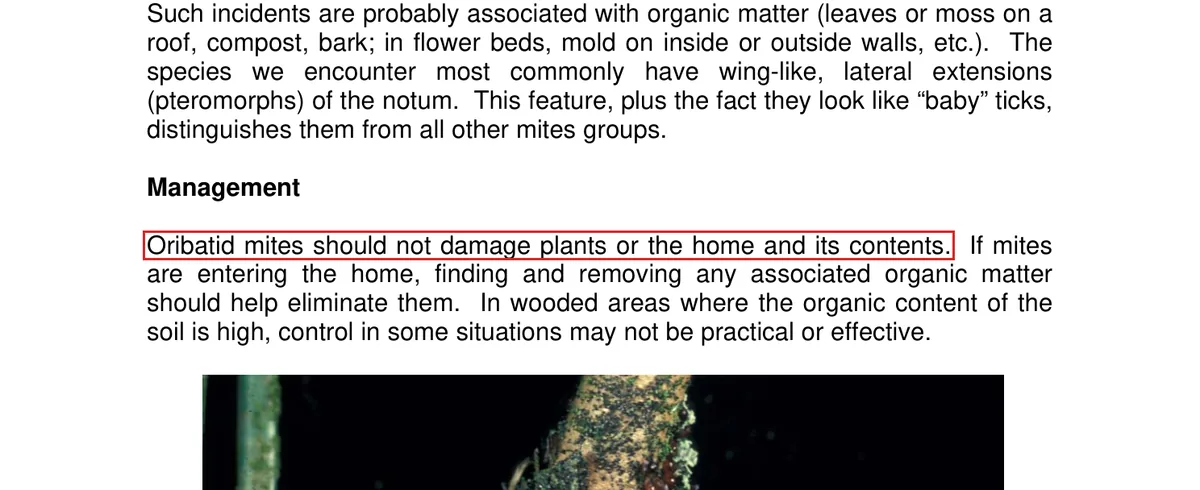
Before you work out how to get rid of soil mites, check what is actually crawling in the pot. The pale specks people call soil mites are usually decomposer mites that WSU entomologist Art Antonelli says “should not damage plants or the home” (WSU Extension PLS-21), or they are springtails, which jump. The two that injure plants, bulb mites and root mealybugs, are tied to bulbs and roots, not the soil surface.
The table below sorts 10 look-alikes by measured size, from extension fact sheets rather than forum photos, and the remedy audit further down checks hydrogen peroxide, neem, soap, diatomaceous earth and predatory mites against what the labels and extension sources actually say. If the bag itself is the suspect, our guide to how potting soil ages in storage covers how wet stored mix picks up pests, and potting soil vs potting mix shows which bags are soilless.
What are soil mites, and do they hurt plants?
Soil mites are eight-legged arachnids, not insects, and most of them eat dead leaves, fungi and algae. The USDA NRCS Soil Biology Primer pictures 200 species of mites extracted from one square foot of the top 2 inches of forest litter and soil, and calls oribatid turtle mites “among the most numerous” micro-arthropods; its example species is about 1 millimeter long and feeds on fungi (NRCS Soil Biology Primer, arthropods chapter).
A second group hunts. The primer’s predatory Pergamasus mite is 1/25 inch (1 mm) long and eats nematodes, springtails, other mites and insect larvae. University of Maryland Extension sorts mites into plant feeders, predators and detritivores, and puts most at under 1/16 inch (1 to 2 mm), walking only: mites cannot jump or fly (UMD Extension, Mites in Home Gardens).
The white ones that boil out of wet mix can be mold or grain mites (Tyrophagus), which the Pacific Northwest Insect Management Handbook describes as very small, light-colored, long-haired and “usually associated with moist or damp conditions”; its fix is moisture control and air circulation, not a pesticide (PNW Insect Management Handbook 2026). That pattern holds across the group: mites track wet organic matter, so numbers fall when it dries.
Tiny white bugs in soil: which one do you have?
Use a 10x hand lens and two tests: tap the soil and see whether anything jumps, then slide the root ball out and look at the outer roots. Springtails jump “an inch or farther” with a forked tail and most are 1 to 2 mm long (Texas A&M AgriLife Extension); mites only walk. Anything over 3 mm with a black head is a fungus gnat larva, not a mite.
| Critter | Adult size | What you see | Where it lives | Harms plants? | What to do | Source |
|---|---|---|---|---|---|---|
| Oribatid (beetle or moss) mite | About 1 mm | Brown to tan, rounded, slow; WSU says they look like “baby” ticks | In decaying organic matter, leaf litter, moss | No | Leave; dry the surface if numbers bother you | WSU PLS-21, NRCS |
| Predatory soil mite (Pergamasus, gamasid) | 1 mm (1/25 in) | Fast, long-legged, pale to tan | Soil and litter, hunting springtails and larvae | No, beneficial | Leave | NRCS |
| Stratiolaelaps scimitus (sold as Hypoaspis) | Under 1 mm, up to 1 mm | Tan, quick; lives in the top 1/2 in of media | Moist potting media; sold for fungus gnats | No, beneficial | Leave | UConn, Koppert |
| Mold or grain mite (Tyrophagus) | Very small (no size given) | White, long body hairs, can swarm | Damp organic material, molds, mushrooms | Nuisance | Dry the mix, add airflow | PNW Handbook |
| Bulb mite (Rhizoglyphus) | 0.55 to 0.75 mm (1/50 to 1/32 in) | Whitish, shiny, brown stubby legs, slow | Inside bulbs, corms and tubers, often with rot | Yes, with rot fungi | Discard bulb or hot-water treat | UC IPM, NC State |
| Springtail (Collembola) | Most 1 to 2 mm; 0.2 to 10 mm range | White or gray, 6 legs, jumps when disturbed | Soil surface after watering | Rarely | Water less | Texas A&M, CSU |
| Root (ground) mealybug (Rhizoecus) | 1/16 to 1/8 in (1.6 to 3.2 mm) | Bluish white under powdery white wax, slow | On roots and between root ball and pot | Yes | Hot water, discard or labeled systemic | NC State, UC IPM |
| Fungus gnat larva | 1/4 in (6.4 mm) mature | Clear to pale worm, shiny black head, legless | Top inch of wet mix | At high numbers | Fungus gnat guide | UW Madison |
| Twospotted spider mite | Under 1/20 in (about 1.3 mm) | Moving dots with 2 dark spots, webbing | Leaf undersides, not soil | Yes | Treat foliage, not soil | UC IPM, CSU |
| Cyclamen or broad mite (Tarsonemidae) | Too small to see unaided | No webbing; stunted, twisted new growth | Buds and leaf folds, not soil | Yes | Usually discard plant | CSU, UC IPM |
The size gap is the fastest sort. Anything you can see clearly without a lens, about 2 mm and up, is unlikely to be a mite in a pot: UMD puts most mites under 1/16 inch, with outdoor velvet mites near 4 mm the exception. The chart puts root mealybugs at up to 3.2 mm and gnat larvae at 6.4 mm. If the specks are a mite’s size but jump, they are springtails, which Colorado State says cause “little if any damage” to houseplants (CSU Extension).
1Do they jump when you tap the pot or water?
YesSpringtails (most 1 to 2 mm, Texas A&M). Water less; no treatment needed.
NoGo to the next question
2Are they legless worms about 1/4 inch long with a shiny black head?
YesFungus gnat larvae (UW Madison). Use the fungus gnat guide.
NoGo to the next question
3Is there white powdery wax on the roots or between root ball and pot?
YesRoot mealybugs (1/16 to 1/8 in, NC State). Hot water to 115 F root ball, discard, or a labeled systemic.
NoGo to the next question
4Are the specks inside a soft or rotting bulb, corm or tuber?
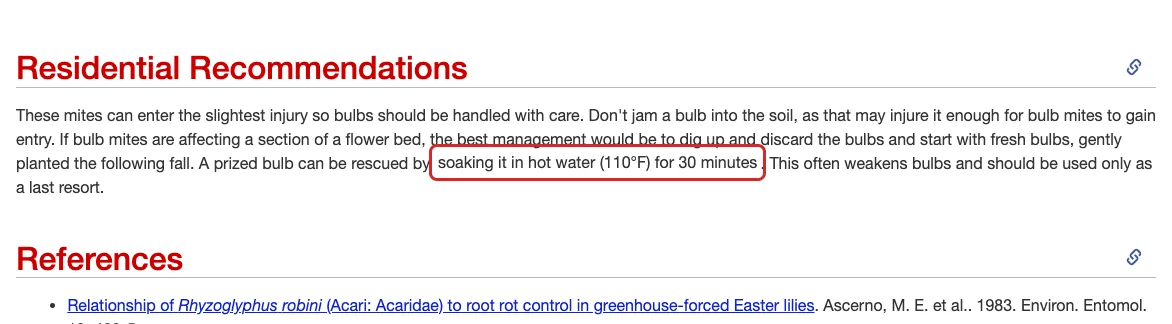
YesBulb mites (0.55 to 0.75 mm, UC IPM). Discard, or 110 F water for 30 minutes as a last resort (NC State).
NoGo to the next question
5Are leaves stippled with fine webbing on the undersides?
YesSpider mites (under 1/20 in, UC IPM). Treat the foliage, not the soil.
NoDecomposer soil mites. Let the top 1 to 2 inches dry, remove dead leaves and moldy mix, and repot if they persist.
When are soil mites worth getting rid of?
Act on the plant, not the bug count. The cases that justify treatment are a soft or rotting bulb, corm or tuber (bulb mites), white powdery wax on the roots with yellowing or stunting (root mealybugs), or stippled leaves with webbing (spider mites, which UC IPM places on leaves, not in soil). A firm, white-rooted plant with mites crawling on the surface has a moisture problem, not a mite problem.
Two softer reasons are fair too: mites wandering indoors, and a swarm that shows up every watering. WSU says oribatids that move into homes are “probably associated with organic matter” such as moss on a roof, compost, bark or mold on walls, and removing that matter “should help eliminate them” (WSU PLS-21). A swarm at every watering means the mix rarely dries. For scale, bulb mites complete a generation in about 10 days at 80°F (UC IPM), so numbers can climb within a few weeks in a warm, wet pot.
How to get rid of soil mites in houseplants
These steps cut numbers without a pesticide, in the order the sources support them. They are the same moisture fixes extension services give for fungus gnats and springtails, because all three feed on the same wet, decaying material (UC IPM, Fungus Gnats).
- Let the top 1 to 2 inches dry between waterings; Cornell Cooperative Extension gives that depth for fungus gnats, which breed in the same wet layer (Cornell CCE Allegany County). Empty the saucer after watering, and bottom-water drought-tender plants so the surface stays dry.
- Pick off dead leaves and scrape out the top 1 inch of mix where it is soft, moldy or full of bark fines, and bag it outside. Mites, springtails and gnat larvae all live in that layer; UConn puts the predatory mites in the top 1/2 inch. White fuzz there is a separate issue, covered in white fungus in soil.
- If numbers stay high after the mix has dried down twice, repot into fresh bagged mix in a scrubbed pot. Shake off the old mix over a bin and inspect the roots: white wax means root mealybugs, not mites.
- Keep compost, garden soil and leaf mold out of indoor pots. Colorado State’s houseplant table lists avoiding “high organic matter soils” for fungus gnats and springtails (CSU). Our garden soil vs potting soil comparison explains why yard soil packs and stays wet in containers.
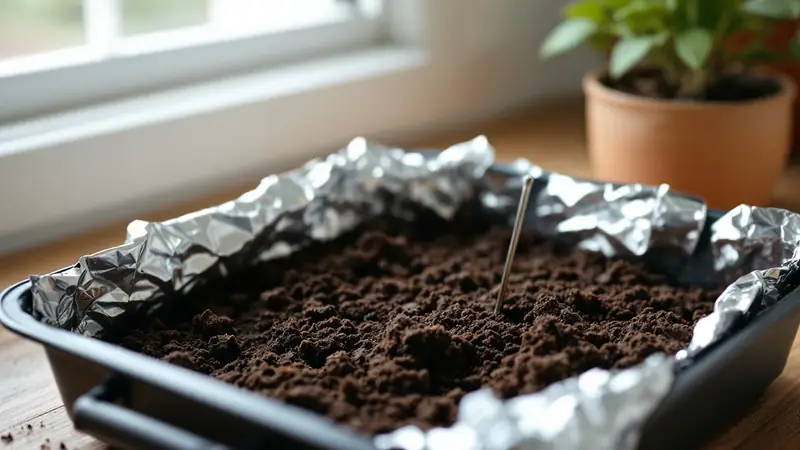
- Reusing old mix? Heat it first. Our guide to how to sterilize soil gives oven and solarization settings: 140°F for 30 minutes in moist mix for pathogens, and no hotter than 180°F.
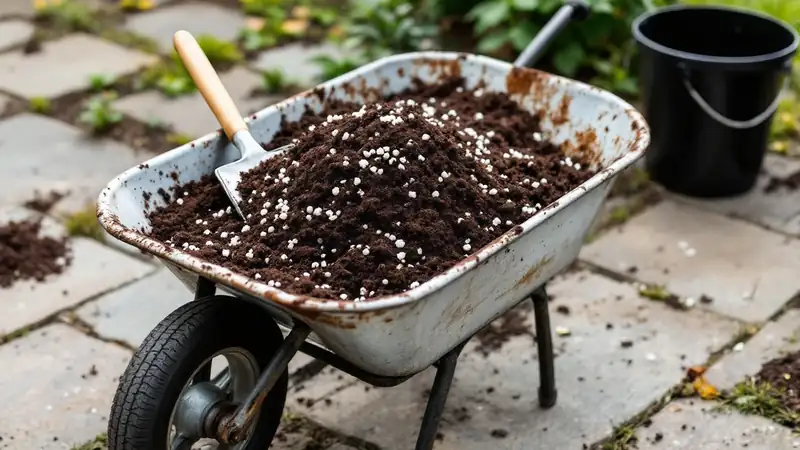
Coarser mix dries faster. Adding perlite opens air space so the surface dries sooner, as our page on what perlite does for soil measures. If the mix still fails, our sibling guide on how to make potting soil gives drier recipes.
Bulb mites and root mealybugs: the two that need heat
Bulb mites are the soil mite that really is a pest. NC State Extension describes females about 1/32 inch long that lay up to 700 eggs each and get into bulbs through the slightest injury, worsening Pythium, Rhizoctonia and Fusarium rots (NC State Extension, Bulb Mites). In a flower bed, its advice is to dig up and discard affected bulbs and plant fresh ones gently the next fall.
| Pest and material | Water or air temperature | Time | Source |
|---|---|---|---|
| Bulb mites, prized home bulb | 110°F water | 30 minutes (“last resort”, weakens bulbs) | NC State |
| Bulb mites, commercial bulbs, corms, rhizomes | Presoak 75°F with wetting agent, then 111°F | 2 to 3 hours presoak, then about 1.5 hours | UC IPM |
| Bulb mites, stored bulbs | 105.5°F air at 100% relative humidity | 24 hours | UC IPM |
| Root mealybugs, potted plants | 120°F water until root ball reaches 115°F | Until the center reads 115°F (Hawaii trial on potted Rhapis palms) | UC IPM |
Root mealybugs are the other true root pest. They gather on the outer root ball between the roots and the pot and can live 1 to 2 months; UC IPM says it is “difficult to completely disinfest roots” and that starting fresh with pest-free plants and mix can be preferable (UC IPM, Ground Mealybugs). NC State suggests a systemic labeled for residential use, such as imidacloprid, and moving houseplants outdoors when the label allows landscape use only (NC State, Root Mealybugs).
Will hydrogen peroxide, neem or soap kill soil mites?
Most home remedies come from fungus gnat advice and were never checked against mites. We matched 7 of them to their labels or extension sources; the label is the law, so use a product only on pests and sites it lists.
| Remedy | What the source says | For soil mites | Source |
|---|---|---|---|
| Hydrogen peroxide, 1 part 3% to 4 parts water | Cornell CCE gives this mix for fungus gnat larvae | No mite source found; the 1:4 ratio is gnat advice | Cornell CCE |
| Neem oil drench | GreeNeem RTU (EPA Reg. No. 95993-4) lists spider mites and fungus gnats; soil drench allowed for listed pests | Soil mites are not a listed pest | EPA label |
| Insecticidal soap | Neudorff’s concentrate (EPA Reg. No. 67702-22) is a contact spray, 2% dilution, “rapidly degraded by soil microbes” | Foliage pests only; CSU rates soap marginal even on spider mites | EPA label, CSU |
| Diatomaceous earth | NPIC: works only while “kept dry and undisturbed” | Wet potting mix defeats it | NPIC |
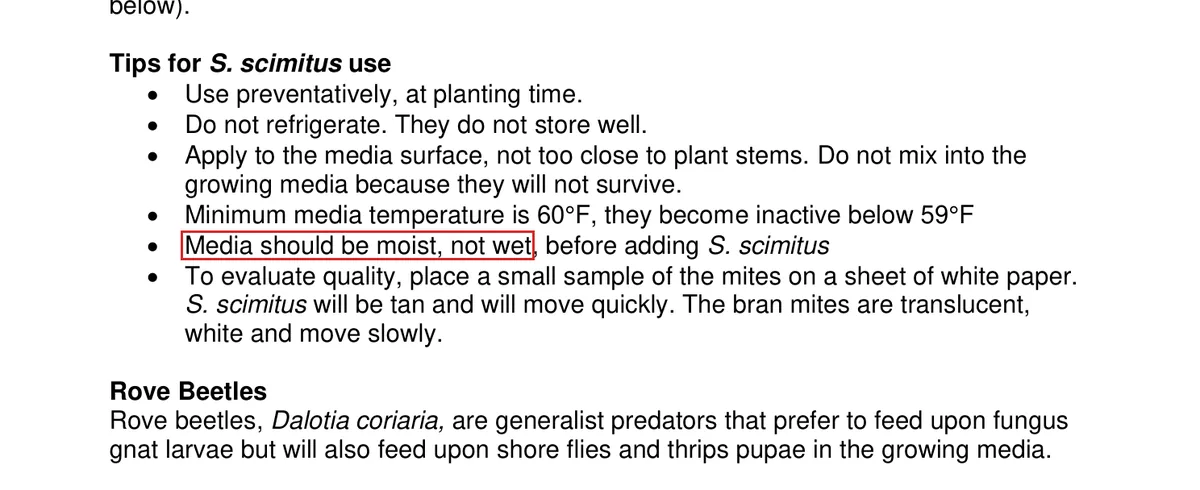
| Predatory mites (Stratiolaelaps scimitus) | Koppert: 100 to 500 per m² per release; needs moist, organic soil above 59°F; eats mites and springtails | Adds another mite under 1 mm; sold for gnats and thrips | Koppert, UConn |
| Drying the surface | UC IPM and CSU: limit water so the surface dries | Removes the food and moisture all of these need | UC IPM, CSU |
| Hot water dip | 110 to 120°F for set times (table above) | Bulbs and root mealybugs only | NC State, UC IPM |
Hydrogen peroxide is the most repeated tip and the least sourced. The 1:4 dilution traces to fungus gnat advice (Cornell CCE Allegany County); none of the 20 extension pages, labels and fact sheets we read recommends it for mites. Predatory mites have the opposite catch: Koppert’s own sheet says they need soil that is “moist, rich in organic matter” (Koppert), the conditions the drying steps remove. UConn adds a 60°F minimum media temperature and says to apply them to media that is moist, not wet (UConn Extension).
General information, not pesticide advice. The label is the legal limit on pests, sites and rates; read all of it first.
Soil mites in compost, mulch and garden beds
Outdoors, leave them. In the NRCS primer, mites and springtails are the most abundant soil dwellers in most environments, and they shred litter so fungi and bacteria can finish it, the step that turns leaves into humus. Our page on whether mulch attracts bugs shows how those same detritivores feed the spiders that eat garden pests.
The exceptions are crop problems, not lawn or bed problems: bulb mites in garlic, lilies and tulips and spider mites on beans, tomatoes and cucurbits (UMD Extension), plus bulb mites in onions (UC IPM). In compost, mites are part of the process; the compost vs mulch comparison covers when a pile is finished.
How we compiled this
In November 2026 we read 20 primary documents: extension pages and PDFs from WSU, UMD, NC State (3), UC IPM (4), Texas A&M, UW Madison, Colorado State, Cornell CCE and UConn; the USDA NRCS Soil Biology Primer; 2 EPA-stamped pesticide labels; NPIC; the PNW handbook; and Koppert’s product sheet. Sizes are as published, converted at 25.4 mm per inch. We ran no tests or counts; forum threads were used for question phrasing only.
Frequently asked questions
Do soil mites go away on their own?
Numbers fall when their food and moisture do. Colorado State says limiting water reduces springtail numbers, and WSU says removing organic matter “should help eliminate” oribatid mites indoors. Let the top 1 to 2 inches dry and clear out dead leaves and moldy mix.
Will hydrogen peroxide kill soil mites?
No extension source or label we found recommends it for mites. The common 1 part 3% peroxide to 4 parts water mix is Cornell CCE advice for fungus gnat larvae. Drying the mix does more for mites.
Are soil mites harmful to humans or pets?
The decomposer mites in potting mix are not listed as biting people. NC State Extension‘s guide to mites that bite names chiggers, rodent and bird mites and scabies, which live outdoors or on hosts, not in houseplant mix.
Can soil mites infest your house?
They can wander in but do not damage the home, WSU Extension says of oribatid mites. They follow organic matter such as moss, compost, bark or mold near walls; remove it and the mites go with it.
What kills soil mites naturally?
Drying is the only method with extension support. Predatory Stratiolaelaps scimitus eats mites and springtails, but Koppert says it needs moist, organic soil above 59°F, so it works against drying. Bulb mites in bulbs need 110°F water for 30 minutes.
Sources
- Washington State University Puyallup REC (A.L. Antonelli), Oribatid Mites, PLS-21, updated April 2003. Accessed November 2026.
- USDA NRCS (Ingham, Moldenke et al.), Soil Biology Primer, food web and arthropods chapters (copy hosted by Pennsylvania Envirothon), NRCS primer, undated reprint. Accessed November 2026.
- University of Maryland Extension, Mites in Home Gardens, current page. Accessed November 2026.
- NC State Extension, Bulb Mites, current page. Accessed November 2026.
- UC Statewide IPM Program, Bulb Mites (Acarid Mites), Floriculture and Ornamental Nurseries guidelines, current page. Accessed November 2026.
- NC State Extension, Root Mealybugs, current page. Accessed November 2026.
- UC Statewide IPM Program, Ground (Root) Mealybugs, Floriculture guidelines, current page. Accessed November 2026.
- Texas A&M AgriLife Extension, Springtails, current page. Accessed November 2026.
- University of Wisconsin Madison Extension, Fungus Gnats on Houseplants, current page. Accessed November 2026.
- Colorado State University Extension, Managing Houseplant Pests, current page. Accessed November 2026.
- Cornell Cooperative Extension, Allegany County, A Spooky Houseplant Pest: Fungus Gnats, current page. Accessed November 2026.
- UC Statewide IPM Program, Pest Notes: Fungus Gnats, current page. Accessed November 2026.
- UC Statewide IPM Program, Pest Notes: Spider Mites, current page. Accessed November 2026.
- UConn Extension IPM (L. Pundt), Biological Control of Fungus Gnats, 2024 upload. Accessed November 2026.
- Koppert, Stratiolaelaps scimitus (Hypoaspis miles) product information, current page. Accessed November 2026.
- U.S. EPA, GreeNeem Neem Oil RTU label, EPA Reg. No. 95993-4, stamped Oct. 31, 2025. Accessed November 2026.
- U.S. EPA, Neudorff’s Insecticidal Soap Concentrate label, EPA Reg. No. 67702-22, stamped Nov. 25, 2014. Accessed November 2026.
- National Pesticide Information Center, Diatomaceous Earth General Fact Sheet, current page. Accessed November 2026.
- Pacific Northwest Insect Management Handbook, Cheese mite, grain mite and mold mite, 2026 edition. Accessed November 2026.
- NC State Extension, Mites That Bug People, current page. Accessed November 2026.