How to kill poison ivy: spray fully leafed plants with a triclopyr or glyphosate product whose label lists poison ivy, or cut climbing vines at the base and paint the stump with undiluted product within 15 minutes. Expect 2 to 6 weeks and a retreatment.
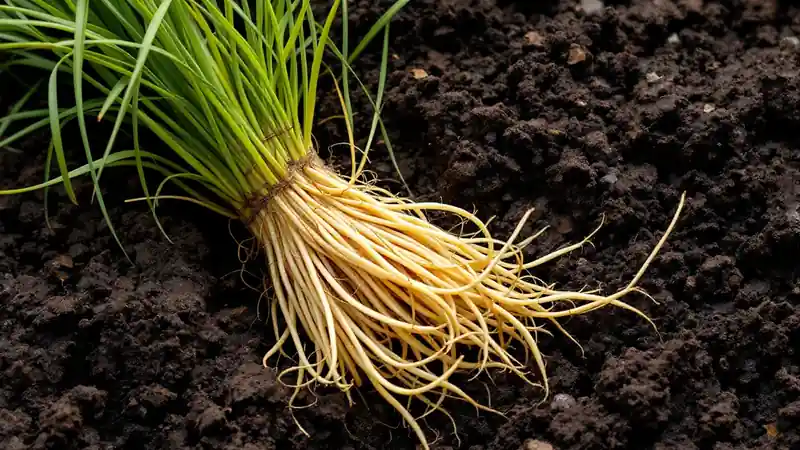
How to kill poison ivy depends on what it is growing on, because the label that allows a spray on a fence line does not allow it on a lawn or a tree trunk. The Ortho Brush-B-Gon and GroundClear concentrate label (EPA Reg. No. 239-2491) says to mix 4 fl oz per gallon for brush, but its lawn directions drop to 1 fl oz per gallon and exclude bermudagrass and St. Augustinegrass. Poison ivy (Toxicodendron radicans) regrows from creeping roots, so a spray that only burns the leaves buys a few weeks.
Today’s top results are Reddit, Facebook and Quora threads, two herbicide makers’ pages and 2 extension guides. None sets the method by site next to the EPA Reg. No., label rate and retreat interval, or shows where guides contradict each other: how long to wait before painting a cut vine runs from 15 minutes (Penn State Extension) to 48 hours (UGA Extension C867). The site table, the 12-label table and the disagreement table below do that. Spray products work because they are systemic, which our explainer on how systemic and contact herbicides differ covers in more depth.
This page summarizes pesticide labels and extension guidance; it is not a recommendation of any product. The label is the law: read the current label of the exact product you buy, and check whether your state requires a pesticide applicator license before anyone treats a property for pay.
Is it poison ivy? Rule out 5 look-alikes first
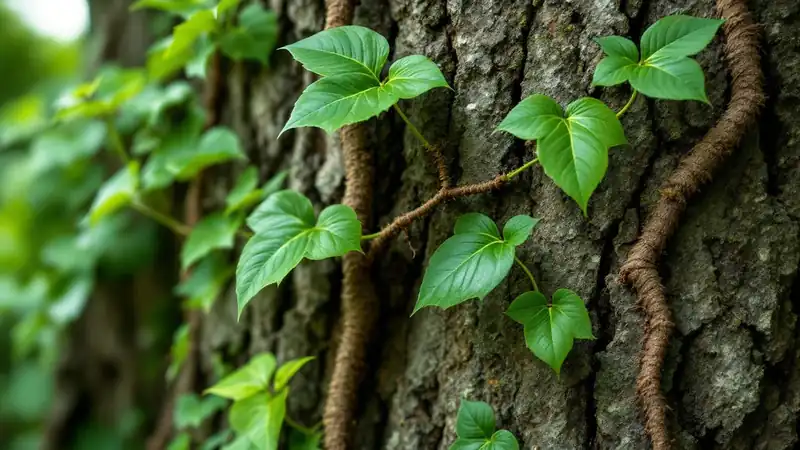
Poison ivy has 3 leaflets per leaf, set alternately on the stem, and the middle leaflet sits on a longer stalk than the two side leaflets (Missouri Department of Conservation). Climbing vines grow aerial rootlets that make the stem look hairy, and mature plants carry grayish-white fruit about 3/16 inch across (UGA Extension C867). Leaf edges vary from smooth to toothed or lobed on the same plant, so edge shape alone proves nothing.
| Plant | Leaflets | Leaf arrangement | Stem or fruit clue | Source |
|---|---|---|---|---|
| Poison ivy (T. radicans) | 3; middle one on a longer stalk | Alternate | Hairy aerial rootlets on climbing vines; white, waxy fruit about 3/16 in. | MDC; UGA C867 |
| Virginia creeper | 5 (sometimes 3 on young growth) | Alternate, palm-like | Blue-black berries in late summer | MDC; Penn State |
| Box elder seedling | 3 to 7, feather-like | Opposite | A tree, not a vine | MDC; UGA C867 |
| Fragrant sumac | 3; middle one has no stalk | Alternate | Upright shrub; red, fuzzy berries in tight clusters | MDC |
| Staghorn sumac (harmless) | Many, toothed | Alternate | Fuzzy stems; often blamed for poison ivy growing under it | Penn State |
| Eastern poison oak (T. pubescens) | 3, rounded and lobed like oak | Alternate | Shrub form; fine fuzz under leaves; contains urushiol | Penn State; Clemson HGIC 2307 |
| Western poison oak (T. diversilobum) | 3, lobed | Alternate | Only Toxicodendron in California; fruit without hairs | UC IPM 7431 |
Western poison ivy is a low shrub of the northern and western states. UC IPM lists it as its own species, T. rydbergii, while UGA Extension notes that a 2024 Flora of North America revision now treats rydbergii as 1 of 5 subspecies of T. radicans (UC IPM 7431; UGA C867). Control is the same. For lawn weeds with 3 leaflets, such as clover and oxalis, see our common lawn weeds identification chart.
What makes poison ivy dangerous to remove?
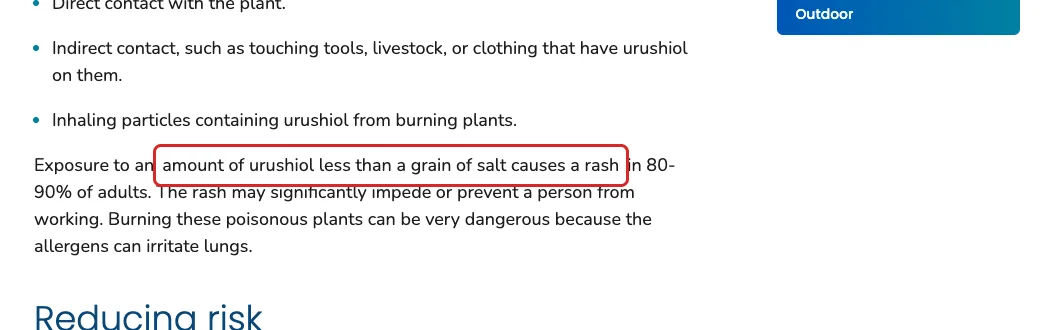
Urushiol, the oil in the sap, does the damage, and it does not need a live plant. CDC NIOSH says an amount of urushiol smaller than a grain of salt causes a rash in 80 to 90 percent of adults, and that urushiol stays active on the surface of objects for up to 5 years (CDC NIOSH, Poisonous plants). Penn State says dead plants and roots keep active urushiol, which makes removing them hazardous for years (Penn State Extension).
Timing the wash matters more than the soap. UC IPM reports that washing removes 50 percent of the oil at 10 minutes after contact, 25 percent at 15 minutes and 10 percent at 30 minutes, after which the skin has absorbed it (UC IPM 7431). Clemson HGIC puts the window at 10 minutes for very sensitive people and notes that rubbing alcohol dissolves urushiol better than water (Clemson HGIC 2307).
Never burn the plants or the brush pile. NIOSH says inhaling smoke from burning poison ivy can cause severe allergic respiratory problems, and if burning cannot be avoided, workers need a NIOSH-certified respirator rated R-95, P-95 or better (CDC NIOSH). Flame also fails on perennial roots, as our page on whether burning weeds kills them shows. Penn State adds that string trimmers throw urushiol-laden sap into the air.
Wear long sleeves, pants tucked into boots, eye protection, and disposable nitrile gloves under heavy work gloves, the layering Penn State recommends (Penn State Extension). The label for 71995-25 adds: handle dead plants with rubber gloves and bag plants and gloves tightly.
Which method fits where your poison ivy grows?
Pick the method by site, then the product. Spray open ground; cut and paint on trees and among shrubs, where drift hits plants you keep; in lawns, use only a label that lists your grass. Clemson HGIC calls glyphosate the safest spray in existing flower and shrub beds because it has little soil activity, a few days against several months for triclopyr (Clemson HGIC 2307).
| Where it grows | Method | Label examples (EPA Reg. No.) | Rate on the label | Timing and retreat | Source |
|---|---|---|---|---|---|
| Fence line, open patch, woodland edge | Spray leaves until wet | Triclopyr 8% (239-2491, 92564-6); triclopyr + fluazifop + diquat (71995-64) | 4 fl oz per gal (239-2491); 4 to 8 fl oz (92564-6); 6 fl oz per 300 sq ft (71995-64) | Full leaf, actively growing; 71995-64 at least 4 weeks before the first killing frost; 28 days between sprays | Labels |
| Climbing a tree trunk or a shrub you keep | Cut vine near the ground, paint the lower stump | Undiluted 8% triclopyr (239-2491); glyphosate 41% full strength or 1:1 with water | Undiluted to the whole fresh cut | Within 15 minutes of cutting; late summer through autumn works best | Penn State; UC IPM |
| Climbing a fence, pole or mature-bark trunk | Spray vine up to 3 to 4 ft, or cut and paint | Triclopyr 8% (239-2491); 71995-64 | 4 fl oz per gal; 6 fl oz per gal | UGA says not to spray triclopyr on mature tree bark; cut instead on trees | Label; UGA C867 |
| Mixed into flower or shrub beds | Spot spray with a cardboard shield, or cut and paint | Glyphosate 41% (Roundup PRO 524-475) or 50.2% (71995-25) | 2% solution (about 2.5 fl oz per gal) | Clemson: 2 weeks either side of full bloom; label: before leaves lose green color in fall | Clemson; labels |
| Cool-season or zoysia lawn | Spot spray a lawn-labeled triclopyr | Ortho lawn directions on 239-2491 | 1 fl oz per gal per 200 sq ft; max 5.4 fl oz per 100 sq ft a year | Seed bare spots 1 week later | Label |
| Bermuda, bahia, St. Augustine or centipede lawn | Mow often, or spot spray a 3-way 2,4-D + MCPP + dicamba | Trimec (2217-543) | 1.2 to 1.5 fl oz per 1,000 sq ft; spot only in St. Augustine and centipede | 2 spot treatments a year, 30 days apart; not on Floratam | Label; UGA C867 |
| Leafless, in winter | Basal bark (professional) or cut stump | Pathfinder II ready-to-use triclopyr ester (62719-176) | Wet the lower 12 to 15 in. of stems under 6 in. across | Any time except when snow or water blocks the ground line | Label |
| A few seedlings | Pull or dig every root piece | None | Dig several inches deep with a fork | Moist soil; check for regrowth often | Penn State |
1Only a few small seedlings?
YesPull or dig them in moist soil, roots included, wearing nitrile gloves under work gloves; bag them (Penn State).
NoGo to the next question
2Is the vine climbing a tree or a shrub you want to keep?
YesCut near the ground, remove a 1-foot section, paint the lower stump within 15 minutes with an undiluted concentrate labeled for stumps (239-2491, 92564-6 or 41% glyphosate). Leave the upper vine.
NoGo to the next question
3Is it growing in a lawn?
YesCool-season or zoysia lawn: triclopyr lawn directions on 239-2491, 1 fl oz per gal per 200 sq ft. Bermuda, bahia, St. Augustine or centipede: mow often or spot spray a 3-way such as Trimec 2217-543 (spot only in St. Augustine and centipede, never Floratam).
NoGo to the next question
4Is it tangled in a flower or shrub bed?
YesSpot spray 2% glyphosate behind a cardboard shield, or cut and paint the stems (Clemson HGIC).
NoGo to the next question
5Are the plants leafless (winter)?
YesWait for full leaf to spray, or cut and paint; a licensed applicator can use a basal-bark triclopyr ester such as Pathfinder II 62719-176.
NoOpen patch or fence line: spray to wet at full leaf with 8% triclopyr at 4 to 8 fl oz per gal or 71995-64 at 6 fl oz per gal, at least 4 weeks before the first killing frost; repeat after 28 days if it regrows.
Source: Labels 239-2491, 92564-6, 71995-64, 2217-543, 62719-176; Penn State; Clemson HGIC
Two bottles with the same brand name can hold different chemistry. EPA’s label system lists Ortho GroundClear Poison Ivy & Tough Brush Killer under 4 registrations: 239-2491 (triclopyr 8.0%), 239-2768 (triclopyr 8.0% plus diquat 1.5%), 239-2587 (triclopyr 0.7%, ready to use) and 239-2773 (triclopyr 0.7% plus 2% nonanoic acid). Only the concentrates are labeled for painting stumps undiluted, so read the Reg. No. on the back panel before you buy for vines.
What does each poison ivy killer’s label actually allow?
The 12 labels below all name poison ivy. The chart shows how much product each one puts in a gallon of spray, the number most people get wrong when they mix by eye. The Roundup name is the other trap: our page on how long each Roundup formula stays in soil shows the brand selling both glyphosate and glyphosate-free products, and 71995-64, sold as Roundup Poison Ivy Plus Tough Brush Killer, contains no glyphosate.
Swipe the table sideways to see every column.
| Product family (EPA Reg. No.) | Active ingredients | Poison ivy rate | Cut-stump use | Limits on the label | Label date |
|---|---|---|---|---|---|
| Ortho Brush-B-Gon / GroundClear concentrate (239-2491) | Triclopyr TEA 8.0% | 4 fl oz per gal, 100 to 400 sq ft | Undiluted with a paintbrush | Max 5.4 fl oz per 100 sq ft a year; not for lawn foliage spray | Aug. 6, 2024 |
| Same label, lawn directions (239-2491) | Triclopyr TEA 8.0% | 1 fl oz per gal per 200 sq ft | No | Fescues, bluegrass, ryegrass, zoysia, buffalograss only | Aug. 6, 2024 |
| Ortho GroundClear Poison Ivy & Tough Brush Killer2 (239-2768) | Triclopyr TEA 8.0%, diquat 1.5% | 4 fl oz per gal | Undiluted | Max 4 fl oz per 100 sq ft per spray, 5.3 fl oz a year | Mar. 31, 2021 |
| Ortho Poison Ivy & Tough Brush Killer ready to use (239-2587) | Triclopyr TEA 0.7% | Spray to wet | No | 2 sprays a year, 28 days apart | Apr. 24, 2024 |
| Ortho GroundClear Poison Ivy & Tough Brush Killer3 ready to use (239-2773) | Triclopyr TEA 0.7%, nonanoic acid 2% | Spray to wet | No | 28 days between sprays | Aug. 24, 2022 |
| BioAdvanced Brush Killer Plus, now Triclopyr 8.8% Concentrate (92564-6) | Triclopyr TEA 8.8% | 4 to 8 fl oz per gal | Undiluted | 24 fl oz per 500 sq ft a year; 28 days between sprays; not for lawns | Aug. 17, 2026 |
| Roundup Poison Ivy Plus Tough Brush Killer concentrate (71995-64) | Triclopyr TEA 2.5%, fluazifop-P-butyl 2.0%, diquat 1.5% | 6 fl oz per gal per 300 sq ft | Drill 4 to 5 holes, pour undiluted | At least 4 weeks before first killing frost; 28 days between sprays; 48 fl oz per 300 sq ft a year | June 5, 2023 |
| Roundup Concentrate Poison Ivy Plus Tough Brush Killer, older formula (71995-37) | Glyphosate 18%, triclopyr TEA 2% | Per label | Per label | Still an active registration; check which formula the bottle holds | Mar. 28, 2019 |
| Roundup Weed & Grass Killer Super Concentrate (71995-25) | Glyphosate 50.2% | 2.5 fl oz per gal | Undiluted | At least 4 weeks before first killing frost; kills lawn grass it touches | Jan. 28, 2021 |
| Roundup PRO and other 41% glyphosate (524-475) | Glyphosate 41% | 2% handheld solution | 50 to 100% solution | Fall sprays before leaves lose green color | Oct. 18, 2016 |
| Bonide Poison Ivy, Oak, Kudzu and Vine Killer (4-491) | Glyphosate 18%, diquat 0.73% | 6 fl oz per gal for tough weeds | Drill holes, pour undiluted | At least 4 weeks before first killing frost | June 30, 2026 |
| Trimec, professional 3-way (2217-543) | 2,4-D 25.93%, MCPP-p 6.93%, dicamba 2.76% | 1.2 to 1.5 fl oz per 1,000 sq ft in turf | No | Spot only in St. Augustine and centipede; not Floratam; seed 3 to 4 weeks later | Apr. 2, 2014 |
| Pathfinder II, professional (62719-176) | Triclopyr butoxyethyl ester 13.6% | Ready to use, basal bark | Undiluted | Stems under 6 in.; any season | June 9, 2026 |
Triclopyr is the active the guides lean on for woody vines, and it spares grass: UGA calls it highly effective on poison ivy, and Penn State says neither it nor glyphosate stays active in soil (UGA C867; Penn State). Glyphosate kills every plant it wets, so it suits beds, not lawns.
How much product goes in your sprayer?
Pick your label and sprayer size. Default: 1 gallon of the 239-2491 brush mix takes 4 fl oz of concentrate and covers 100 to 400 sq ft. A 2-gallon sprayer of 71995-64 takes 12 fl oz.
- Concentrate to measure (fl oz)
- 4.00
Default: 1 gallon of the 239-2491 brush mix takes 4 fl oz of concentrate. Worked example: 2 gallons of 71995-64 at 6 fl oz per gallon = 12 fl oz. Rates from the EPA-stamped labels on this page, read November 2026; your container's label overrides this tool.
How do you kill poison ivy vines on trees without hurting the tree?
Cut, do not pull. Penn State’s window cut severs the vine near the ground, makes a second cut about 1 foot higher, removes that section and leaves the upper vine to die in place, because pulling it down scrapes bark and drops urushiol-coated rootlets on you (Penn State Extension).
English ivy climbs trees the same way but needs a wider clearing: Oregon State’s Life Saver method cuts every vine at eye level and clears a 3 to 5 ft ring at the base, as set out in our plan for how to kill English ivy on trunks, ground and walls.
- Pour the concentrate into a small cup and have a disposable foam brush ready before you cut.
- Cut the vine with loppers or a pruning saw about 6 inches above the soil, without nicking the tree’s bark (MDC).
- Make a second cut about 1 foot higher and lift out that section so the upper vine cannot reconnect (Penn State).
- Within 15 minutes, paint the whole face of the lower stump with undiluted 8% triclopyr concentrate (239-2491 or 92564-6) or 41% glyphosate at full strength or 1:1 with water, per UC IPM. Ready-to-use 0.7% sprays are too weak for this.
- Leave the upper vine on the tree. It dies but stays toxic for years.
- Check the stump every 2 to 3 weeks. Spray resprouts once their leaves are fully expanded, which UC IPM puts at about 2 feet tall, and keep watching for at least a year.
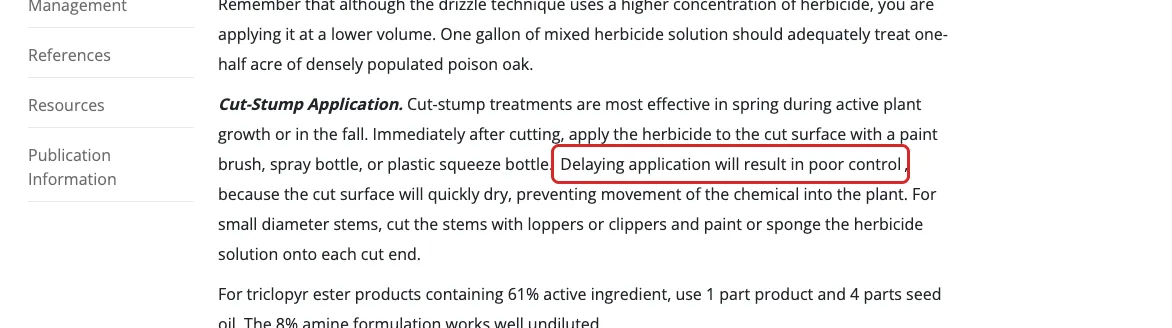
Late summer through autumn is the best season for this, Penn State says, because the plant is moving sugars down to the roots and carries the herbicide with them; spring cuts fail more often because sap is flowing up (Penn State Extension). Labels add a tree warning: the 71995-25 label notes that trees of similar age and spacing can share roots, so a stump treatment next to a tree can injure it.
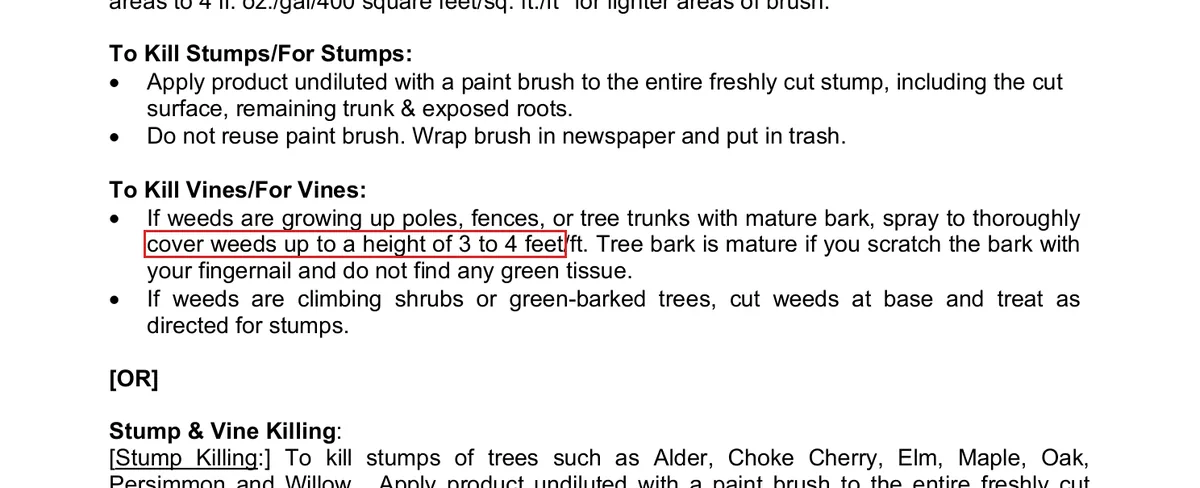
The Ortho label lets you spray vines on poles, fences and mature-bark trunks up to 3 to 4 feet, defining mature bark as bark with no green tissue under a fingernail scratch (label 239-2491, p. 7). UGA Extension disagrees for trees: triclopyr can be absorbed through the bark of some species and cause severe injury, so do not spray it on mature bark (UGA C867). On a tree you value, cutting and painting avoids the question.
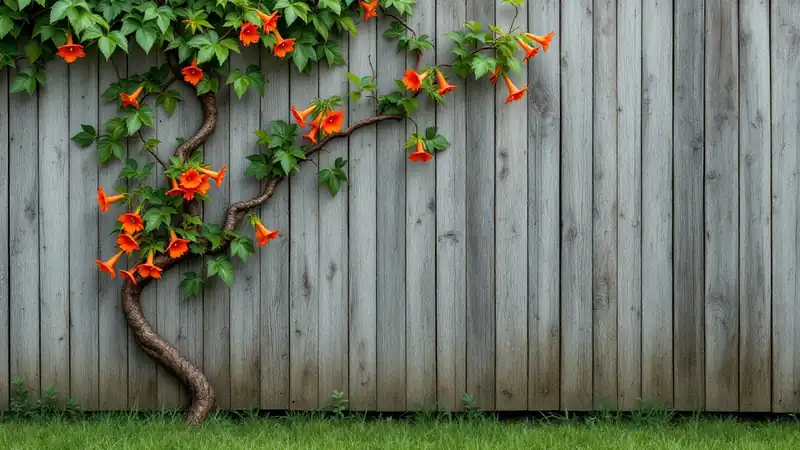
The same Ortho concentrate (239-2491) lists trumpet creeper, but that vine resprouts from root pieces 0.8 inch long, so our guide on how to kill trumpet vine pairs the cut-and-paint step with a late September or October spray.
Where do the guides and labels disagree?
Across 7 extension or agency guides and 12 labels, 8 answers differ. Only the label is a legal requirement; the rest is advice, and where advice differs this page uses the more cautious number.
| Question | What one source says | What another says | What this page uses |
|---|---|---|---|
| How long urushiol stays active on tools and gloves | Up to 5 years (NIOSH) | Up to 1 year on clothing and shoes (MDC); months (Clemson) | Treat anything that touched the plant as contaminated until washed |
| How soon to paint a cut vine | Within 15 minutes (Penn State); immediately (UC IPM) | Within 48 hours, glyphosate 41% or stronger (UGA C867) | 15 minutes |
| Spray triclopyr on vines on mature bark? | Yes, up to 3 to 4 ft (label 239-2491) | No, bark can absorb it (UGA C867) | Cut and paint on trees |
| Strength for cut stumps | Concentrated, usually 20 to 45% (Penn State) | 8% triclopyr amine works undiluted (UC IPM; labels 239-2491, 92564-6) | Any concentrate whose label allows undiluted stump use |
| Best season to cut and paint | Late summer through autumn, not spring (Penn State) | Spring during active growth, or fall (UC IPM) | Late summer to early fall |
| Best time to spray | May to July while flowering (MDC); 2 weeks either side of full bloom for glyphosate (Clemson) | Actively growing, at least 4 weeks before first killing frost (label 71995-64); fall before leaves lose green color (label 524-475) | Full leaf, early summer to early fall |
| Share of adults who react | 80 to 90 percent (NIOSH) | 50 to 75 percent, about 20 percent in large cities (UC IPM) | Assume you are sensitive |
| Does Roundup contain glyphosate? | No residential Roundup in the U.S. has since 2022 (Penn State) | Glyphosate registrations 71995-25 and 71995-37 are still active in EPA’s system | Read the active ingredient line, not the brand |
When is the best time to spray poison ivy?
Spray at full leaf size while the plant is growing. Clemson HGIC times triclopyr from full leaf expansion in spring until fall color, 2,4-D and dicamba to late spring and early summer, and glyphosate to 2 weeks before through 2 weeks after full bloom, which is early summer (Clemson HGIC 2307). UGA adds that glyphosate needs a 1-hour rain-free period.
The label cutoff is the frost. Roundup 71995-64, 71995-25 and Bonide 4-491 all say to spray at least 4 weeks before the first killing frost and to reapply if new growth appears. Rain resistance differs: 2 hours for the Ortho brush mix, 4 hours for 92564-6 and 30 minutes for the Bonide concentrate.
Expect slow results and plan the second round. The Ortho label says wilting shows in 2 to 6 weeks, 92564-6 says 1 to 6 weeks, and the Roundup 71995-64 label says poison ivy may take 3 to 4 weeks or more to die. MDC expects 2 or more sprays; with the usual 28-day label interval, June and late July sprays fit one season.
Can you kill poison ivy without herbicide?
Yes, but it takes seasons, not days. UGA says poison ivy will not tolerate repeated cutting or mowing, and that frequent mowing removes it from lawns without herbicide; in beds it may take several clippings a year for several years (UGA C867). Clemson HGIC says to cut shoots to the ground every time new growth appears, checking every 1 to 2 weeks from leaf-out (Clemson HGIC 2307).
- Digging: use a fork in moist soil and remove roots down several inches; any missed piece resprouts (Penn State). UC IPM grubs western poison oak in early spring or late fall for the same reason.
- Smothering: 3 to 6 inches of wood mulch suppresses seedlings, and cardboard, landscape fabric or black plastic must stay down a full growing season or longer (Penn State). Our page on whether mulch prevents weeds gives depth by weed type.
- Tilling once: UC IPM warns that a single pass fragments the rhizomes and spreads the plant (UC IPM 7431).
Household mixes do not reach the roots. Penn State says 5% grocery vinegar does not control poison ivy and that 20 to 30% horticultural vinegar browns the leaves while the roots survive, needing repeat sprays every 2 to 3 weeks; salt sterilizes soil and bleach is not labeled for plants at all (Penn State Extension). The trial evidence on vinegar as a weed killer shows the same pattern on other perennials.
How do you clean up and dispose of dead poison ivy?
- Bag every stem, leaf and root in a heavy trash bag and seal it; Penn State and the labels say never compost or burn it (Penn State).
- Wash tools with detergent and warm water while wearing fresh nitrile gloves, or wipe pruners with rubbing alcohol; NIOSH lists either (NIOSH).
- Wash the clothes alone in hot water on the longest cycle, rinse twice, then run 1 more cycle with detergent in the empty washer (Penn State).
- Shower rather than bathe, with cool to warm water and dish detergent, and wipe the car seat you sat on. Pets carry the oil on fur, so FDA suggests pet shampoo and rubber gloves (FDA).
Hire out large patches, high vines and anything near water: UC IPM notes only a few glyphosate, triclopyr and imazapyr formulations are permitted near water. Our land clearing cost guide prices brush removal by the acre.
How we compiled this
We read 12 EPA-stamped labels from the Pesticide Product and Label System that name poison ivy, plus 7 extension and agency guides (Penn State, Clemson HGIC, UGA, UC IPM, Missouri Department of Conservation, CDC NIOSH and FDA), on Nov. 20, 2026. Rates, limits and dates come from the label PDFs themselves. We did not test any product. Where sources disagree, both are shown.
Frequently asked questions
What kills poison ivy permanently?
A systemic herbicide that reaches the roots: triclopyr or glyphosate sprayed on full-size leaves, or painted undiluted on a fresh cut. Plan on at least 2 rounds 28 days or more apart and a year of checking, since missed roots resprout.
Does Dawn dish soap kill poison ivy plants?
None of the 12 labels or 7 guides we read lists dish soap as a control. In home mixes it only helps vinegar stick, and Penn State says vinegar leaves the roots alive.
Does vinegar kill poison ivy permanently?
No. Penn State says 5% household vinegar does not control it, and 20 to 30% horticultural vinegar kills only the leaves and stems it touches, needing repeat sprays every 2 to 3 weeks while the roots live.
What kills poison ivy the fastest?
Products that add diquat to triclopyr brown the leaves first: the 239-2768 label says within 3 hours, and 71995-64 says 3 to 6 hours. The same 71995-64 label says poison ivy may still take 3 to 4 weeks or more to die.
What kills poison ivy growing on a tree?
Cut the vine near the ground, remove a 1-foot section and paint the lower stump within 15 minutes with an undiluted 8% triclopyr or 41% glyphosate concentrate.
How do you kill poison ivy without killing other plants?
Cut the stem and brush concentrate onto the cut. If you spray, the 239-2491 label says to shield nearby plants with cardboard or plastic and use a coarse, low-pressure spray.
Sources
- U.S. EPA PPLS (The Scotts Company), Ortho Brush-B-Gon Brush Killer / GroundClear Poison Ivy Killer label, EPA Reg. No. 239-2491, Aug. 6, 2024. Accessed November 2026.
- U.S. EPA PPLS (The Scotts Company), Ortho GroundClear Poison Ivy & Tough Brush Killer2 label, EPA Reg. No. 239-2768, Mar. 31, 2021. Accessed November 2026.
- U.S. EPA PPLS (The Scotts Company), Brush-B-Gon Poison Ivy & Poison Oak Killer ready-to-use label, EPA Reg. No. 239-2587, Apr. 24, 2024. Accessed November 2026.
- U.S. EPA PPLS (The Scotts Company), Ortho GroundClear Poison Ivy & Tough Brush Killer3 label, EPA Reg. No. 239-2773, Aug. 24, 2022. Accessed November 2026.
- U.S. EPA PPLS (SBM Life Science), Triclopyr 8.8% Concentrate Herbicide (BioAdvanced Brush Killer Plus) label, EPA Reg. No. 92564-6, Aug. 17, 2026. Accessed November 2026.
- U.S. EPA PPLS (Monsanto), Roundup Weed & Grass Killer4 Concentrate / Poison Ivy Plus Tough Brush Killer2 master label, EPA Reg. No. 71995-64, June 5, 2023. Accessed November 2026.
- U.S. EPA PPLS (Monsanto), Roundup Concentrate Poison Ivy Plus Tough Brush Killer label, EPA Reg. No. 71995-37, Mar. 28, 2019. Accessed November 2026.
- U.S. EPA PPLS (Monsanto), Roundup Weed & Grass Killer Super Concentrate master label, EPA Reg. No. 71995-25, Jan. 28, 2021. Accessed November 2026.
- U.S. EPA PPLS (Bayer CropScience), Roundup ULTRA / Roundup PRO master label, EPA Reg. No. 524-475, Oct. 18, 2016. Accessed November 2026.
- U.S. EPA PPLS (Bonide), Poison Ivy, Oak, Kudzu and Vine Killer Concentrate label, EPA Reg. No. 4-491, June 30, 2026. Accessed November 2026.
- U.S. EPA PPLS (PBI-Gordon), Trimec Herbicide label, EPA Reg. No. 2217-543, Apr. 2, 2014. Accessed November 2026.
- U.S. EPA PPLS (Corteva), Pathfinder II label, EPA Reg. No. 62719-176, June 9, 2026. Accessed November 2026.
- Penn State Extension, Manage Poison Ivy Safely, updated July 19, 2026. Accessed November 2026.
- Clemson Cooperative Extension HGIC, How to Identify and Control Poison Ivy, HGIC 2307, updated Oct. 8, 2025. Accessed November 2026.
- UGA Cooperative Extension (M. Czarnota), Controlling Poison Ivy in the Landscape, Circular 867-10, July 29, 2025. Accessed November 2026.
- UC IPM, Pest Notes: Poison Oak, Publication 7431, updated June 2021. Accessed November 2026.
- Missouri Department of Conservation, Poison Ivy Control, current page. Accessed November 2026.
- CDC NIOSH, Outdoor Workers: Poisonous Plants, current page. Accessed November 2026.
- U.S. FDA, Outsmarting Poison Ivy and Other Poisonous Plants, current page. Accessed November 2026.