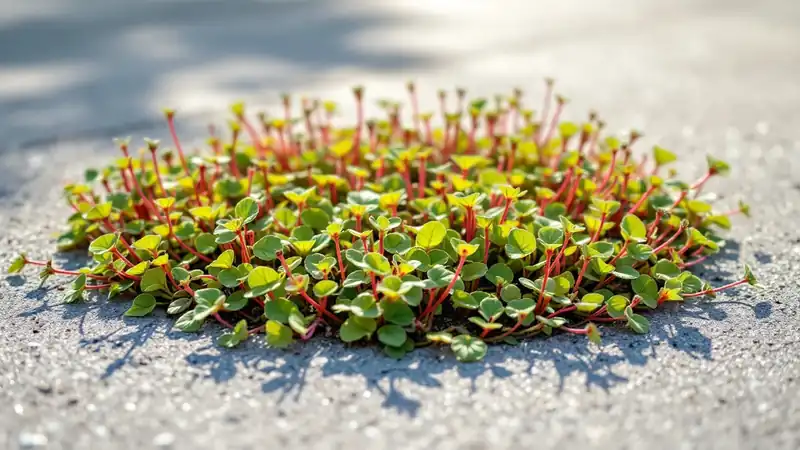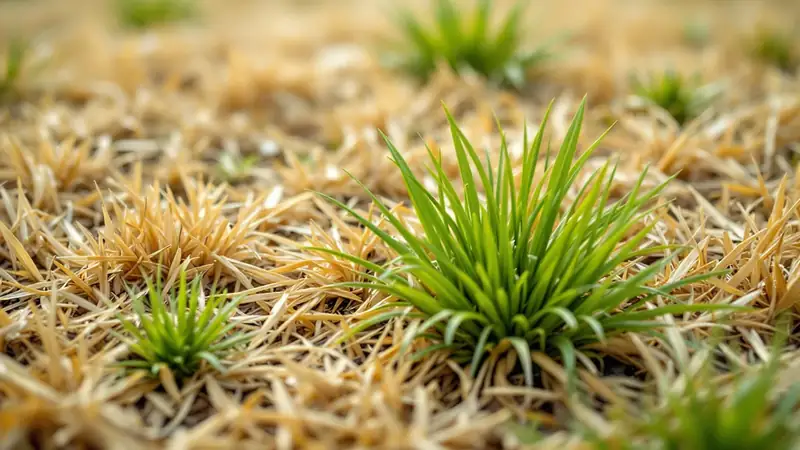
How to get rid of Poa annua: kill existing clumps between fall and spring with a spray your lawn grass tolerates, then put down a preemergent in late summer, before soil falls below 70°F. St. Augustine, bermuda and fescue each need a different spray.
How to get rid of Poa annua (annual bluegrass) is a two-season job, and the lawn grass decides both halves. The seed starts germinating in late summer or fall as soil cools below 70°F and keeps coming in flushes all winter, and one plant can drop about 100 seeds in 8 weeks, even mowed under 1 inch (UC IPM). Our guide to which weeds die in winter and which keep growing covers that life cycle; to confirm the ID against crabgrass and the other grassy weeds, use our lawn weed identification chart.
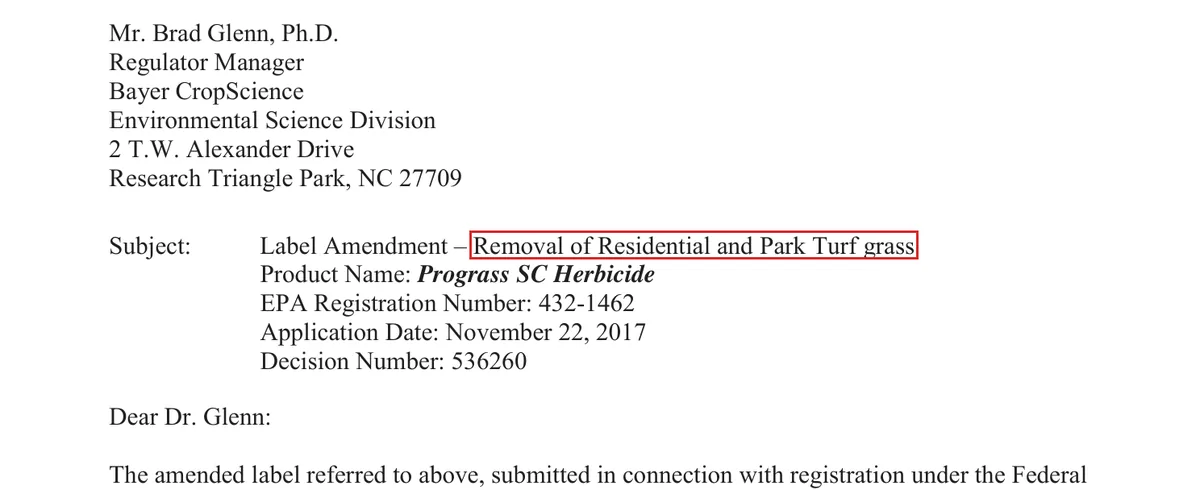
The top results are Reddit threads, YouTube clips and product sellers. We read the EPA-stamped labels of 17 products they and extension guides name. Three findings change what to buy: Prograss SC lost its residential turf use in June 2018 (EPA letter, Reg. No. 432-1462); the Tenacity label claims only preemergence suppression of Poa, not the kill a sod company’s page promises from mesotrione; and 64 percent of 78 Tennessee golf course samples showed some glyphosate resistance (Brosnan et al., 2020).
Pesticide labels are legal documents: the label is the law. Read the current label of the product you buy, confirm it lists your lawn grass, and check whether your state requires a licensed applicator for professional products. This page is general information, not a recommendation of any product.
Is it Poa annua, and which kind?
Look for light green clumps with leaf tips shaped like the bow of a boat, blades often crinkled part way down, and whitish seedheads 1 to 4 inches long, which can form on plants only 6 weeks old (UC IPM). In a brown, dormant bermudagrass lawn it shows as bright green tufts; in tall fescue or Kentucky bluegrass it blends in until the spring seedheads appear (UGA Bulletin 1394, June 2024).
| What you see | Likely type | What it means for control | Source |
|---|---|---|---|
| Upright clumps, heavy seedheads, dies in the first hot weeks of summer | Annual type (Poa annua var. annua) | A late-summer preemergent works; many seeds stay dormant, so expect 2 or more seasons | UC IPM |
| Low, creeping patches that survive summer in shade, wet or compacted spots | Perennial type (var. reptans) | UC IPM: preemergents give little or no benefit; kill the patch and reseed or resod | UC IPM; UGA B1394 |
| Green tufts in brown, dormant bermuda or zoysia from November to March | Either type | Winter is the spray window; the lawn grass is not growing | UGA B1394 |
| Same spots come back after a fall preemergent every year | Possible resistance or perennial type | Switch herbicide group (see resistance section) | Clemson HGIC 2325 |
When does the preemergent go down?
Before the first flush, which UC IPM ties to soil falling below 70°F (UC IPM). Clemson turns that into an air signal: apply when daytime highs drop to 75°F for 4 days in a row, then repeat 8 to 10 weeks later, because most products run out before winter germination ends (Clemson HGIC 2325, rev. Aug. 2021). The labels give their own windows.
| Signal or label | Window for annual bluegrass | Second application | Source |
|---|---|---|---|
| Soil temperature | As soil falls below 70°F, late summer or fall | Germination continues all winter | UC IPM |
| Air temperature | Daytime highs 75°F for 4 consecutive days | 8 to 10 weeks later | Clemson HGIC 2325 |
| Barricade 4FL (prodiamine), 100-1139 | August or September, established non-overseeded turf | Within the yearly cap for your grass | label, 2024 |
| Scotts Halts (pendimethalin), 538-192 | August to October | Not specified for fall | label, 2020 |
| Pendulum AquaCap (pendimethalin), 241-416 | Late summer or early fall | After 5 to 8 weeks | label, 2020 |
| Specticle FLO (indaziflam), 101563-146 | August to November, warm-season turf only | Split programs, 45 to 90 days apart | label, 2019 |
| Sim-Trol 9DF (simazine), 35915-12 | After October 1, warm-season turf only | Up to 2 per year | label, 2021 |
Every row above stops seedlings only. None kills a Poa plant that is already green, and UGA warns that fall preemergents rule out reseeding or resodding damaged areas for several months (UGA B1394). The Barricade 4FL label sets the wait by rate: 16 fl oz per acre means 4 months before overseeding, and 48 fl oz means 12 months in the South (Barricade 4FL label).
The same late-summer prodiamine timing covers common chickweed: the Barricade 4FL label (100-1139) lists it with directions to apply in late summer, fall or winter before the weed germinates, and our guide on how to get rid of chickweed adds the fall sprays for mouseear chickweed.
Which products are labeled for Poa annua, by lawn grass?
The table lists 17 products whose EPA-stamped labels name annual bluegrass, plus generic glyphosate, sorted by the lawn grasses each label allows. The control column is UGA’s rating from Bulletin 1394, where E means 90 to 100 percent control, G 80 to 89, F 70 to 79 and P under 70 (UGA B1394, Tables 2 and 3). The home-lawn column is what the label itself says.
Swipe the table sideways to see every column.
| Product | EPA Reg. No. | Active (group) | Pre or post | Lawn grasses on the label | Poa timing or rate | UGA control | Home lawns? |
|---|---|---|---|---|---|---|---|
| Scotts Halts | 538-192 | pendimethalin (3) | Pre | All lawn grasses except dichondra and bentgrass | Aug. to Oct.; 2.01 lb per 1,000 sq ft | G | Yes, homeowner product |
| Pendulum AquaCap | 241-416 | pendimethalin (3) | Pre | Cool- and warm-season lists | 1.1 to 1.6 fl oz per 1,000 sq ft; repeat after 5 to 8 weeks | G | Yes, residential turf listed |
| Barricade 4FL | 100-1139 | prodiamine (3) | Pre | Warm-season, tall fescue, Kentucky bluegrass, ryegrass, fine fescue | Aug. or Sept.; yearly cap 0.23 to 1.1 fl oz per 1,000 sq ft by grass | G to E | Yes, lawns listed |
| Dimension 2EW | 62719-542 | dithiopyr (3) | Pre | Cool- and warm-season turf | 1.5 to 2 pints per acre for Poa | F to G | Yes, residential sub-label |
| Specticle FLO | 101563-146 | indaziflam (29) | Pre, early post before tillering | Warm-season only; injures tall fescue, Kentucky bluegrass, ryegrass | Aug. to Nov.; 3 to 9 fl oz per acre per split | Not rated | Yes, residential lawns listed |
| Sim-Trol 9DF | 35915-12 | simazine (5) | Pre, some post | Bermuda, centipede, St. Augustine, zoysia | After Oct. 1; 1.1 lb per acre | E | Yes, lawns listed |
| Tenacity | 100-1267 | mesotrione (27) | Pre suppression only | Cool-season; bermuda and zoysia are sensitive | Label: preemergence suppression, postemergence N | Not rated | Yes |
| Auguzine; Image Herbicide for St. Augustinegrass and Centipedegrass | 19713-567 | atrazine 4% (5) | Post and pre | St. Augustine and centipede only | 8.6 fl oz per 1,000 sq ft; max 2 per year; not above 90°F | E | Yes, homeowner product |
| Revolver | 101563-53 | foramsulfuron (2) | Post | Bermuda, zoysia; buffalograss spot only | 0.2 to 0.4 fl oz per 1,000 sq ft; best above 60°F daily average | E | Yes, home lawns listed; label says professional use |
| Monument 75WG | 100-1134 | trifloxysulfuron (2) | Post | Bermuda, zoysia, buffalograss | 0.53 oz per acre; 28 days between | E | Yes, except California |
| Katana (flazasulfuron 25WG) | 71512-12 | flazasulfuron (2) | Post, some pre | Bermuda, zoysia, buffalograss, centipede, seashore paspalum | 1.5 to 3.0 oz per acre; pre lasts 5 to 6 months | Not rated | Yes, residential turf listed |
| Certainty | 59639-226 | sulfosulfuron (2) | Post | Warm-season turf | 1.25 to 2.0 oz per acre, before tillering | P to F | Yes, residential turf listed |
| Finale | 7969-444 | glufosinate (10) | Post, nonselective | Fully dormant bermuda only | Before spring green-up | E | Yes, home lawns listed |
| Glyphosate, 4 lb per gallon products | varies | glyphosate (9) | Post, nonselective | Fully dormant bermuda only | 1 pint per acre on a day above 60°F (NC State) | E | Check your product’s label |
| Xonerate 2SC | 101563-365 | amicarbazone (5) | Post | Kentucky bluegrass, tall fescue, fine fescue, ryegrass; warm-season | Spring; Kentucky bluegrass not above 85°F | Not rated | Yes, home lawns listed |
| Velocity SG | 59639-136 | bispyribac (2) | Post | Tall fescue, perennial ryegrass, bentgrass; can injure Kentucky bluegrass | Max 6 oz per acre; best at 70 to 85°F | Not rated | Yes, residential turf listed (cool-season use) |
| Prograss SC | 101563-123 | ethofumesate (15) | Pre and early post | Ryegrass, Kentucky bluegrass, bentgrass, tall fescue, St. Augustine, dormant bermuda | Fall, up to 30 days after emergence | G to E (pre) | No: golf courses and sod farms only since June 2018 |
| PoaCure SC | 89633-5 | methiozolin (30) | Pre and post | Golf course turf | Golf only; not in California | Not rated | No: golf course turf only |
Two rows correct advice that is still in circulation. UGA’s 2024 residential bulletin and Clemson both list ethofumesate (Prograss) for cool-season lawns (UGA B1394; Clemson), but EPA approved a label amendment titled “Removal of Residential and Park Turf grass” on June 12, 2018, and the current label says commercial use on golf courses and sod farms (Prograss SC label and letter).
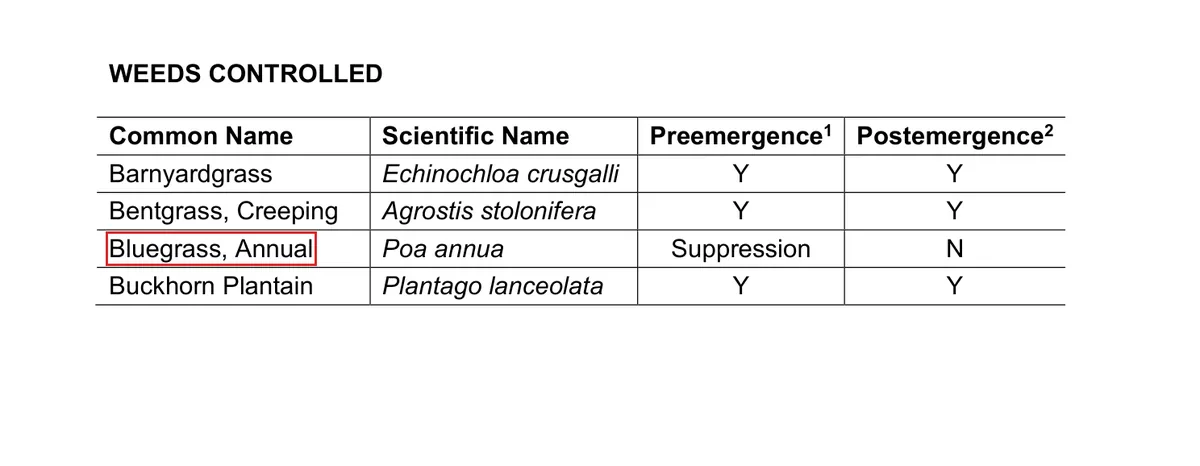
The second is mesotrione. The Tenacity label (EPA Reg. No. 100-1267) rates annual bluegrass “Suppression” before emergence and “N” after it, and says bentgrass, Poa annua, zoysiagrass and bermudagrass are sensitive. It is useful in one spot: at seeding in a cool-season lawn, where prodiamine or dithiopyr would stop the new grass too. It is not a cure for Poa that is already up.
What is the plan for your lawn grass?
The plan splits three ways because Poa annua is itself a cool-season grass. UGA says warm-season lawns have more selective postemergence options than cool-season lawns, where spot spraying a nonselective herbicide is generally the most effective treatment (UGA B1394).
1Only a few clumps?
YesDig each one out before it sets seed and fill the hole with seed or sod; repeat as new seedlings appear (UC IPM).
NoGo to the next question
2Is the lawn St. Augustine or centipede?
Yes4 percent atrazine (EPA Reg. No. 19713-567) in November and early January at 8.6 fl oz per 1,000 sq ft, below 90°F, then a late-summer preemergent.
NoGo to the next question
3Is it bermuda or zoysia?
YesFully dormant bermuda: glyphosate or glufosinate on a day above 60°F. Zoysia or green bermuda: Revolver, Monument or Katana. Then a late-summer preemergent, rotating groups each year.
NoGo to the next question
4Are you overseeding tall fescue or Kentucky bluegrass this fall?
YesSkip the fall preemergent; seed first and deal with Poa in spring by spot spraying or hand removal.
NoCool-season lawn, not seeding: prodiamine or pendimethalin in late summer; in spring, a professional spray of Xonerate 2SC or Velocity SG where the label allows your grass.
Source: UC IPM; UGA B1394; Clemson HGIC 2325; product labels on EPA PPLS
St. Augustine and centipede
- November and early January: spray a 4 percent atrazine product such as Auguzine or Image Herbicide for St. Augustinegrass and Centipedegrass at 8.6 fl oz in 2 gallons of water per 1,000 sq ft (EPA Reg. No. 19713-567; timing from Clemson).
- Stop at 2 a year and 90°F. The label caps it at 2 applications a year, bars spraying above 90°F and bars overseeding within 6 months. Clemson adds: not during spring green-up, and not within twice the drip-line width of hardwood trees and shrubs.
- Watch the rain. Rain within 2 or 3 days weakens control of emerged plants; seed control needs water within 7 to 10 days (Auguzine label).
- Late summer: a Group 3 preemergent (prodiamine, pendimethalin or dithiopyr) or simazine after October 1. Our St. Augustine grass care guide lists which herbicides that grass tolerates and its 85°F atrazine limit for Floratam.
Atrazine is a groundwater risk on sand. Clemson says not to use it on sand or loamy sand where the water table is near the surface (Clemson HGIC 2325). UGA rates both atrazine and simazine excellent on Poa, but their soil residual is only 4 to 6 weeks (UGA B1394).
Bermuda and zoysia
- Fully dormant bermuda, December to February: spray glyphosate at 0.5 lb active ingredient per acre (1 pint of a 4 lb per gallon product) on a day above about 60°F. NC State found tall fescue control was 0 when glyphosate went on in the 50s and 59 percent in the 60s (NC State TurfFiles). Glufosinate (Finale) is the non-glyphosate choice; its label limits it to fully dormant bermuda before green-up (EPA Reg. No. 7969-444).
- Zoysia, or bermuda that is still green: use a selective Group 2 product. Revolver runs 0.2 to 0.4 fl oz per 1,000 sq ft and works best when the daily average is above 60°F (Revolver label); Monument 75WG allows home lawns except in California (Monument label).
- Mid-October to mid-November: the Monument label pairs it with prodiamine after Poa germinates, killing the first flush and blocking the next.
- Late summer: rotate the preemergent group each year: Clemson suggests alternating Group 3 products with indaziflam (Group 29), which is labeled for warm-season lawns only (Clemson; Specticle FLO label).
Spraying bermuda that has begun to green costs recovery time: on Tifway at 15 percent green, 16 oz of glyphosate per acre cut green cover at 9 days from 50 to 18 percent (NC State). Our page on which lawn grasses Roundup kills lists the other limits, and the bermuda grass guide covers the green-up calendar.
Tall fescue, Kentucky bluegrass and ryegrass
- Decide on fall seeding first. Clemson says a fall Group 3 preemergent on tall fescue rules out overseeding that fall; spring overseeding around March 1 still works if no spring preemergent goes down (Clemson). If you are seeding this fall, skip the preemergent and follow our overseeding timing guide.
- Not seeding: apply prodiamine, pendimethalin or dithiopyr in late summer, for example Scotts Halts at 2.01 lb per 1,000 sq ft from August to October (EPA Reg. No. 538-192).
- Spring, selective spray (professional products): Xonerate 2SC lists home lawns of Kentucky bluegrass, tall fescue, fine fescue and ryegrass; on Kentucky bluegrass it allows 3 fl oz per acre every 14 days up to 4 times, never above 85°F, on grass established 12 months (Xonerate 2SC label). Velocity SG covers tall fescue and ryegrass between 70 and 85°F but can injure Kentucky bluegrass (Velocity SG label).
- A few clumps: dig them out before seedheads, or spot spray glyphosate and reseed the hole. UC IPM says hand removal works if repeated, because new seedlings fill each gap (UC IPM).
A lawn company spraying those professional products must hold the license your state requires; our pesticide applicator license guide by state lists them, and our tall fescue lawn guide covers the grass itself.
Why does the same product stop working?
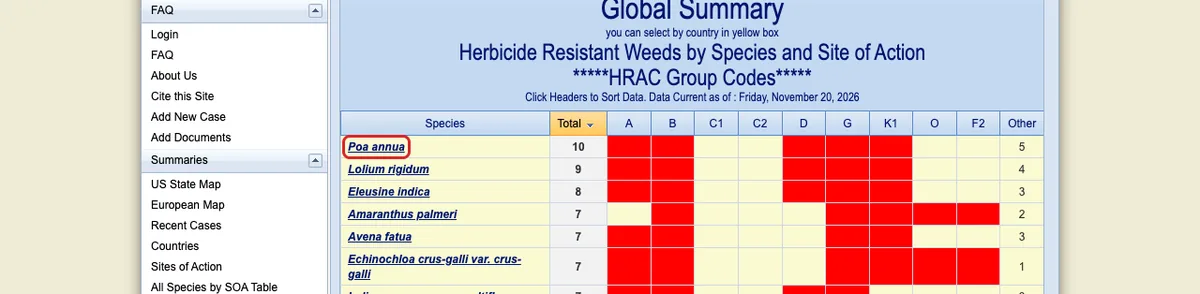
Poa annua has evolved resistance to more herbicide sites of action than any other weed: 10, ahead of rigid ryegrass at 9, in the International Herbicide-Resistant Weed Database table dated Nov. 20, 2026 (WeedScience.org). Its species page lists 57 cases worldwide, 24 of them in the United States (WeedScience.org, Poa annua).
The Tennessee survey shows what that looks like on turf. Brosnan and colleagues sampled 90 golf courses in January and February 2018 and screened seed from 78 of them. Some resistance turned up in 97 percent of samples for simazine, 64 percent for glyphosate, 58 percent for prodiamine and 21 percent for foramsulfuron, and 4 percent resisted glyphosate, foramsulfuron and simazine together (Crop, Forage and Turfgrass Management, 2020).
| Group | Actives used on Poa | U.S. resistance cases naming the group | First U.S. case |
|---|---|---|---|
| 5 (photosystem II) | atrazine, simazine, amicarbazone, metribuzin | 9 | 1980, Alabama pasture (simazine) |
| 3 (microtubule) | prodiamine, pendimethalin, dithiopyr, pronamide | 5 | 1997, North Carolina golf and turf |
| 9 (EPSP synthase) | glyphosate | 5 | 2010, Missouri turf |
| 2 (ALS) | foramsulfuron, trifloxysulfuron, flazasulfuron, sulfosulfuron, bispyribac | 4 | 2012, Alabama turf |
| 29 (cellulose synthesis) | indaziflam | 3 | 2017, Tennessee golf course |
| 10 (glutamine synthetase) | glufosinate | 1 | 2017, Tennessee golf course |
| 15 | ethofumesate | 1 | 1994, Oregon grass seed |
Most of those cases come from golf courses sprayed several times a year, not home lawns. The newest group is moving, though: a 2025 study confirmed Oregon hazelnut-orchard Poa surviving indaziflam at 2 to 4 times the orchard label rate, with resistance up to 51-fold and worse in cold weather (Pest Management Science, 2026). The practical rule for a lawn is to change groups every year and to follow a spray with a preemergent from a different group.
How much product do you measure?
Pick the product and enter the lawn area in thousands of square feet. The tool multiplies the label rate per 1,000 sq ft and returns fluid ounces and milliliters. The default, 1,000 sq ft with a 4 percent atrazine product, is 8.6 fl oz (254 mL).
- Product (fl oz)
- 8.600
- Product (mL)
- 254.3
Default: 1,000 sq ft with a 4 percent atrazine product takes 8.6 fl oz (254 mL). Rates from the labels and NC State page linked on this page, read November 2026; per-1,000 values are the label's own or the per-acre rate divided by 43.56. Surfactants and water volume are extra; your container's label overrides this tool.
| Product and use | Label rate | Per 1,000 sq ft | 5,000 sq ft lawn |
|---|---|---|---|
| Atrazine 4% (19713-567), St. Augustine or centipede | 8.6 fl oz per 1,000 sq ft | 8.6 fl oz | 43 fl oz |
| Pendulum AquaCap (241-416), fall pre | 1.1 to 1.6 fl oz per 1,000 sq ft | 1.1 to 1.6 fl oz | 5.5 to 8 fl oz |
| Dimension 2EW (62719-542), Poa pre | 1.5 to 2 pints per acre | 0.55 to 0.73 fl oz | 2.8 to 3.7 fl oz |
| Revolver (101563-53), bermuda or zoysia | 0.2 to 0.4 fl oz per 1,000 sq ft | 0.2 to 0.4 fl oz | 1 to 2 fl oz |
| Xonerate 2SC (101563-365), Kentucky bluegrass | 3 fl oz per acre | 0.069 fl oz | 0.34 fl oz |
| Glyphosate 4 lb per gallon, dormant bermuda | 1 pint per acre | 0.37 fl oz | 1.8 fl oz |
What stops Poa annua from coming back?
Herbicides buy time; a dense lawn closes the gaps. Five habits from UGA and UC IPM (UGA B1394; UC IPM):
- Water deep and less often. Poa roots are shallow; UC IPM suggests holding water until the lawn grass first shows drought stress.
- Hold nitrogen during germination. UGA says high nitrogen then helps Poa survive winter, and feeding dormant warm-season grass feeds only the Poa.
- Bag clippings while seedheads are up. UGA advises removing clippings then; Clemson suggests mowing at about 2 inches with a bagger in spring.
- Aerate when the grass can recover first. UGA times fall aeration of cool-season lawns before Poa germinates, since open holes at peak germination are seedbeds; our aeration timing guide gives the dates by grass.
- Clean the mower deck. UC IPM lists mowers, string trimmers and aerators as the usual way seed moves between yards.
Expect a lawn that had heavy Poa this spring to need 2 or more falls. UGA notes the seed can stay dormant in soil for years, and UC IPM says no single control procedure has succeeded on its own (UGA B1394; UC IPM).
How we compiled this
We read 17 current EPA-stamped product labels from the EPA Pesticide Product Label System on Nov. 20, 2026, plus UGA Bulletin 1394 (June 2024), Clemson HGIC 2325, UC IPM’s annual bluegrass Pest Notes, NC State TurfFiles, the WeedScience.org database and two peer-reviewed resistance studies. We did not test any product. Control ratings are UGA’s; resistance figures are the authors’. Labels change, so the label on your container governs.
Frequently asked questions
How do you kill Poa annua without killing grass?
Match the herbicide to the lawn grass. On St. Augustine and centipede, a 4 percent atrazine product is labeled for it; on bermuda and zoysia, Revolver, Monument or Katana; on dormant bermuda only, glyphosate or glufosinate. Cool-season lawns have Xonerate 2SC and Velocity SG, both professional products (UGA B1394).
What is the best pre-emergent for Poa annua?
UGA rates prodiamine good to excellent and pendimethalin good, and both are sold in homeowner bags. On warm-season lawns, simazine and atrazine rate excellent but last only 4 to 6 weeks. Apply before soil falls below 70°F and rotate herbicide groups, since prodiamine resistance showed up in 58 percent of Tennessee golf samples (Brosnan et al.).
Does Image kill Poa annua?
Image Herbicide for St. Augustinegrass and Centipedegrass is a 4 percent atrazine product registered under EPA Reg. No. 19713-567, and that label lists annual bluegrass as controlled. It is for St. Augustine and centipede only, at 8.6 fl oz per 1,000 sq ft, at most twice a year and not above 90°F (label).
What kills Poa annua in fescue?
Few selective products: Xonerate 2SC and Velocity SG list tall fescue, applied by professionals in spring when temperatures allow. Prograss SC lost its residential use in 2018. For a few clumps, spot spray glyphosate and reseed, or dig them out (Xonerate 2SC label; Velocity SG label).
Will Poa annua die on its own in summer?
The annual type usually does in warm areas, leaving bare spots that need seed or sod. In coastal or frequently irrigated lawns it can live all year, and the perennial type survives summer (UC IPM). Clemson says plants still up in April and May will die back as it warms, so spraying then is unnecessary.
Sources
- UC Statewide IPM Program, Pest Notes: Annual Bluegrass, current page. Accessed November 2026.
- University of Georgia Extension, Bulletin 1394, Annual Bluegrass Control in Residential Turfgrass, June 11, 2024. Accessed November 2026.
- Clemson Cooperative Extension, HGIC 2325, Annual Bluegrass Control, revised Aug. 13, 2021. Accessed November 2026.
- NC State TurfFiles, Winter Glyphosate Applications to Bermudagrass, current page. Accessed November 2026.
- Brosnan et al., Crop, Forage and Turfgrass Management 6(1): e20050, Herbicide resistance in annual bluegrass on Tennessee golf courses, 2020. Accessed November 2026.
- Pest Management Science, Poa annua becomes the first weed to evolve resistance to indaziflam applied preemergence and early postemergence, 2025, issue January 2026. Accessed November 2026.
- International Herbicide-Resistant Weed Database, Herbicide Resistant Weeds by Species and Site of Action, data as of Nov. 20, 2026. Accessed November 2026.
- International Herbicide-Resistant Weed Database, Herbicide Resistant Annual Bluegrass Globally (Poa annua), read Nov. 20, 2026. Accessed November 2026.
- U.S. EPA Pesticide Product Label System, Scotts Halts label, EPA Reg. No. 538-192, label dated 2020-03-02. Accessed November 2026.
- U.S. EPA Pesticide Product Label System, Pendulum AquaCap label, EPA Reg. No. 241-416, label dated 2020-07-02. Accessed November 2026.
- U.S. EPA Pesticide Product Label System, Barricade 4FL label, EPA Reg. No. 100-1139, label dated 2024-02-21. Accessed November 2026.
- U.S. EPA Pesticide Product Label System, Dimension 2EW label, EPA Reg. No. 62719-542, label dated 2021-07-02. Accessed November 2026.
- U.S. EPA Pesticide Product Label System, Specticle FLO label, EPA Reg. No. 101563-146, label dated 2019-04-02. Accessed November 2026.
- U.S. EPA Pesticide Product Label System, Sim-Trol 9DF label, EPA Reg. No. 35915-12, label dated 2021-11-10. Accessed November 2026.
- U.S. EPA Pesticide Product Label System, Tenacity label, EPA Reg. No. 100-1267, label dated 2022-09-28. Accessed November 2026.
- U.S. EPA Pesticide Product Label System, Auguzine; Image Herbicide for St. Augustinegrass and Centipedegrass label, EPA Reg. No. 19713-567, label dated 2021-11-10. Accessed November 2026.
- U.S. EPA Pesticide Product Label System, Revolver label, EPA Reg. No. 101563-53, label dated 2024-11-20. Accessed November 2026.
- U.S. EPA Pesticide Product Label System, Monument 75WG label, EPA Reg. No. 100-1134, label dated 2024-11-21. Accessed November 2026.
- U.S. EPA Pesticide Product Label System, Katana (flazasulfuron 25WG) label, EPA Reg. No. 71512-12, label dated 2018-12-11. Accessed November 2026.
- U.S. EPA Pesticide Product Label System, Certainty label, EPA Reg. No. 59639-226, label dated 2024-11-07. Accessed November 2026.
- U.S. EPA Pesticide Product Label System, Finale label, EPA Reg. No. 7969-444, label dated 2021-03-17. Accessed November 2026.
- U.S. EPA Pesticide Product Label System, Xonerate 2SC label, EPA Reg. No. 101563-365, label dated 2022-01-06. Accessed November 2026.
- U.S. EPA Pesticide Product Label System, Velocity SG label, EPA Reg. No. 59639-136, label dated 2026-04-22. Accessed November 2026.
- U.S. EPA Pesticide Product Label System, Prograss SC label, EPA Reg. No. 101563-123, label dated 2018-06-12. Accessed November 2026.
- U.S. EPA Pesticide Product Label System, PoaCure SC label, EPA Reg. No. 89633-5, label dated 2024-07-22. Accessed November 2026.